
Pluck a nylon string on an acoustic guitar, and you hear sound because the wood vibrates the air. Now pluck a steel string on an electric guitar with the amp turned off. Silence. It looks like nothing is happening, but physics is doing heavy lifting. The magic isn't in the wood or the shape; it’s in the invisible dance between magnetism and electricity.
You might think the amplifier makes the sound, but that’s only half the story. The guitar itself creates an electrical signal-a tiny whisper of voltage-that travels through a cable to be amplified. Understanding this process changes how you play. It explains why changing a pickup alters your tone, why noise happens, and why your gear matters more than you think. Let's pull back the curtain on the electromagnetism that powers rock, blues, and jazz.
The Heartbeat: How Pickups Convert Vibration into Voltage
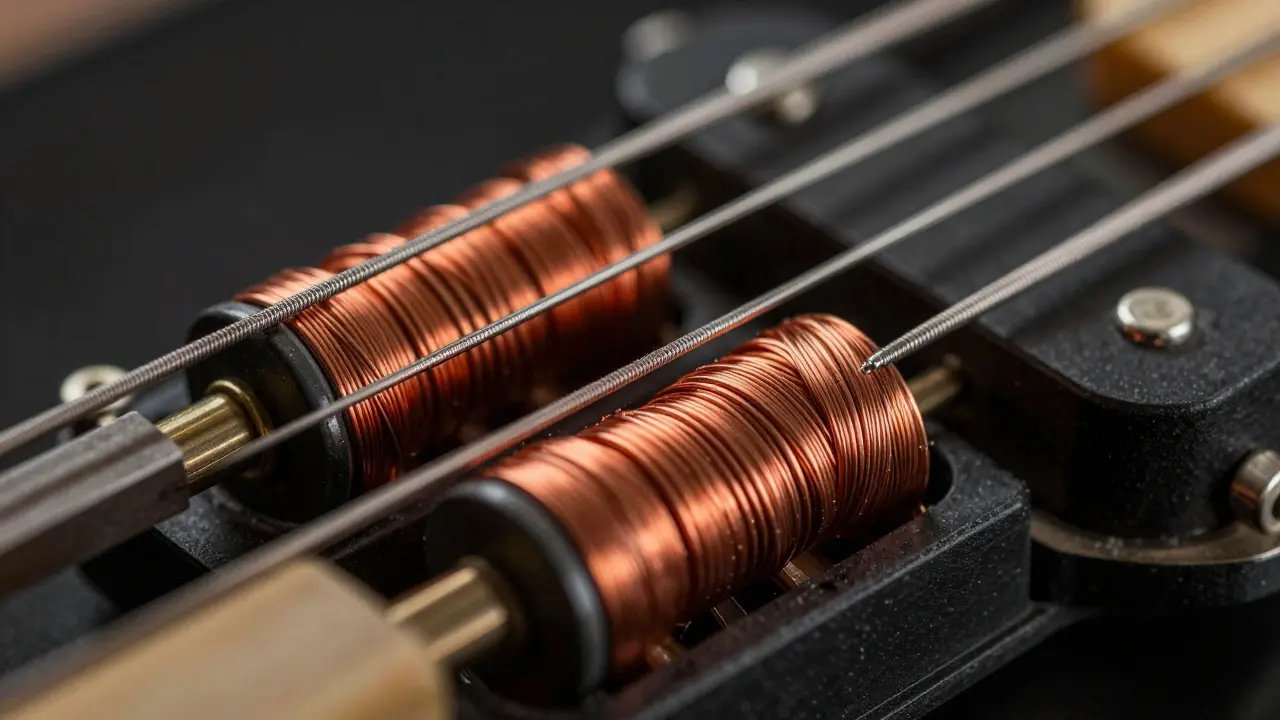
At the core of every electric guitar lies the pickup, which is the transducer that converts string vibrations into electrical signals using electromagnetic induction. This device relies on a principle discovered by Michael Faraday in 1831: a changing magnetic field induces an electric current in a nearby conductor.
Inside a standard pickup, you have two main components: magnets and wire coils. Most guitars use Alnico (aluminum-nickel-cobalt) magnets or ceramic magnets wrapped in thousands of turns of copper wire. When a steel string-remember, steel is ferromagnetic-vibrates over these magnets, it disturbs the magnetic field. As the string moves closer to the magnet, the field strengthens. As it moves away, the field weakens. This constant fluctuation pushes electrons through the copper coil, creating an alternating current (AC) signal.
This is where many players get confused. The pickup doesn't "pick up" sound waves like a microphone. It picks up physical movement via magnetism. If you used a brass or nylon string, the pickup would produce almost no signal because those materials don't interact with magnetic fields. That’s why electric guitars strictly require steel strings.
| Pickup Type | Magnet Material | Output Level | Tone Characteristic |
|---|---|---|---|
| Single-Coil | Alnico 2 or 5 | Low to Medium | Bright, clear, articulate |
| Humbucker | Alnico 2, 3, or Ceramic | High | Warm, thick, high-output |
| P-90 | Alnico 2 or 5 | Medium | Gritty, mid-range focused |
Why Humbuckers Don't Hum: The Physics of Noise Cancellation
If you’ve ever played a Fender Stratocaster near a fluorescent light or a computer monitor, you know the buzz. Single-coil pickups are sensitive antennas. They pick up not just the string’s vibration but also the 60-cycle hum from electrical wiring in your walls. This is electromagnetic interference (EMI).
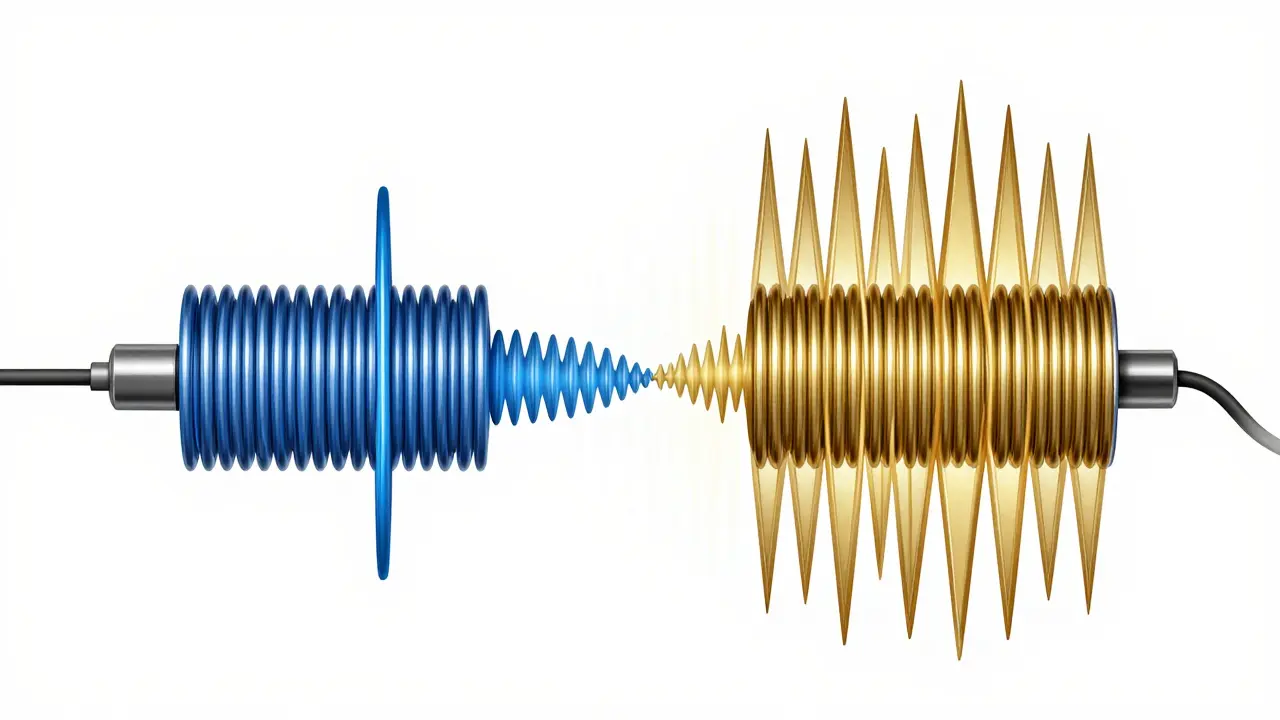
Enter the humbucker, invented by Seth Lover at Gibson in 1955. The name comes from its ability to "buck" the hum. A humbucker uses two coils wired in series but with opposite magnetic polarity and reverse winding direction. Here’s the trick: the string’s vibration creates a signal that adds up in both coils (in-phase), making the output louder. However, external noise like power line hum hits both coils simultaneously. Because they are wired oppositely, the noise cancels itself out (out-of-phase). You get the music, but not the buzz.
This design choice affects tone too. Humbuckers generally have higher output and a thicker sound because two coils generate more voltage than one. But that extra warmth comes at the cost of some high-end clarity compared to single-coils. It’s a trade-off between noise floor and tonal character.
The Signal Chain: Potentiometers and Capacitors Shape Your Tone
Once the pickup generates the signal, it doesn’t go straight to the amp. It passes through the guitar’s internal circuitry, primarily volume and tone knobs. These aren't just simple on/off switches; they are active filters that sculpt the frequency response before the signal even leaves the instrument.
Volume knobs are potentiometers, which are variable resistors that control the amount of signal sent to the output jack. Standard pots are usually 250k ohms for single-coil guitars and 500k ohms for humbucker guitars. Lower resistance loads the pickup more, rolling off highs. Higher resistance lets more high frequencies pass through, keeping the signal bright.
Tone knobs work differently. They pair a potentiometer with a capacitor, which is a component that stores and releases electrical charge, filtering high frequencies to ground. Think of a capacitor as a trapdoor for treble. When you roll the tone knob down, you lower the resistance, allowing high-frequency sounds to escape to ground instead of going to the amp. The result is a darker, mellower sound. The value of the capacitor, measured in microfarads (µF), determines how much treble is cut. A 0.047µF capacitor is standard for brighter cuts, while a 0.022µF offers a subtler change.
Impedance and Cable Length: Why Your Gear Matters
You might wonder why long cables make your guitar sound dull. It’s all about impedance mismatch. Passive electric guitars have high output impedance. Coaxial instrument cables have capacitance. As cable length increases, so does total capacitance. This capacitance forms a low-pass filter with the guitar’s output impedance, eating away your high end. That’s why a 50-foot cable sounds muddy compared to a 10-foot one.
This is also why active pickups (like those in EMG systems) need batteries. Active circuits buffer the signal, lowering the output impedance significantly. This allows the signal to travel through long cables without losing clarity, though it requires a 9V battery to power the preamp inside the guitar.
Wood and Body Construction: Resonance vs. Sustain
If the pickup does all the work, why do luthiers obsess over mahogany, maple, and alder? Wood doesn't generate the signal, but it influences how the string vibrates. Different woods have different densities and stiffness, which affect sustain and resonance.
A dense wood like ebony or maple reflects energy back into the string quickly, leading to longer sustain and a tighter attack. Softer woods like basswood absorb some energy, resulting in faster decay and a warmer, more compressed feel. While the pickup dictates the fundamental tone, the body acts as a resonator that colors the transient response-the initial "snap" of the note. This is subjective, but measurable in terms of harmonic content and decay time.
From Guitar to Speaker: The Amplifier's Role
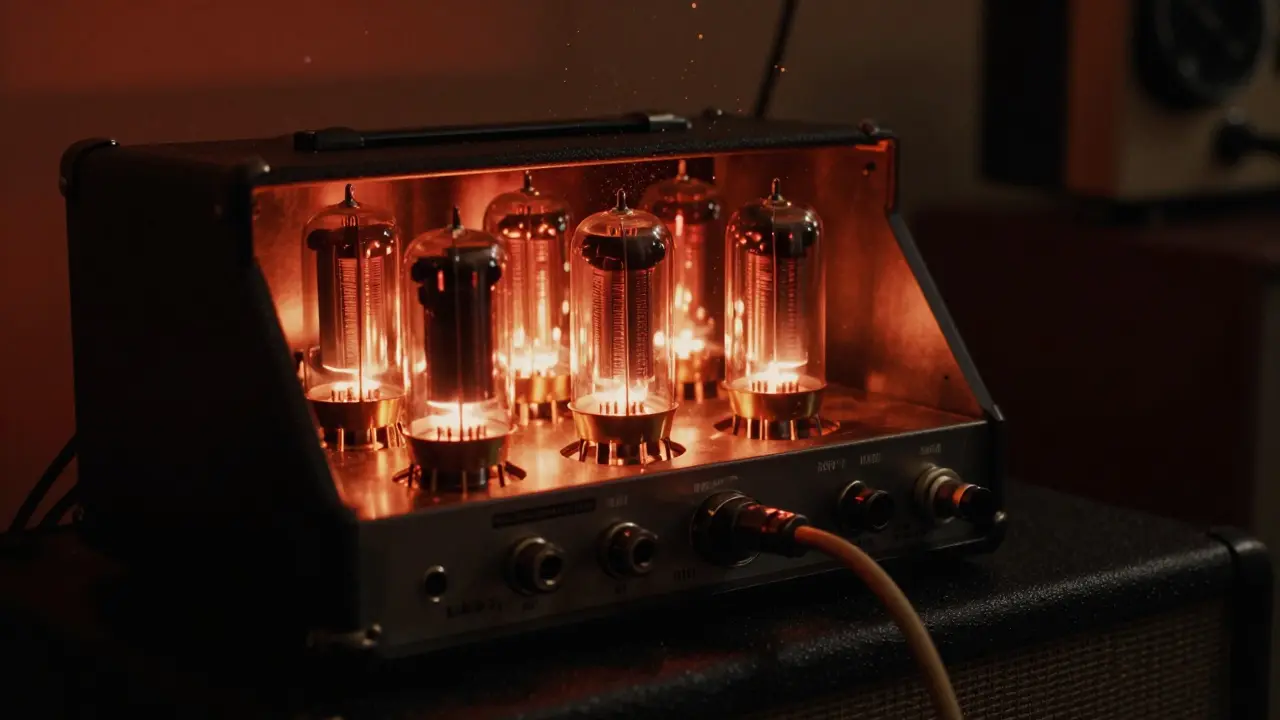
The signal leaving your guitar is weak-often less than 1 volt. To drive a speaker, it needs significant power. This is where the amplifier comes in. The amp takes the high-impedance signal from the guitar and steps it down to low impedance while increasing voltage and current.
Crucially, tube amplifiers add harmonic distortion when pushed hard. This "overdrive" is what gives electric guitars their singing lead tones. Solid-state amps and digital modelers simulate this behavior, but the interaction between a guitar’s pickups and a tube amp’s input stage remains a key part of the classic electric guitar sound. The guitar and amp are not separate entities; they form a complete system where feedback loops between the speaker cone and the guitar body can further shape the tone.
Can I use non-steel strings on an electric guitar?
Generally, no. Standard magnetic pickups rely on ferromagnetic materials to disturb the magnetic field. Nylon, silk, or bronze strings do not interact with magnets, so the pickup will produce little to no signal. Some specialized piezoelectric pickups can read any material, but traditional magnetic pickups require steel.
Why does my guitar hum when I turn the volume up?
This is likely electromagnetic interference (EMI) from lights, computers, or poor grounding. Single-coil pickups are especially susceptible. Using shielded cables, ensuring your guitar has proper ground wiring, or switching to humbucking pickups can reduce this noise.
What is the difference between 250k and 500k pots?
The number refers to electrical resistance in kilohms. 250k pots are typically used with single-coil pickups to prevent the tone from becoming too bright and harsh. 500k pots are used with humbuckers to preserve their natural brightness and output level. Swapping them can subtly alter your guitar's tonal balance.
Do expensive guitars sound better because of the wood?
Wood affects sustain and resonance, but its impact is often overstated compared to pickups and electronics. High-quality construction ensures consistent vibration transfer, but the pickup type and quality have a far greater influence on the final recorded or amplified tone than the specific species of wood used.
Why do active pickups need batteries?
Active pickups contain a built-in preamp circuit that boosts the signal and lowers output impedance. This allows for higher output, cleaner signals over long cable runs, and consistent tone regardless of cable length. The battery powers this preamp, usually lasting several hundred hours of playtime.