
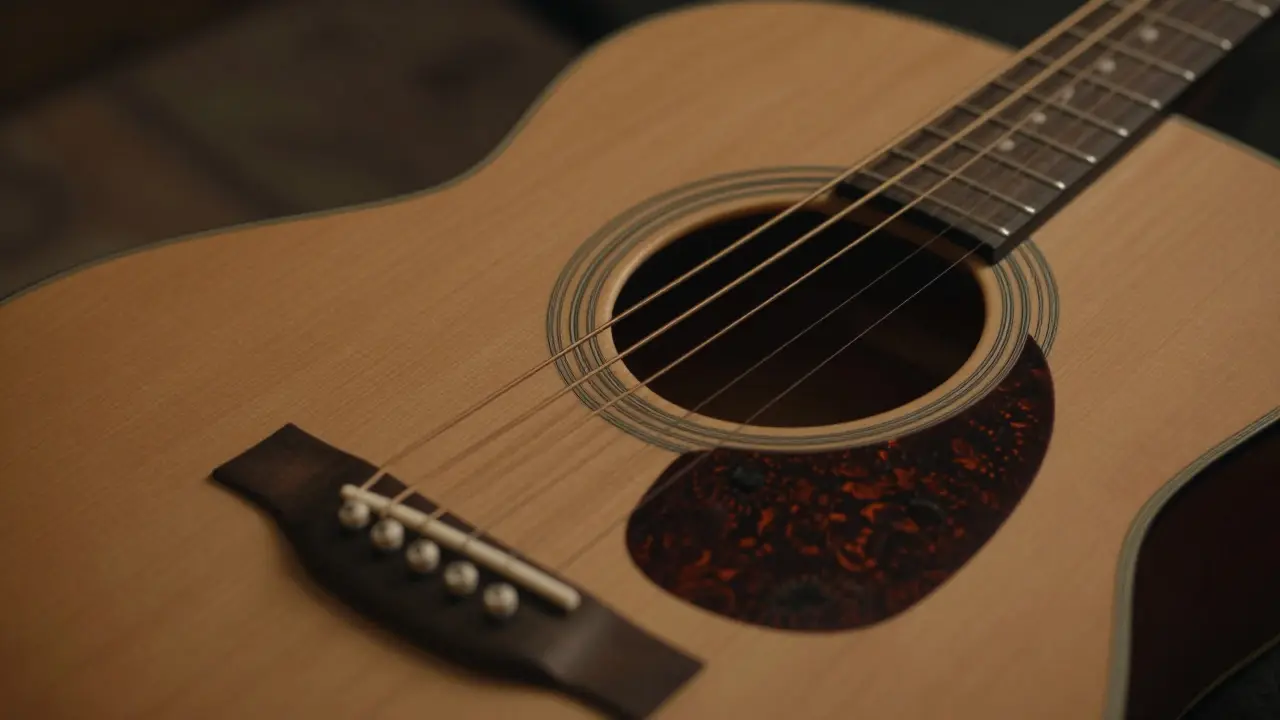
The Magic of the Hollow Body
Why does this instrument feel so intimate? It all comes down to physics. Unlike a solid-body electric, an acoustic guitar is a complex chamber of air and wood. When you pluck a string, the vibration travels through the bridge and into the soundboard. This piece of wood pushes the air inside the body, which then escapes through the soundhole, creating that rich, organic resonance we love. If you've ever tapped on the top of a guitar, you've felt the instrument's soul. This natural amplification allows for a dynamic range that is incredibly hard to replicate. You can whisper a melody by barely touching the strings or roar during a chorus by digging in with a heavy pick. This versatility is why the instrument remains a staple in everything from folk circles in Appalachia to high-end recording studios in Los Angeles.Choosing Your Weapon: Steel vs. Nylon
Not all acoustic guitars are created equal. Depending on what you want to play, your choice of strings changes everything. Most people think of the Steel-string Acoustic, which is the workhorse of pop, rock, and country. These guitars use metal strings that provide a bright, sharp, and loud projection. If you're playing a campfire sing-along or a chunky rhythm part for a band, this is your go-to. Then there is the Classical Guitar. These use nylon strings, which are softer and warmer. They don't have the volume of a steel-string, but they offer a level of nuance and delicacy perfect for fingerstyle pieces or Spanish flamenco. The neck is also wider, giving your fingers more room to navigate complex chords without accidentally muting other strings.| Feature | Steel-String | Classical (Nylon) | Resonator |
|---|---|---|---|
| Tone | Bright, Crisp | Warm, Mellow | Metallic, Nasal |
| Volume | High | Medium/Low | Very High |
| Primary Genre | Pop, Folk, Country | Classical, Flamenco | Blues, Bluegrass |
| String Tension | High (Harder on fingers) | Low (Easier on fingers) | High |
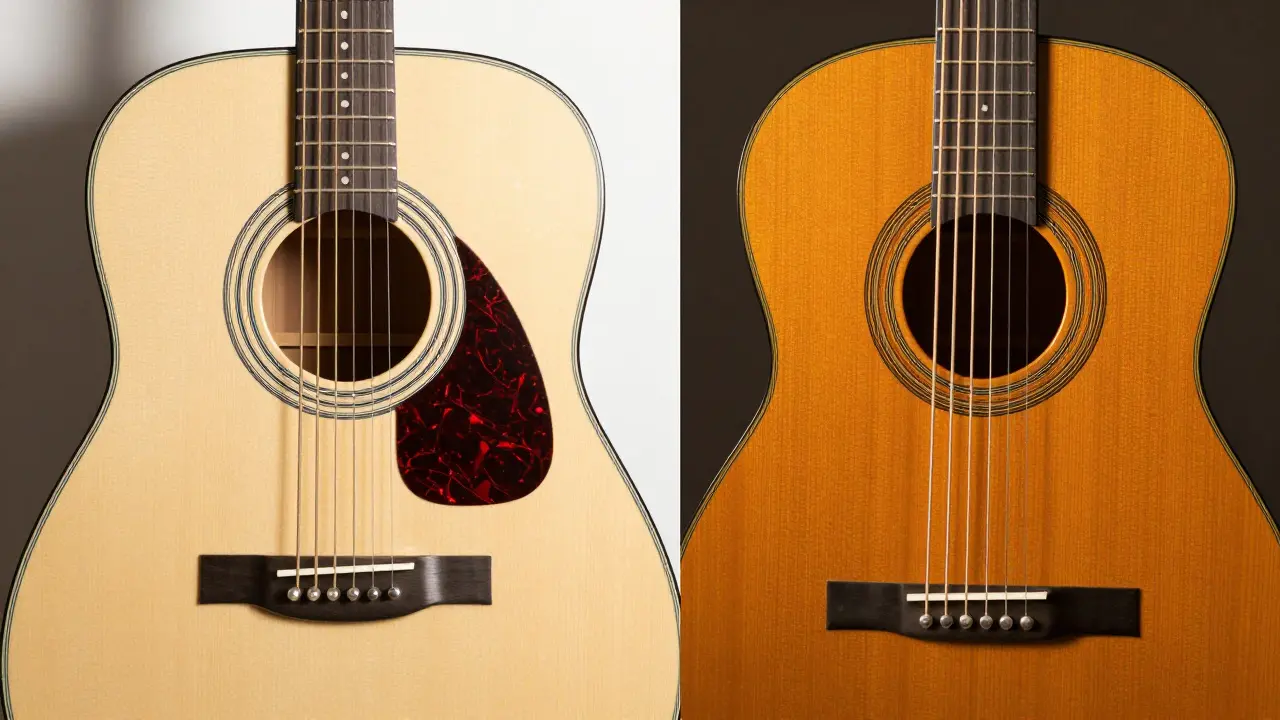
The Secret Sauce: Tonewoods and Construction
If you've ever wondered why a $200 guitar sounds different from a $5,000 one, look at the wood. The Tonewood is the specific type of timber used to build the instrument, and it dictates the frequency response. For the top (the soundboard), Sitka Spruce is the gold standard. It's lightweight but strong, allowing it to vibrate freely while handling the tension of the strings. This results in a clear, punchy sound. For the back and sides, you'll often find Mahogany or Rosewood. Mahogany gives a focused, "woody" mid-range that's great for recording because it doesn't clutter the mix. Rosewood, on the other hand, provides deep lows and sparkling highs, creating a "scooped" sound that feels lush and expensive. Then there's the shape. A Dreadnought body is the most common-it's big and loud, perfect for strumming. If you need something more comfortable for your lap or a more balanced sound for recording, the Parlor Guitar or an Auditorium shape is a better bet. The smaller air volume in a parlor guitar emphasizes the mid-tones, making it a favorite for blues players who want a gritty, intimate vibe.Why Songwriters Can't Live Without Them
Ever wonder why almost every hit song starts with a demo recorded on an acoustic guitar? It's because the instrument provides a complete harmonic and rhythmic foundation. You don't need a drummer or a bass player to feel the groove; the guitar does it all. Writing on an acoustic guitar forces a certain kind of honesty. Since there are no pedals or distortion to hide behind, the melody and lyrics have to stand on their own. If a song sounds great on a simple acoustic, it'll almost certainly sound great with a full orchestra or a heavy metal band. It's the ultimate litmus test for songwriting. Think about artists like Ed Sheeran or Taylor Swift. They use the acoustic guitar not just as an instrument, but as a percussion tool. By slapping the body of the guitar (percussive fingerstyle), they turn the wooden box into a drum kit, allowing them to perform full-bodied songs solo. This marriage of rhythm and melody is what makes the instrument so addictive.
Common Pitfalls for New Players
If you're just starting out, the first thing you'll notice is that your fingertips hurt. This is the "initiation rite" of the steel-string guitar. Your skin needs to develop calluses before you can play for hours without pain. A pro tip here is to keep your nails short on your fretting hand but slightly longer on your picking hand if you want more precision. Another common mistake is ignoring the Action. Action is the height of the strings above the fretboard. If the action is too high, you'll struggle to press the strings down, which leads to buzzing and sore fingers. A quick trip to a technician for a "setup" can transform a cheap, clunky guitar into a smooth-playing machine. Lastly, don't neglect humidity. Because acoustic guitars are made of organic material, they breathe. In very dry winters or humid summers, the wood can shrink or swell. This can lead to cracks in the soundboard or strings that won't stay in tune. Using a humidifier inside your case is the best way to ensure your instrument lasts for decades.The Future of the Acoustic Experience
We're seeing a strange and exciting evolution in guitar design. The rise of Hybrid Guitars-acoustic instruments with built-in pickups and preamps-has bridged the gap between the living room and the stadium. You get the natural tone of wood, but with the ability to plug into a PA system without the dreaded feedback that usually plagues hollow bodies. We're also seeing a shift toward sustainable materials. With many traditional tonewoods becoming endangered, builders are experimenting with carbon fiber and thermally treated woods. These materials are more stable and less prone to weather damage, yet they are getting closer and closer to the warmth of traditional spruce and mahogany. Despite all these changes, the core appeal remains the same. Whether it's a carbon fiber travel guitar or a vintage 1930s Martin, the goal is the same: to turn a vibration into an emotion. The acoustic guitar reigns supreme because it is the most honest tool in music. It doesn't mask a poor performance with effects; it amplifies exactly who you are as a player.Is it harder to learn acoustic or electric guitar?
Generally, acoustic guitars are slightly harder for absolute beginners because the strings have higher tension, which can make fingertips sore and chords harder to press. However, they are more convenient since you don't need an amplifier or cables to start playing immediately.
How often should I change my acoustic guitar strings?
It depends on how much you play, but most players change their strings every 3 to 6 months. If the strings look dull, feel rough to the touch, or stop holding their tune, it's time for a new set. Fresh strings provide a brighter, crisper tone.
What is the difference between a Dreadnought and a Concert guitar?
A Dreadnought is larger and designed for maximum volume and bass response, making it ideal for strumming. A Concert (or Auditorium) guitar is smaller and more balanced, which makes it easier to hold and better suited for fingerpicking and intricate melodies.
Can I use nylon strings on a steel-string acoustic guitar?
No, you should not. Steel-string guitars are built with internal bracing to handle immense tension. Nylon strings have much lower tension and won't vibrate the heavy top of a steel-string guitar effectively, resulting in a very quiet and thin sound.
Why does my guitar buzz when I play certain notes?
Buzzing usually happens when a string hits a fret. This could be because the action is too low, the neck has bowed over time, or you aren't pressing the string down firmly enough. A professional setup can usually fix this by adjusting the truss rod or filing the nut.