
Have you ever walked into a room where someone was playing piano music, and suddenly your shoulders dropped, your breathing slowed, and that knot in your stomach just... unraveled? It’s not magic. It’s biology meeting art. The piano is unique among instruments because it can play melody and harmony simultaneously, creating a sonic landscape that mimics the complexity of human emotion. But why does this specific arrangement of keys have such a profound effect on our mental state?
We often think of music as background noise or entertainment. Yet, when we listen to a Chopin nocturne or a Bill Evans ballad, something shifts inside us. This article explores the science behind why piano music affects the mind so deeply, how it alters our neurochemistry, and how you can use it intentionally for better mental health.
The Neurological Dance: How the Brain Processes Piano
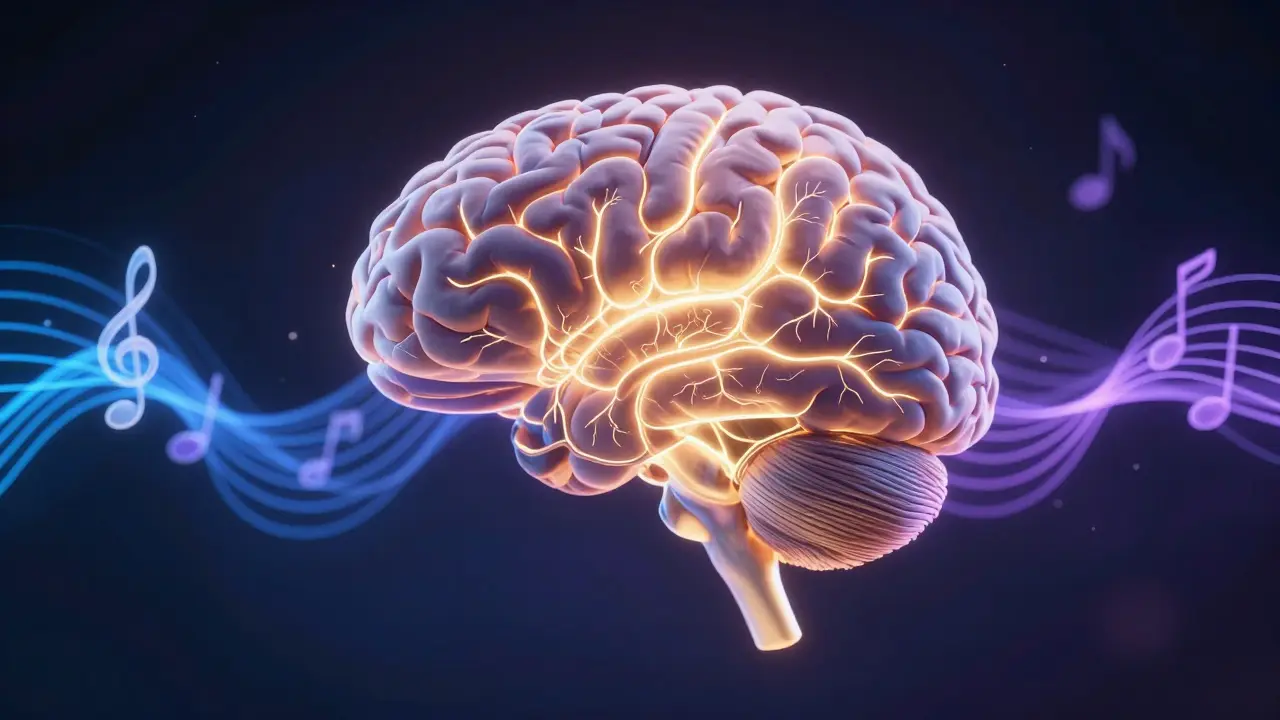
To understand the emotional weight of the piano, we first need to look at what happens in your head when those notes hit your ears. Unlike a guitar or a violin, which are monophonic (playing one note at a time per string), the piano is polyphonic. It allows for chords-multiple frequencies vibrating together. This complexity triggers a wider network of neural activity.
When you hear a consonant chord, like a major triad, your brain processes it as "stable" or "safe." This activates the prefrontal cortex, the area responsible for reasoning and calm decision-making. Conversely, dissonant intervals trigger the amygdala, the brain's alarm system. But here’s the twist: if the dissonance resolves back to consonance, the brain releases a surge of dopamine. That feeling of satisfaction? That’s your reward system working overtime.
| Brain Region | Function | Response to Piano |
|---|---|---|
| Amygdala | Emotional processing & fear | Activates during tension/dissonance; calms with resolution |
| Hippocampus | Memory formation | Strengthens emotional memory encoding |
| Prefrontal Cortex | Cognitive control | Engages during complex harmonic analysis |
| Reward System (Striatum) | Pleasure & motivation | Releases dopamine during anticipated resolutions |
This neurological dance explains why piano music feels "complete." It engages both the logical and emotional centers of the brain simultaneously. You aren't just hearing sounds; you're experiencing a structured emotional journey that your brain is wired to follow and enjoy.
Chemical Shifts: Dopamine, Cortisol, and Oxytocin
Beyond neural pathways, piano music triggers a cocktail of neurotransmitters and hormones that directly alter your mood and physical state. Let’s break down the three most significant players.
Dopamine: Known as the "feel-good" chemical, dopamine spikes when you anticipate a musical climax. Studies using fMRI scans have shown that listeners experience peak dopamine release not just when they hear a beautiful phrase, but right before it happens, if they expect it. This anticipation creates a sense of pleasure and engagement.
Cortisol: This is the primary stress hormone. Listening to slow-tempo piano pieces (around 60 beats per minute) has been shown to lower cortisol levels significantly. Why 60 BPM? Because it aligns closely with the resting heart rate of a healthy adult. Your body literally syncs up with the music, slowing down your heartbeat and reducing anxiety.
Oxytocin: Often called the "love hormone," oxytocin promotes bonding and trust. While usually associated with touch, listening to intimate, lyrical piano music can stimulate its release, making you feel more connected and less isolated. This is particularly powerful for people dealing with loneliness or depression.
If you’re feeling overwhelmed, putting on a playlist of slow, minor-key piano pieces isn’t just a hobby-it’s a physiological intervention. You are actively lowering your stress markers.
Why the Piano Specifically? Timbre and Range
You might wonder, "Doesn’t all music do this?" To an extent, yes. But the piano has distinct acoustic properties that make it uniquely effective for emotional regulation.
Timbre: The sound of a piano is percussive yet sustaining. When a key is struck, a hammer hits strings, creating an immediate attack followed by a gradual decay. This decay mimics the natural way human speech fades, making piano music feel conversational and intimate. It doesn’t overwhelm like a full orchestra or isolate like a single flute.
Range: A standard piano has 88 keys, covering seven octaves. This range spans from deep, rumbling bass notes that you feel in your chest to high, crystalline treble notes that seem to hang in the air. This wide spectrum allows composers to create vast emotional landscapes within a single piece. A low C can evoke sadness or gravity; a high E can evoke hope or fragility. Few other instruments offer this dynamic contrast without changing instruments.
Harmonic Clarity: Because each note on a piano is independent, harmonies are clear. In a band, instruments can muddy each other’s frequencies. On a piano, every voice in a chord is distinct. This clarity helps the brain process complex emotions without cognitive overload, allowing for deeper immersion.
Mood Regulation: Using Piano for Mental Health
Understanding the science is one thing; applying it is another. How can you use piano music to manage your daily emotional state? Here are practical strategies based on psychological research.
- The "Matching" Principle: If you’re angry or sad, don’t start with happy, upbeat music. Instead, choose piano pieces that match your current mood. This validates your feelings and prevents emotional resistance. Once you’ve sat with the emotion, gradually transition to more neutral or uplifting pieces.
- Focused Attention: Use piano music as an anchor for mindfulness. Pick a piece with a simple, repetitive motif (like Satie’s Gymnopédies). Focus solely on the decay of each note. This practice pulls your attention away from ruminative thoughts and grounds you in the present moment.
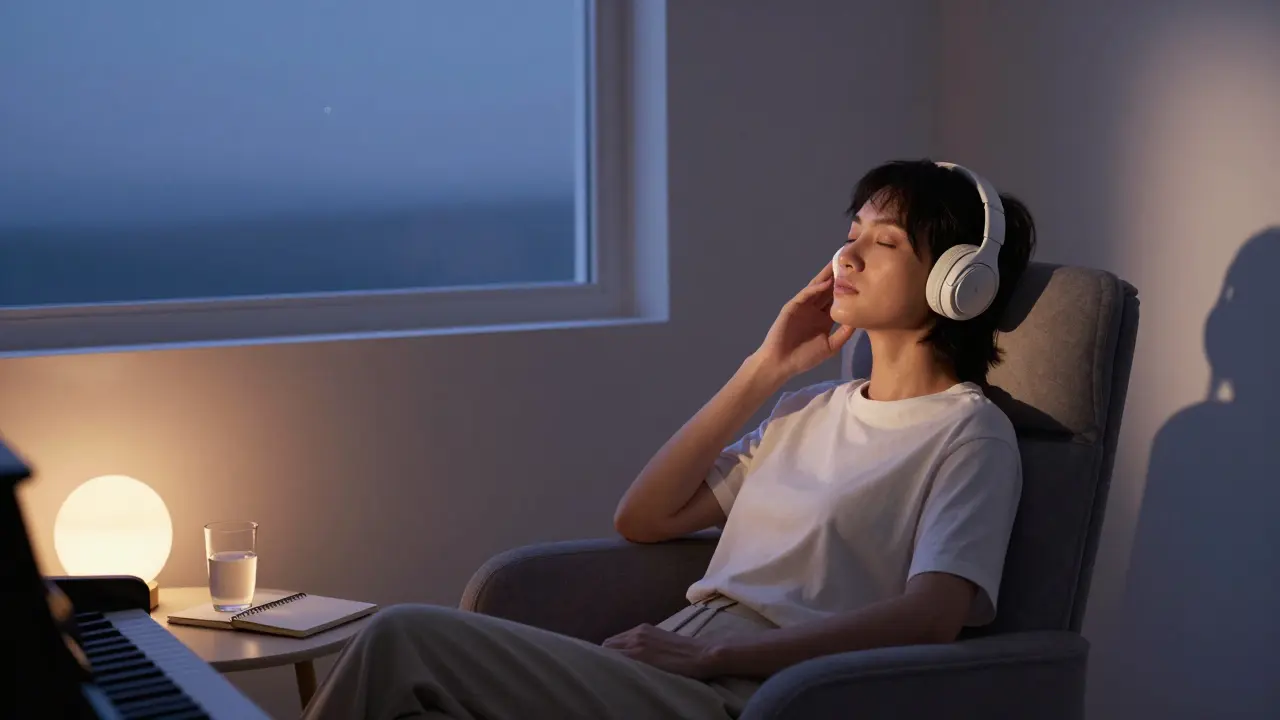
- Sleep Hygiene: Replace white noise with soft piano music before bed. The lack of lyrics prevents language processing in the brain, while the steady rhythm encourages sleep onset. Avoid pieces with sudden dynamic changes or fast tempos.
- Creative Flow: For tasks requiring concentration, instrumental piano music (especially Baroque or Classical era) provides enough stimulation to keep boredom at bay without distracting from the task. The structure of these periods mirrors logical thinking patterns.
These techniques turn passive listening into active self-care. You’re not just consuming content; you’re curating your internal environment.
Playing vs. Listening: Different Impacts
There’s a crucial distinction between hearing piano music and making it. Both are beneficial, but they engage different parts of the brain and yield different emotional outcomes.
Listening is primarily receptive. It allows for relaxation and emotional catharsis. It’s ideal for stress reduction and mood stabilization. You are letting the music wash over you, giving your conscious mind a break.
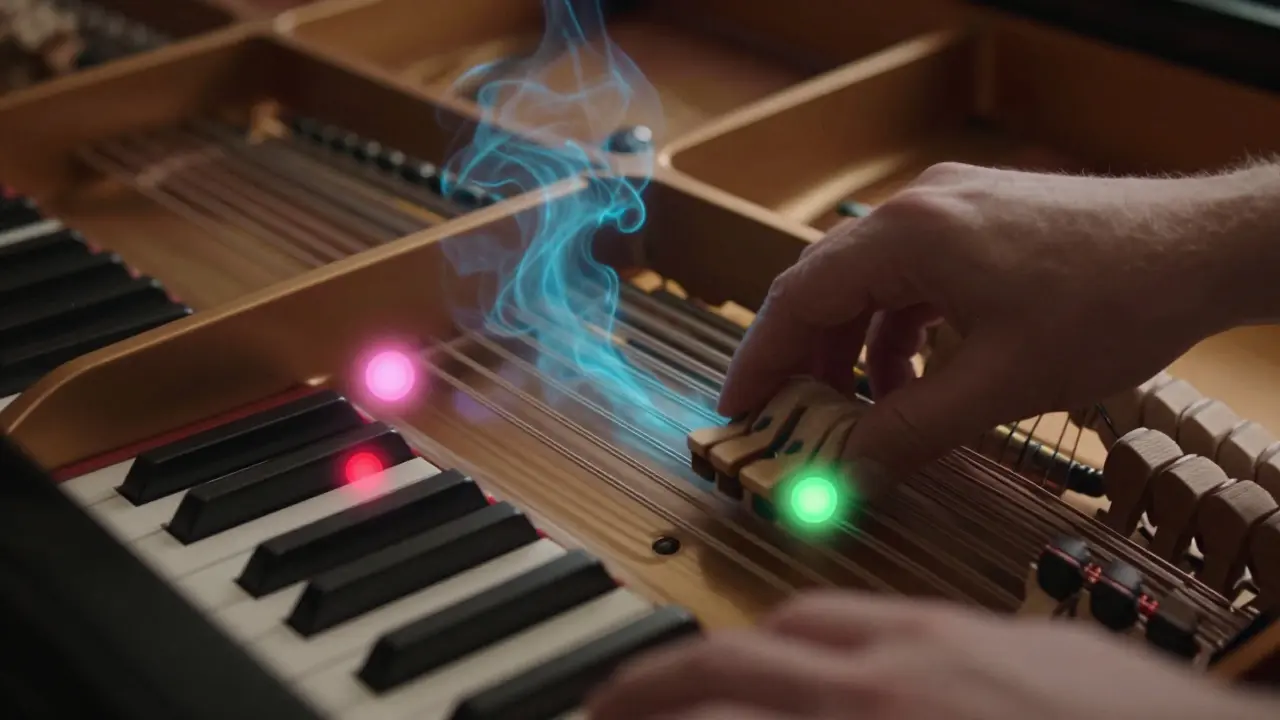
Playing is active and integrative. It requires coordination between hands, eyes, and feet, engaging the motor cortex, cerebellum, and auditory processing areas simultaneously. Playing piano builds neuroplasticity-the brain’s ability to reorganize itself by forming new neural connections. This leads to improved cognitive reserve, which may delay age-related cognitive decline.
Emotionally, playing gives you agency. You are creating the emotional expression rather than receiving it. This can be empowering, especially for people who struggle to articulate their feelings verbally. The piano becomes a voice for unspoken emotions.
| Aspect | Listening | Playing |
|---|---|---|
| Primary Benefit | Stress reduction, relaxation | Cognitive enhancement, self-expression |
| Brain Activity | Auditory & emotional centers | Motor, auditory, & executive functions |
| Time Commitment | Low (passive) | High (active practice required) |
| Emotional Outcome | Catharsis, comfort | Empowerment, flow state |
If you’re looking for quick relief, listen. If you want long-term mental resilience and creative fulfillment, learn to play. Ideally, integrate both into your routine.
Genre Matters: Classical, Jazz, and Modern
Not all piano music affects the mind equally. The genre, tempo, and complexity play huge roles in the emotional impact.
Classical Piano: Pieces by Bach, Mozart, or Debussy often follow strict structural rules. This predictability can be soothing for anxious minds. The mathematical precision of Bach’s fugues, for example, can induce a meditative state. Debussy’s impressionistic works, with their fluid harmonies, are excellent for evoking imagery and calming the nervous system.
Jazz Piano: Artists like Bill Evans or Keith Jarrett introduce improvisation and syncopation. This unpredictability keeps the brain alert and engaged. Jazz is great for stimulating creativity and breaking out of rigid thought patterns. However, complex jazz might increase anxiety in some listeners due to its harmonic density.
Modern/Minimalist Piano: Composers like Ludovico Einaudi or Max Richter use repetition and gradual evolution. This style is highly effective for focus and study. The minimalism reduces cognitive load, allowing the listener to concentrate on tasks while still being emotionally supported by the music.
Your choice of genre should depend on your goal. Need to de-stress? Go classical or minimalist. Need to spark creativity? Try jazz. Need to focus? Stick to minimalism.
Pitfalls: When Piano Music Backfires
While generally beneficial, piano music isn’t a universal panacea. There are scenarios where it might worsen your mental state.
Triggering Memories: Music is tightly linked to episodic memory. A specific piano piece might remind you of a past trauma or loss. If you find yourself becoming more distressed after listening, stop. Don’t force the "positive" aspect. Acknowledge the memory and switch to neutral sounds.
Overstimulation: Fast, virtuosic pieces (like Liszt’s transcriptions) can be exciting but also exhausting. If you’re already mentally fatigued, high-energy piano music might add to your cognitive burden rather than relieve it. Save these for when you need energy, not rest.
Lyrical Interference: While pure piano has no lyrics, many modern piano tracks feature vocals. If you’re trying to read or write, lyrics compete for your language-processing centers. Stick to instrumental versions for productivity tasks.
Be mindful of your context. The same piece that comforts you in the evening might frustrate you during a deadline.
Integrating Piano into Daily Life
You don’t need to be a musician to benefit from the emotional power of piano music. Here’s how to weave it into your everyday routine effectively.
- Morning Routine: Start your day with 10 minutes of gentle piano music. This sets a calm tone and reduces morning cortisol spikes.
- Work Breaks: Instead of scrolling social media, take a 5-minute "piano break." Close your eyes and listen to a short piece. Reset your attention span.
- Evening Wind-Down: Create a playlist of slow, minor-key pieces. Play them softly as you prepare for bed. Signal to your brain that the day is over.
- Physical Activity: Pair moderate exercise with upbeat piano jazz or classical sonatas. The rhythm can enhance endurance and enjoyment.
Consistency is key. Like any habit, the benefits compound over time. Your brain will begin to associate piano music with safety and relaxation, creating a conditioned response that works faster each time.
Is piano music better for the brain than other instruments?
Piano music is uniquely effective due to its polyphonic nature, wide range, and harmonic clarity. While other instruments also provide benefits, the piano’s ability to play melody and harmony simultaneously engages broader neural networks, making it particularly potent for emotional regulation and cognitive stimulation.
How much piano music should I listen to daily?
There’s no strict limit, but 15-30 minutes of intentional listening can yield significant stress-reduction benefits. For background focus, longer sessions are fine as long as the volume is low and the music is non-distracting. Listen to your body-if you feel refreshed, continue; if you feel fatigued, take a break.
Can piano music help with insomnia?
Yes. Slow-tempo piano music (around 60 BPM) can lower heart rate and cortisol levels, promoting sleep onset. Choose pieces without sudden dynamic changes or lyrics. Many studies show that listening to calming piano music before bed improves sleep quality and duration.
Does playing piano improve memory?
Absolutely. Playing piano requires coordinating multiple senses and motor skills, which strengthens neural connections in the hippocampus and prefrontal cortex. Regular practice has been linked to improved verbal memory, spatial-temporal reasoning, and overall cognitive reserve, potentially delaying dementia symptoms.
What type of piano music is best for studying?
Instrumental, minimalist, or Baroque piano music is ideal for studying. These genres provide structure without distraction. Avoid pieces with strong emotional narratives or complex improvisations, as they may divert your attention. Composers like Bach, Satie, or modern artists like Ludovico Einaudi are excellent choices.