

Picture this: your kid has been strumming an air guitar in the living room for months. They’re obsessed with their favorite band, and you’ve decided it’s time to get them a real instrument. But walk into any music store, and you’re immediately hit with a wall of options. Full-size Stratocasters, tiny 3/4 models, pink ones, black ones, ones that look like bananas. It’s overwhelming.
You don’t want to buy something they’ll outgrow in six months. You also don’t want to spend $500 on a toy that sounds terrible. Getting the right electric guitar for a child isn’t just about picking a cool color. It’s about finding an instrument that fits their body, inspires them to practice, and doesn’t break the bank. If you get it wrong, they might quit before they even learn their first chord. If you get it right, you could be nurturing a lifelong passion.
The Critical Role of Scale Length and Body Size
The biggest mistake parents make is buying a full-size guitar because "they’ll grow into it." That’s like buying adult shoes for a toddler and hoping their feet stretch. It won’t work, and it will hurt. For a child, comfort is everything. If the neck is too long or the body is too heavy, their fingers will cramp, their posture will suffer, and playing will feel like a chore rather than fun.
Scale length refers to the distance between the nut (where the strings meet the headstock) and the bridge. Standard electric guitars usually have a 25.5-inch scale length. For kids, you need shorter scales. Here is how to match size to age:
- Ages 5-7: Look for a 3/4 size guitar. These typically have a scale length of around 22 inches. The body is smaller, lighter, and easier to hold while sitting on a couch or standing up.
- Ages 8-10: This is the transition zone. Many kids can handle a 3/4 size comfortably, but if they are tall for their age, a small-body full-scale guitar (like a Mini Strat) might work better. These keep the shorter neck but have a slightly larger body.
- Ages 11-13: Most pre-teens can handle a full-size guitar, especially if they are over 5 feet tall. However, weight matters here. A heavy Les Paul-style guitar might drag down a younger teen’s shoulder strap.
Always let your child try the guitar before buying. Watch their hands. Can they reach the frets without stretching awkwardly? Is the body hitting their ribs when they sit down? If they look uncomfortable, put it back.
Solid Body vs. Hollow Body: What’s Best for Beginners?
When we talk about electric guitars, we usually mean solid-body electric guitars. These are made from a single piece of wood (or layered pieces) and are the standard for rock, pop, and metal. They are durable, less prone to feedback at high volumes, and generally more forgiving for beginners.
Hollow-body or semi-hollow guitars sound warmer and jazzier, but they are heavier, more expensive, and much more fragile. Drop one, and you might crack the top. For a kid who is still learning coordination, a solid-body guitar is the clear winner. It can take a bump or two and keep playing.
Within the solid-body category, you’ll see two main shapes dominating the market:
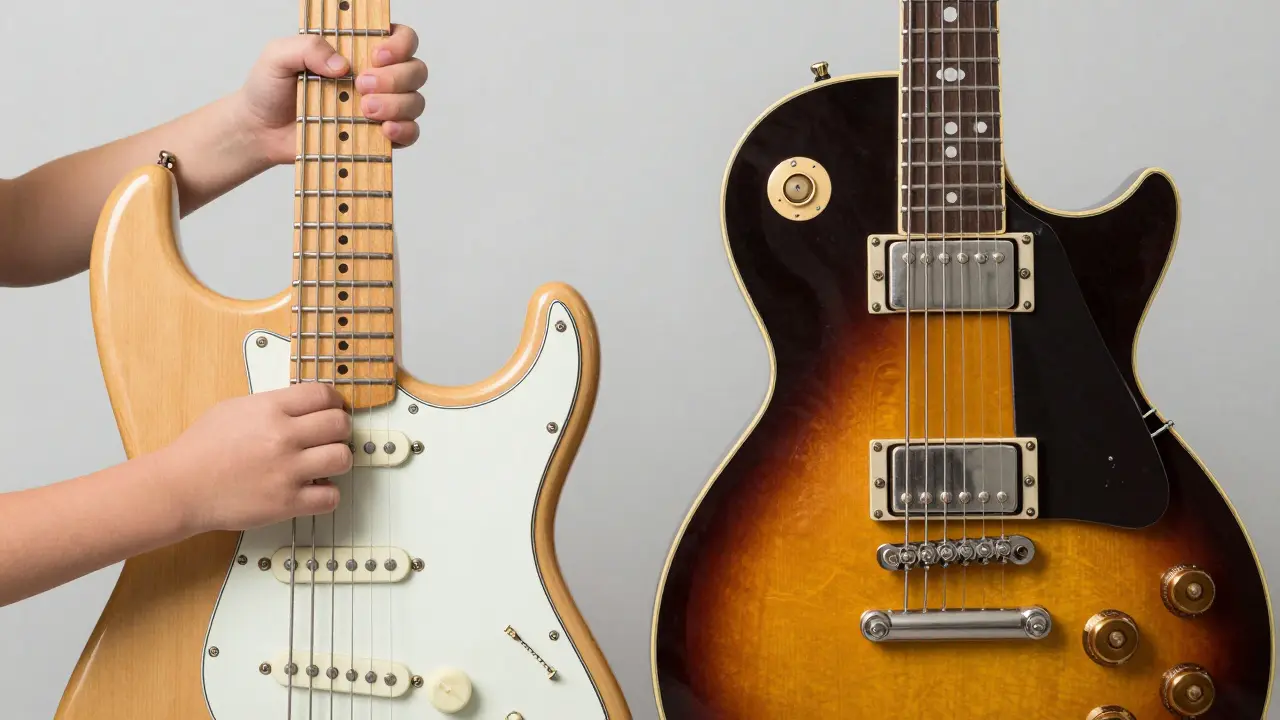
- Stratocaster Style: Contoured bodies that fit against the chest. Three pickups offer versatile tones. Great for blues, pop, and classic rock.
- Les Paul Style: Thicker, heavier bodies with a simpler control layout. Often associated with rock and hard rock. Good for sustained notes, but heavier to carry.
For most kids, the Stratocaster style is more comfortable due to its ergonomic curves. It feels natural to hold, which encourages longer practice sessions.
Don’t Forget the Amplifier
An electric guitar is silent without an amplifier. And here’s a trap many parents fall into: buying a cheap guitar but skipping the amp, or vice versa. You need both. But you don’t need a massive stack.
For home practice, a small practice amplifier with 5 to 10 watts is perfect. Why so small? Because volume isn’t the point. Tone and convenience are. A 10-watt tube amp can actually be louder and clearer at low volumes than a 50-watt digital amp. However, for kids, I recommend a modeling amp or a digital practice amp. Why?
- Headphone Jack: Essential. You don’t want to annoy the neighbors (or your spouse). Let them play quietly at night.
- Built-in Effects: Kids love distortion, delay, and reverb. A good practice amp lets them toggle these effects with a button, making practice feel like performing.
- Durability: Digital amps are less sensitive to being bumped around than vintage-style tube amps.
Brands like Fender, Yamaha, and Boss make excellent entry-level amps. Avoid no-name brands from online marketplaces; they often have poor tone and break easily.
Essential Accessories: The Hidden Costs
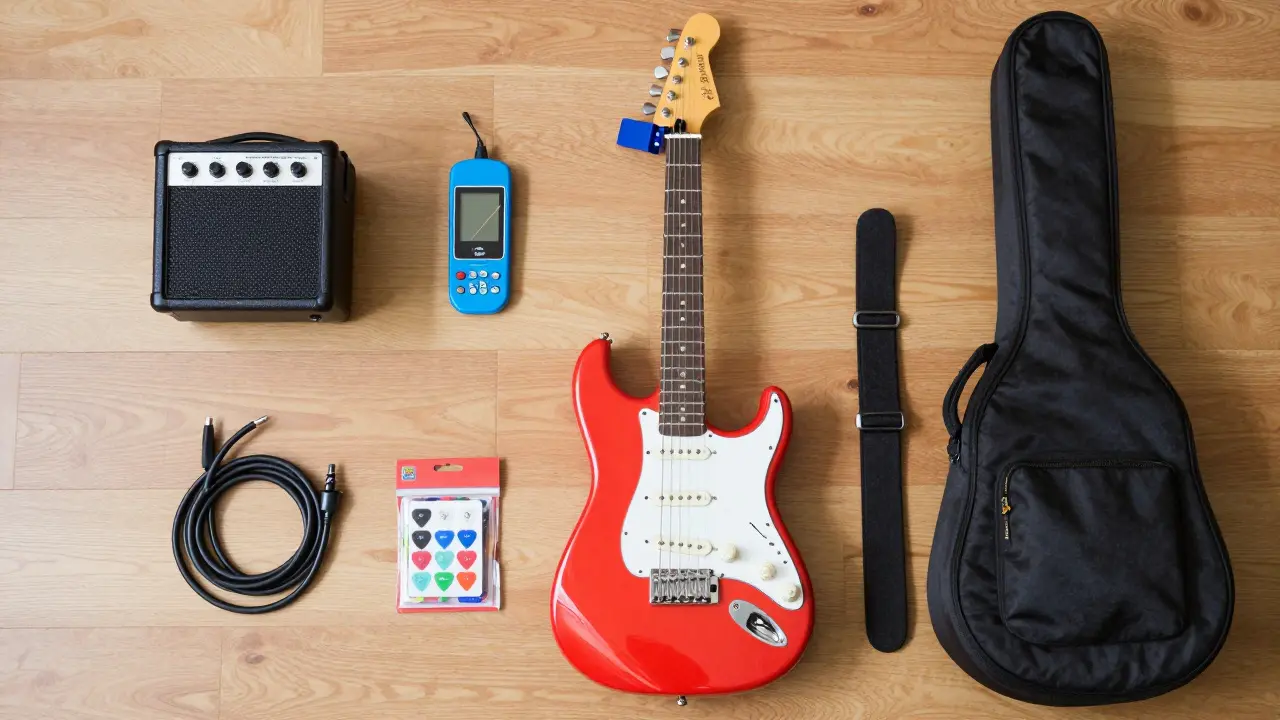
The guitar and amp are only half the battle. When budgeting, set aside an extra $50-$100 for accessories. Without these, the experience will be frustrating.
| Accessory | Why It’s Needed | Estimated Cost |
|---|---|---|
| Guitar Cable | Connects guitar to amp. Cheap cables hiss and fail. | $15 - $25 |
| Picks (Assorted) | Kids lose picks constantly. Buy a pack of thin, medium, and thick. | $5 - $10 |
| Tuner | A clip-on tuner is easy for beginners. Out-of-tune guitars sound bad and discourage players. | $15 - $30 |
| Strap | Allows standing up. Get one with wide padding for comfort. | $10 - $20 |
| Gig Bag | Protects the guitar during transport. Hard cases are overkill for beginners. | $20 - $40 |
| Extra Strings | Strings break. Have a spare set ready. | $10 - $15 |
One pro tip: buy a clip-on tuner, not a pedal tuner. Pedal tuners require batteries and can be lost under the amp. A clip-on tuner attaches directly to the headstock and is always visible.
Budgeting: How Much Should You Spend?
This is the question everyone asks. The short answer: aim for $200-$400 for the guitar alone. The sweet spot for a complete starter pack (guitar, amp, bag, accessories) is around $300-$600.
Why not cheaper? Guitars under $150 often have poor build quality. High action (strings too far from the neck) makes pressing down painful. Intonation issues mean the guitar goes out of tune as you move up the neck. These problems teach bad habits and kill motivation.
Why not more expensive? Unless your child is already showing serious dedication, there’s no need to spend $800+ on a professional-grade instrument. They will likely upgrade within a year or two anyway. Brands like Squier (Fender’s budget line), Epiphone (Gibson’s budget line), and Yamaha offer incredible value in the $200-$350 range. These guitars are built in the same factories as their pricier siblings, just with simpler finishes and electronics.
If you’re tight on cash, consider used gear. Local music stores often trade in student guitars. Check the neck for warping and the electronics for scratches. A well-maintained used Squier can sound just as good as a new one.
Making the Decision: A Quick Checklist
Before you hand over your credit card, run through this mental checklist:
- Does it fit? Can they reach the first fret comfortably? Does the body hang naturally?
- Is it lightweight? Heavy guitars cause fatigue. Lighter woods like alder or basswood are great for kids.
- Does it sound good plugged in? Test it with the amp. Listen for buzzing, dead spots, or weak output.
- Is the setup decent? Ask the shop to do a "setup" if they haven’t. This adjusts the string height and intonation. It costs $50-$80 but makes a huge difference.
- Do they like the look? This seems trivial, but aesthetics matter. If they love how it looks, they’ll pick it up more often.
Remember, the goal isn’t to buy the best guitar. It’s to buy the guitar that gets picked up. A moderately priced, well-fitting instrument that looks cool to them is infinitely better than a premium model gathering dust in a case.
Encouraging Long-Term Engagement
Buying the gear is step one. Keeping them interested is step two. Don’t just hand them the guitar and say "good luck." Show interest. Ask what songs they want to learn. Find simple tutorials on YouTube together. Celebrate small wins, like learning their first power chord or switching between two chords smoothly.
Consider getting them a few lessons. Even five or ten lessons can establish good technique and prevent bad habits. Online platforms like Yousician or Fender Play can also be engaging for tech-savvy kids, offering gamified learning experiences.
Most importantly, be patient. Learning an instrument is hard. There will be days when their fingers hurt and they want to quit. Support them through those moments. Remind them why they started. With the right tool in their hands, the journey can be incredibly rewarding-for both of you.
What is the best brand of electric guitar for a beginner child?
Squier (by Fender) and Epiphone (by Gibson) are widely considered the best brands for beginners. They offer reliable quality, good resale value, and models specifically designed for smaller players, such as the Squier Bullet or Mini Strat series. Yamaha is also an excellent choice for durability and consistency.
Can a 7-year-old play a full-size electric guitar?
It depends on the child's height and arm length. Generally, a 7-year-old should use a 3/4 size guitar. If they are unusually tall, they might manage a full-size guitar, but it will likely be uncomfortable. Comfort is crucial for learning, so err on the side of a smaller instrument.
Do I need to buy a guitar stand for my child?
Yes. Keeping the guitar in its case discourages casual playing. A sturdy floor stand or wall hanger keeps the instrument accessible and visible, reminding your child to pick it up and play. Just ensure the stand is stable and placed where it won't be knocked over.
How often should guitar strings be changed for a beginner?
Beginners often have sweaty fingers or inconsistent tuning, which can dirty strings faster. Aim to change strings every 1-3 months, or whenever they sound dull and lose brightness. Fresh strings are easier to press down and sound better, which helps maintain motivation.
Is it better to buy a starter pack or individual components?
Starter packs are convenient and cost-effective for the very first purchase, as they include the guitar, amp, cable, and picks. However, the amps in packs are often lower quality. If your budget allows, buying a reputable guitar separately and pairing it with a dedicated practice amp yields a better long-term experience.