
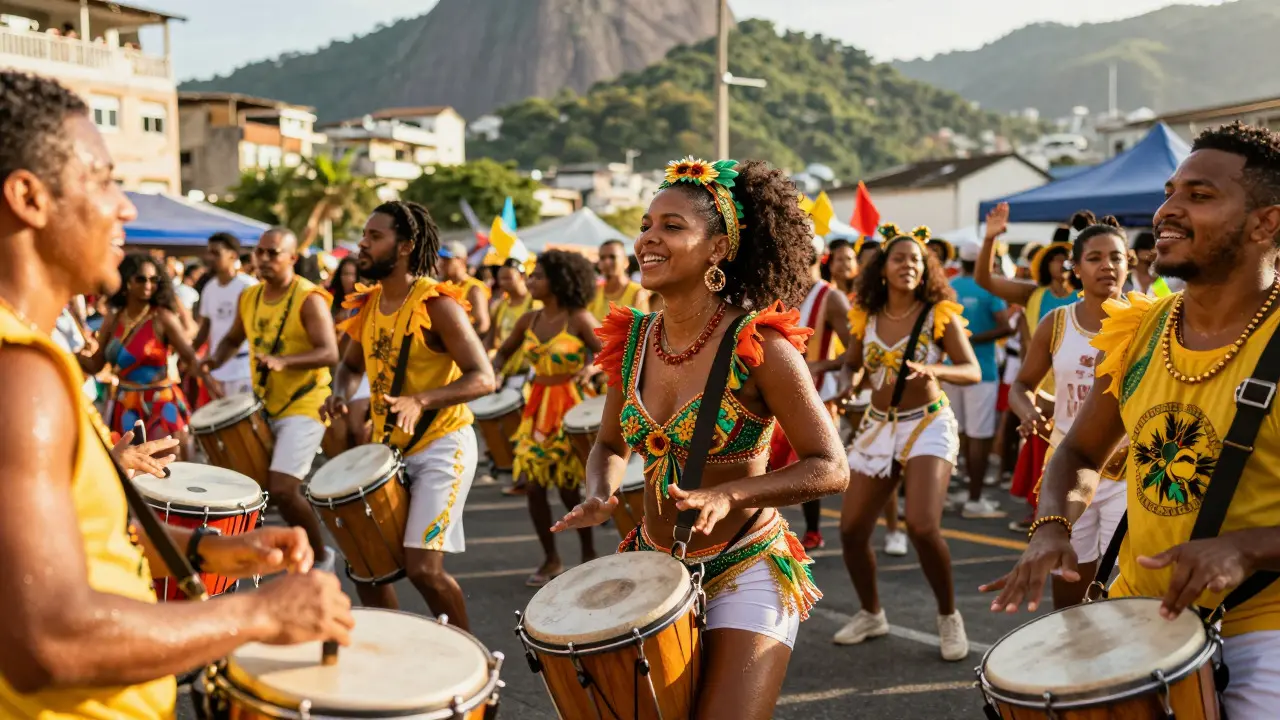
Have you ever wondered why a heavy metal riff feels like rebellion in one country but sounds like traditional storytelling in another? Music is rarely just noise. It is a mirror. When we listen to the raw energy of Brazilian Samba, we aren't just hearing drums; we are hearing the history of Afro-Brazilian resistance and community joy. Similarly, when we hear the haunting melodies of Scottish Folk, we are touching centuries of landscape and loss.
Music genres are not arbitrary boxes created by record labels for marketing purposes. They are complex systems of communication that carry the DNA of a culture. To understand a genre is to understand the people who made it, the land they live on, and the struggles they have faced. This article breaks down how specific musical styles serve as keys to unlocking deep cultural understanding, moving beyond surface-level appreciation to genuine insight.
The Anatomy of Cultural Sound
Every genre has a "signature" sound, but that signature is built from materials available in its environment and shaped by its social history. Think about Jazz. Born in New Orleans at the turn of the 20th century, Jazz did not emerge in a vacuum. It was a collision of West African rhythmic traditions, European harmonic structures, and the blues sensibility of the American South. The improvisation central to Jazz reflects a cultural value placed on individual expression within a collective framework-a direct reflection of the democratic ideals and racial complexities of the United States during that era.
Consider the instruments used. In many Indigenous Australian cultures, the Didgeridoo is not just a wind instrument; it is a connection to the Dreamtime, the creation period. Its drone mimics the natural sounds of the outback. You cannot separate the sound from the spiritual belief system that produced it. When you listen to a Didgeridoo performance, you are listening to a philosophy of continuity and land stewardship.
- Rhythm patterns: Often reflect work songs, dance traditions, or religious ceremonies.
- Instrumentation: Determined by local resources (wood, skin, metal) and trade routes.
- Vocal techniques: Can indicate language tonality, emotional expression norms, and gender roles.
- Harmonic structure: May align with mathematical concepts or spiritual beliefs prevalent in the society.
African Rhythms: Community and Identity
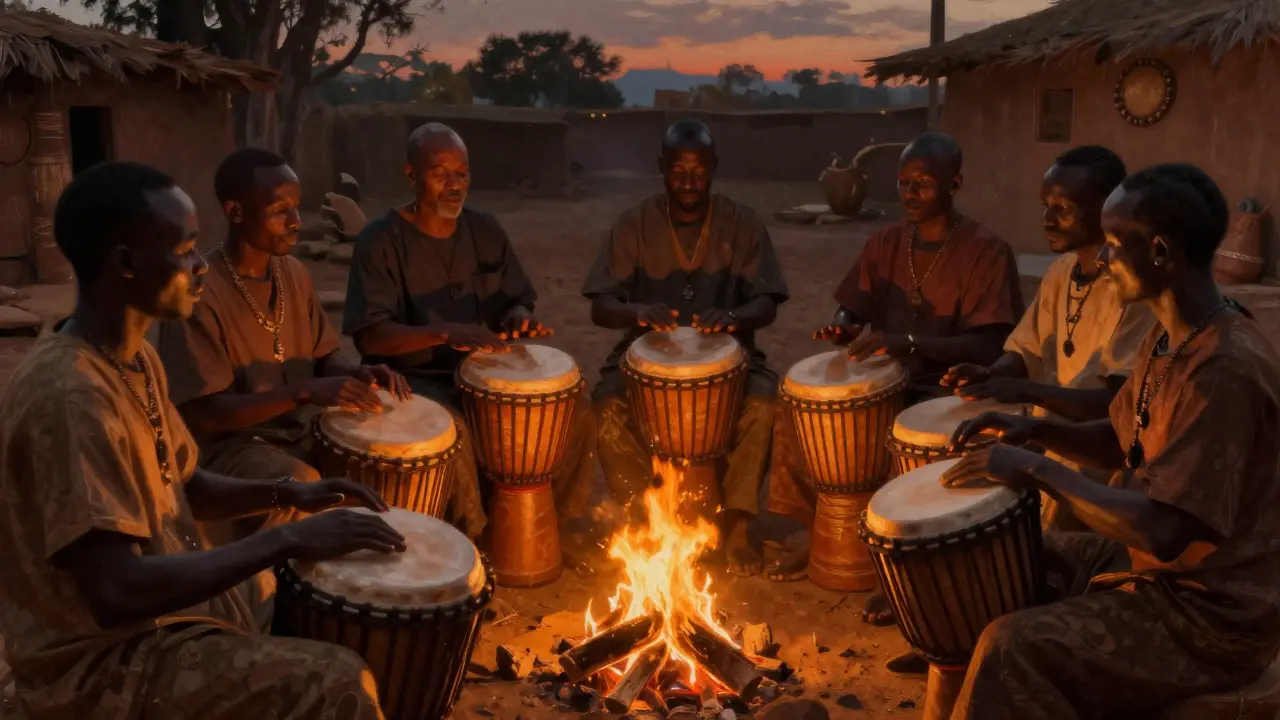
African music is incredibly diverse, spanning thousands of distinct ethnic groups, yet it shares core principles that reveal much about the continent's social fabric. One of the most defining characteristics is polyrhythm-the simultaneous use of two or more conflicting rhythms. This is not chaos; it is a sophisticated conversation.
In many West African societies, such as among the Yoruba people of Nigeria, drumming is a form of language. The Talking Drum can mimic the tones and prosody of the Yoruba language, allowing messages to be sent over long distances. This reveals a culture where oral tradition is paramount and where technology (the drum) serves to strengthen communal bonds rather than isolate individuals. The complexity of the rhythm requires tight coordination among players, mirroring the interdependence required in village life.
| Genre/Tradition | Key Musical Element | Cultural Meaning |
|---|---|---|
| West African Drumming | Polyrhythm & Talking Drums | Communal interdependence; oral communication; |
| Irish Folk | Jigs & Reels | Celebration of resilience; community gathering; |
| K-Pop | Synchronized Choreography | Dedication, discipline, and collective harmony; |
| Andean Flute | Pentatonic Scales | Connection to nature and ancestral spirits; |
Asian Traditions: Harmony and Hierarchy
Music in East Asia often reflects Confucian values of hierarchy, respect, and harmony. Take Japanese Gagaku, the imperial court music that dates back over a thousand years. It is slow, stately, and meticulously structured. There is little room for improvisation. Each instrument has a precise role, and deviations are discouraged. This mirrors the societal emphasis on order, duty, and maintaining social stability.
Contrast this with modern K-Pop. While seemingly commercial, K-Pop also reveals deep cultural codes. The intense training regimes idols undergo reflect a societal respect for hard work and meritocracy. The synchronized choreography emphasizes group cohesion over individual star power, a nod to collectivist values. Yet, the global appeal shows how these traditional values can be packaged for a modern, digital audience without losing their core identity.
In India, Hindustani Classical Music relies on ragas-melodic frameworks associated with specific times of day, seasons, or emotions. Performing a raga at the wrong time is considered culturally inappropriate. This demonstrates a worldview where music is not just entertainment but a spiritual practice aligned with cosmic cycles and natural laws.
Latin America: Fusion and Resistance
Latin American music is a masterclass in cultural fusion. Centuries of colonization, indigenous heritage, and African influence have blended into genres that tell stories of survival and celebration. Tango from Argentina and Uruguay is a prime example. Emerging in the working-class neighborhoods of Buenos Aires in the late 19th century, Tango was originally seen as scandalous. It expressed the pain of immigration, poverty, and longing. The close embrace and dramatic movements reflect a culture that values intense emotional expression and physical connection.
Mexican Mariachi music, with its trumpets and violins, combines Spanish instrumentation with indigenous Mexican lyrics and themes. It celebrates national identity, love, death, and heroism. The bright colors of the charro suits and the powerful vocals project pride and resilience. Listening to Mariachi is an entry point into understanding the Mexican concept of "mestizaje"-the mixing of races and cultures that defines the nation.
The Role of Language in Music
You cannot fully understand a genre without considering the language it is sung in. Language shapes melody. Tonal languages like Mandarin Chinese require specific pitch contours to distinguish meaning. This influences the melodic lines in traditional Chinese opera and folk songs, which must navigate these tonal constraints while remaining musically pleasing.
In contrast, non-tonal languages like English allow for greater melodic freedom, which contributed to the development of complex harmonies in Western classical music and the blues scales in African American music. The rhythm of speech also matters. The fast-paced, consonant-heavy nature of German might contribute to the driving, percussive quality of some electronic music scenes, while the flowing vowels of Italian have long been associated with operatic bel canto singing.

Modern Globalization: Hybrid Genres
Today, borders are blurring. The internet allows a teenager in Tokyo to discover Afrobeats from Lagos, leading to new hybrid genres. Reggaeton, originating in Puerto Rico, blends Jamaican Dancehall, Latin American rhythms, and Hip Hop. It has become a global phenomenon, symbolizing a shared youth culture that transcends national boundaries. However, even in this globalization, local flavors persist. Artists adapt the beat to fit their own linguistic and cultural contexts.
This hybridization challenges us to look beyond static definitions of culture. It shows that culture is dynamic, constantly evolving through exchange. Understanding these modern genres requires recognizing both the global influences and the local roots. For instance, Bhangra music, which originated as Punjabi folk music, has evolved into a high-energy dance style worldwide, yet it remains deeply tied to Sikh harvest festivals and community celebrations.
How to Listen with Cultural Awareness
To truly use music as a key to understanding culture, you need to change how you listen. Stop treating songs as background noise. Start asking questions.
- Research the origins: Where did this genre come from? Who were the first artists?
- Understand the instruments: Why are these specific instruments used? What do they symbolize?
- Learn the lyrics: Even if you don't speak the language, look up translations. What are the common themes?
- Contextualize historically: Was this music born during a war, a revolution, or a period of peace?
- Observe the performance: How do people move? Is it solo or group? Is there audience participation?
By doing this, you transform passive listening into active learning. You begin to see the connections between a song's structure and the society that created it. This approach fosters empathy and reduces stereotypes. Instead of seeing "foreign" music as exotic or strange, you start to recognize universal human experiences expressed through unique cultural lenses.
Preservation vs. Evolution
A critical tension exists in the world of music genres: preservation versus evolution. Some argue that traditional forms must be kept pure to maintain cultural integrity. Others believe that adaptation is necessary for survival. Both views have merit. Flamenco in Spain, for example, has strict rules about palmas (handclaps) and cante (song), yet contemporary artists continue to innovate within those boundaries. This balance ensures that the culture remains alive and relevant to younger generations while honoring its ancestors.
Understanding this tension helps us appreciate why certain communities might resist outside influences or why others eagerly embrace them. It is not just about taste; it is about identity and survival in a changing world.
Why is rhythm important in understanding culture?
Rhythm often reflects the daily activities and social structures of a culture. Work songs have rhythms that match labor tasks, while ceremonial music may have rhythms designed to induce trance states or mark ritual transitions. Complex polyrhythms suggest a culture that values communal coordination and intricate social interactions.
Can music genres change over time?
Yes, music genres are fluid. They evolve as societies change, technologies advance, and cultures interact. For example, Blues evolved into Rock and Roll, which then influenced Punk and Indie rock. These changes reflect shifts in social attitudes, technological capabilities, and cross-cultural exchanges.
How does language affect musical composition?
Language affects melody, rhythm, and phrasing. Tonal languages constrain melodic choices to preserve word meanings. The syllable stress patterns of a language influence the rhythmic flow of songs. Additionally, the emotional connotations of words in a specific language shape the lyrical content and thematic focus of the music.
What is the significance of instruments in cultural music?
Instruments are often made from locally available materials and carry symbolic meanings. For instance, the sitar in Indian music is associated with spiritual devotion, while the banjo in Appalachian music connects to African American folk traditions. Instruments can also signify social status, gender roles, or religious affiliation within a community.
Is it possible to appreciate music without knowing its cultural context?
You can enjoy the aesthetic qualities of music without knowing its context, but your understanding will be limited. Knowing the cultural background enriches the experience by revealing deeper layers of meaning, historical significance, and emotional resonance. It transforms music from mere sound into a narrative about human experience.