
Ever listened to a song and thought, ‘What even is this?’ That’s not confusion-that’s the sound of a subgenre pulling you into something new. Subgenres aren’t just labels for music nerds. They’re the lifeblood of innovation in music. Without them, we’d still be stuck with ‘rock’ and ‘pop’ as the only options. But here’s the truth: subgenres are how music stays alive.
What Exactly Is a Subgenre?
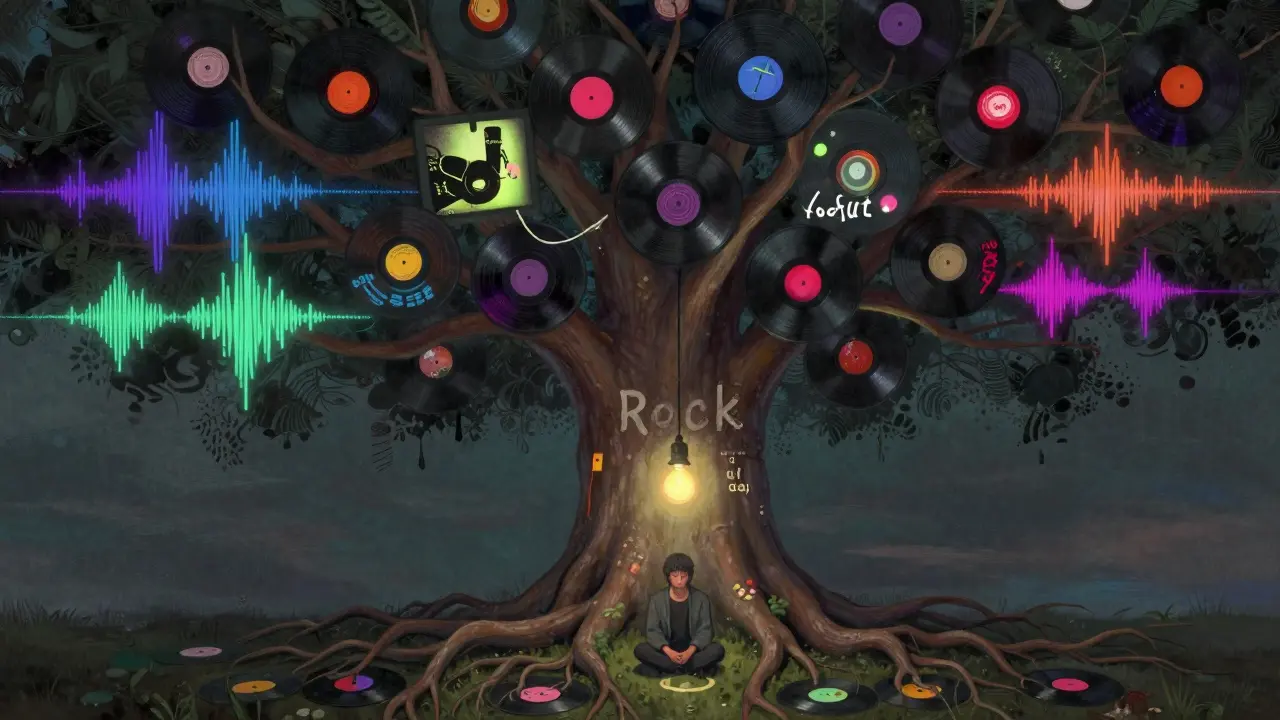
A subgenre is a smaller, more specific branch of a larger music genre. Think of it like a tree: rock is the trunk. From it grow subgenres like grunge, post-punk, math rock, and garage rock. Each one has its own rules, its own sound, its own culture. They’re not just ‘rock with a twist’-they’re different animals entirely.
Take metal. On the surface, it’s heavy guitars and loud drums. But dive deeper, and you find black metal with its shrieking vocals and lo-fi production, doom metal that drags you through slow, crushing riffs, and symphonic metal that sounds like a Wagner opera with electric guitars. These aren’t just variations-they’re full-blown worlds.
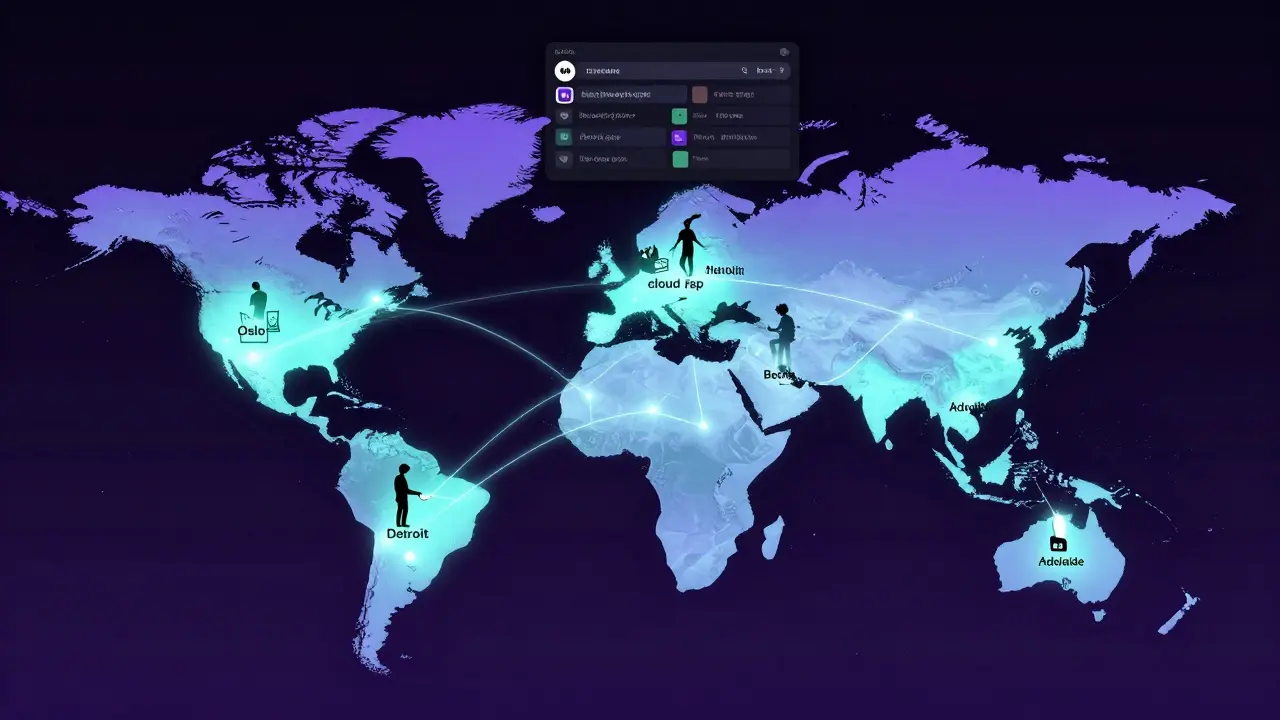
Subgenres emerge when musicians push boundaries. Someone in Oslo starts blending folk melodies with raw, distorted guitars. A producer in Detroit layers trap beats with jazz samples. A teenager in Buenos Aires records a bedroom album using only a phone and a MIDI keyboard. These experiments don’t stay quiet. They spread. Then, someone writes about them. A Reddit thread goes viral. A YouTube channel breaks it down. Suddenly, it’s not just a weird track-it’s a subgenre.
Why Subgenres Drive Discovery
Streaming platforms make it easy to find ‘pop’ or ‘hip-hop.’ But they’re terrible at helping you find the hidden corners. That’s where subgenres come in. They’re the compass for people who want more than the top 40.
Imagine you’re into lo-fi hip-hop. You like the chill beats, the vinyl crackle, the late-night vibe. But you’ve heard all the popular playlists. What now? Enter chillhop-a subgenre with slower tempos and more ambient textures. Then there’s future funk, which mixes 80s Japanese city pop with deep house. Or dronehop, where beats melt into long, humming synths. These aren’t just tags. They’re gateways.
A 2024 study from the University of Melbourne’s Music Lab found that listeners who explored subgenres were 3.7 times more likely to discover new favorite artists than those who stuck to broad genres. Why? Because subgenres narrow the search. Instead of sifting through 50,000 pop songs, you’re looking at 500 that share your exact taste. It’s like going from a giant supermarket to a specialty shop where everything is curated for you.
The Rise of Micro-Subgenres
Five years ago, you might have heard of vaporwave or hyperpop. Today? You’ve got seapunk, witch house, emo rap, bedroom pop, post-dubstep, and cloud rap. These aren’t just made-up terms. They’re real scenes with real fans, real artists, and real communities.
Take emo rap. It started as a blend of punk-infused lyrics with trap beats. Artists like Lil Peep and Juice WRLD didn’t set out to create a genre. They just poured their pain into music that sounded nothing like traditional hip-hop. Fans connected. Others followed. Now, there are producers who specialize in 808s with distorted vocal chops, lyrics about anxiety and loneliness, and album art that looks like a MySpace layout from 2007. It’s a whole aesthetic. A whole identity.
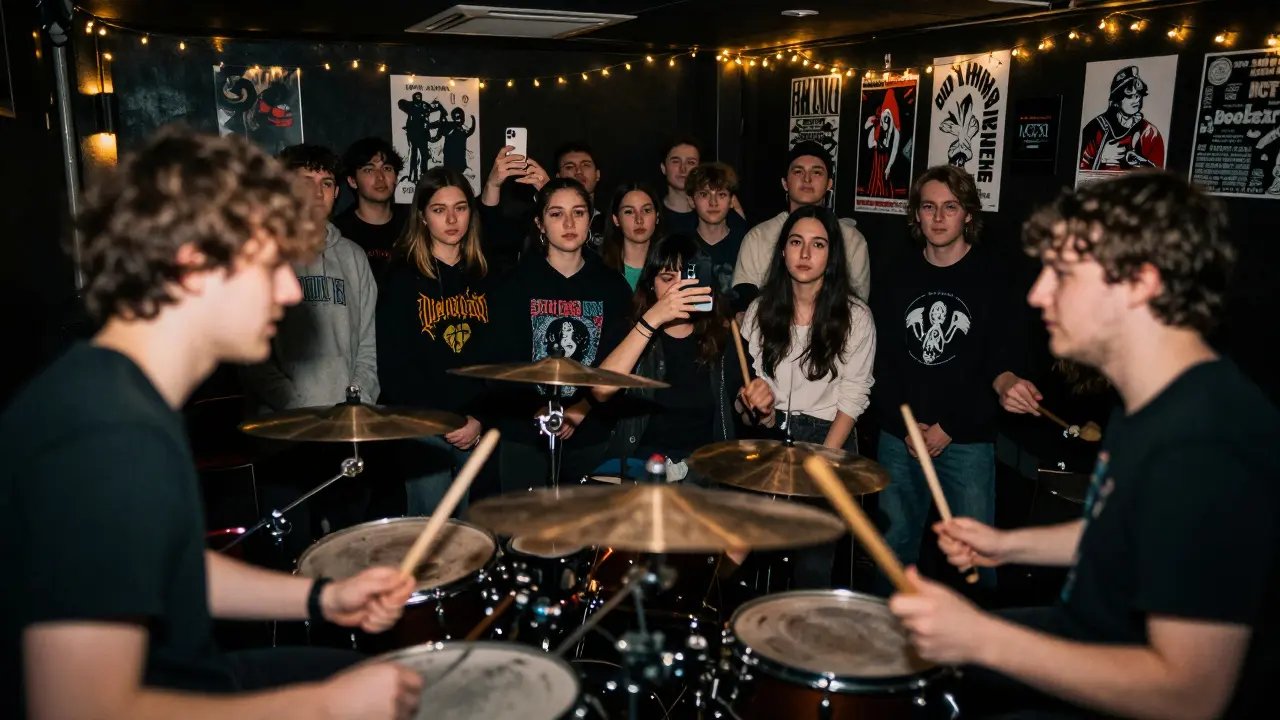
And it’s not just digital. In Melbourne, you’ll find basement shows where bands play mathcore-a subgenre of hardcore punk with irregular time signatures and screamed vocals. The crowd doesn’t care about charts. They care about the complexity. The precision. The chaos. That’s the power of subgenres: they create spaces where music isn’t just heard-it’s understood.
How Subgenres Shape Identity
People don’t just listen to music. They live inside it. Subgenres give people a sense of belonging. When you say you listen to blackgaze-a mix of black metal and shoegaze-you’re not just naming a sound. You’re saying, ‘I like music that’s loud, beautiful, and dark.’ You’re saying, ‘I get it.’
There’s a reason subgenre communities thrive on Discord, Bandcamp, and Tumblr. These aren’t just fan groups. They’re cultural hubs. Fans share rare demos. They translate lyrics from Japanese or Polish. They design merch for bands that play to 30 people in a basement. These aren’t hobbies-they’re passions.
One Reddit user from Adelaide posted about discovering post-rock after hearing Godspeed You! Black Emperor. Within months, they’d started a local listening group. They rented a warehouse, put up string lights, played albums on vinyl, and invited strangers to sit in silence and just feel the music. No dancing. No talking. Just sound. That’s the kind of connection subgenres create.
Why Big Labels Can’t Control Subgenres
Major record labels love genres. They’re easy to market. ‘This is pop.’ ‘This is country.’ But subgenres? They’re messy. They’re organic. They don’t fit neatly into ad campaigns.
When a label tries to package a subgenre-like when they tried to push ‘indie sleaze’ as a trend-they fail. Why? Because subgenres aren’t made for mass appeal. They’re made for authenticity. A band that plays folk-punk doesn’t want to be on a billboard. They want to play in a library basement. They want their album to be pressed on cassette and sold for $5 at a zine fair.
Bandcamp is the heartbeat of subgenre culture. In 2025, over 60% of all sales on Bandcamp came from artists who self-identified with a subgenre, not a main genre. These artists don’t need radio play. They need a niche. And that niche? It’s bigger than you think.
How to Explore Subgenres Without Getting Overwhelmed
There are hundreds of subgenres. Where do you even start? Here’s how to do it without drowning:
- Start with one genre you already like. If you love punk, try post-punk. If you like hip-hop, try boom-bap or trap soul.
- Follow the producers. If you like a track, look up who produced it. They likely work in the same scene.
- Check out Bandcamp’s ‘Discover’ section. Filter by subgenre tags like ‘dream pop’ or ‘noise rock.’
- Join subreddits like r/WeirdMusic or r/PostRock. People there don’t just recommend songs-they explain why they matter.
- Go to local shows. Even if you don’t know the band, show up. You’ll hear something you’ve never heard before.
Don’t try to learn them all. Just find one that speaks to you. Then dive deeper.
The Future of Music Is Fragmented
Some people worry that too many subgenres mean music is splitting apart. But that’s the wrong way to see it. Fragmentation isn’t decay-it’s evolution. The more subgenres there are, the more voices get heard. The more niches exist, the more room there is for someone to create something entirely new.
Think about what happened with electronic music. In the 90s, there was house, techno, trance. Now? You’ve got microhouse, ghettotech, acid techno, future garage, and hauntology. Each one has its own rhythm, its own history, its own emotional weight.
And that’s the beauty of subgenres. They’re not about rules. They’re about feeling. They’re about finding the exact sound that matches your mood, your story, your silence.
Next time you hear a song you can’t name, don’t scroll past it. Lean in. Ask yourself: What is this? And then-go find out. Because somewhere, in a bedroom, a garage, or a basement in Melbourne, someone is making the next subgenre. And you might be the first to hear it.
What’s the difference between a genre and a subgenre?
A genre is a broad category like rock, hip-hop, or electronic. A subgenre is a more specific style that falls under that genre. For example, grunge is a subgenre of rock, and trap is a subgenre of hip-hop. Subgenres have distinct sounds, cultural contexts, and often specific production techniques.
Why do subgenres matter if most people only listen to pop music?
Even if you only listen to pop, subgenres shape what pop becomes. Pop music constantly pulls elements from underground scenes-like how trap beats entered mainstream pop in the 2010s. Subgenres are where innovation happens. Without them, pop would stagnate. They’re the hidden engine behind what becomes popular.
Can a subgenre disappear?
Yes, but rarely completely. Some subgenres fade as trends change-like ‘twee pop’ in the early 2000s. But they often resurface later, sometimes with new influences. The sounds, aesthetics, and emotions of old subgenres live on in new ones. What seems dead might just be sleeping, waiting for the right moment to come back.
Are subgenres just made up by critics?
Not usually. While critics sometimes name them, most subgenres emerge from artists and fans first. A group of musicians start making similar-sounding music. Fans notice. They start using a label to describe it. Then blogs, forums, and streaming platforms pick it up. It’s organic. Critics just document what’s already happening.
How do I find subgenres that match my taste?
Start with songs you love and dig into their origins. Look at the artist’s influences. Check Bandcamp tags. Join niche communities on Reddit or Discord. Try listening to playlists labeled with specific subgenres-like ‘dark ambient’ or ‘jazz rap.’ Don’t chase them all. Find one that feels right, then go deeper from there.