
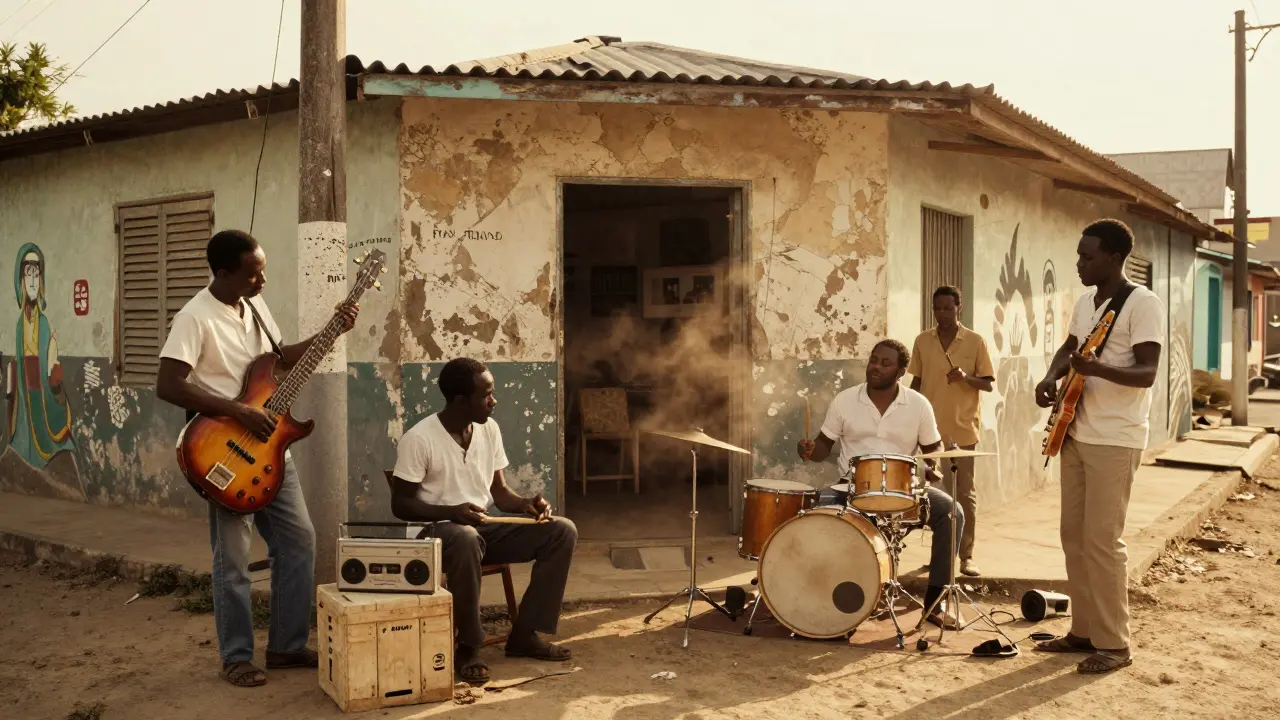
Reggae music didn’t just appear out of nowhere. It was forged in the streets of Kingston, Jamaica, in the late 1960s, born from the fusion of ska, rocksteady, and the raw spiritual energy of Rastafarian culture. But behind every beat, every bassline, and every chant was a handful of artists who refused to stay silent. These were the pioneers-the ones who turned rhythm into resistance, melody into movement, and music into a global force.
The Sound That Changed Everything
Before reggae, there was ska. Fast, upbeat, horn-heavy, and danced to with quick steps. Then came rocksteady-slower, smoother, with a focus on the bass and vocals. But neither fully captured the heartbeat of Jamaica’s working class. That changed in 1968, when artists began emphasizing the offbeat, dragging the rhythm back just enough to make you feel it in your chest. That was the birth of reggae. And it wasn’t an accident. It was a statement.
The drum didn’t just keep time-it carried history. The bass wasn’t just low-end-it spoke of struggle. And the guitar? It didn’t strum. It skanked. That sharp, choppy rhythm on the upstroke became the signature of the genre. But none of this would’ve mattered if not for the voices behind it.
Bob Marley: The Voice That Reached the World
If you know one name in reggae, it’s Bob Marley. But calling him just a singer misses the point. He was a prophet with a guitar. His songs-"One Love," "Redemption Song," "No Woman, No Cry"-weren’t just hits. They were hymns for the unheard. Marley didn’t write songs for fame. He wrote them because he saw injustice and refused to look away.
His band, The Wailers, started as a trio with Peter Tosh and Bunny Wailer. Together, they recorded albums in tiny studios with cracked walls and broken equipment. Their first international breakthrough came in 1972 with Exodus. It spent 11 weeks at #1 in the UK. That’s not luck. That’s legacy. Marley took reggae from Jamaican dancehalls to stadiums in Europe, North America, and Africa. He made it clear: this music wasn’t just for Jamaica. It was for everyone who ever felt oppressed.
Peter Tosh: The Revolutionary with a Microphone
If Bob Marley was the messenger, Peter Tosh was the firebrand. Where Marley sang of love and unity, Tosh sang of revolution. His 1976 album Legalize It wasn’t just about marijuana-it was a direct challenge to the laws that criminalized Black culture, spirituality, and freedom.
Tosh didn’t soften his message for the world. He stood firm. "Equal rights and justice," he sang in "Equal Rights," and he meant every word. He was shot in a 1978 home invasion, allegedly because of his political stance. He survived. And he kept singing. His voice was rougher than Marley’s, his delivery more militant. But his influence? Just as deep. Today, activists from South Africa to Brazil still quote his lyrics. He didn’t just play reggae. He weaponized it.
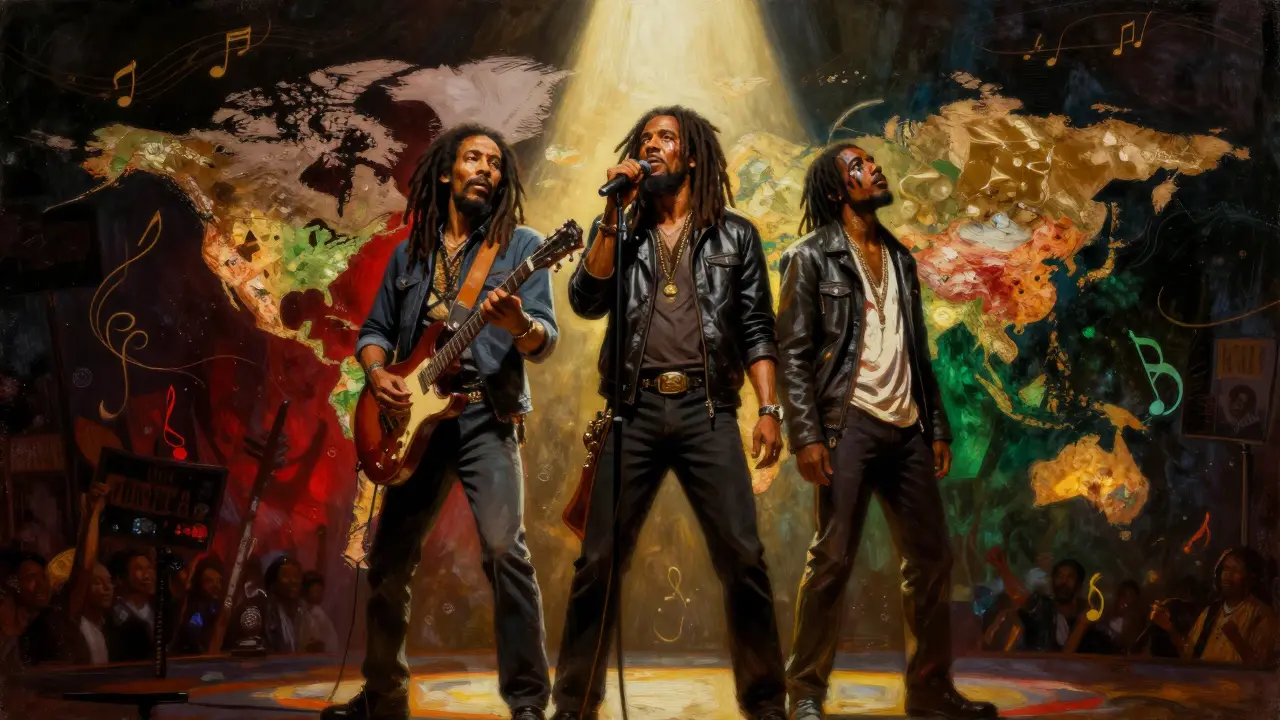
Jimmy Cliff: The First Global Reggae Star
Long before Marley’s global explosion, Jimmy Cliff was already breaking barriers. In 1972, he starred in the film The Harder They Come, a gritty story of a Jamaican musician fighting the system. The soundtrack? Pure reggae. It was the first time most people outside Jamaica had ever heard the sound.
Cliff’s version of "Many Rivers to Cross" didn’t just make the charts-it made people cry. His voice carried pain, hope, and resilience in equal measure. He wasn’t just an actor or a singer. He was the bridge. He showed the world that reggae could be both poetic and powerful. Without Cliff, Marley might never have found an international audience. Cliff didn’t wait for permission. He walked through the door and turned it into a highway.
Toots Hibbert and The Maytals: The Original Reggae Sound
Most people think Bob Marley invented reggae. He didn’t. Toots Hibbert and The Maytals did. In 1968, they released "Do the Reggay," the first song ever to use the word "reggae" in its title. That’s not trivia. That’s history. Before anyone else was calling it reggae, Toots was defining it.
His voice? A mix of gospel, soul, and street-corner shouting. He could go from a whisper to a roar in one line. Songs like "Pressure Drop" and "Sweet and Dandy" were dancehall staples before dancehalls were even called that. Toots didn’t need fancy studios. He just needed a mic, a band, and a story to tell. His music was raw, joyful, and deeply human. He proved reggae didn’t need politics to be powerful-it just needed truth.
The Roots: From Ska to Rocksteady to Reggae
Reggae didn’t come from nothing. It was built on the shoulders of earlier sounds. Ska, with its upbeat horns and fast tempo, came from Jamaican musicians who mixed American R&B with local mento rhythms. Rocksteady slowed it down, letting the bass take center stage. That’s when the drums started to lock into that steady one-drop pattern-the heartbeat of reggae.
Producers like Duke Reid and Coxsone Dodd didn’t just record music. They built communities. Their studios were like schools. Young musicians learned how to play, how to harmonize, how to feel the groove. Without them, the pioneers wouldn’t have had the tools to create. The rhythm wasn’t just invented-it was passed down, like a family secret.
Why These Legends Still Matter
Reggae isn’t just a genre. It’s a movement. And the pioneers didn’t just play music-they changed how people saw themselves. They gave voice to the voiceless. They turned pain into power. Today, reggae influences hip-hop, punk, pop, and even electronic music. But none of that would’ve happened if these men hadn’t stood up and said, "This is who we are. This is what we’ve been through. And we’re not letting it go silent."
Listen to any modern reggae artist-whether they’re from Tokyo, Berlin, or Cape Town-and you’ll hear echoes of Marley’s harmony, Tosh’s defiance, Cliff’s soul, and Toots’ joy. The music lives because they refused to let it die.
Who is considered the father of reggae music?
There’s no single "father" of reggae, but Toots Hibbert of The Maytals is credited with naming the genre in 1968 with the song "Do the Reggay." Bob Marley, Peter Tosh, and Jimmy Cliff were the key figures who brought it to the world. Reggae was shaped by many, not one.
How did reggae music spread outside Jamaica?
Reggae spread through films like The Harder They Come (1972), which featured Jimmy Cliff and introduced global audiences to the sound. Bob Marley’s international tours, especially after the release of Exodus in 1977, cemented reggae’s global presence. Record labels in the UK and US began signing Jamaican artists, and radio stations started playing reggae tracks. By the 1980s, it was a staple in punk, hip-hop, and pop scenes worldwide.
What’s the difference between ska, rocksteady, and reggae?
Ska is fast, with upbeat horns and a walking bassline. Rocksteady slowed the tempo, emphasized the bass and vocals, and dropped the horns in favor of smoother rhythms. Reggae took rocksteady’s groove and added the signature "one-drop" drum pattern-where the snare hits on the third beat-and the choppy guitar skank on the offbeat. Reggae also carries deeper spiritual and political themes.
Did all the reggae pioneers follow Rastafarian beliefs?
Not all, but most did. Bob Marley, Peter Tosh, and Bunny Wailer were devout Rastafarians, and their music reflected Rastafarian themes like liberation, African identity, and spiritual resistance. Jimmy Cliff and Toots Hibbert were spiritual but not strictly Rastafarian. Their music still carried the same messages of justice and resilience, even if the religious framework differed.
Why is reggae music still relevant today?
Reggae remains relevant because its core message-equality, resistance, peace-is timeless. Modern artists like Chronixx, Koffee, and Damian Marley carry the torch, blending reggae with hip-hop, dancehall, and electronic beats. Governments around the world now recognize reggae as a cultural force, and UNESCO named it an Intangible Cultural Heritage in 2019. The music still speaks to people fighting for justice, whether in Jamaica, Brazil, or beyond.
What Comes Next
The pioneers didn’t just leave behind songs. They left behind a blueprint. Today, young artists in Lagos, Kingston, and Melbourne are picking up that blueprint and rewriting it. They’re adding trap beats, synth basses, and digital effects. But if you listen closely, you’ll still hear the one-drop. The skank. The message.
Reggae’s power isn’t in its instruments. It’s in its truth. And as long as people need to speak up, that truth will keep beating.