
The Quick Rundown: What You Need to Know
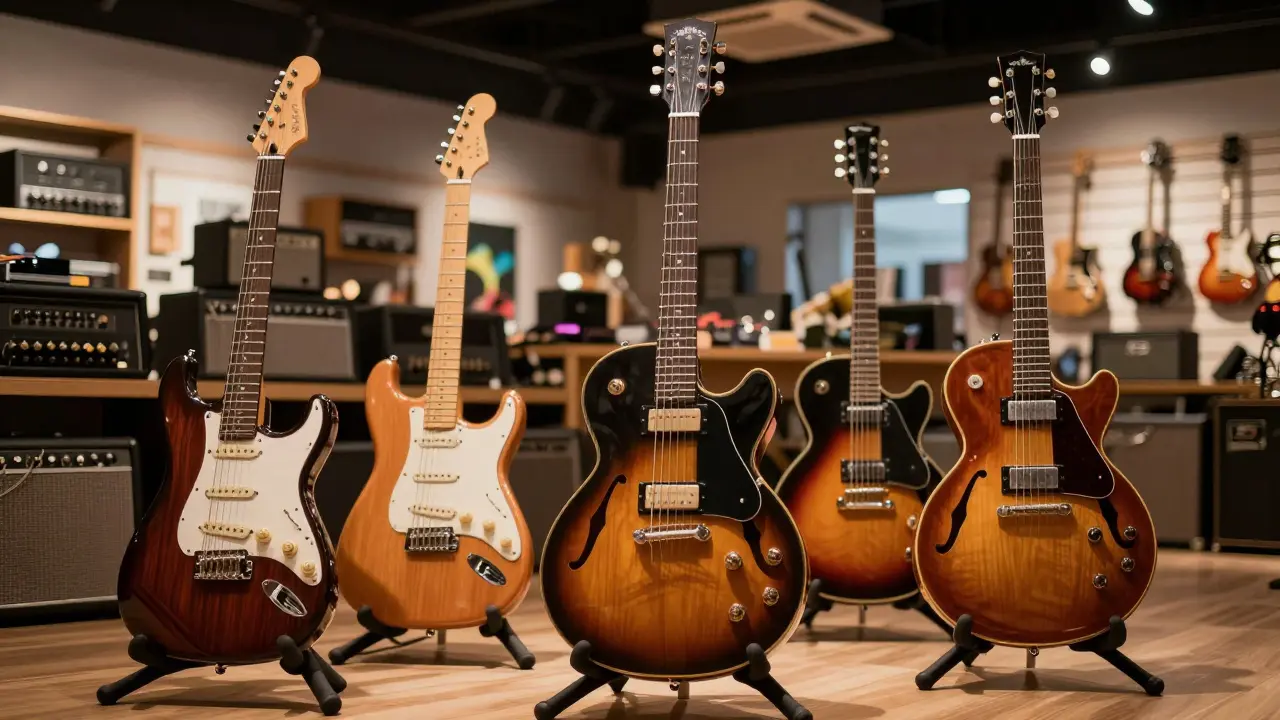
- Body Types: Solid bodies are best for high volume and sustain; hollow bodies provide a warm, jazzier tone.
- Pickups: Single-coils are bright and clear; Humbuckers are thick, powerful, and cancel hum.
- Amplification: You need a way to turn electrical signals into sound-either via a physical amp or digital software.
- Scale Length: This affects how the strings feel and how they vibrate, influencing the 'tension' of the instrument.
Understanding the Core: The Body and Construction
At its simplest, an electric guitar is a stringed instrument that uses electromagnetic pickups to convert string vibrations into electrical signals. But the way that body is built changes how those signals behave. Most people start with a Solid Body Guitar. These are made from a solid slab of wood-often mahogany or alder-which means they don't vibrate much on their own. This is a huge advantage because it prevents feedback when you crank the volume. If you've ever seen a guitarist stand right in front of a massive speaker stack without a screeching noise filling the room, that's the solid body at work.
Then you have Hollow Body Guitars. These are essentially acoustic guitars with a preamp. They have a large internal cavity that resonates, creating a rich, airy sound perfect for jazz or early blues. The trade-off? They are prone to feedback. If you try to play heavy metal on a hollow body, you'll likely end up with a howling noise that drowns out your notes. Somewhere in the middle is the semi-hollow body, which has a solid block of wood running down the center to stabilize the instrument while still keeping some of that acoustic depth.
| Body Type | Primary Tone | Feedback Risk | Best Genres |
|---|---|---|---|
| Solid Body | Focused, Sustained | Low | Rock, Metal, Pop |
| Semi-Hollow | Warm, Balanced | Medium | Blues, Indie, Jazz |
| Hollow Body | Airy, Resonant | High | Jazz, Traditional Pop |
The Heart of the Sound: Pickups and Electronics
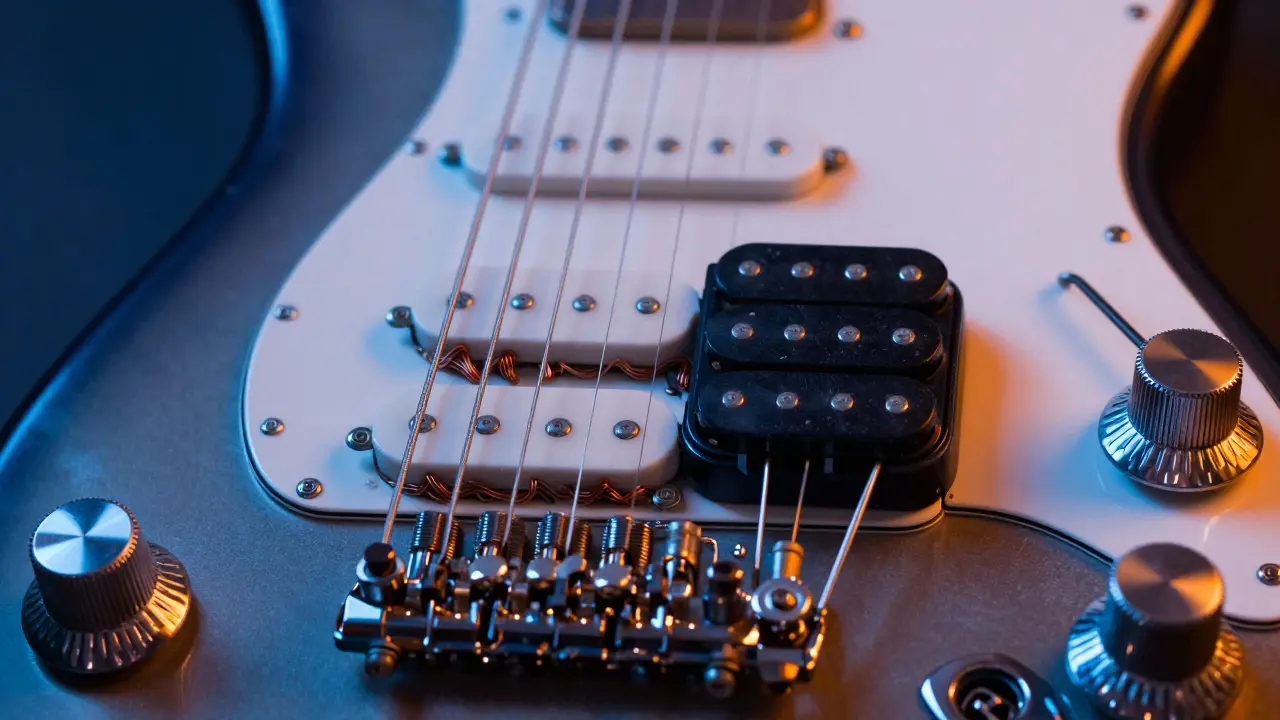
If the body is the skeleton, the pickups are the heart. A pickup is essentially a magnet wrapped in thousands of turns of fine copper wire. When a steel string vibrates over this magnet, it creates a tiny electrical current. The type of pickup you have determines the 'flavor' of your sound. The Single-Coil Pickup uses one coil of wire. It's famous for being 'twangy' and clear. Think of the bright, piercing sound of a Fender Stratocaster. The downside is that they act like antennas for electronic interference, resulting in a 60-cycle hum when you're near lights or computers.
To fix that, engineers created the Humbucker. As the name suggests, it 'bucks the hum.' It's actually two single-coil pickups wired in opposite directions. This cancels out the noise and produces a much thicker, louder signal. This is why humbuckers are the gold standard for hard rock and metal; they can push an amplifier into distortion much more effectively without the annoying buzz. If you're looking for a sound that feels like a wall of noise, go for humbuckers. If you want to cut through a mix with clarity, stick to single-coils.
Beyond the pickups, you have the control knobs. Most guitars have a volume knob and a tone knob. The tone knob is essentially a low-pass filter. When you turn it down, you're stripping away the high frequencies, making the guitar sound 'darker' or 'muddier.' Some advanced guitars include a pickup selector switch, allowing you to jump between the bridge pickup (which is bright and sharp) and the neck pickup (which is warm and bassy).
Turning Electricity into Music: Amplification
A guitar by itself is almost silent. You need Guitar Amplifiers to make it audible. Traditionally, this meant a heavy box with a vacuum tube inside. Tube Amps are beloved because they add 'warmth' to the signal. When you push a tube amp to its limit, it creates a natural clipping effect called saturation, which sounds musical and pleasing to the ear. This is the 'holy grail' tone for most blues and rock players.
However, tubes are fragile and expensive. This led to the rise of Solid State Amps, which use transistors. These are more reliable, cheaper, and usually cleaner. While early solid-state amps sounded sterile, modern digital modeling amps have changed the game. These use complex algorithms to mimic the behavior of legendary vintage amps. You can switch from a 1960s British stack to a boutique American clean amp with the press of a button.
In the modern era, many players are skipping the physical amp entirely. They use Audio Interfaces to plug their guitar directly into a computer. Using software plugins, you can access thousands of dollars worth of gear inside a laptop. It's the perfect setup for home recording and practicing in an apartment where you can't blast a 100-watt stack through the walls.
The Essential Gear: Accessories and Maintenance
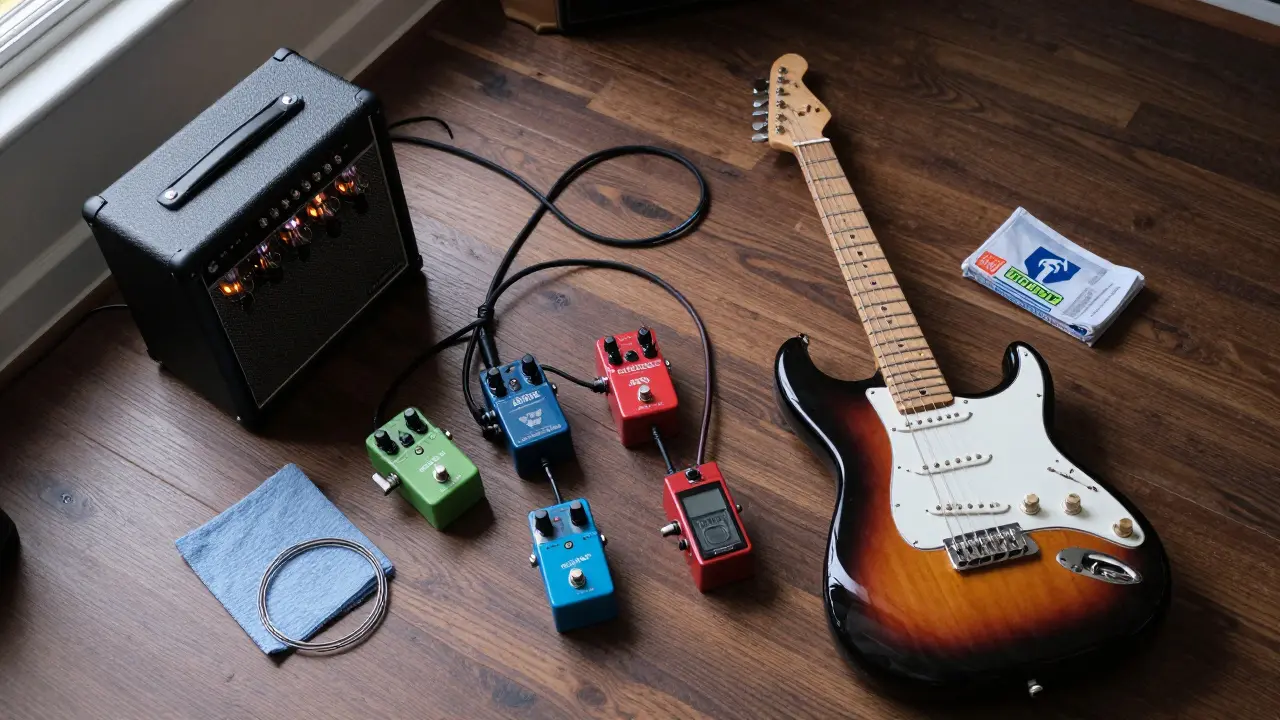
Buying the guitar and amp is just the start. To actually play, you'll need a few key items. First is the cable-a shielded TS cable that carries the signal. If you use a cheap, unshielded cable, you'll introduce noise into your signal chain. Then there are strings. Most electrics use Nickel-Wound Strings. These are steel cores wrapped in nickel, providing a balance of brightness and durability. If you go too heavy (like .011s), the guitar will be harder to bend; too light (.009s), and they might snap or feel 'floppy.'
Maintaining your gear is where many beginners fail. The most critical task is tuning. Since electric guitars are subject to temperature changes and string wear, they drift out of tune constantly. Using a chromatic tuner is non-negotiable. Additionally, cleaning your strings with a microfiber cloth after playing prevents sweat and oils from corroding the metal, which would otherwise make your tone sound 'dead' within a few weeks.
For those looking to expand their sound, Effects Pedals are the next step. These are small boxes that sit between the guitar and the amp. A distortion pedal adds grit, a delay pedal creates echoes, and a reverb pedal makes it sound like you're playing in a cathedral. The order in which you connect these-your 'signal chain'-matters. Generally, you want your overdrive first, followed by modulation (like chorus), and then time-based effects (like delay) at the end.
Making Your Choice: Which One is Right for You?
Choosing your first electric guitar depends entirely on the music you love. If you're dreaming of playing along to Nirvana or Metallica, look for a solid body with humbuckers. The Gibson Les Paul is the classic example here-it's heavy, sustain-rich, and powerful. If you prefer the clean, funky sounds of Nile Rodgers or the shimmering tones of John Mayer, a Fender Stratocaster or Telecaster with single-coils is the way to go. These are lighter and more 'expressive' in the high end.
Don't ignore the 'feel' of the neck. Some guitars have a 'C' shape (round and chunky), while others have a 'D' shape or a flatter profile. If you have small hands, a chunky 50s-style neck might feel like wrestling a baseball bat. Spend time holding different instruments. The 'best' guitar isn't the one with the highest specs on paper; it's the one that feels natural in your hands and makes you want to pick it up every time you walk past it.
Do I need an amp to play an electric guitar?
Yes, if you want to hear the instrument as intended. While an electric guitar makes a very faint sound on its own, it needs an amplifier or a digital interface to boost that signal into audible sound waves. Without one, you're essentially playing a very quiet, metallic-sounding acoustic guitar.
What is the difference between active and passive pickups?
Passive pickups rely on permanent magnets and don't need power. Active pickups have a built-in preamp and require a battery (usually a 9V). Active pickups are much louder, have a wider frequency range, and are almost completely silent (no hum), which is why they are popular in extreme metal.
Are expensive guitars actually better for beginners?
Not necessarily. A $3,000 guitar won't make you play better than a $300 one. However, cheaper guitars sometimes have 'action' issues-where the strings are too high off the fretboard, making them hard to press down. The key is to find a reasonably priced instrument and have a professional technician 'set it up' to ensure it plays comfortably.
Can I play different genres on one guitar?
Mostly, yes. While a Stratocaster is 'better' for funk and a Les Paul is 'better' for rock, you can play almost any genre on any electric guitar. Much of the specific sound comes from the amplifier and the effects pedals you use rather than the guitar itself.
How often should I change my strings?
It depends on how much you play and if you sweat. For most people, every 2 to 4 weeks is a good rhythm. If the strings start looking brown or feel 'gritty' to the touch, they've oxidized and lost their brightness; that's the signal to swap them out.
Next Steps for Your Journey
If you've just bought your first rig, start by learning the basics of 'tuning by ear' alongside your electronic tuner. It builds a musical connection to the instrument. If you're feeling stuck with a 'thin' sound, experiment with your amp's EQ settings-try boosting the mids to get a more vocal-like quality. For those who find the strings too hard to press, look into 'light gauge' strings (.009 or .008) to reduce the finger tension. Your goal in the first few months isn't to play fast; it's to make the guitar feel like an extension of your body.