
Think about the last song that gave you chills. Was it the punch of a distorted electric guitar? The deep thump of a bass drum? The smooth glide of a synth pad? None of that would exist without the instruments that came before them. Musical instruments aren’t just tools-they’re the backbone of how music evolves. They don’t just play notes; they shape entire genres, change how we feel, and even redefine what music can be.
The Electric Guitar and the Birth of Rock
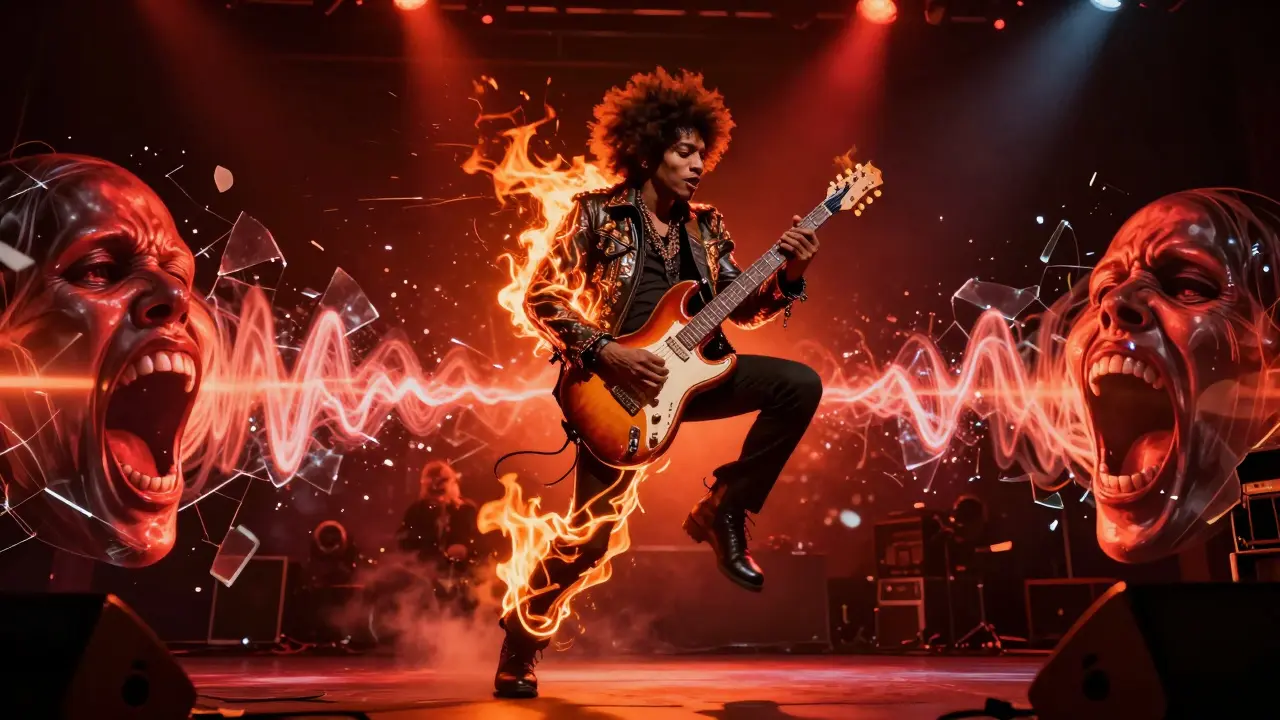
The electric guitar didn’t just amplify sound-it exploded it. Before the 1950s, guitars were quiet, mostly used in jazz or country bands. Then came Leo Fender’s Telecaster and Les Paul’s solid-body design. Suddenly, musicians could push volume, distortion, and feedback into something musical, not accidental. Jimi Hendrix didn’t just play guitar-he made it scream, cry, and glide like a human voice. That sound became the heartbeat of rock, punk, metal, and even hip-hop beats today. Bands like The Who, Led Zeppelin, and Nirvana didn’t just use electric guitars-they built their identities around them. Without the electric guitar, modern rock wouldn’t exist. It’s not an instrument you play. It’s one you become.
Drum Machines and the Rise of Electronic Beats
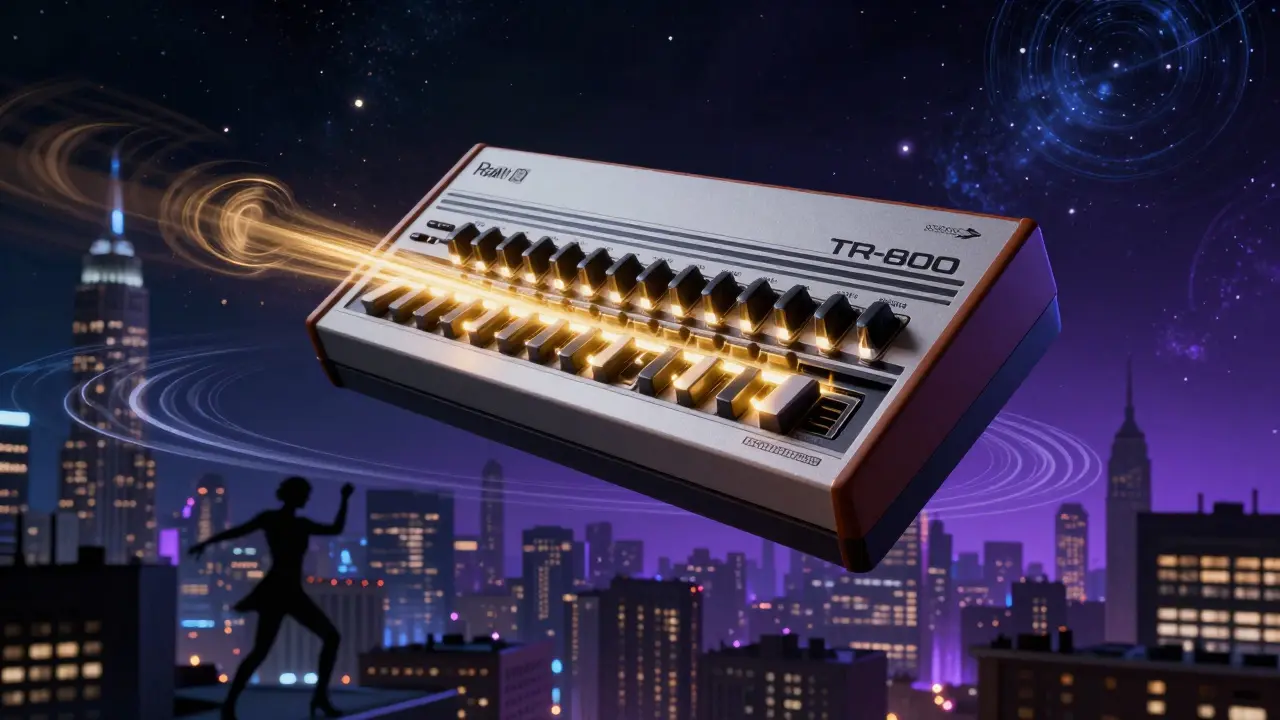
Before the 1980s, drums were played by humans. Then came the Roland TR-808. It wasn’t even meant to be a hit. A company built it as a practice tool for drummers who couldn’t afford live sessions. But producers in Chicago, Detroit, and New York heard something else: a futuristic pulse. The 808’s booming kick, snappy clap, and metallic hi-hats became the foundation of hip-hop, house, techno, and trap. Kanye West’s 808s & Heartbreak turned its robotic beat into emotional ballads. Today, 90% of pop songs use sampled 808 kicks or their digital clones. You don’t need a drummer anymore-you just need a button. The instrument didn’t replace the human. It gave us a new kind of rhythm.
Synthesizers and the Collapse of Genre Boundaries
Synths used to be bulky, expensive, and only found in university labs. Then Moog, Roland, and later Ableton made them affordable and intuitive. Suddenly, you could create a bassline that didn’t come from a string or a horn-it came from oscillators and filters. Daft Punk’s Random Access Memories used analog synths to recreate 1970s funk. But Billie Eilish uses the same tech to make whispery, eerie soundscapes. Synths don’t just mimic instruments-they invent new ones. A pad can sound like a choir. A filter sweep can feel like a wave crashing. That’s why genres like synthwave, hyperpop, and ambient trap exist. Synthesizers didn’t just add new sounds. They erased the lines between what music could be.
The Turntable: From Background Noise to Lead Instrument
Turntables were meant to play records. DJs in the 1970s in the Bronx didn’t care. They started scratching, backspinning, and looping breaks. Suddenly, a machine designed for playback became a lead instrument. Grandmaster Flash didn’t just mix songs-he chopped them into new ones. Hip-hop was born from this. Today, turntables are still used in live sets, but the real shift happened digitally. Software like Serato and Traktor lets anyone scratch with a mouse. But the soul? That’s still in the hand. The turntable proved you don’t need to build an instrument from wood and metal. You just need to rethink what it’s for.
Smartphones and the Democratization of Sound
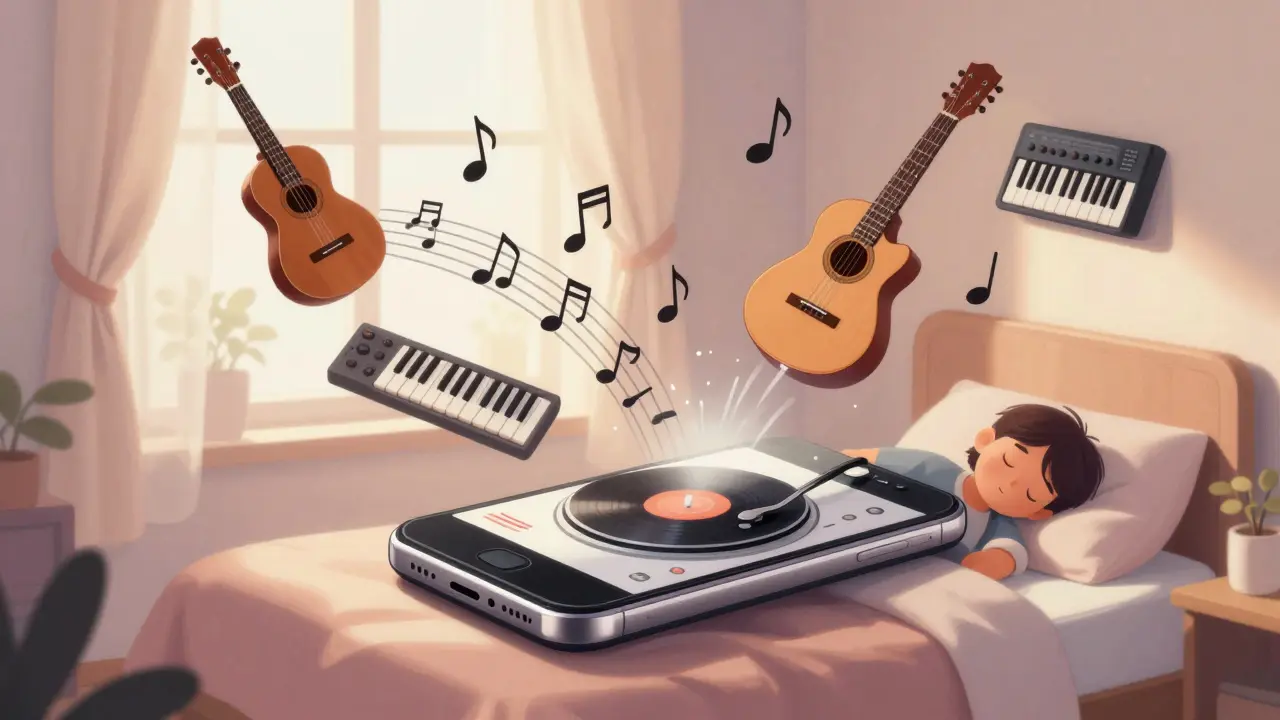
Five years ago, making a hit song meant studio time, a producer, and thousands of dollars. Now? A teenager in Jakarta can make a chart-topping track on their iPhone using GarageBand. Mobile apps like BandLab, FL Studio Mobile, and BeatMaker turn phones into full studios. You can record a vocal, layer a synth, add reverb, and upload it to TikTok-all in 10 minutes. This isn’t just convenience. It’s revolution. Genres like lo-fi hip-hop and bedroom pop exploded because anyone could make them. You don’t need a drum kit. You don’t need a studio. You just need a phone and an idea. Instruments are no longer owned by professionals. They’re in everyone’s pocket.
The Hidden Influence: What You Don’t See
It’s not just about the big names. Think about the theremin-the eerie, voiceless instrument used in 1950s sci-fi films. It never became mainstream, but its sound lives on in horror movie scores and synthwave tracks. Or the kalimba, an African thumb piano that became a trend in indie folk music after being used in The Hunger Games soundtrack. Even instruments that fade away leave fingerprints. The sitar shaped psychedelic rock. The accordion fueled tango and polka. The banjo, once a folk staple, now drives bluegrass and pop-country hits. Every instrument, no matter how obscure, adds a color to the palette. Modern music isn’t just about what’s new-it’s about what’s been dug up, repurposed, and remixed.
Why This Matters Now
Today, we’re in a golden age of instrument innovation. AI-generated sounds, holographic instruments, and haptic feedback controllers are starting to appear. But the real story isn’t the tech-it’s the freedom. Musical instruments have always been about expression. The electric guitar gave rebellion a sound. The drum machine gave rhythm to the masses. The smartphone gave creation to the quiet kid in the corner. The next big genre won’t come from a famous studio. It’ll come from someone in their bedroom, using an app they downloaded, playing a sound no one’s heard before. Instruments don’t just make music. They give people a voice.
What instrument had the biggest impact on modern pop music?
The synthesizer. It’s the most used instrument in modern pop, from the 1980s to today. It replaced traditional orchestration with programmable tones, letting artists create basslines, pads, leads, and effects without needing a band. Think of hits by Prince, Daft Punk, or Dua Lipa-all built on synths. It’s the reason pop music sounds so layered and futuristic.
Can you make modern music without traditional instruments?
Absolutely. Entire genres like dubstep, trap, and ambient electronica rely almost entirely on digital tools. A producer might use a sample of a snare, a synth bass, and a vocal chop-none of which came from a physical instrument. Even vocals are often processed beyond recognition. The line between "instrument" and "sound source" has blurred. What matters isn’t the tool-it’s how it’s used to create emotion.
Why do some old instruments still appear in modern songs?
Because they carry emotion. A sitar adds mystery. A banjo adds roots. A harp adds magic. Even if a song is mostly digital, slipping in one acoustic instrument grounds it. Artists use them like spices-not to dominate, but to add depth. Think of Ed Sheeran using a loop pedal to layer a cello sound, or Olivia Rodrigo sampling a harpsichord in her pop ballads. It’s nostalgia with purpose.
Are physical instruments becoming obsolete?
Not at all. While digital tools are dominant, physical instruments are experiencing a revival. Vinyl sales are up. Guitar sales hit record numbers in 2025. People crave the tactile feel-pressing keys, plucking strings, hitting drums. Digital tools make creation easy. Physical instruments make it meaningful. The best modern music often blends both.
How has technology changed how we learn instruments?
Apps like Yousician, Simply Piano, and Fender Play offer real-time feedback, gamified lessons, and AI coaching. You can learn guitar by playing along with your favorite song, and the app tells you if you’re off-key. This has lowered the barrier to entry. In 2025, 40% of new learners started with apps, not teachers. It’s not perfect, but it’s made music learning accessible to millions who couldn’t afford lessons.