
Genre Fusion Calculator
Explore how music genres combine and evolve. Select two genres to see their fusion potential and examples from today's music landscape.
Fusion Potential
This combination has one of the highest historical fusion rates in modern music, reflecting how streaming algorithms favor genre-blending.
What to Expect
You'll hear synth-heavy production with raw vocal delivery and hybrid instrumentation - a blend of polished pop production with the emotional intensity of rock.
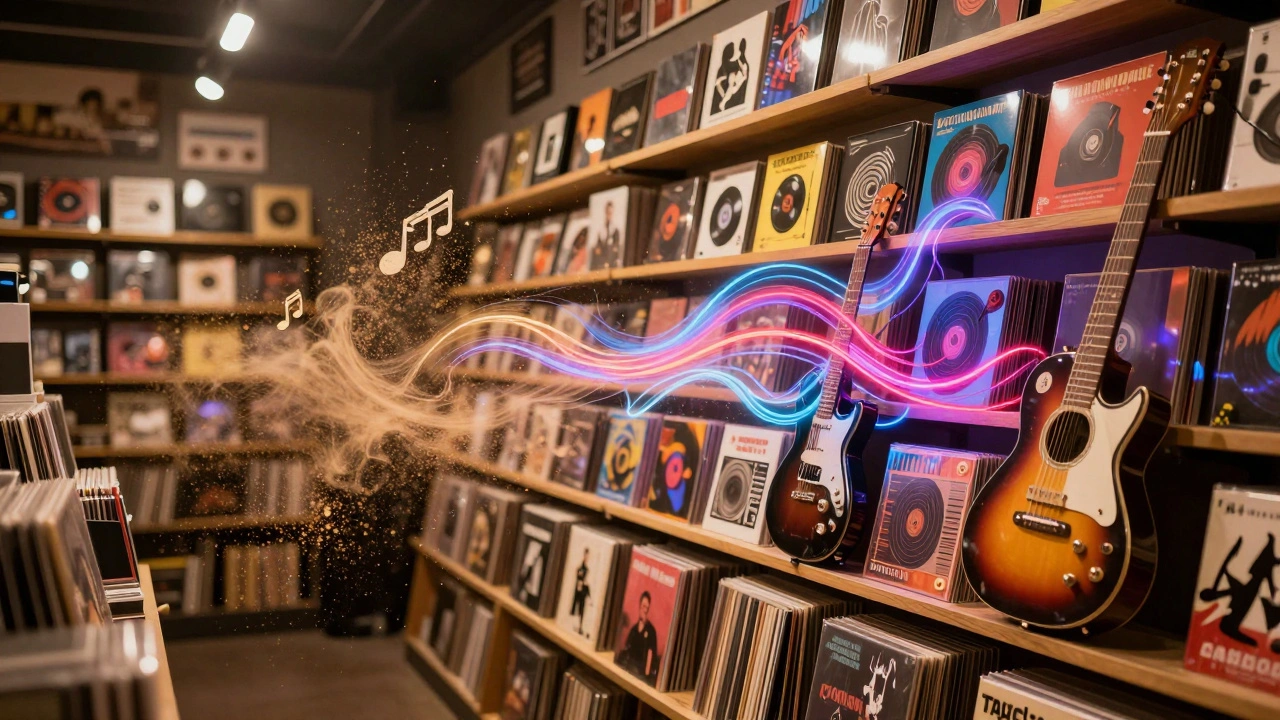
Forty years ago, if you walked into a record store, you could point to a shelf and say, pop was here, rock was there, hip-hop was in the back corner, and country was tucked away in its own aisle. Today? Those shelves don’t exist anymore. Genres don’t stay in their lanes. They bleed into each other, mutate, and reappear as something unrecognizable-and that’s exactly what makes today’s music so alive.
How Pop Music Became a Shape-Shifter
Pop music wasn’t always this messy. In the 1980s, pop meant catchy melodies, synthesizers, and polished vocals. Michael Jackson’s Thriller was the blueprint: tight production, danceable beats, and radio-friendly hooks. But by the 2010s, pop started swallowing everything. Drake mixed R&B crooning with trap drums. Taylor Swift traded acoustic guitars for synth-heavy production. Billie Eilish brought whispery vocals over bass-heavy beats that sounded more like a horror movie soundtrack than a Top 40 hit.
Why? Because streaming changed the game. Algorithms don’t care if a song is "pop" or "hip-hop." They care if it keeps people listening. So producers started stitching together elements from every genre they could find. A song might start with a reggaeton rhythm, drop into a metal guitar riff, then end with a gospel choir. That’s not chaos-it’s strategy.
Rock’s Slow Fade and Its Unexpected Revival
Rock used to be the king. Bands like Led Zeppelin, Nirvana, and Radiohead ruled the charts. But by the mid-2000s, rock’s dominance began to crack. Younger listeners weren’t picking up guitars. They were making beats on laptops. Record labels shifted focus. Radio stations stopped playing guitar-driven songs.
But rock didn’t die. It disguised itself. Bands like Arctic Monkeys started blending garage rock with electronic textures. Tame Impala took psychedelic rock and layered it with danceable synths. Even Foo Fighters added pop hooks to their anthems. Today, "rock" isn’t a sound-it’s an attitude. It’s in the raw vocal delivery of Olivia Rodrigo, the distorted basslines in Bring Me The Horizon’s pop-punk hybrids, and the DIY energy of indie bands recording in bedrooms.
Rock’s transformation wasn’t about losing its identity. It was about finding new ways to scream.
Hip-Hop’s Global Takeover
Hip-hop was born in the Bronx in the 1970s. It was about rhythm, wordplay, and speaking truth to power. By the 2000s, it had become the most dominant genre in the U.S. But something even bigger happened after 2010: hip-hop went global.
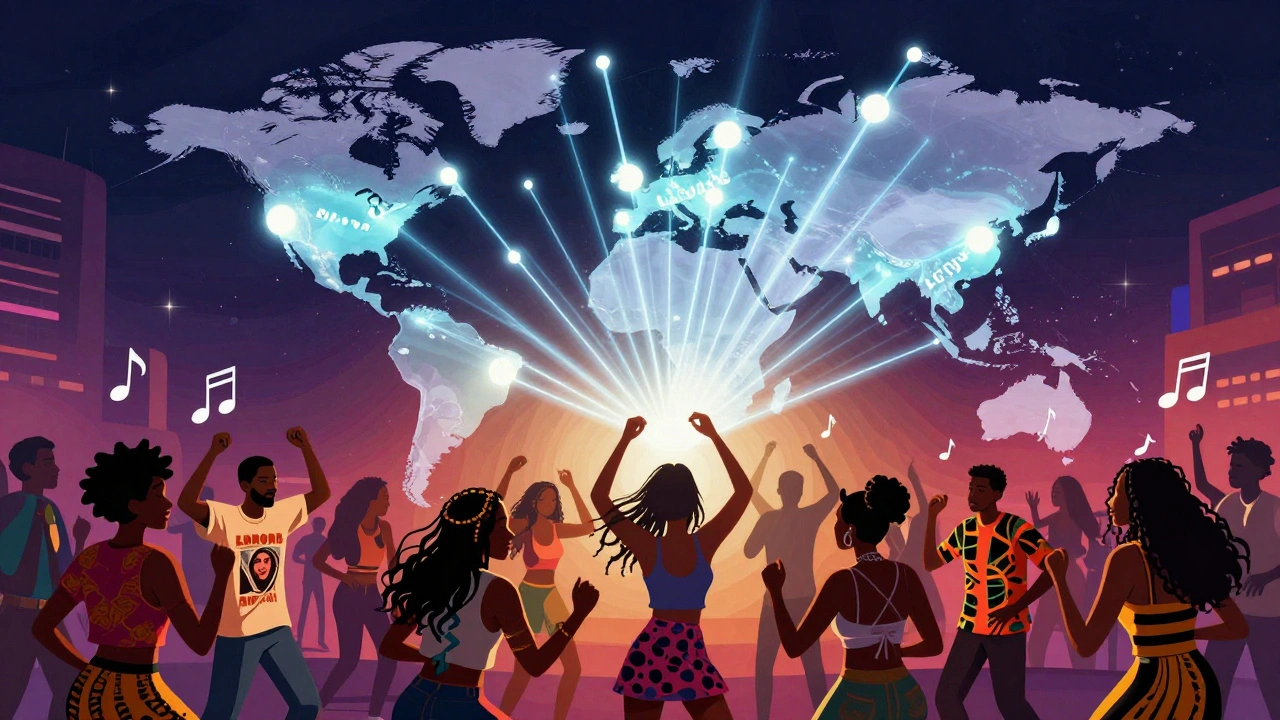
In South Korea, BTS mixed trap beats with Korean pop melodies and English lyrics. In the UK, drill music exploded-dark, gritty, and street-level, with artists like Skepta and Stormzy turning UK garage into something heavier. In Nigeria, Afrobeats fused traditional rhythms with hip-hop flows. Burna Boy and Wizkid didn’t just borrow from hip-hop-they redefined it.
Today, the lines between hip-hop and other genres are nearly invisible. A song can be labeled "hip-hop" just because the artist raps, even if the beat comes from a Latin percussion loop or a Celtic fiddle. The genre’s power isn’t in its sound anymore-it’s in its voice. And that voice is now heard everywhere.
Country’s Quiet Revolution
Countries used to mean twangy guitars, pickup trucks, and heartbreak ballads. But in the 2020s, country music started sounding more like pop than ever. Lil Nas X’s "Old Town Road"-a song that blended country twang with trap beats-was banned from Billboard’s country chart because it "wasn’t country enough." The backlash? It became the longest-running No. 1 hit in history.
Artists like Kacey Musgraves and Chris Stapleton didn’t abandon country-they expanded it. Musgraves added disco grooves and psychedelic production. Stapleton brought soul and blues into the mix. Even Taylor Swift’s early country roots re-emerged in her re-recorded albums, but now layered with modern production techniques.
Country’s transformation isn’t about selling out. It’s about survival. Young listeners don’t want to hear the same stories told the same way. So country artists started telling them differently-with more honesty, more diversity, and more beats.
The Rise of Genreless Artists
Some artists don’t even try to fit into a genre anymore. Olivia Rodrigo? She’s pop-punk meets ballad meets orchestral drama. Doja Cat? She’s rap, R&B, pop, and meme culture rolled into one. Rosalía? Flamenco meets trap meets avant-garde pop.
These artists aren’t confused. They’re liberated. They grew up listening to everything-Spotify playlists, YouTube rabbit holes, TikTok trends. Their music reflects that. No label can pin them down. No radio station knows where to play them. And that’s the point.
Genreless doesn’t mean meaningless. It means the rules have changed. The music isn’t defined by its roots anymore-it’s defined by its emotion. A song can make you cry, dance, or scream, and you don’t need to know what genre it belongs to.
Technology’s Role in Genre Blending
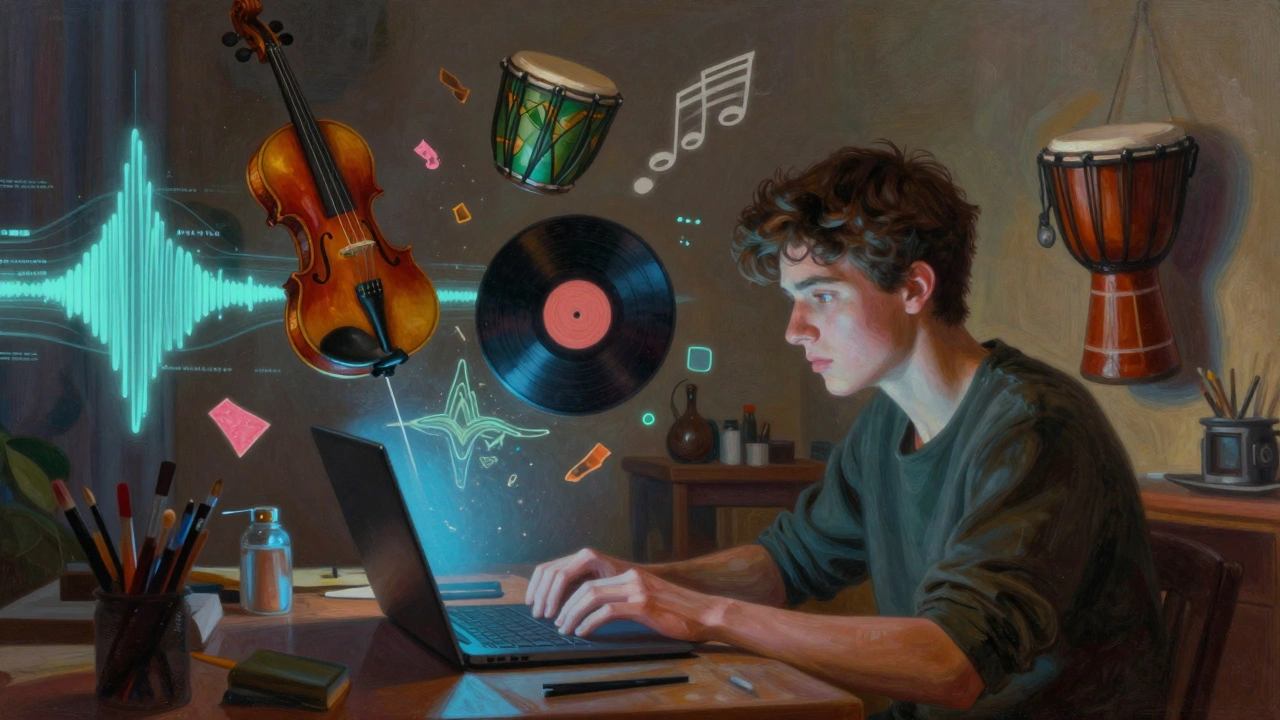
You can’t talk about genre transformation without talking about tools. Today’s producers have access to software that can turn a violin into a bassline, or a drum machine into a choir. AI-powered plugins can mimic the vocal style of any singer. Virtual instruments can replicate sounds from any culture, anywhere in the world.
That’s how a producer in Lagos can sample a 1970s Japanese synth and layer it with a Brazilian samba rhythm, then drop a rap verse over it-and call it "future pop." That’s how a teenager in Finland can make a song that sounds like a mix of Viking folk and hyperpop using nothing but a laptop and free plugins.
Technology didn’t create genre blending. It just made it easier. And faster. And cheaper.
What This Means for Listeners
For listeners, this is the best time to be into music. You’re not stuck with one style. You can go from a 90s punk riot to a Nigerian afrobeats banger to a lo-fi jazz beat in five minutes. Playlists don’t care about genre labels. Algorithms don’t either.
But there’s a catch. With so much choice, it’s harder to find your sound. You don’t just need to know what you like-you need to know what you feel. A song that sounds "pop" might carry the weight of a blues ballad. A track labeled "electronic" might be the most human thing you’ve heard all week.
The transformation of music genres isn’t about losing tradition. It’s about expanding it. Every new sound carries echoes of the past. The drum patterns in trap music trace back to funk. The harmonies in K-pop owe something to Motown. The rawness in indie rock echoes the punk movement of the 70s.
Music isn’t breaking apart. It’s reassembling. And the pieces are better together.
Why do music genres keep changing?
Music genres change because culture changes. New technologies, social movements, and global connections all shape how music is made and heard. Younger generations don’t want to repeat the past-they want to remix it. Streaming and social media accelerate this by exposing people to sounds they never would’ve found before.
Can a song belong to more than one genre?
Absolutely. In fact, most hit songs today are hybrids. A track might be labeled "pop" on Spotify, but it could have hip-hop beats, rock guitar tones, and electronic synths. Genre labels are just shortcuts for listeners and algorithms-they don’t define the music’s true character.
Are traditional genres disappearing?
Not disappearing-evolving. Blues, jazz, and country still exist, but they’re no longer locked in their original forms. You’ll find jazz in hip-hop beats, blues in modern rock vocals, and country storytelling in pop lyrics. The DNA is still there; it’s just wearing new clothes.
How do artists decide which genres to blend?
Most artists don’t set out to "blend genres." They just make the music they feel. If they grew up listening to metal, reggaeton, and classical piano, their songs will naturally reflect all of that. It’s not a strategy-it’s a reflection of their lived experience.
Is genre blending just a trend?
No. Genre blending has been happening for decades-think of David Bowie’s glam rock mixed with funk, or Prince blending rock, pop, and soul. What’s new is the speed and scale. Today, it’s not just a few artists doing it-it’s the entire industry. The tools, the access, and the audience demand it.
What’s Next for Music Genres?
Look at what’s happening right now. Genres are being born in TikTok trends, not record labels. A 15-second sound can spark a new subgenre overnight. "Hyperpop" exploded from SoundCloud uploads. "Emo rap" came from teenagers posting lyrics over distorted 808s. "Afrobeats" went global because of viral dance challenges.
The next wave won’t be defined by instruments or studios. It’ll be defined by emotion, identity, and connection. A genre might emerge from a community, not a city. A sound might come from a refugee camp, a college dorm, or a rural village in Indonesia.
Music has always been a mirror. Today, it’s reflecting a world that’s more connected, more chaotic, and more beautiful than ever. The transformation isn’t ending. It’s just getting louder.