
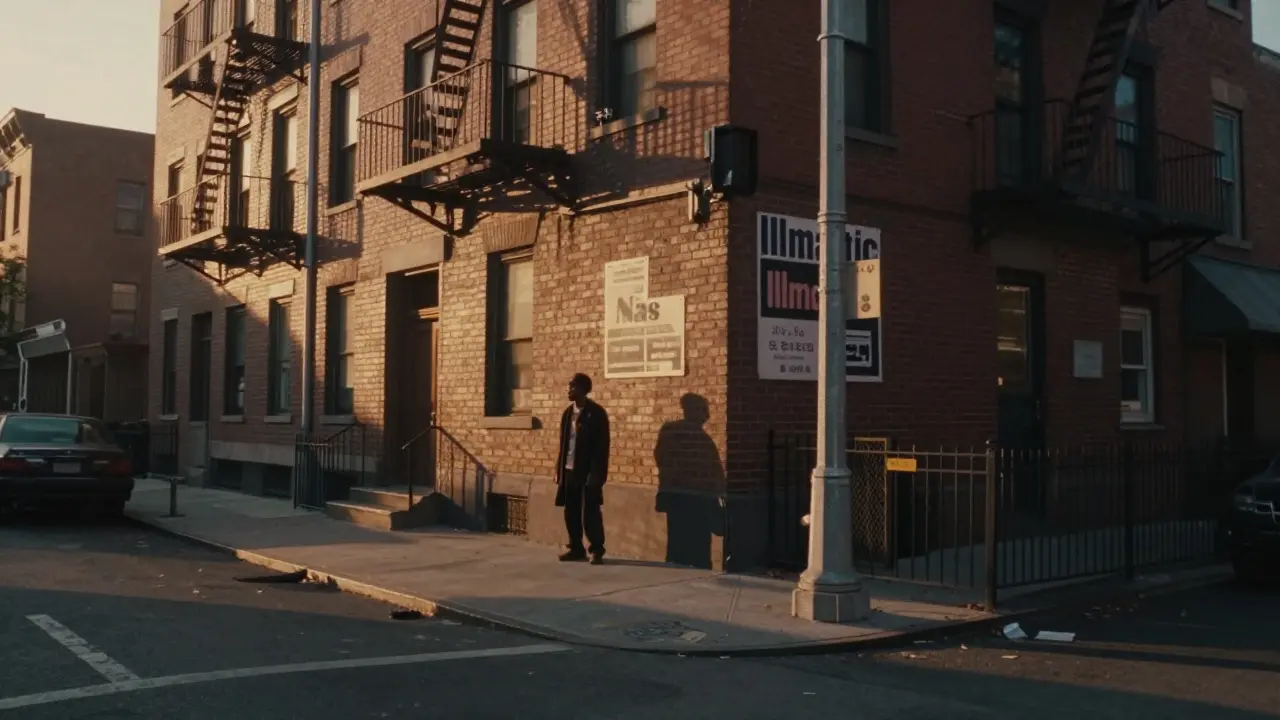
The Blueprint: Nas - Illmatic (1994)
If there’s one album that sets the standard for lyrical density and atmospheric production, it’s Illmatic. Released when Nas was just twenty years old, this record captures the essence of Queensbridge with haunting precision. Every track feels like a cinematic scene, blending samples from jazz and soul into beats that hit hard without overpowering the lyrics.
What makes Illmatic stand out isn’t just the skill on display-it’s the cohesion. There’s no filler here. Tracks like "NY State of Mind" and "The World Is Yours" showcase a maturity that belies the artist’s age. For anyone trying to understand why hip hop commands respect as an art form, this is your starting point.
Royal Decrees: The Notorious B.I.G. - Ready to Die (1994)
While Nas was painting pictures of street life, The Notorious B.I.G. was crafting narratives that felt larger than life. Ready to Die introduced Christopher Wallace to the world not just as a rapper, but as a storyteller who could make you feel every high and low of his journey. The production, largely handled by Puff Daddy and others, brought a lush, almost orchestral quality to East Coast hip hop.
This album proved that commercial success and artistic integrity weren’t mutually exclusive. Songs like "Juicy" turned struggle into triumph, while "Gimme the Loot" offered a darker, more complex look at addiction and desire. It’s a masterclass in balance-hard enough for the streets, smooth enough for the radio.
West Coast Dominance: Dr. Dre - The Chronic (1992)
You can’t talk about hip hop without acknowledging the seismic shift caused by The Chronic. Before this, G-funk wasn’t really a thing-or at least, it wasn’t dominating airwaves nationwide. Dr. Dre took synthesizers, heavy basslines, and laid-back grooves to create a sound that defined the West Coast identity. This album didn’t just change hip hop; it changed pop culture.
Tracks like "Nuthin’ But a 'G' Thang" became anthems, blending catchy hooks with gritty realism. The influence of The Chronic extends far beyond its release year. Even today, producers sample its melodies, and rappers emulate its flow. It’s proof that sometimes, one person’s vision can redirect an entire genre.
Soulful Storytelling: A Tribe Called Quest - The Low End Theory (1991)
In a time when gangsta rap was gaining mainstream traction, A Tribe Called Quest decided to go another route. The Low End Theory is built on jazz samples, funky basslines, and thoughtful lyrics that challenge listeners to think deeper. This album helped establish alternative hip hop as a viable and respected subgenre.
What’s remarkable is how accessible yet sophisticated it remains. You don’t need a degree in music theory to appreciate tracks like "Check the Rhime," but if you do have that background, you’ll find layers upon layers of clever sampling and rhythmic complexity. It’s intellectual without being pretentious, cool without trying too hard.
Raw Emotion: Tupac - All Eyez on Me (1996)
Tupac Shakur was many things-a poet, a revolutionary, a provocateur-but never boring. All Eyez on Me stands as his magnum opus, a double album that showcases his versatility. He moves seamlessly between aggressive tracks like "Hit 'Em Up" and vulnerable ballads like "Brenda's Got a Baby."
This record captures the duality of Pac’s persona: the anger and the empathy, the bravado and the fragility. Produced by a team including Dave Hall and Snoop Dogg, it blends West Coast vibes with universal themes. Listening to it now, you realize why he remains such an iconic figure-he spoke truths that resonated across demographics.
Lyrical Mastery: Eminem - The Marshall Mathers LP (2000)
When Eminem dropped The Marshall Mathers LP, he didn’t just break sales records-he sparked debates about censorship, violence, and free speech in music. His technical ability is undeniable; few rappers match his speed, rhyme schemes, and emotional range. But what makes this album special is its honesty.
He doesn’t shy away from controversy, whether addressing his struggles with fame in "Stan" or confronting critics in "The Way I Am." While some found his content offensive, others saw a raw portrayal of inner turmoil. Regardless of your stance, you can’t deny its impact on bringing hip hop further into the mainstream consciousness.
Experimental Brilliance: OutKast - Stankonia (2000)
OutKast always pushed boundaries, but Stankonia represents their most ambitious work yet. Blending funk, rock, electronic elements, and traditional Southern hip hop, this album defies categorization. And that’s exactly the point. André 3000 and Big Boi refused to be boxed in by expectations.
From the hypnotic groove of "Ms. Jackson" to the chaotic energy of "B.O.B.," each track surprises you. It’s playful yet profound, energetic yet reflective. This album reminds us that creativity thrives when rules are broken-and that true innovation often comes from unexpected places.
Modern Classic: Kendrick Lamar - good kid, m.A.A.d city (2012)
If earlier albums laid the foundation, Kendrick Lamar's good kid, m.A.A.d city shows how far the genre has evolved. Told through a narrative lens, this concept album follows a day in the life of a young man navigating Compton’s dangers. It’s personal, political, and profoundly human.
Produced by a collective including Thundercat and Flying Lotus, the sound is both futuristic and grounded. Tracks like "Swimming Pools (Drank)" tackle alcoholism subtly, while "Backseat Freestyle" bursts with youthful confidence. It’s a coming-of-age story wrapped in incredible music, proving that hip hop can be both commercially successful and deeply meaningful.

Introspective Depth: Jay-Z - The Blueprint (2001)
Jay-Z had already established himself as a top-tier MC, but The Blueprint solidified his status as a legend. Built around sampled soul classics, this album exudes confidence without arrogance. Each beat complements his wordplay perfectly, creating a seamless blend of past and present.
Songs like "Izzo (H.O.V.A.)" and "Girls, Girls, Girls" demonstrate his knack for crafting hits that also carry weight. Beyond the music, The Blueprint reflects Jay-Z’s business acumen-he knew how to package artistry with marketability. It’s a reminder that longevity in hip hop requires more than talent; it demands strategy.
Cultural Commentary: Public Enemy - Fear of a Black Planet (1990)
No list of essential hip hop albums would be complete without Public Enemy's Fear of a Black Planet. This isn’t just music; it’s activism set to a beat. With dense layers of scratches, shouts, and sirens, the production mirrors the chaos they describe lyrically. Chuck D and Flavor Flav deliver messages about systemic racism, media manipulation, and empowerment.
Tracks like "911 Is Just a Call Away" remain relevant decades later, highlighting issues that persist in society. This album challenges listeners to confront uncomfortable truths, making it both powerful and necessary. It proves that hip hop can be a tool for change, not just entertainment.
| Album | Artist | Year | Key Theme |
|---|---|---|---|
| Illmatic | Nas | 1994 | Street Life |
| Ready to Die | The Notorious B.I.G. | 1994 | Rags to Riches |
| The Chronic | Dr. Dre | 1992 | G-Funk Innovation |
| The Low End Theory | A Tribe Called Quest | 1991 | Jazz Fusion |
| All Eyez on Me | Tupac | 1996 | Duality |
Why These Albums Matter Today
Listening to these records isn’t just about nostalgia-it’s about understanding the roots of contemporary hip hop. Modern artists draw inspiration from them constantly. Whether it’s the sample-heavy production of The Chronic influencing trap beats or the storytelling techniques of Illmatic shaping conscious rap, these albums live on through their descendants.
Moreover, they offer lessons beyond music. They teach resilience, creativity, and the power of voice. In a world where algorithms dictate trends, revisiting these timeless works grounds us in authenticity. They remind us that great art transcends time, speaking directly to the human experience regardless of era.
Building Your Own Collection
If you’re new to hip hop, start with one album per week. Let yourself absorb each fully before moving on. Pay attention to the production choices, the flows, the stories told. Don’t rush-it’s better to truly know five albums than skim fifty. As you explore, notice connections between eras and styles. You might discover hidden gems along the way.
Also, consider exploring related genres like R&B, funk, and jazz. Many hip hop producers pull heavily from these sources, so familiarizing yourself with their histories enriches your listening experience. Finally, engage with communities online or offline. Discussing interpretations deepens appreciation and introduces fresh perspectives.
Which hip hop album should I listen to first?
Start with Illmatic by Nas or The Chronic by Dr. Dre. Both offer strong introductions to foundational elements of hip hop while remaining highly enjoyable.
Are older hip hop albums still relevant today?
Absolutely. Themes explored in classic albums continue to resonate, and many modern artists cite them as major influences. Their cultural significance endures.
How do I appreciate the production in older hip hop?
Focus on the samples used and how they’re manipulated. Notice layering techniques, drum patterns, and vocal effects. Understanding these components enhances overall enjoyment.
Can I enjoy hip hop if I don’t like violent lyrics?
Yes. Albums like The Low End Theory and good kid, m.A.A.d city focus more on introspection and storytelling than aggression. Explore diverse subgenres to find what suits you.
Where can I legally stream these albums?
Most platforms like Spotify, Apple Music, and Amazon Music carry these titles. Always support artists by using legitimate services rather than pirated content.