
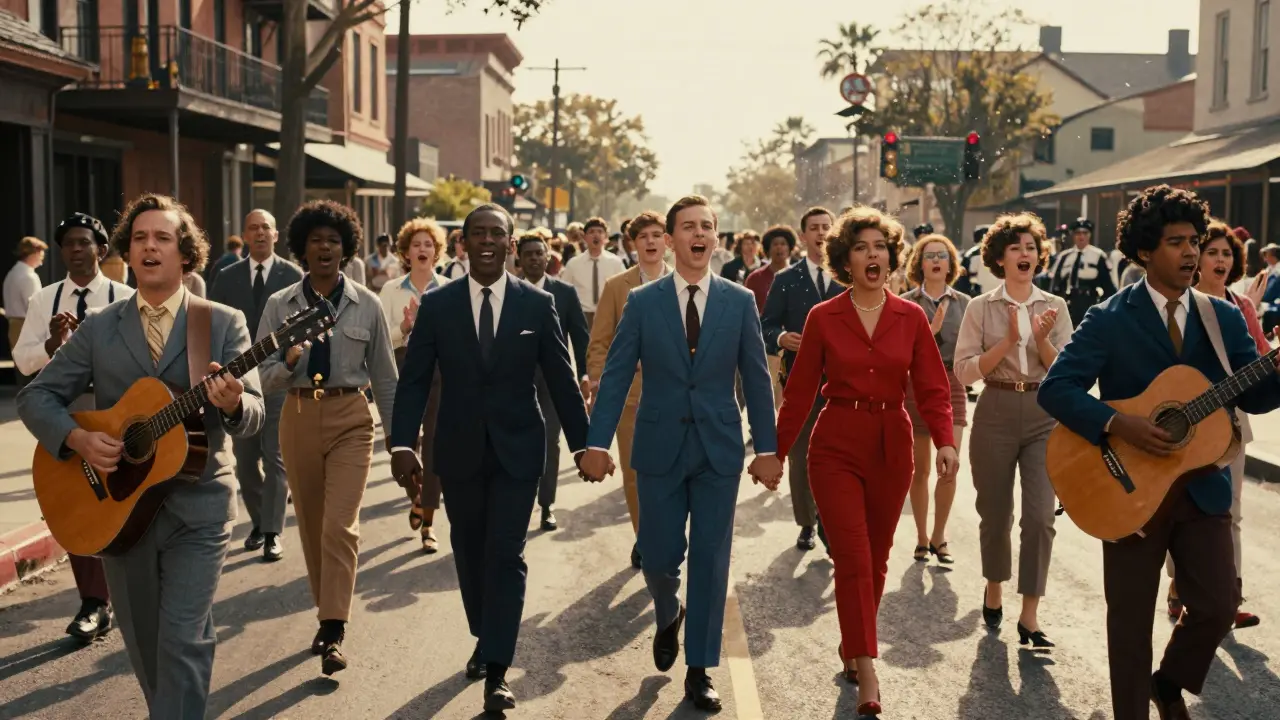
Music does more than fill the silence. It moves bodies, yes, but it also moves minds. When you look back at the major shifts in society, from the fight for voting rights to modern calls for racial justice, one sound is always there. That sound is Rhythm and Blues. Often shortened to R&B, this genre did not just reflect the times; it helped shape them. It gave a voice to those who were silenced and a beat to march to when the path forward was unclear.
We tend to think of protest songs as folk ballads with acoustic guitars. But the truth is, the energy required to sustain a movement often comes from the groove. R&B provided that energy. It blended the spirituals of the church, the work songs of the fields, and the raw emotion of the blues into something powerful enough to shake foundations. This article breaks down exactly how R&B became the soundtrack of resistance and why its role in social change remains relevant today.
The Roots: From Spirituals to Soul Power
To understand how R&B fueled social movements, we have to look at where it came from. The genre emerged in the post-World War II era, evolving directly from African American musical traditions. It wasn't created in a vacuum. It was born out of struggle. The early roots trace back to spirituals sung by enslaved people-songs that encoded messages of freedom and hope within religious lyrics.
As these traditions moved north during the Great Migration, they mixed with jazz and gospel. By the late 1940s, the term "Rhythm and Blues" was coined by Billboard magazine to market black music to a broader audience. However, the soul of the music remained deeply tied to the Black experience. Artists like Ray Charles began blending gospel harmonies with secular blues lyrics, creating a sound that felt both holy and human. This fusion was crucial. It meant that the music carried the moral weight of the church while addressing the gritty realities of everyday life.
| Era | Musical Style | Social Context | Key Function |
|---|---|---|---|
| 1940s-1950s | Jump Blues / Early R&B | Post-WWII Segregation | Cultural Identity & Pride |
| 1960s | Soul Music | Civil Rights Movement | Mobilization & Solidarity |
| 1970s | Funk / Disco | Black Power / Economic Struggle | Empowerment & Celebration |
| 1980s-1990s | New Jack Swing / Hip-Hop Soul | War on Drugs / Mass Incarceration | Consciousness & Critique |
The Civil Rights Era: Songs as Weapons
The 1960s marked the peak of R&B’s direct involvement in political activism. During the Civil Rights Movement, music was not background noise; it was a tactical tool. Marchers needed stamina. They needed to stay united when faced with police dogs and fire hoses. R&B and Soul music provided the rhythm that kept feet moving and spirits high.
Artists like Sam Cooke played a pivotal role. His song "A Change Is Gonna Come," released in 1964, became an anthem for the movement. Cooke, a pop star who crossed over to white audiences, used his platform to speak about the pain of segregation without being overtly aggressive, which allowed the message to penetrate mainstream consciousness. Similarly, Aretha Franklin, known as the Queen of Soul, recorded "Respect." While originally a duet about a man demanding respect from his partner, Franklin flipped the script. Her version became a demand for dignity from society itself, resonating with both the Civil Rights and feminist movements.
These songs served three main jobs-to-be-done for activists:
- Moral Validation: Confirming that their struggle was righteous.
- Community Building: Creating a shared emotional language among diverse groups.
- Media Amplification: Reaching audiences beyond the immediate protest sites through radio and records.
You cannot underestimate the power of a chorus that everyone can sing. When thousands of people sing the same words, they become a single entity. That unity is terrifying to oppression and empowering to the oppressed.
From Soul to Funk: The Black Power Shift
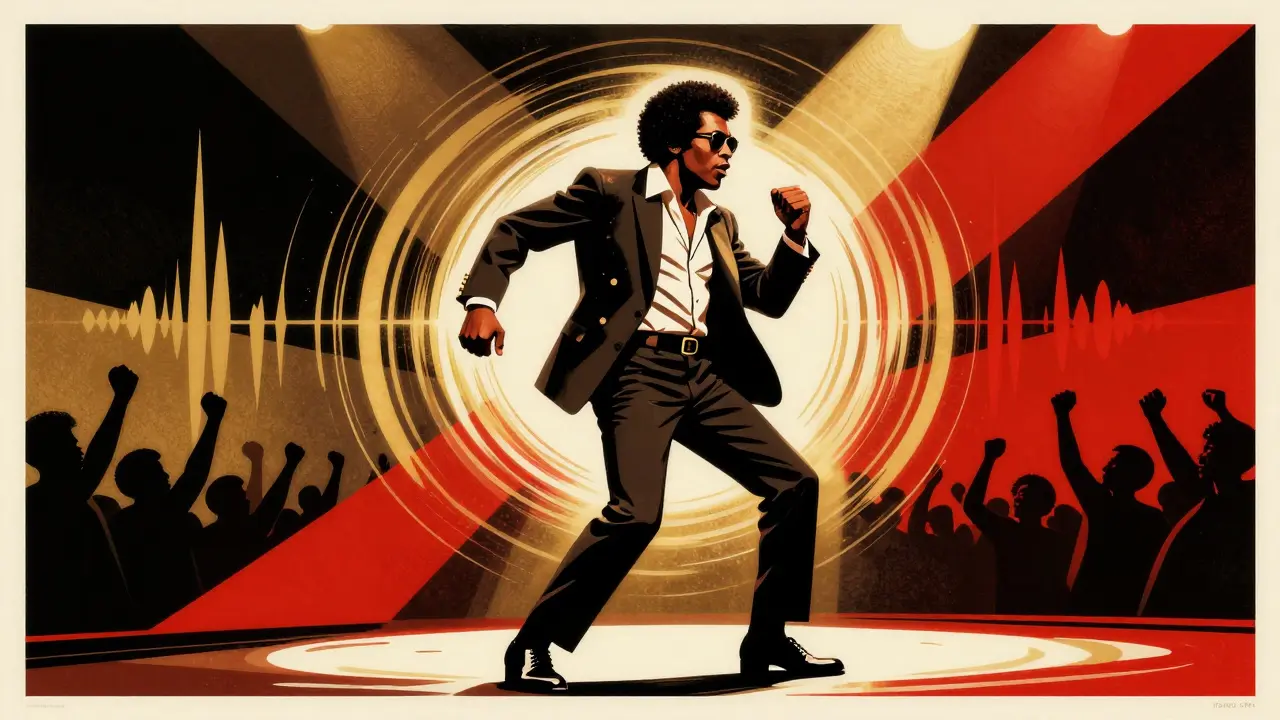
As the 1960s gave way to the 1970s, the tone of the music shifted. The gentle plea for integration gave way to a louder demand for Black Power. This shift was mirrored in the evolution from Soul to Funk. If Soul was about feeling, Funk was about force. The basslines got heavier, the rhythms more syncopated, and the lyrics more explicit about political reality.
James Brown is the central figure here. He didn't just play music; he conducted social commentary through percussion. His track "Say It Loud - I'm Black and I'm Proud" (1968) was revolutionary. Before this song, public expressions of Black pride were rare in mainstream media. Brown told young Black Americans to embrace their identity unapologetically. The repetitive, hypnotic beat reinforced the message until it became internalized.
This era also saw the rise of conscious lyricism. Artists began addressing economic disparity, police brutality, and systemic racism directly. The music became a mirror reflecting the harsh truths of urban America. For many listeners, hearing their reality described in such vivid detail was a form of healing. It validated their anger and turned it into creative energy.
The Digital Age: Hip-Hop Soul and Modern Activism
Fast forward to the late 20th and early 21st centuries. R&B evolved again, absorbing elements of Hip-Hop and electronic production. This new wave, often called Hip-Hop Soul or Contemporary R&B, continued the tradition of social critique, albeit with different tools. The internet changed how music spread, allowing artists to bypass traditional gatekeepers and speak directly to their communities.
In the 1990s and 2000s, artists like Mary J. Blige and later Beyoncé used their platforms to highlight issues facing Black women. Blige’s "My Life" spoke to survival against all odds, while Beyoncé’s visual album *Lemonade* and her performance at the Super Bowl LV halftime show explicitly honored Black culture and protested police violence. These moments showed that R&B could still be a vehicle for mass mobilization, even in an age of fragmented media.
The connection between R&B and social movements has not weakened; it has diversified. Today, streaming playlists serve as digital rally points. Hashtags accompany song releases. The mechanism has changed, but the core function remains: using rhythm and melody to articulate injustice and inspire action.
Why Rhythm Matters More Than Lyrics
It is easy to focus only on the words when discussing protest music. But the "Rhythm" in Rhythm and Blues is just as important as the "Blues." Rhythm is physical. It affects your heart rate, your breathing, and your posture. In a protest setting, a strong beat synchronizes the crowd. It creates a collective pulse.
Psychological studies suggest that synchronized movement increases feelings of trust and cooperation among participants. When you march to a drumbeat or clap along to a soulful groove, you are biologically wired to feel connected to the person next to you. This biological response is what turns a group of individuals into a movement. The lyrics provide the intellectual argument, but the rhythm provides the emotional glue.
Furthermore, R&B melodies are often designed to be memorable and emotionally resonant. They use call-and-response patterns inherited from African musical traditions. This structure invites participation. You don’t just listen to R&B; you respond to it. This interactivity makes it ideal for live gatherings where engagement is key.
Legacy and Future Directions
The role of R&B in social movements is not a chapter closed in history books. It is a living tradition. As new generations face new challenges-climate change, economic inequality, ongoing racial disparities-they turn to music for solace and strength. Contemporary R&B artists continue to blend personal narrative with political commentary, ensuring the genre remains relevant.
For listeners and creators alike, understanding this history offers a roadmap. It shows that art is not separate from politics. Art is a form of politics. By studying how past artists used R&B to challenge the status quo, we can learn how to wield our own voices effectively today. Whether you are singing in a choir, producing a beat, or simply listening with intent, you are part of this lineage.
What is the difference between R&B and Soul music?
While often used interchangeably, Soul music is a subgenre of R&B that emerged in the late 1950s and 1960s. Soul places greater emphasis on vocal delivery, gospel-influenced harmonies, and emotional intensity. R&B is a broader category that includes various styles, including Soul, Funk, and Contemporary R&B. Both genres have played significant roles in social movements, but Soul is particularly associated with the Civil Rights era due to its deep roots in the Black church.
Who were the most influential R&B artists in the Civil Rights Movement?
Key figures include Sam Cooke, whose "A Change Is Gonna Come" became a movement anthem; Aretha Franklin, whose "Respect" symbolized demands for dignity; and James Brown, whose "Say It Loud - I'm Black and I'm Proud" championed Black Power. Other notable contributors include Nina Simone, though she spanned multiple genres, and Curtis Mayfield, whose work with The Impressions addressed social issues directly.
How did R&B help unify protesters during marches?
R&B provided a rhythmic foundation that helped synchronize marching steps, reducing fatigue and maintaining order. The call-and-response nature of the music encouraged active participation, fostering a sense of community and shared purpose. Additionally, the uplifting melodies and powerful lyrics boosted morale and reinforced the moral righteousness of the cause, helping protesters withstand intimidation and violence.
Is contemporary R&B still involved in social activism?
Yes, contemporary R&B artists continue to address social issues. Artists like Beyoncé, Kendrick Lamar (who blends Hip-Hop and R&B), and H.E.R. use their platforms to advocate for racial justice, gender equality, and mental health awareness. Through visual albums, benefit concerts, and lyrical content, they keep the tradition of musical activism alive, adapting it to digital media and global audiences.
Why is rhythm considered more important than lyrics in protest music?
Rhythm has a direct physiological impact, influencing heart rate and movement. Synchronized rhythmic activities promote feelings of trust and cohesion among groups, which is essential for collective action. While lyrics convey specific messages, rhythm creates the emotional and physical bond that holds a movement together. It transforms individual listeners into a unified body capable of sustained effort and resistance.