
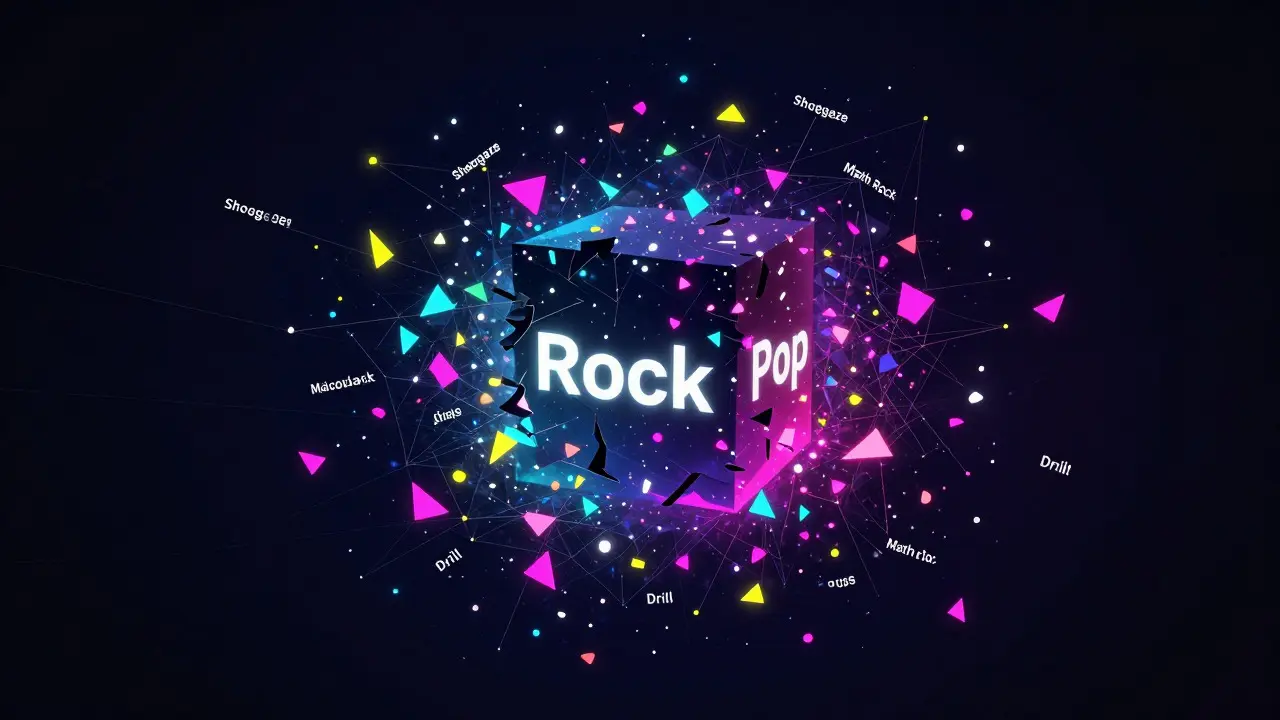
Remember when you could walk into a record store and find exactly what you wanted by looking at the broad section headers? Rock, Pop, Jazz, Hip-Hop. It was simple. Today, if you search for "rock" on any major streaming platform, you might get lost in a labyrinth of tags like "Shoegaze," "Math Rock," or "Post-Punk Revival." The landscape has shifted dramatically. We are no longer just listening to genres; we are navigating a complex ecosystem of subgenres. This fragmentation isn't just a marketing gimmick; it is a fundamental change in how music is created, discovered, and consumed.
The emergence of these hyper-specific categories reflects a deeper truth about modern culture: identity is increasingly defined by niche interests rather than broad affiliations. When a listener identifies as a fan of "Drill" rather than just "Hip-Hop," they are signaling membership in a specific cultural tribe with its own rules, aesthetics, and history. This shift has profound implications for artists, labels, and the technology that connects them to audiences.
The Death of the Broad Brush
In the pre-digital era, radio stations and physical retail spaces acted as gatekeepers. They had limited shelf space and airtime, forcing them to group music into large, digestible buckets. A band playing experimental electronic music might be forced into the "New Age" or "Ambient" category simply because there was no other place for them. This limitation bred compromise. Artists often smoothed out their edges to fit into these broader definitions.
Today, that constraint is gone. Digital platforms offer infinite shelf space. An artist can release a track that blends Lo-Fi Hip Hop with Baroque Classical elements, and algorithms will find the exact listeners who crave that specific combination. This freedom has led to an explosion of creativity. Musicians are no longer afraid to experiment because they know there is an audience for almost any sonic texture, no matter how obscure.
This democratization of distribution has also changed the speed at which trends emerge. In the past, a new style might take years to gain traction through word-of-mouth and critical acclaim. Now, a viral moment on social media can catapult a micro-genre from obscurity to mainstream awareness in weeks. Think of the rapid rise of "Hyperpop" in the early 2020s. What started as a small online community sharing exaggerated, glitchy pop tracks quickly became a recognized global phenomenon, complete with its own festivals and fashion trends.
Algorithms as Curators
If infinite choice is the engine of subgenre proliferation, then algorithmic recommendation systems are the steering wheel. Platforms like Spotify, Apple Music, and YouTube use sophisticated data analysis to identify patterns in listening behavior. These systems don't just look at genre tags; they analyze audio features such as tempo, key, danceability, and acousticness.
When you listen to a song, the algorithm doesn't just see "Jazz." It sees "Bebop-influenced, fast-tempo, saxophone-heavy instrumental." It then searches its database for other tracks with similar attributes, regardless of their official genre classification. This process creates personalized playlists that often introduce listeners to subgenres they didn't know existed. You might start listening to standard Indie Rock and gradually be guided toward "Dream Pop" or "Chamber Pop" based on subtle sonic similarities.
This dynamic has a double-edged sword effect. On one hand, it helps niche artists find dedicated fans. A musician playing "Blackgaze" (a fusion of Black Metal and Shoegaze) can build a sustainable career without ever appealing to the masses. On the other hand, it can create echo chambers. Listeners may become trapped in a loop of increasingly narrow tastes, missing out on the broader musical landscape. The challenge for platforms today is balancing personalization with discovery, ensuring that users are exposed to enough variety to keep their musical diets healthy.
Community and Identity in the Niche
Subgenres are not just about sound; they are about community. In the age of social media, finding your people is easier than ever. Online forums, Discord servers, and TikTok hashtags serve as hubs for fans of specific micro-genres. These communities develop their own slang, inside jokes, and shared values. For many young listeners, belonging to a niche music community provides a sense of identity and belonging that broader genres cannot offer.
Consider the world of K-Pop. While K-Pop itself is a massive global industry, it is further divided into numerous subgenres and styles, each with its own dedicated fanbase. Fans of "Girl Crush" concepts differ significantly from those who prefer "Ballad" groups. These distinctions allow fans to curate their identities more precisely. They can connect with others who share not just a love for Korean music, but a specific aesthetic and emotional experience.
This tribalism extends beyond passive listening. Fans actively participate in the creation and promotion of subgenres. They create memes, edit videos, and organize virtual listening parties. This grassroots energy often drives the commercial success of niche sounds. Record labels and major artists pay close attention to these online communities, recognizing that the next big trend is likely brewing in a Discord server or a Reddit thread long before it hits the Billboard charts.
Impact on Artist Development
For emerging artists, the rise of subgenres presents both opportunities and challenges. The opportunity lies in the ability to stand out. In a sea of generic pop songs, a unique blend of styles can capture attention. Artists can leverage subgenre tags to reach targeted audiences. By optimizing their metadata with specific keywords like "Synthwave" or "Vaporwave," they increase the likelihood of being recommended to listeners who are actively seeking that sound.
However, this specificity can also be limiting. If an artist becomes too closely associated with a fleeting micro-trend, they risk being discarded when the trend fades. The lifecycle of a subgenre can be incredibly short. What is cool today may be considered outdated tomorrow. Successful artists must navigate this volatility by building a core identity that transcends temporary trends while still engaging with current movements.
Moreover, the pressure to fit into a subgenre can stifle artistic growth. Labels and managers may push artists to conform to the expectations of a particular niche to ensure consistent streaming numbers. This can lead to creative stagnation. The most enduring artists are often those who resist easy categorization, blending influences from multiple subgenres to create something entirely new. They use the language of subgenres but refuse to be confined by it.
The Future of Musical Classification
As technology continues to evolve, so too will our methods of classifying music. Artificial intelligence is already beginning to play a larger role in tagging and categorizing tracks. AI models can analyze millions of songs simultaneously, identifying patterns and connections that human curators might miss. This could lead to even more granular classifications, potentially creating thousands of new subgenres.
We may also see a shift away from text-based tags toward visual or experiential categorizations. Imagine a music app that organizes songs based on mood, activity, or physiological response rather than traditional genre labels. You might search for "songs that make me feel nostalgic" or "tracks for high-intensity workouts," and the system would pull from across all genres to meet your needs. This approach prioritizes function over form, reflecting how many people actually use music in their daily lives.
Despite these changes, the human desire for connection remains constant. Whether through broad genres or hyper-specific subgenres, music serves as a bridge between individuals. It allows us to express ourselves, connect with others, and make sense of the world around us. As long as humans continue to create and consume music, we will continue to find new ways to categorize and celebrate the diversity of sound.
What is the difference between a genre and a subgenre?
A genre is a broad category of music characterized by common conventions and styles, such as Rock or Jazz. A subgenre is a specialized subdivision within a genre, possessing distinct characteristics that set it apart from the broader category. For example, Punk Rock is a subgenre of Rock, while Bebop is a subgenre of Jazz. Subgenres often emerge as artists experiment with and refine the elements of the parent genre.
How do streaming algorithms influence the popularity of subgenres?
Streaming algorithms analyze user listening habits and audio features to recommend songs. By identifying patterns, they can surface niche subgenres to listeners who show interest in related sounds. This targeted exposure helps micro-genres gain traction faster than in the past, allowing them to build dedicated fanbases without needing mainstream radio support. Algorithms essentially act as digital curators, connecting obscure music with eager audiences.
Why are micro-genres becoming more popular among younger listeners?
Younger listeners often use music as a tool for identity formation. Micro-genres offer a higher degree of specificity, allowing individuals to signal nuanced aspects of their personality and taste. Belonging to a niche community provides a sense of exclusivity and connection that broader genres may lack. Additionally, digital natives are accustomed to navigating vast amounts of information, making them comfortable exploring and defining themselves through highly specific cultural markers.
Can an artist belong to multiple subgenres?
Yes, many artists blend elements from multiple subgenres to create unique sounds. This cross-pollination is common in modern music production. For instance, an artist might combine Trap beats with Indie Rock guitar riffs. While this can make categorization difficult for platforms, it often leads to innovative and fresh musical experiences. Audiences are increasingly open to hybrid styles, appreciating artists who defy strict boundaries.
Do subgenres have a shorter lifespan than main genres?
Generally, yes. Subgenres, especially micro-genres driven by internet trends, tend to have shorter lifespans. They can rise rapidly due to viral moments but may fade just as quickly as attention shifts. Main genres, however, are more resilient and endure over decades or centuries. Some subgenres eventually mature into established genres if they gain widespread acceptance and historical significance, but many remain fleeting phenomena.