
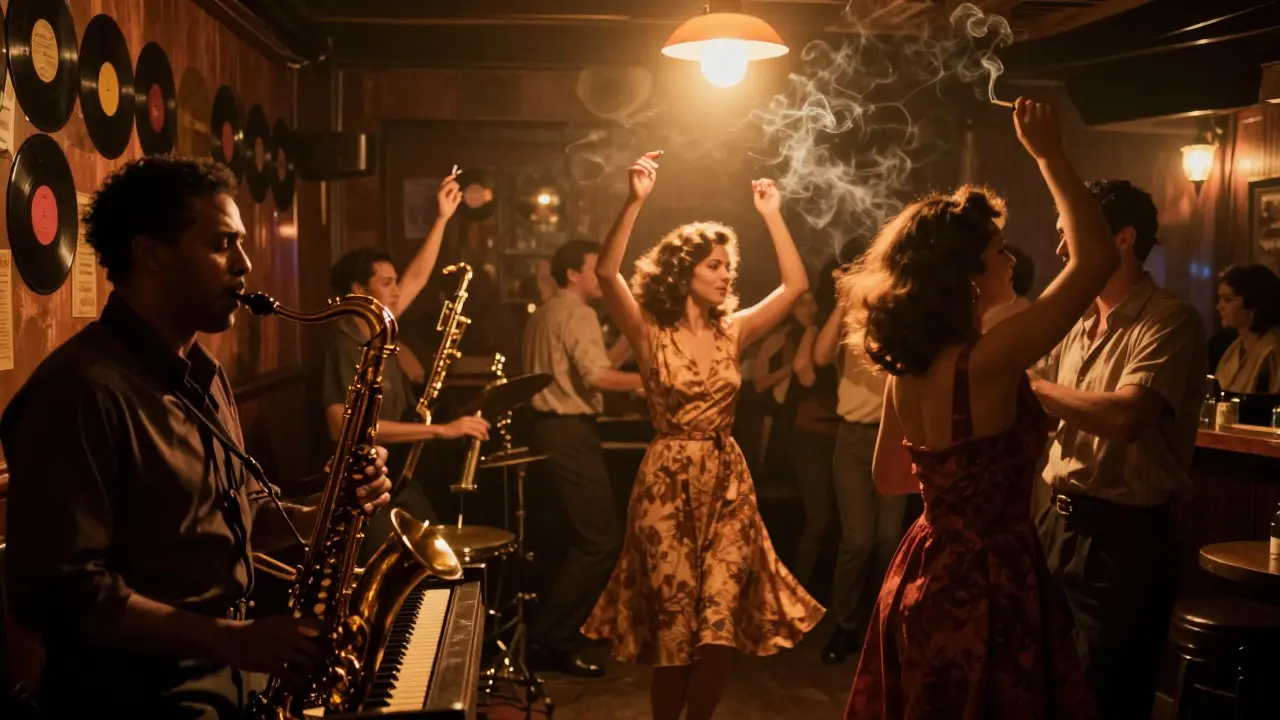
Rhythm and blues didn’t just appear one day in a recording studio. It was born from sweat, church choirs, juke joints, and the quiet defiance of Black Americans in the 1940s who refused to be silenced. It wasn’t called R&B at first. Record labels labeled it "race records"-a term that stuck until 1949, when Jerry Wexler at Billboard finally replaced it with something that matched the sound: rhythm and blues.
Where It All Began: The Blues Meet the Big Band
Before there was Marvin Gaye or Aretha Franklin, there was Louis Jordan. His 1943 hit "Caldonia" wasn’t just danceable-it was revolutionary. Jordan mixed jump blues with tight horn sections, driving backbeats, and lyrics that spoke to everyday life: work, love, and getting by. That’s the DNA of R&B. It took the raw emotion of Delta blues, sped it up, added swing, and made it for the people who couldn’t afford to sit still.
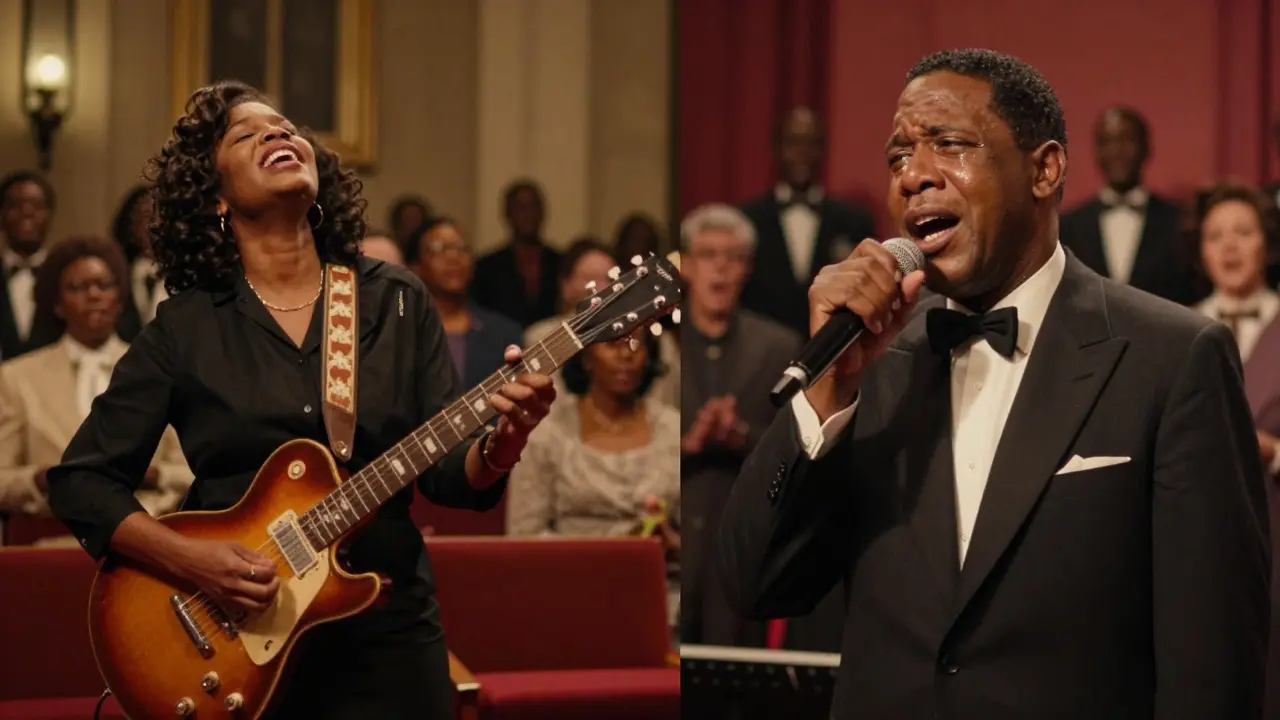
At the same time, gospel choirs were filling churches with call-and-response vocals, hand-claps, and soaring harmonies. Artists like Sister Rosetta Tharpe didn’t just sing spirituals-she played electric guitar like a rockstar, long before Elvis. Her 1938 recording of "Strange Things Happening Every Day" is often called the first R&B record. It had the groove of the blues, the fire of the church, and the energy of a party you didn’t want to leave.
The Post-War Explosion: Urban Sounds, Urban Lives
After World War II, millions of Black families moved from the rural South to cities like Chicago, Detroit, and New York. They brought their music with them. In cramped apartments and small clubs, the sound evolved. Pianos replaced banjos. Electric guitars cut through the noise. Bass lines became thicker. Drums locked into a steady, head-nodding rhythm.
Artists like Ray Charles took gospel vocals and dropped them into secular songs. His 1954 hit "I Got a Woman" didn’t just borrow the melody-it borrowed the feeling. He sang about love like it was salvation, and suddenly, church music wasn’t just for Sundays anymore. That song sold over a million copies. It wasn’t just popular-it was a cultural earthquake.
Across town, Ruth Brown was selling records like crazy at Atlantic Records. Her 1950 single "Mama, He Treats Your Daughter Mean" hit No. 1 on the R&B charts. She wasn’t just a singer-she was the voice of working women who had been ignored by mainstream radio. Atlantic’s founder, Ahmet Ertegun, called her "the queen of R&B." She made the label profitable before rock and roll even existed.
The Transition to Soul and Rock and Roll
By the late 1950s, R&B was no longer just one sound. It was splitting into branches. In New Orleans, Fats Domino and Little Richard turned R&B into something wilder-faster, louder, piano-driven. Their records didn’t just cross over-they exploded. Little Richard’s "Tutti Frutti" (1955) was pure chaos: screaming, pounding keys, and a beat that made teenagers forget their parents’ rules.
Meanwhile, Sam Cooke was smoothing things out. His 1957 song "You Send Me" was the first R&B record to top the pop charts. He didn’t shout. He crooned. His voice was velvet. That’s when the line between R&B and soul started to blur. Soul wasn’t just music-it was feeling with a backbone.
And then there was Elvis. He didn’t invent rock and roll. He popularized it. But he didn’t do it alone. He took R&B songs like "Hound Dog" (originally by Big Mama Thornton) and sang them with a Southern twang. The result? White teens bought the records. Black artists got paid less. The industry copied, whitewashed, and profited. That’s the ugly side of R&B’s rise.
The Motown Machine: R&B Goes Mainstream
By the early 1960s, Detroit became the engine of R&B. Berry Gordy started Motown Records in a small house on West Grand Boulevard. He didn’t just want hits-he wanted polish. Motown artists were trained in etiquette, choreography, and vocal harmony. They were sent to finishing school. Diana Ross, Marvin Gaye, Stevie Wonder-they weren’t just singers. They were products. But they were brilliant ones.
Motown’s sound was clean: tambourines on the backbeat, crisp bass lines, strings layered under gospel-style vocals. "My Girl" by The Temptations, "Ain’t No Mountain High Enough" by Marvin Gaye and Tammi Terrell-these weren’t just songs. They were emotional blueprints. They crossed racial lines in a way few things had before. Radio stations that refused to play "race records" now played Motown without hesitation.
But behind the glossy image, the artists were fighting. Marvin Gaye wrote "What’s Going On" in 1971 as a protest against war, poverty, and police brutality. It wasn’t just R&B-it was a cry for justice. The label didn’t want it. But Gaye refused to change it. The song hit No. 1. That’s the power of R&B: it could be sweet, but it could also be sharp.
From Disco to Hip-Hop: The Legacy Lives On
By the 1970s, funk and disco took over. James Brown’s tight rhythms and syncopated grooves became the foundation for hip-hop. DJs like Kool Herc spun breaks from James Brown’s "Funky Drummer"-the most sampled drum break in history. R&B didn’t disappear. It got chopped up, looped, and rebuilt.
In the 1980s, Prince fused R&B with rock, synth-pop, and funk. "When Doves Cry" had no bass line. That was a risk. But it worked. He made R&B sound futuristic. Whitney Houston took gospel vocals and turned them into stadium anthems. Her version of "I Will Always Love You" wasn’t just a ballad-it was a moment.
By the 1990s, R&B had become synonymous with slow jams, sensual beats, and whispered confessions. TLC, Mary J. Blige, and Boyz II Men ruled the charts. Mary’s 1992 album "What’s the 411?" mixed hip-hop beats with soulful cries. It was raw. It was real. It sold over 5 million copies.
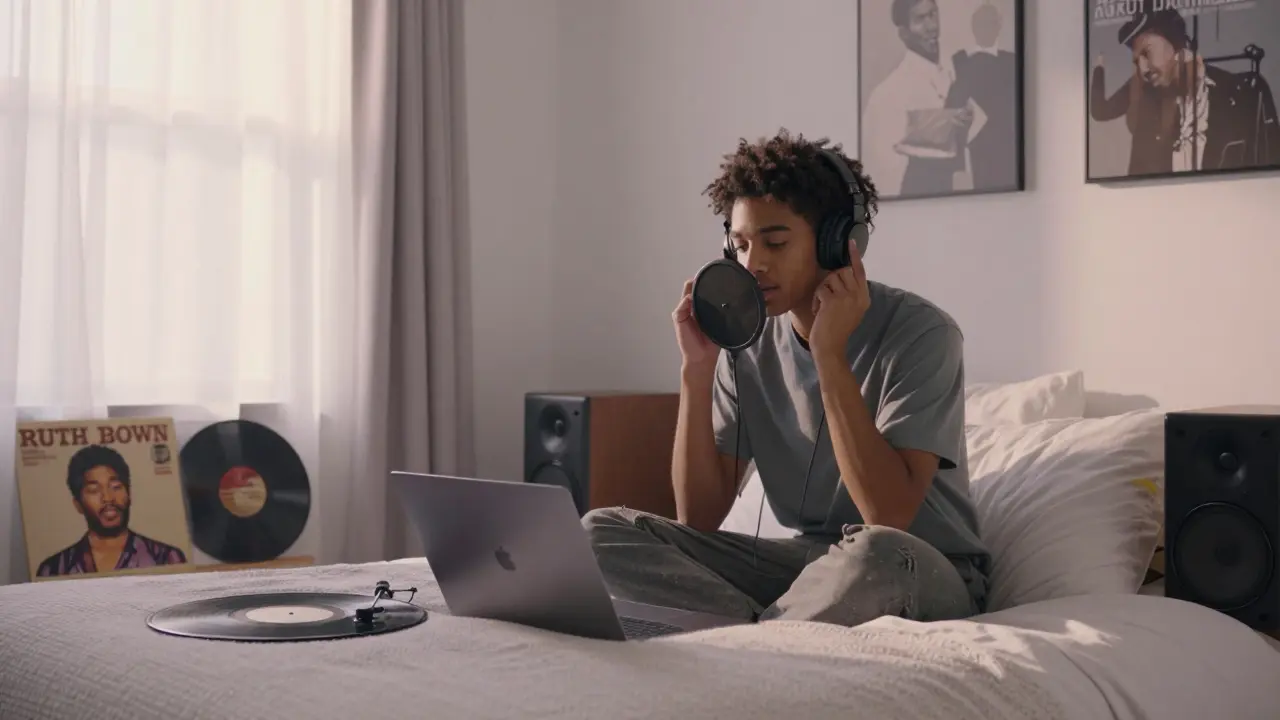
Today, artists like SZA, H.E.R., and Brent Faiyaz still carry the torch. They don’t just sing about love-they sing about trauma, healing, identity. The structure might be different: Auto-Tune, trap beats, lo-fi production. But the heart? That’s still the same. It’s still the same voice that started in a Mississippi church and moved through a Chicago tenement, a Detroit studio, and now a bedroom in Atlanta.
Why R&B Still Matters
R&B isn’t just a genre. It’s a thread that connects generations. It’s the reason pop music has a backbeat. It’s why Beyoncé can sing a ballad and then drop a trap verse. It’s why a 16-year-old in Tokyo can feel the ache in a 1953 record by Ruth Brown.
Every time a singer holds a note just a second too long, every time a bassline locks in with a snare, every time lyrics turn pain into poetry-that’s R&B. It’s the sound of survival. Of joy after sorrow. Of love that won’t let go.
You don’t need to know the history to feel it. But if you do, you’ll hear it everywhere. In the drums of a Kendrick Lamar track. In the harmonies of a Taylor Swift ballad. In the way a voice cracks on a high note-not because it’s broken, but because it’s telling the truth.
What’s the difference between R&B and soul music?
R&B is the broader category that includes soul. R&B started in the 1940s as a mix of blues, jazz, and gospel. Soul emerged in the 1960s as a more emotional, gospel-driven offshoot. Artists like Ray Charles and Aretha Franklin are considered soul because they poured deep spiritual feeling into secular songs. All soul is R&B, but not all R&B is soul.
Who is considered the father of R&B?
There’s no single "father," but Louis Jordan is often called the grandfather of R&B. His jump blues hits in the 1940s laid the blueprint: upbeat rhythms, horns, and lyrics about everyday life. Ray Charles and Sam Cooke later expanded it into soul. But Jordan’s music was the first to make Black music mainstream without losing its roots.
Did R&B influence rock and roll?
Absolutely. Rock and roll was built on R&B. Elvis, Chuck Berry, Jerry Lee Lewis-they all covered R&B songs. The driving backbeat, the electric guitar riffs, the raw vocal delivery-all came from R&B artists. Even the term "rock and roll" was originally slang in R&B lyrics. The difference? White artists got radio play and royalties. Black pioneers were often erased from the story.
Why was the term "race records" replaced with "R&B"?
"Race records" was a racist label used by record companies to market music made by Black artists to Black audiences. In 1949, Jerry Wexler, a producer at Billboard, proposed "rhythm and blues" as a more accurate and respectful term. It reflected the music’s groove and emotion, not the skin color of the artists. The change helped break down barriers on radio and in sales.
Is modern pop music still influenced by R&B?
Every day. From The Weeknd’s moody vocals to Ariana Grande’s vocal runs, from Doja Cat’s rhythmic flow to Ed Sheeran’s use of syncopated beats-R&B is the hidden architecture of pop. The vocal runs, the ad-libs, the emphasis on groove over melody, the way singers bend notes for emotion-all come from R&B traditions. Even if you don’t hear the blues in it, you’re still hearing its descendants.