
Rock music didn’t just change the sound of the 20th century-it rewired culture, fashion, politics, and how people thought about freedom. Some bands didn’t just play songs; they built movements. Others sold hundreds of millions of records, broke touring records, and influenced every band that came after them. So who really made the cut as the most successful rock bands of all time? It’s not just about chart numbers. It’s about impact, longevity, innovation, and how deeply they dug into the soul of a generation.
The Beatles: The Blueprint
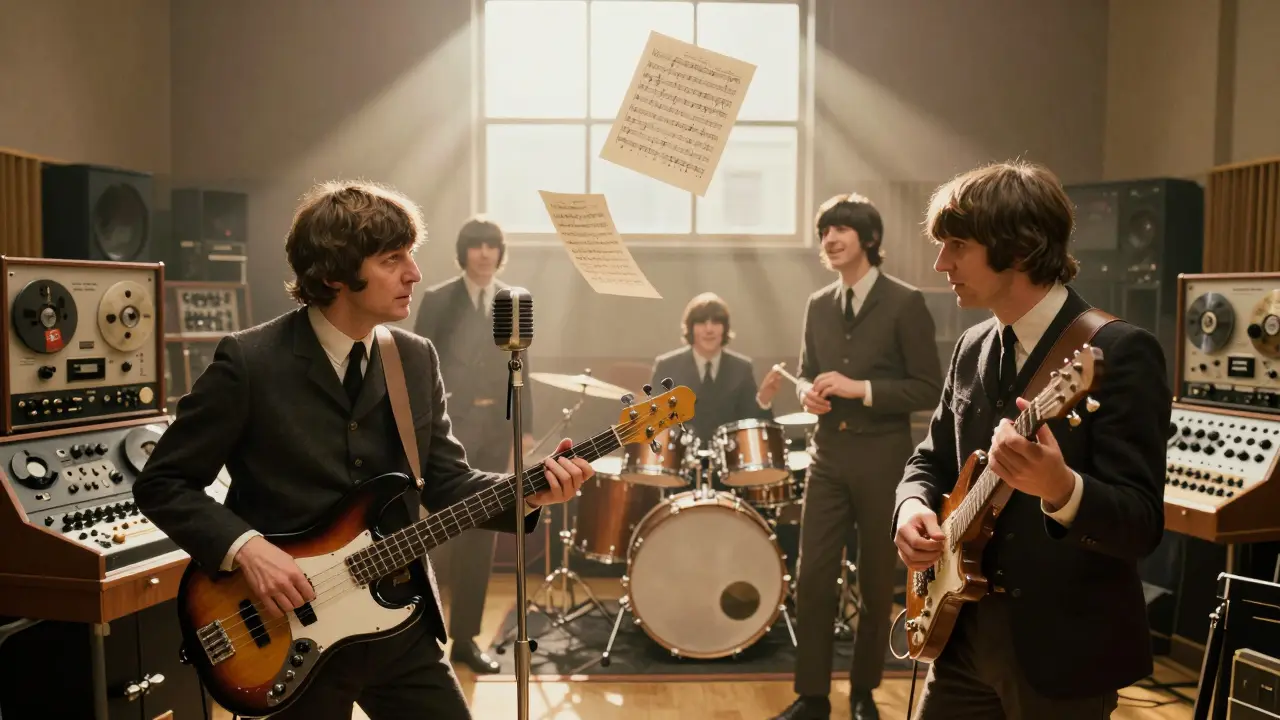
Before there was rock as we know it, there were four guys from Liverpool who turned pop into art. The Beatles didn’t just top charts-they redefined what a band could be. They went from playing tiny clubs in Hamburg to selling over 600 million units worldwide, making them the best-selling music act in history. Their albums-Revolver, Abbey Road, Sgt. Pepper’s-weren’t just collections of songs. They were sonic experiments that pushed studio technology to its limits. Paul McCartney’s bass lines became melodies. George Harrison brought sitars into mainstream rock. John Lennon wrote lyrics that sounded like poetry. And Ringo Starr? His drumming was simple, but perfect. No one else has matched their combination of mass appeal and artistic risk. They didn’t just succeed-they created the template for every rock band that followed.
Rolling Stones: The Enduring Rebels
If The Beatles were the dreamers, the Rolling Stones were the ones who stayed up all night, lit a cigarette, and said, ‘Let’s do it anyway.’ Formed in 1962, they’ve been touring and recording for over 60 years. They hold the record for the longest-running band with the same original members (Mick Jagger and Keith Richards). Their album sales? Over 240 million. Their live shows? Still selling out stadiums in their 70s and 80s. What made them different? They never chased perfection. They chased energy. Songs like ‘(I Can’t Get No) Satisfaction,’ ‘Paint It Black,’ and ‘Jumpin’ Jack Flash’ weren’t written to win awards-they were written to make people move. And they still do. While other bands faded, the Stones kept the blues alive, turned rebellion into a brand, and proved that rock doesn’t have an expiration date.
Queen: The Theatrical Giants
Queen didn’t just play rock-they turned it into opera with electric guitars. Freddie Mercury’s voice could go from a whisper to a scream in one note. Brian May’s guitar tone? Built from a homemade axe and layered harmonies that sounded like a choir of angels on fire. Their 1975 album A Night at the Opera cost more than any rock album before it-and became a global smash. ‘Bohemian Rhapsody’ wasn’t just a song; it was a six-minute epic with no chorus, no bridge, and no rules. It topped charts twice-once in 1975, again in 1991 after Mercury’s death. They sold over 300 million records worldwide. And let’s not forget Live Aid in 1985. Their 20-minute set is still called the greatest live performance in rock history. Queen didn’t need to be cool. They were loud, bold, and unapologetically themselves-and the world loved them for it.
Led Zeppelin: The Architects of Heavy Rock
Before metal, before hard rock, before the word ‘heavy’ was used to describe music, Led Zeppelin made it sound like thunder. Jimmy Page’s riffs on ‘Whole Lotta Love’ and ‘Kashmir’ became the foundation for generations of guitarists. Robert Plant’s howl carried myth and mystery. John Bonham’s drums? Still studied today-his triplets on ‘When the Levee Breaks’ are the gold standard. John Paul Jones? The silent genius who played bass, keyboards, and mandolin like no one else. They never released singles to radio, yet their albums sold over 300 million copies. They didn’t tour much, but when they did, it was legendary. Their 1977 U.S. tour grossed more than $100 million in today’s money. And despite breaking up in 1980 after Bonham’s death, they remain the most bootlegged band in history. They didn’t need to be everywhere-they just needed to be unforgettable.
Pink Floyd: The Soundtrack to the Cosmos
Pink Floyd didn’t write songs-they built worlds. Dark Side of the Moon spent 961 weeks on the Billboard chart. That’s nearly 18 and a half years. Wish You Were Here and The Wall weren’t just albums-they were immersive experiences. Roger Waters’ lyrics dealt with alienation, war, madness, and loss. David Gilmour’s guitar solos felt like emotions made audible. Their live shows used lasers, inflatables, and projections before anyone else even thought of it. They sold over 250 million records. Unlike other bands chasing hits, Pink Floyd chased ideas. They made music for people who wanted to get lost in sound. And they never stopped. Even after Waters left, the band kept going-because the music was bigger than any one person.
AC/DC: The Unstoppable Engine
Forget complexity. AC/DC believed in three chords, a thunderous beat, and a scream that came straight from the gut. Formed in Sydney in 1973, they became global giants without ever changing their formula. Brian Johnson’s voice? Raw power. Angus Young’s schoolboy uniform and lightning-fast riffs? Iconic. Songs like ‘Back in Black,’ ‘Highway to Hell,’ and ‘Thunderstruck’ are played at sports arenas, weddings, and car radios from Tokyo to Toronto. They’ve sold over 200 million records. ‘Back in Black’ alone is the second-best-selling album in history, with over 50 million copies. They never did interviews about their ‘meaning.’ They just showed up, played loud, and left the crowd breathless. No reinvention. No gimmicks. Just pure, unfiltered rock and roll. That’s why they still sell out stadiums decades later.
The Who: Power, Destruction, and Soul
The Who turned chaos into art. Pete Townshend smashed guitars on stage before anyone else thought to. Roger Daltrey’s screams could shake walls. Keith Moon’s drumming? Wild, unpredictable, and perfect. Their 1969 album Tommy was rock’s first opera-a 50-minute story about a deaf, dumb, and blind boy who becomes a messiah. It sold over 20 million copies. Their live shows were legendary for their destruction and energy. They didn’t just play music-they exploded it. Songs like ‘My Generation’ became anthems for youth rebellion. They influenced punk, metal, and alternative rock. Even after Moon’s death in 1978 and Townshend’s health struggles, they kept touring. Why? Because their music still had something to say. And people still needed to hear it.
Why These Bands? The Real Measure of Success
Success in rock isn’t just about sales or chart positions. It’s about how deeply a band’s sound got under your skin. It’s about the kid in 1982 who heard ‘Stairway to Heaven’ and picked up a guitar for the first time. It’s about the teenager in 2010 who found ‘Bohemian Rhapsody’ on YouTube and cried because it felt like someone finally understood them. These bands didn’t just make music-they created emotional landmarks. They didn’t follow trends. They set them. They didn’t chase fame. They earned it by being fearless, relentless, and true to their vision. And even today, when a new band picks up a guitar, they’re still standing on the shoulders of these giants.
Which rock band sold the most albums?
The Beatles hold the record for the highest album sales in history, with over 600 million units sold worldwide. They’re the only band to have more than 20 albums certified diamond or platinum by the RIAA. No other group comes close in total sales across all formats-vinyl, cassette, CD, and digital.
What rock band has been active the longest?
The Rolling Stones have been performing and recording continuously since 1962. With Mick Jagger and Keith Richards still touring in their 80s, they hold the record for the longest-running rock band with original members. Other bands like AC/DC and U2 have also had long runs, but none match the Stones’ six-decade streak of touring and releasing new music.
Which rock band had the biggest live performance?
Queen’s performance at Live Aid in 1985 is widely regarded as the greatest live rock show ever. Playing just 20 minutes in front of 72,000 people at Wembley Stadium and over 1.9 billion TV viewers, they turned a short set into a global moment. Their energy, vocal power, and tight musicianship made the entire world stop and pay attention. Many musicians still cite it as their inspiration to get on stage.
Did any rock band influence modern genres like hip-hop or electronic music?
Absolutely. Led Zeppelin’s use of rhythm and bass grooves inspired early hip-hop producers who sampled their tracks. Pink Floyd’s atmospheric soundscapes became the blueprint for ambient and electronic artists like Brian Eno and Aphex Twin. Even bands like Nirvana and Radiohead owe their experimental side to The Who and Pink Floyd. Rock’s DNA is in almost every genre today-it’s just buried under layers of technology.
Why do older rock bands still sell out concerts today?
Because their music isn’t nostalgia-it’s timeless. These bands wrote songs that tap into universal emotions: freedom, heartbreak, rebellion, wonder. A 17-year-old today can feel ‘Stairway to Heaven’ the same way a 50-year-old does. Plus, modern touring tech lets bands recreate the magic of their studio albums live. The sound is better, the visuals are stunning, and the connection between artist and fan hasn’t faded. Rock isn’t dead-it just got older, and so did its audience.
These bands didn’t just make music. They gave people a voice when they felt unheard. They turned noise into meaning. And even now, in a world of algorithms and playlists, their songs still rise above the noise. That’s not success. That’s legacy.