
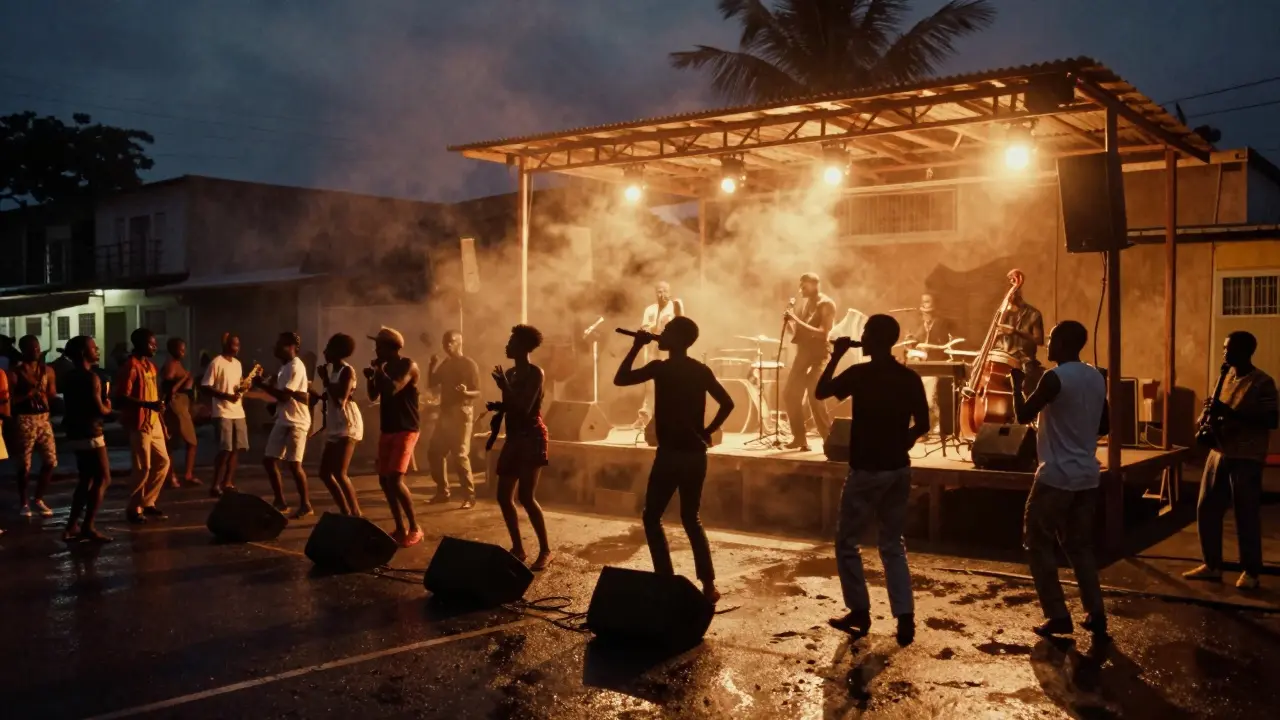
Picture a warm evening in Kingston, Jamaica, in the late 1960s. The air is thick with humidity and anticipation. A band plugs into their amps, but instead of the frantic energy of ska or the mid-tempo groove of rocksteady, they slow it down. The bass line becomes heavier, deeper, almost hypnotic. The drums emphasize the third beat-the "skank." This wasn't just a change in tempo; it was a birth. Reggae music is a genre that originated in Jamaica in the late 1960s, characterized by its distinctive off-beat rhythms, heavy bass lines, and socially conscious lyrics. It didn't just stay on the island. It crossed oceans, challenged governments, and rewired the DNA of global popular culture.
You might think you know reggae because of a few famous names, but the story is much richer. It’s a tale of political struggle, spiritual awakening, and sonic innovation. Today, we’re looking at how this sound moved from the dancehalls of Trench Town to stadiums in London, Tokyo, and beyond. We’ll explore why the rhythm sticks in your head, how it became a voice for the oppressed, and why it still matters in 2026.
The Sonic Blueprint: How Reggae Was Born
To understand reggae, you have to look at what came before. Music doesn’t appear in a vacuum. In Jamaica, the post-independence era (Jamaica gained independence in 1962) was a time of searching for identity. Before reggae, there was Ska is an upbeat Jamaican music genre that emerged in the late 1950s, combining mento, calypso, jazz, and R&B. Ska was fast, energetic, and perfect for dancing. But as the years passed, musicians wanted something different. They slowed it down to create Rocksteady is a slower, more romantic precursor to reggae that emphasized vocal harmonies and a steady drum beat. Rocksteady lasted only a few years, roughly from 1966 to 1968.
Then came the shift. Producers like Lee "Scratch" Perry is a legendary Jamaican record producer and songwriter who pioneered experimental studio techniques and shaped the sound of reggae. and artists began emphasizing the bass and the off-beat guitar chops. The result was a sparse, rhythmic pulse known as the "One Drop." In this rhythm, the kick drum often misses the first beat entirely, creating a sense of suspension. It feels like you’re floating. This technical choice wasn’t accidental; it mirrored the spiritual and social mood of the time-resilience through patience.
Key early tracks like Toot and the Maytals' "Do the Reggay" (1968) literally named the genre. But it was the production style that defined it. Studios like Channel One and Black Ark became laboratories. Engineers used tape loops, echo chambers, and dub plates to create immersive soundscapes. This wasn’t just background music; it was an experience.
Beyond the Beat: Lyrics as Resistance
If the rhythm gets your body moving, the lyrics get your mind working. Reggae has always been deeply connected to social justice. Unlike many pop genres that focus on romance or partying, early reggae addressed poverty, colonialism, and racial inequality. This subgenre, known as Roots Reggae is a style of reggae music that focuses on traditional themes such as Rastafari spirituality, African heritage, and social justice., became the soundtrack for the marginalized.
Central to this movement was Rastafari is a Afro-Caribbean religious and cultural movement that originated in Jamaica in the 1930s, emphasizing African identity, repatriation, and the divinity of Haile Selassie I.. For Rastafarians, music was not entertainment; it was "livity"-a way of living. Songs preached Babylon (the oppressive Western system) would fall and Zion (spiritual freedom/Africa) would rise. Artists like Peter Tosh is a Jamaican singer-songwriter and guitarist, best known as a member of The Wailers, who wrote politically charged anthems like 'Legalize It' and 'Equal Rights'. and Bunny Wailer is a Jamaican reggae musician and one-third of The Wailers, known for his deep spiritual approach to roots reggae and solo work like 'Blackheart Man'. used their platforms to challenge authority. When Bob Marley sang "Get Up, Stand Up," he wasn’t asking politely; he was demanding dignity.
This lyrical depth resonated far beyond Jamaica. In South Africa, during apartheid, reggae was banned by the government because its message of unity and resistance was too dangerous. Yet, it thrived underground. In the UK, among Caribbean immigrants facing racism and housing discrimination, reggae provided a sense of community and validation. The music said, "You are not alone."
The Global Ambassador: Bob Marley and The Wailers
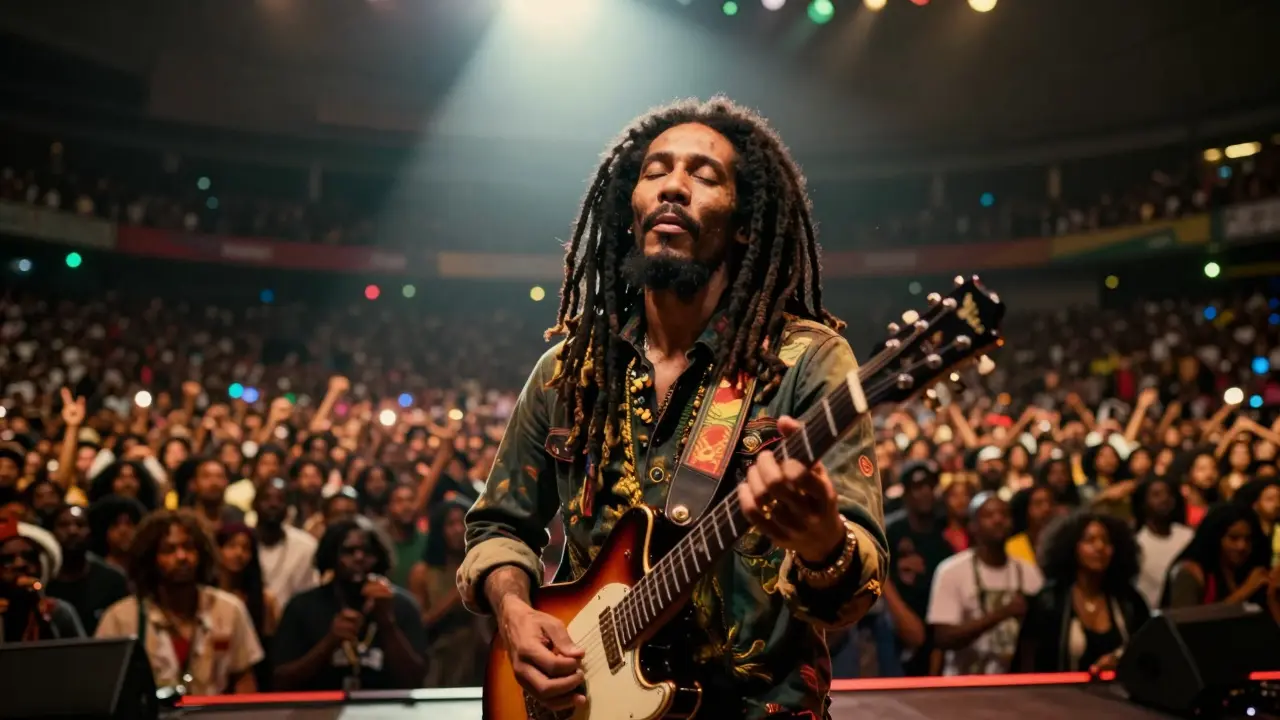
You cannot talk about reggae’s global rise without discussing Bob Marley is a Jamaican singer-songwriter and musician who achieved international fame and became the most prominent figure in reggae music.. While he was part of a larger movement, Marley possessed a unique charisma and musical simplicity that translated across language barriers. His band, The Wailers is a Jamaican reggae group founded by Bob Marley, Peter Tosh, and Bunny Wailer, which later evolved into Bob Marley & The Wailers., refined the sound for international audiences. Albums like *Exodus* (1977) and *Kaya* (1978) were not just hits; they were cultural exports.
Marley’s strategy was smart. He kept the core elements-the One Drop rhythm, the bass-heavy mix-but added polished production and universal themes. Love, peace, and hope are languages everyone understands. When he performed at the "One Love Peace Concert" in Kingston in 1978, bringing political rivals Michael Manley and Edward Seaga together on stage, the world watched. That image cemented reggae as a force for peace.
His death in 1981 was a turning point. Instead of fading away, his legacy expanded. Tributes, cover versions, and documentaries introduced new generations to his work. He became a symbol of anti-colonial resistance and spiritual integrity. Today, Tuff Gong Studios remains a pilgrimage site for fans worldwide, proving that his influence is not just historical but ongoing.
Cross-Pollination: Reggae’s Impact on Other Genres
Reggae didn’t just travel; it infected other styles. Its rhythmic structure and production techniques seeped into punk, hip-hop, electronic music, and even classical compositions. Let’s look at how this happened.
| Genre | Key Connection to Reggae | Notable Examples |
|---|---|---|
| Punk Rock | Shared DIY ethos, anti-establishment lyrics, and stripped-down instrumentation. Bands like The Clash covered reggae songs. | The Clash - "Police Thieves", The Specials - "Ghost Town" |
| Hip-Hop | Sampling of reggae breaks, use of toasting (precursor to rapping), and shared themes of urban struggle. | Public Enemy, N.W.A., modern trap beats using reggae samples |
| Dubstep/Electronic | Heavy basslines, spacious mixes, and emphasis on low-frequency effects derived from Dub music. | Skrillex, Skream, Burial |
| Pop | Rhythmic grooves and melodic structures adopted by mainstream artists seeking a relaxed vibe. | Lady Gaga - "Marry the Night", Rihanna - various tracks |
In the UK, the 2-Tone Movement is a musical and cultural movement in the early 1980s that fused ska, punk, and reggae, promoting multi-racial unity through music. merged punk energy with ska/reggae rhythms. Bands like The Specials and Madness brought these sounds to white British youth, breaking down racial barriers in nightlife. This fusion proved that reggae’s appeal wasn’t limited by race or geography.
In the US, hip-hop producers sampled reggae records extensively. The breakbeats from reggae tracks provided the backbone for early rap. Toasting-a style of rhythmic talking over instrumental tracks-was directly influenced by Jamaican DJs like U-Roy and King Stitt. Without reggae, hip-hop might have sounded very different.
The Digital Age: Reggae in the 21st Century
Fast forward to today. Is reggae still relevant? Absolutely. While the classic roots sound remains strong, the genre has evolved. Dancehall is a genre of Jamaican popular music that originated in the late 1970s, characterized by faster tempos, digital instrumentation, and toasting vocals. has become a global phenomenon. Artists like Sean Paul, Shaggy, and more recently, Spice and Popcaan, have dominated charts worldwide. Dancehall is more aggressive, club-oriented, and digitally produced than traditional reggae, but it shares the same rhythmic DNA.
Streaming platforms have democratized access. You don’t need to import vinyl from Kingston anymore. Algorithms introduce young listeners in Brazil, Japan, and Scandinavia to both classic roots and modern dancehall. Festivals like Reggae Sumfest in Montego Bay and Rebel Salute in London draw diverse crowds. The music is no longer niche; it’s part of the global playlist.
Moreover, younger artists are blending reggae with indie rock, jazz, and electronic music. Bands like Alpha Blondy (from Ivory Coast) and Chronixx (from Jamaica) keep the roots alive while experimenting with new sounds. Chronixx’s album *Smile* won a Grammy, signaling that serious critical acclaim is still possible for authentic reggae.
Why Reggae Still Matters
In a world increasingly divided by politics and technology, reggae offers a reminder of our shared humanity. Its message of love, resilience, and resistance is timeless. The rhythm slows you down, forcing you to listen. The lyrics make you think. And the spirit connects you to a global community.
Whether you’re listening to a 1970s dub plate or a 2026 dancehall hit, you’re participating in a tradition that started in the streets of Jamaica and conquered the world. It’s not just music; it’s a mindset. And that’s why reggae isn’t just rising-it’s enduring.
What is the difference between reggae and dancehall?
Reggae typically features live instruments, slower tempos, and lyrics focused on spirituality or social issues. Dancehall, emerging in the late 1970s, uses digital production, faster beats, and often focuses on partying, fashion, and street life. While related, they cater to different moods and audiences.
Who invented reggae music?
No single person invented reggae. It evolved from ska and rocksteady in Jamaica during the late 1960s. Key figures include producers like Lee "Scratch" Perry and artists like Toot Hibbert, whose song "Do the Reggay" helped name the genre.
Is reggae only about Bob Marley?
While Bob Marley is the most famous ambassador, reggae is a vast genre with many influential artists. Peter Tosh, Burning Spear, Dennis Brown, and contemporary acts like Protoje and Koffee have all made significant contributions. Reducing reggae to Marley overlooks its rich diversity.
How did reggae influence hip-hop?
Hip-hop borrowed heavily from reggae’s toasting style (rhythmic spoken word over beats) and sampled reggae breaks for instrumentals. The thematic focus on urban struggle and resistance also parallels early hip-hop lyrics. Many early MCs cited Jamaican DJs as inspirations.
What is the "One Drop" rhythm?
The One Drop is a signature reggae drum pattern where the kick drum emphasizes the third beat of the measure, rather than the first. This creates a syncopated, floating feel that defines the genre’s relaxed yet driving groove.