
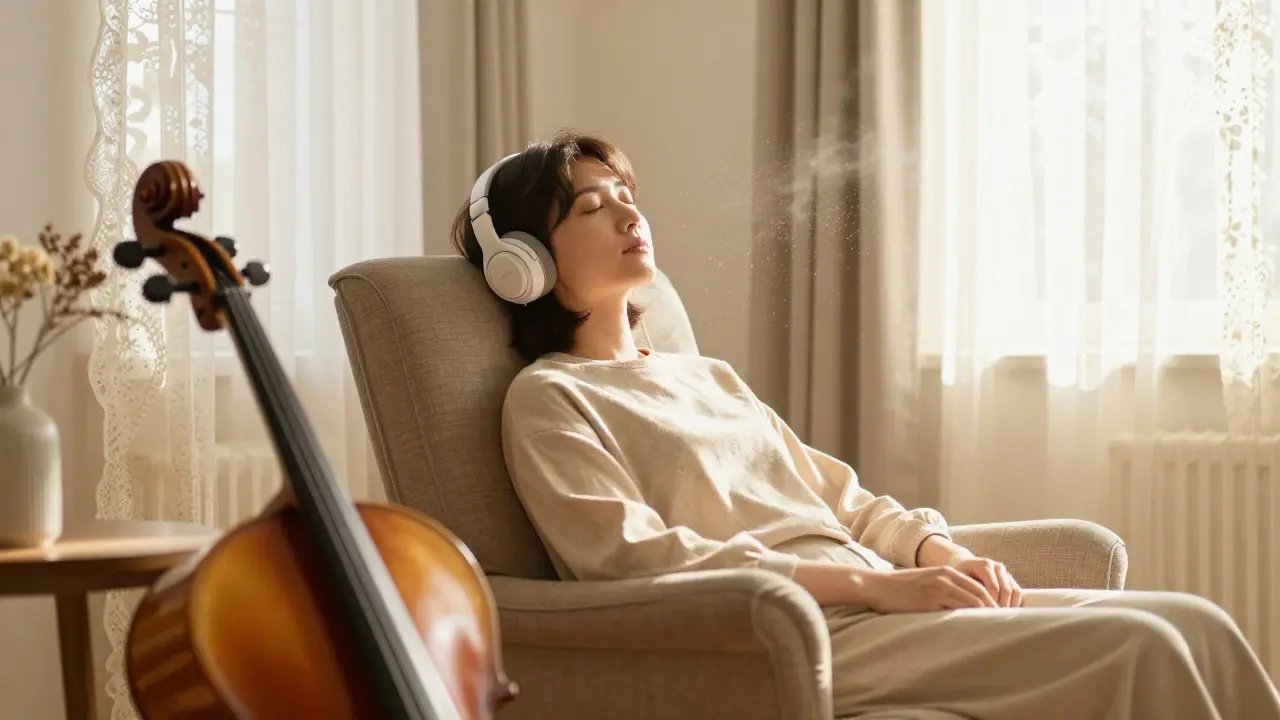
Imagine sitting in a quiet room, the weight of the day pressing on your shoulders. You put on headphones or turn on a speaker, and suddenly, the chaotic noise of the world fades away. In its place is a slow, resonant cello melody that seems to breathe with you. This isn't just background noise; it is an active reset for your nervous system. Classical music is a genre of Western art music characterized by specific compositional techniques and historical periods, but beyond its academic definition, it serves as a powerful tool for emotional regulation. When we talk about finding inner peace, we are often looking for a way to lower our heart rate, quiet our racing thoughts, and reconnect with ourselves. Classical music offers a structured, predictable, yet deeply expressive path to achieve this state.
The Science Behind the Calm
Why does listening to Bach or Debussy make us feel so relaxed? It’s not just magic; there is biology at play. Research in neuroscience suggests that listening to classical music can reduce levels of cortisol, the primary stress hormone in the body. A study published in the journal Anesthesia & Analgesia found that patients who listened to classical music before surgery experienced significantly lower anxiety levels compared to those who did not. The music acted as a physiological anchor, slowing down the sympathetic nervous system-the part of your body responsible for the "fight or flight" response-and activating the parasympathetic nervous system, which promotes rest and digestion.
The structure of classical music plays a crucial role here. Unlike modern pop music, which often relies on repetitive loops and sudden drops in energy to create excitement, classical compositions follow complex harmonic progressions. These progressions create a sense of tension and release that mirrors natural emotional cycles. When you listen to a piece like Beethoven's Moonlight Sonata, your brain anticipates the resolution of chords. This anticipation engages your attention in a gentle way, pulling you out of ruminative thoughts and into the present moment. It is a form of active meditation where the music does the heavy lifting.
Choosing the Right Composer for Your Mood
Not all classical music is created equal when it comes to relaxation. Some pieces are dramatic and intense, designed to evoke fear or awe, while others are serene and contemplative. To find inner peace, you need to match the music to your current emotional state. Here is a guide to selecting the right composers and works for different needs:
- For Deep Relaxation: Look to Johann Sebastian Bach. His Goldberg Variations are renowned for their mathematical precision and soothing counterpoint. The repetitive nature of the variations creates a hypnotic effect that can help calm an anxious mind. Bach’s music is often described as "ordered chaos," providing a sense of stability in an unpredictable world.
- For Emotional Release: If you need to process sadness or grief, Samuel Barber's Adagio for Strings is a powerful choice. It builds slowly from a whisper to a roar, allowing listeners to cry and let go of pent-up emotions. This catharsis is essential for long-term inner peace.
- For Focus and Clarity: Frédéric Chopin's nocturnes offer a delicate balance of melody and harmony. They are engaging enough to keep your mind occupied but subtle enough to allow for deep concentration. The rubato (flexible tempo) in Chopin’s piano works mimics human breathing, creating a natural rhythm that supports focus.
- For Sleep Aid: Erik Satie's Gymnopédies are minimalist and sparse. The lack of dense orchestration prevents overstimulation, making them ideal for winding down before bed. The simple, repeating melodies act as a lullaby for the adult mind.
Creating a Ritual for Listening
Listening to classical music passively while scrolling through social media rarely yields the benefits of inner peace. To truly harness its power, you need to create a ritual. This means dedicating time solely to listening. Start by setting aside 10-15 minutes each day. Choose a comfortable seat, close your eyes, and commit to not doing anything else. Put your phone in another room. The goal is to eliminate distractions so your brain can fully engage with the audio landscape.
As you listen, practice active hearing. Instead of letting the music wash over you, try to identify individual instruments. Can you hear the violin section entering? Notice how the bass line supports the melody. This technique, known as focused listening, trains your brain to stay in the present moment. It is similar to mindfulness meditation, where you anchor your attention to a single object-in this case, sound. Over time, this practice strengthens your ability to regulate attention and reduces overall stress levels.
| Composer | Key Work | Primary Benefit | Best Time to Listen |
|---|---|---|---|
| J.S. Bach | Goldberg Variations | Anxiety reduction | Morning routine |
| Erik Satie | Gymnopédie No. 1 | Sleep induction | Before bed |
| Samuel Barber | Adagio for Strings | Emotional catharsis | Evening reflection |
| Frédéric Chopin | Nocturne in E-flat Major | Focus enhancement | Work sessions |
Bridging the Gap: Why Classical Music Feels Distant
Many people avoid classical music because they feel it is elitist or too complex. This perception is a barrier to accessing its therapeutic benefits. The truth is, classical music is simply a collection of human expressions captured in sound. You don't need a degree in music theory to appreciate it. Think of it like language: you don't need to know grammar rules to enjoy a poem. You just need to be open to the feeling it evokes.
To bridge this gap, start with shorter pieces. Symphonies can last 40 minutes or more, which might feel overwhelming if you are new to the genre. Instead, explore solo piano works or string quartets. These forms are more intimate and easier to digest. Streaming platforms now offer curated playlists specifically designed for stress relief, featuring tracks under five minutes. Use these as entry points. As you become more familiar with the sounds, you can gradually explore longer compositions.
The Role of Tempo and Dynamics
Tempo, or the speed of the music, is a critical factor in achieving inner peace. Generally, music with a tempo between 60 and 80 beats per minute (BPM) aligns with the resting heart rate of a healthy adult. This synchronization can physically slow down your heartbeat and breathing. Works by Claudio Monteverdi or early Baroque composers often feature slower tempos that encourage relaxation. Conversely, fast-paced concertos may increase arousal and alertness, which is useful for morning motivation but less effective for calming down.
Dynamics, the variation in volume, also matter. Sudden loud noises trigger the startle reflex, releasing adrenaline. Classical music typically uses gradual dynamic changes, building intensity slowly and releasing it just as gently. This predictability creates a safe auditory environment. For example, in Mozart's Piano Concerto No. 21, the second movement features a gentle, flowing melody that maintains a consistent dynamic level, providing a stable emotional backdrop for the listener.
Integrating Classical Music into Daily Life
You don't need a formal concert hall experience to benefit from classical music. Integration is key. Try playing soft instrumental music during your commute. It can transform a stressful drive into a peaceful journey. Use it as background music while reading or writing. The lack of lyrics prevents cognitive interference, allowing your creative mind to flow more freely. Many writers and artists have cited classical music as a catalyst for creativity, helping them enter a state of flow.
Consider incorporating classical music into your exercise routine. While high-energy workouts might require upbeat pop, yoga and stretching sessions benefit greatly from classical accompaniment. The extended phrases and smooth transitions in works by Max Richter or contemporary neo-classical composers provide a perfect soundtrack for mindful movement. This combination of physical activity and auditory stimulation enhances the mind-body connection, deepening the sense of inner peace.
Is classical music better than other genres for stress relief?
While personal preference plays a huge role, classical music has unique structural elements that support relaxation. Its lack of lyrics reduces cognitive load, and its harmonic complexity provides a rich auditory experience without being jarring. However, any music that you personally find calming can be effective. The key is consistency and intentional listening.
How long should I listen to classical music to feel relaxed?
Studies suggest that even 10-15 minutes of focused listening can significantly lower cortisol levels. For deeper effects, such as improved sleep or sustained mood enhancement, 30-45 minutes may be more beneficial. Quality of attention matters more than duration; distracted listening yields fewer benefits.
Can classical music help with insomnia?
Yes, particularly slow-tempo pieces without percussion. Music by Erik Satie or Max Richter is often recommended for sleep aids. The predictable rhythms and soft dynamics help signal to your brain that it is time to rest, reducing the time it takes to fall asleep and improving sleep quality.
Do I need expensive equipment to enjoy classical music?
No. While high-quality speakers or headphones can reveal more detail in the recording, the therapeutic benefits come from the music itself, not the fidelity. Standard earbuds or built-in device speakers are sufficient for stress relief. The most important factor is eliminating external distractions.
What if I don't like traditional classical music?
Explore neo-classical or ambient classical fusion. Artists like Ludovico Einaudi or Nils Frahm blend traditional instruments with modern production techniques. These styles often feel more accessible to contemporary listeners while retaining the calming properties of acoustic instrumentation.