
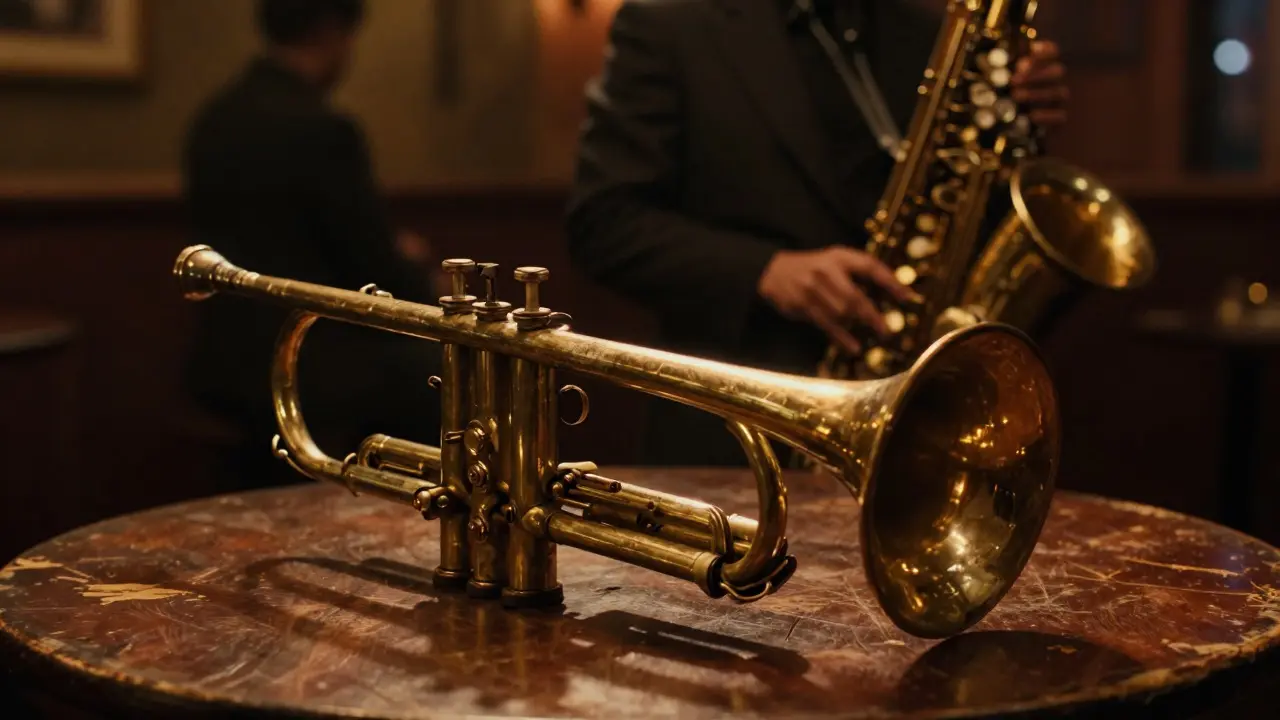
There is a specific kind of magic that happens when a saxophone cuts through the silence of a smoky club in 1959. It’s not just noise; it’s conversation. Jazz is an American musical genre originating in African-American communities of New Orleans in the late 19th and early 20th centuries, characterized by swing and blue notes, call and response formats, polyrhythm, and improvisation. For decades, people labeled it "difficult" or "old-fashioned." But if you’ve been avoiding it because you think you need a music degree to enjoy it, you’re missing out on one of the most emotionally resonant art forms ever created.
This isn’t a dry history lesson. This is a practical map for your ears. Whether you want to fill a rainy afternoon with soulful melodies or understand why certain chords make you feel like crying, this guide breaks down the journey from the brass-heavy streets of New Orleans to the abstract textures of modern free jazz. We’ll look at the key players, the pivotal moments, and how to actually listen so you can hear what the masters were doing.
The Roots: Where Swing Was Born
To understand where we are, we have to go back to the French Quarter of New Orleans around 1890. The city was a melting pot of Creole, African, and European cultures. Musicians like Buddy Bolden were blowing their horns so loud they could be heard across the bayou. This early style, often called Dixieland, a style of jazz music that originated in New Orleans, characterized by collective improvisation and a steady rhythm section, wasn’t about one star soloist. It was about the group working together in a tight, rhythmic pocket.
The sound was raw and energetic. Think of King Oliver’s Creole Jazz Band, which included a young Louis Armstrong. When Armstrong left the band in 1924, he changed everything. He introduced the concept of the individual voice in jazz. His recordings with the Hot Five and Hot Seven bands showed that one person could carry a melody, improvise complex lines, and still keep time. This shift from collective to individual expression is the single most important turning point in jazz history. If you only listen to one thing from this era, try "West End Blues." You’ll hear Armstrong’s cornet singing in a way that felt impossible at the time.
The Swing Era: Jazz Goes Mainstream
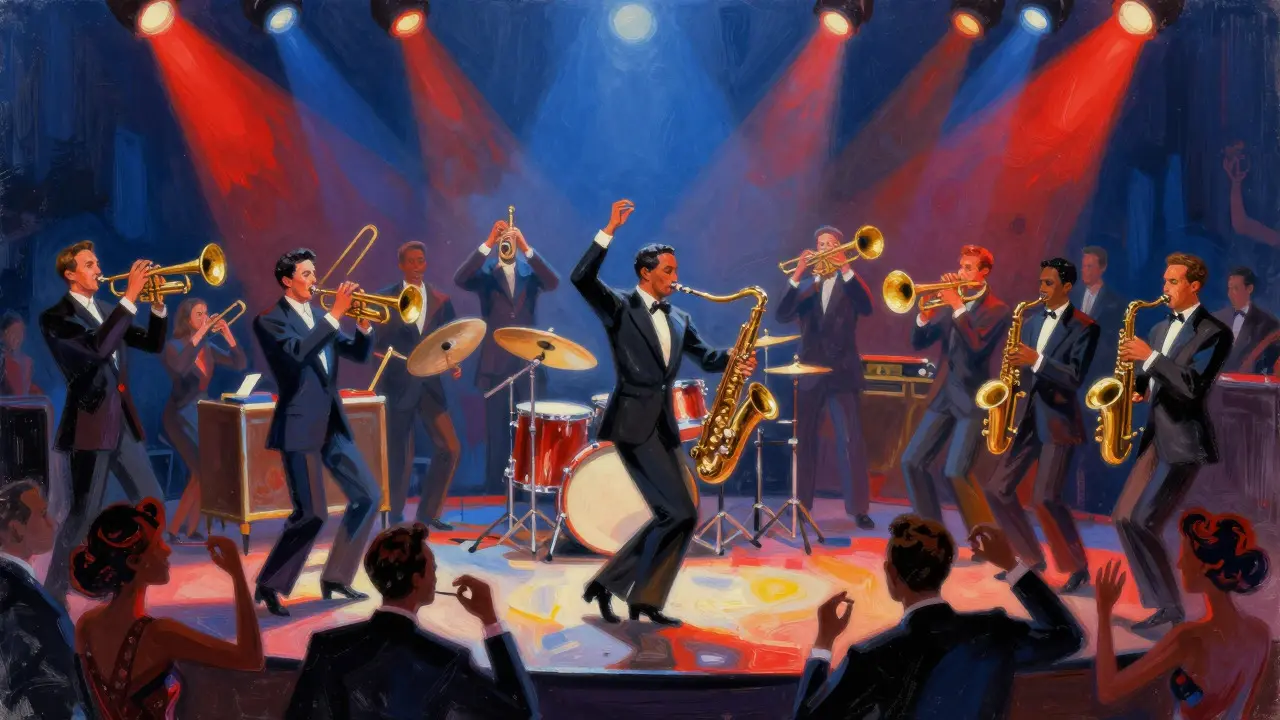
In the 1930s and 40s, jazz stopped being niche and became the popular music of America. This period, known as the Swing Era, a period in the 1930s and 1940s when big band jazz became the dominant popular music in the United States, featured large ensembles, or big bands. These groups had sections for trumpets, trombones, saxophones, and a rhythm section consisting of piano, bass, guitar, and drums.
Why did it take off? Because it was danceable. Bands like Duke Ellington’s Orchestra and Count Basie’s Orchestra played long, flowing tunes that kept people moving on the dance floor. Ellington wasn’t just a bandleader; he was a composer who wrote specifically for his musicians’ unique voices. He didn’t treat them as interchangeable parts. He knew exactly what Johnny Hodges could do on the alto sax and built songs around that. This era taught the world that jazz could be sophisticated yet accessible, serious yet fun.
Bebop: The Intellectual Revolution
If Swing was for dancing, Bebop was for listening. In the mid-1940s, a group of young musicians in Harlem decided that jazz needed to get faster, more complex, and less commercial. They wanted to play music that challenged the listener’s brain as much as their body. This movement, led by figures like Charlie Parker and Dizzy Gillespie, is called Bebop, a form of jazz characterized by fast tempos, advanced harmonic progressions, and virtuosic improvisation, emerging in the 1940s.
The tempo skyrocketed. Chords changed every beat or even half-beat. Melodies became angular and unpredictable. To the casual ear, it might sound chaotic. But there is a strict logic underneath. Parker and Gillespie were essentially re-harmonizing standard pop songs, turning simple blues into complex architectural structures. Listening to bebop requires focus. You aren’t swaying to the beat; you’re tracking the melodic line against the rapid-fire chord changes. It’s intellectual, yes, but also incredibly exciting. It’s like watching a high-speed chess match played on instruments.
Cool Jazz and Modal Jazz: Finding Space
After the intensity of bebop, some musicians wanted to cool things down. In the 1950s, Cool Jazz, a style of jazz that emerged in the 1950s, characterized by slower tempos, softer dynamics, and a more restrained, linear approach to improvisation, emerged, particularly on the West Coast. Miles Davis was central to this shift. His album *Kind of Blue* (1959) is arguably the best-selling jazz album of all time, and for good reason. It marked the move toward modal jazz.
Instead of playing over a series of changing chords, musicians would improvise over a single scale or mode for several bars. This gave the soloists more space to breathe and explore emotion rather than just technical speed. The result is a sound that feels spacious, melancholic, and deeply human. When you listen to Bill Evans’ piano work on this album, you hear restraint. Every note counts. There is no rushing. This era proved that jazz didn’t have to be loud or fast to be profound. Sometimes, silence is part of the music.
Fusion and Free Jazz: Breaking the Rules
By the late 1960s, the boundaries were getting thin. Some artists wanted to strip away all structure entirely, leading to Free Jazz, a form of avant-garde jazz that abandons traditional structures such as fixed chord progressions and regular meter, emphasizing spontaneous improvisation,. Ornette Coleman and John Coltrane pushed this frontier. It sounds harsh to untrained ears, but it’s an exploration of pure emotion without the safety net of harmony.
At the same time, another group looked outward. Miles Davis again led the charge with Jazz Fusion, a subgenre of jazz that blends jazz harmony and improvisation with elements of rock, funk, and electronic music, typically featuring electric instruments,. He plugged in. Electric guitars, synthesizers, and heavy drum beats entered the mix. Albums like *Bitches Brew* confused purists but opened the door for millions of new listeners. This fusion influenced rock bands like The Beatles and later paved the way for hip-hop sampling. Without jazz fusion, the sonic landscape of modern music would look very different.
How to Listen: A Practical Guide
You don’t need to memorize chord charts to enjoy jazz. But here are three tips to deepen your experience:
- Focus on the Rhythm Section: The bass and drums are the heartbeat. In many styles, they lock in a groove that allows the soloists to fly. Listen to how the drummer brushes the cymbals or how the bassist walks a line. This foundation creates the tension and release you feel.
- Identify the Soloists: Most jazz tracks follow a structure: Intro, Head (the main melody), Solos, Head Out. Try to identify when the melody ends and the improvisation begins. Each soloist brings a different color. One might be bright and brassy, another dark and mellow.
- Embrace the Mistakes: In classical music, a wrong note is an error. In jazz, a surprising note is a choice. Don’t judge the music by perfection. Judge it by authenticity. Did the musician express something true? That’s what matters.
| Era | Time Period | Key Artists | Defining Sound |
|---|---|---|---|
| Dixieland | 1890s - 1910s | Buddy Bolden, King Oliver | Collective improvisation, brass-heavy, upbeat |
| Swing | 1930s - 1940s | Duke Ellington, Count Basie | Big band arrangements, danceable rhythms, arranged compositions |
| Bebop | 1940s - 1950s | Charlie Parker, Dizzy Gillespie | Fast tempos, complex harmonies, virtuosic solos |
| Cool/Modal | 1950s - 1960s | Miles Davis, Dave Brubeck | Softer dynamics, modal scales, spacious phrasing |
| Fusion | Late 1960s - 1970s | Miles Davis, Herbie Hancock | Electric instruments, rock/funk rhythms, extended structures |
Building Your First Jazz Collection
Where do you start? Don’t buy 50 albums at once. Start with these five essential records that cover the major shifts in style:
- Kind of Blue by Miles Davis: The gateway drug. Smooth, modal, and timeless.
- A Love Supreme by John Coltrane: Spiritual, intense, and deeply moving. A masterclass in emotional intensity.
- Take Five by The Dave Brubeck Quartet: A perfect example of odd-time signatures made accessible and catchy.
- Anthology of the Avant-Garde by Ornette Coleman: For when you’re ready to break the rules and explore free jazz.
- We Get Request by Thelonious Monk: Unique, quirky, and harmonically challenging. Monk’s piano style is unlike anyone else’s.
Play these on repeat. Let the melodies sink in. Notice how the interplay between the musicians changes from track to track. Over time, you’ll start to recognize patterns. You’ll hear the echo of New Orleans brass in a modern hip-hop sample. You’ll realize that jazz isn’t a museum piece; it’s a living language that keeps evolving.
Is jazz difficult to understand?
Not necessarily. While some styles like bebop require focused listening due to their complexity, many other forms like Cool Jazz or Swing are very accessible. The key is to let the music wash over you first. You don't need to analyze every chord change to feel the emotion. Start with smoother styles and work your way up to more complex ones as your ear develops.
What is the difference between swing and bebop?
Swing is generally slower, danceable, and features arranged big band compositions with a strong emphasis on the rhythm section keeping a steady groove. Bebop is faster, more complex harmonically, and focuses heavily on individual virtuosity and improvisation. Swing is meant for dancing; bebop is meant for listening and intellectual engagement.
Who is considered the father of jazz?
While many contributed, Louis Armstrong is often cited as the most influential figure in transforming jazz from a regional folk music into a global art form. His innovations in soloing and vocal phrasing set the template for virtually every jazz musician who came after him. However, earlier figures like Buddy Bolden laid the groundwork in New Orleans.
Can I learn to play jazz without formal training?
Yes, though it helps. Jazz relies heavily on ear training and understanding harmony. You can start by learning basic chord progressions (like the ii-V-I) and practicing improvising over them. Many online resources offer interactive tools for this. The most important skill is active listening. Analyze recordings, hum along, and try to replicate the phrases you hear.
What is the role of improvisation in jazz?
Improvisation is the core of jazz. Unlike classical music, where the performer interprets a fixed score, jazz musicians create music in real-time. They use the composition's chord structure and melody as a framework, but the actual notes played during the solo are invented on the spot. This makes every performance unique and emphasizes spontaneity and personal expression.