
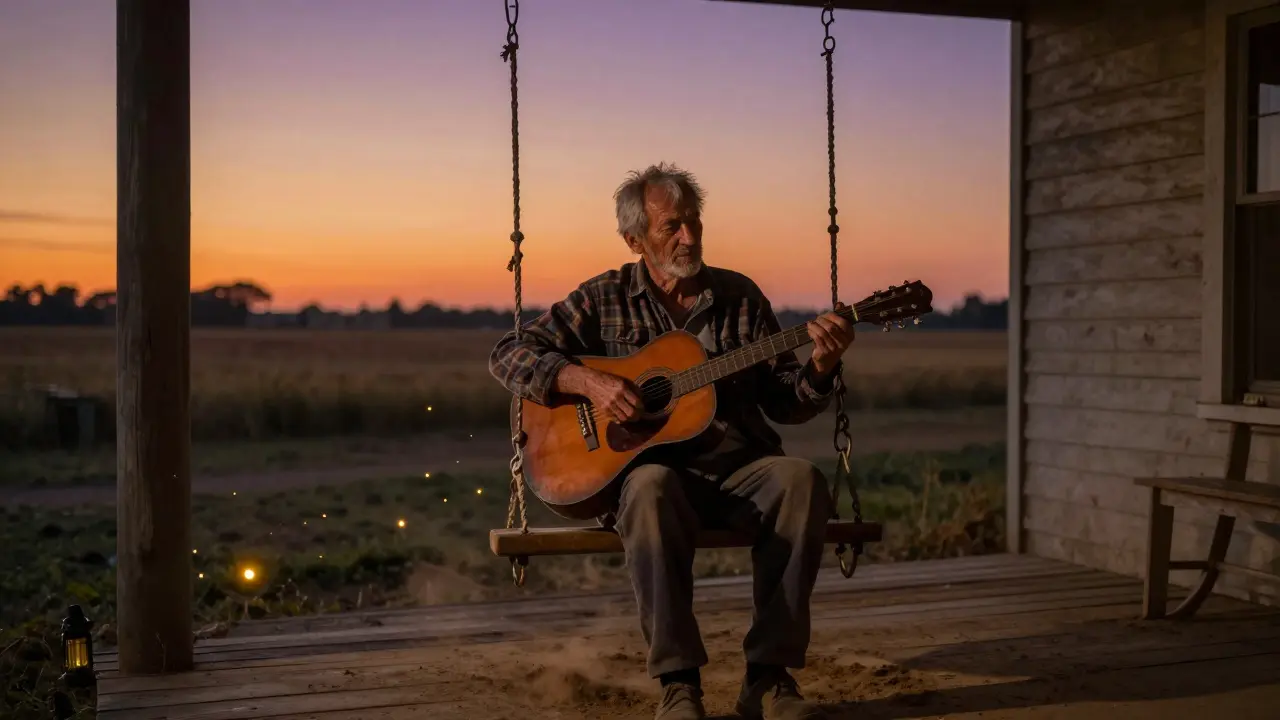
Country music doesn’t just play on radios in pickup trucks-it lives in the silence between harvests, in the creak of porch swings at dusk, and in the voices of people who’ve worked with their hands all day and still find something to sing about at night. It’s not about fame or flashy stages. It’s about truth. Real life. The kind that doesn’t need editing.
Roots in the Soil, Not the Studio
Country music didn’t start in Nashville. It started in the Appalachian Mountains, in the churches of the Deep South, and in the fields where sharecroppers sang to keep from losing their minds. The first country records, made in the 1920s, weren’t polished by producers. They were recorded in hotel rooms, on makeshift setups, with fiddles, banjos, and guitars that had been passed down for generations. Artists like Jimmie Rodgers and the Carter Family didn’t have record deals-they had stories. And those stories were about loss, faith, hard work, and love that didn’t always end happily.
There’s a reason why country music still sounds like it’s been weathered by rain and dust. The lyrics don’t sugarcoat. They say things like, "I lost my job, my wife left, and the dog died," and then they play a melody that makes you feel like you’re not alone in it. That’s why it stuck. It didn’t try to be pretty. It tried to be real.
The Instruments That Speak Louder Than Words
You can’t talk about country music without talking about the instruments. The steel guitar doesn’t just play notes-it weeps. The fiddle doesn’t just dance-it remembers. The banjo doesn’t just pluck-it recalls the rhythms of African slaves who brought it across the Atlantic and turned it into something new. These aren’t just tools. They’re time machines.
Look at the way a pedal steel guitar slides between chords. It doesn’t hit the note. It climbs to it, like someone walking up to a grave and finally letting themselves cry. That’s why it’s the sound of heartbreak in country music. And the mandolin? It’s the sound of a Sunday morning, church hymns, and a mother humming while she fixes breakfast. These instruments don’t need fancy effects. They don’t need auto-tune. They just need to be played by someone who’s lived the song.
Small Towns, Big Stories
Country music thrives where the population is thin and the silence is loud. In towns like Bakersfield, Owensboro, or even places you won’t find on most maps, you’ll hear the same themes repeated: working hard, losing your way, finding your way back. It’s not about money. It’s about dignity. A man in a worn-out hat singing about fixing his truck with duct tape and hope-that’s the hero of country music.
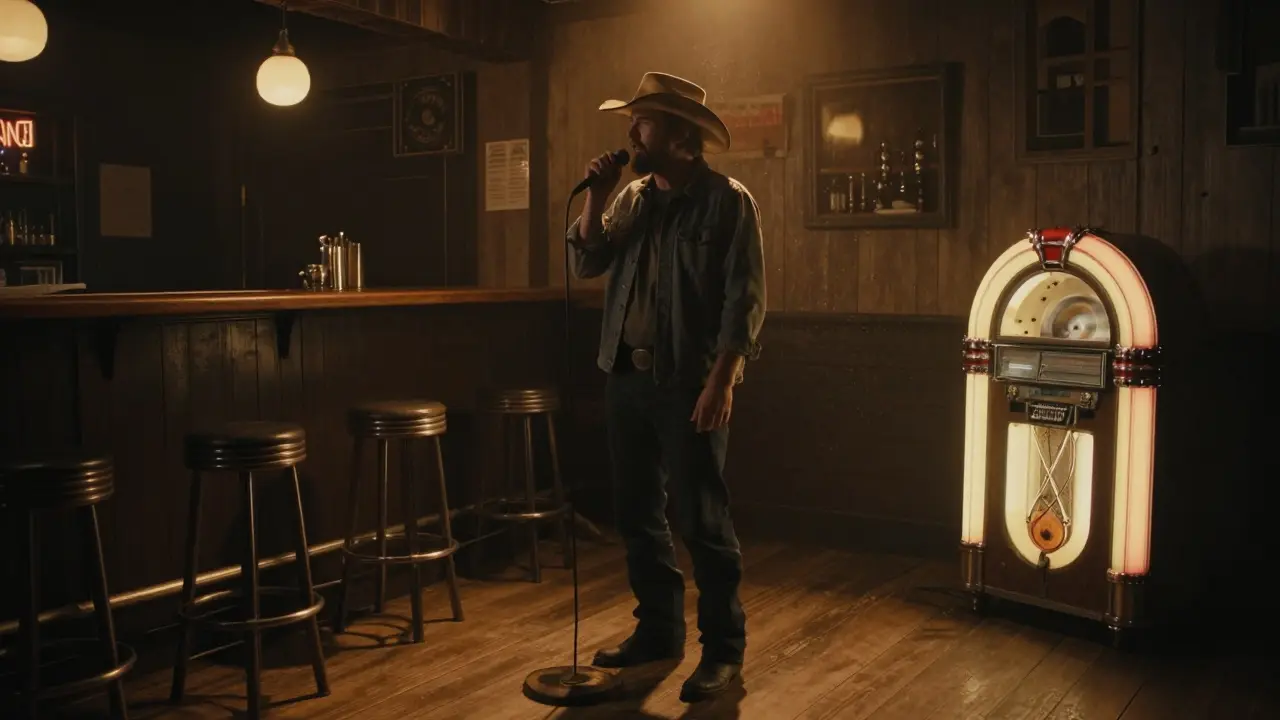
Think about songs like "He Stopped Loving Her Today" by George Jones. It’s not a love song. It’s a eulogy. The man in the song kept loving her long after she was gone, and he died the day he stopped. That’s the kind of truth that doesn’t fit on a TikTok video. But in a small-town bar, where the jukebox is the only thing that doesn’t lie, that song brings the room to silence.
Country Music and the American Dream-The Other Side
People say country music celebrates the American Dream. But it doesn’t. It celebrates the people who kept going when the dream fell apart. It’s not about owning a house, a car, or a retirement fund. It’s about keeping your head up when the bank takes your farm, when the factory closes, when the doctor says there’s nothing more they can do.
Look at the lyrics of "The Ballad of Thunder Road" or "Coal Miner’s Daughter.” They don’t glorify success. They honor endurance. Loretta Lynn didn’t write about being rich. She wrote about being the daughter of a man who worked six days a week in a mine just to feed his kids. That’s not a story you hear in a corporate boardroom. But it’s the kind that gets sung around kitchen tables in West Virginia, Kentucky, and Oklahoma.
Modern Country-Still Grounded, Even When It’s Loud
Today, you hear country music on pop radio. You see artists with million-dollar stage shows and holograms of their grandfathers singing duets with them. But the heart hasn’t changed. Luke Combs sings about drinking beer and remembering his dad. Carrie Underwood sings about surviving abuse and finding strength. Chris Stapleton doesn’t just sing about pain-he sounds like he’s lived it.
Even when the production gets bigger, the lyrics stay raw. A song like "The Bones" by Maren Morris isn’t about a perfect relationship. It’s about two people holding each other together even when everything else is cracking. That’s still country music. It’s just wearing a new hat.
Why It Still Matters
Country music is one of the last genres that still tells the truth about what it means to be human in a world that’s moving too fast. In a time when algorithms decide what you see, and influencers sell you happiness in 15 seconds, country music still gives you 3 minutes to sit with your pain, your pride, your regrets, and your hope.
It doesn’t ask you to be perfect. It doesn’t ask you to be rich. It just asks you to show up. And if you’ve ever stood in a field after a long day, looked up at the stars, and felt like no one else understands-you already know why country music still lives.
It’s Not Just Music. It’s Memory.
When you hear a fiddle start to play, it’s not just a song. It’s your grandmother’s voice singing in the kitchen. It’s your dad fixing the tractor with grease on his hands. It’s the church hymn you sang as a kid, even if you didn’t know the words. Country music doesn’t just echo in your ears. It echoes in your bones.
That’s why it’s the soundtrack of rural America. Not because it’s loud. Not because it’s popular. But because it remembers what the rest of the world has forgotten.
Why is country music called "country"?
It’s called "country" because it originated in rural areas of the American South and Appalachia, where people lived close to the land and worked with their hands. The term was used in the 1940s to distinguish it from urban, big-city music like jazz or swing. "Country and western" eventually got shortened to just "country," but the roots stayed the same: small towns, hard work, and honest stories.
Who are the most important pioneers of country music?
Jimmie Rodgers, known as the "Father of Country Music," blended blues, yodeling, and folk in the 1920s. The Carter Family-A.P., Sara, and Maybelle-recorded traditional songs and wrote originals that became standards, like "Wildwood Flower" and "Keep on the Sunny Side." Their harmonies and guitar style shaped the genre for decades. Later, Hank Williams brought raw emotion and poetic lyrics that turned country into a voice for the lonely and the lost.
Does country music still reflect rural life today?
Yes, even when the production sounds polished, the themes haven’t changed. Songs still talk about working-class struggles, family loyalty, faith, loss, and small-town pride. Artists like Tyler Childers, Sturgill Simpson, and Ashley McBryde write about coal mining, opioid addiction, and the quiet dignity of people who don’t see themselves in mainstream media. Country music still speaks for those who feel unseen.
Why do people in cities listen to country music?
Because the emotions in country music are universal. You don’t have to live on a farm to feel heartbreak, loneliness, or pride in hard work. Many city dwellers connect with country because it feels honest in a world full of noise and pretense. It’s not about where you’re from-it’s about what you’ve been through. A single mom in Chicago or a teacher in Seattle can relate to a song about losing a job or holding on to hope.
Is country music only American?
While it’s rooted in American history, its themes of resilience, family, and hardship resonate globally. Australia has its own thriving country scene, with artists like Lee Kernaghan and Kasey Chambers singing about outback life and drought. Canada, Ireland, and the UK have country fans and artists who blend local stories with the genre’s sound. Country music doesn’t need borders-it needs truth.