
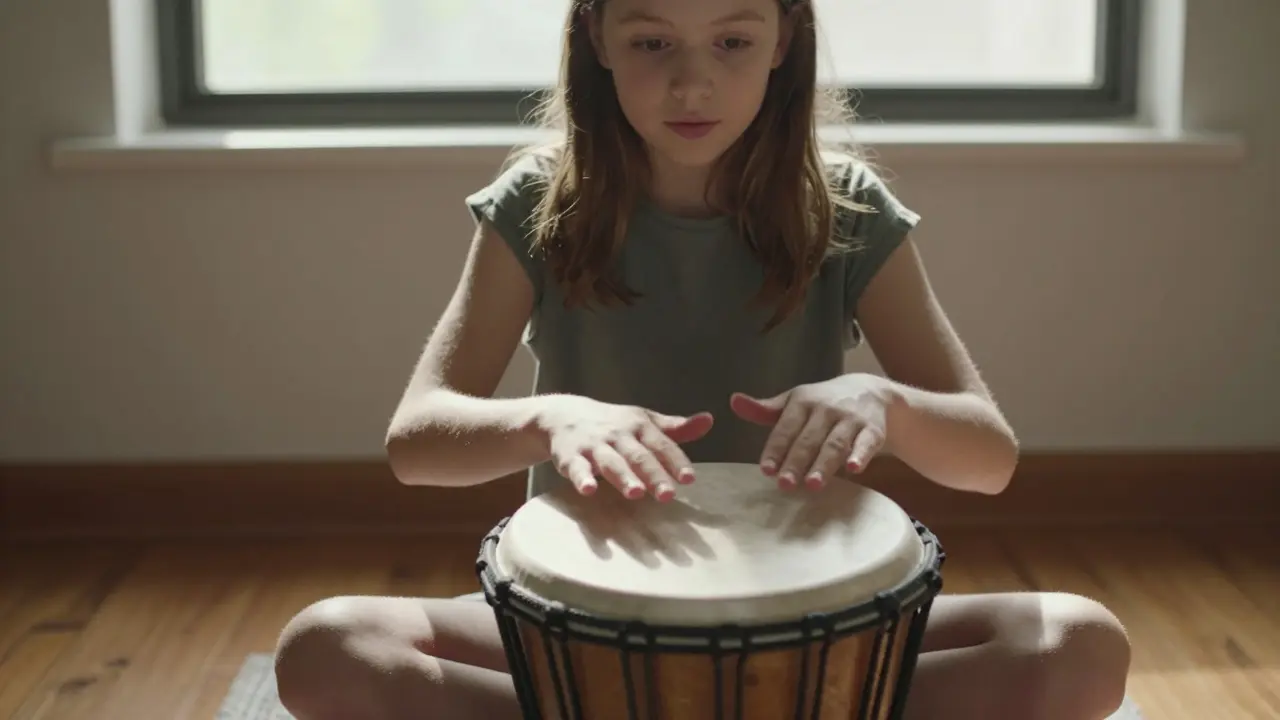
When you hear a drumbeat, a guitar strum, or a flute melody, you might feel something stir inside you. That’s not just coincidence. For decades, therapists, neuroscientists, and musicians have seen how musical instruments can do more than entertain-they can heal. Whether someone is recovering from a stroke, coping with PTSD, or simply struggling to express emotions they can’t put into words, the right instrument can open a door that words never could.
How Instruments Speak When Words Fail
Think about a child with autism who avoids eye contact but starts tapping a xylophone with perfect rhythm. Or an elderly person with dementia who doesn’t recognize their own children but sings along to an old hymn played on a piano. These aren’t rare miracles. They’re common outcomes of music therapy, where instruments become tools for communication, not just sound makers.
The brain processes music differently than speech. While language lives mostly in the left hemisphere, music activates both sides-especially areas tied to emotion, memory, and movement. That’s why someone who can’t say their name might still hum a tune perfectly. Instruments let people bypass broken pathways and access deep, untouched parts of themselves.
Instruments That Work Best-And Why
Not all instruments are created equal in therapy. Some are more intuitive, more forgiving, and more physically accessible. Here are the top five used by certified music therapists, and why they stand out:
- Drums and percussion - Hand drums, tambourines, shakers. These require no prior skill. Just hitting a surface releases tension, builds coordination, and syncs body rhythms. A 2023 study in the Journal of Neurologic Music Therapy found that group drumming reduced cortisol levels by 37% in veterans with PTSD after just eight sessions.
- Keyboard and piano - The layout is visual and tactile. Notes are laid out in order, making it easier for people with cognitive challenges to play melodies. Therapists often use simple patterns like C-G-A to help stroke patients retrain motor skills.
- Ukulele and guitar - Small, light, and easy to hold. Strumming gives a sense of control and rhythm. For teens with anxiety, learning three chords can be a first step toward self-expression.
- Handpan and hang drums - These newer instruments produce soothing, resonant tones. Their calming vibrations help regulate breathing and lower heart rate. Used heavily in hospice and trauma care.
- Voice and simple wind instruments - Even humming into a recorder or playing a harmonica can improve lung capacity and emotional release. For people with speech disorders, singing first often leads to speech recovery.
Real Cases, Real Change
In Perth, a music therapist working with refugee children noticed that most of them wouldn’t speak for weeks after arriving. One girl, just eight years old, sat silently through six sessions. Then she picked up a small hand drum. She played it for 45 minutes straight. The next week, she whispered a single word: “home.”
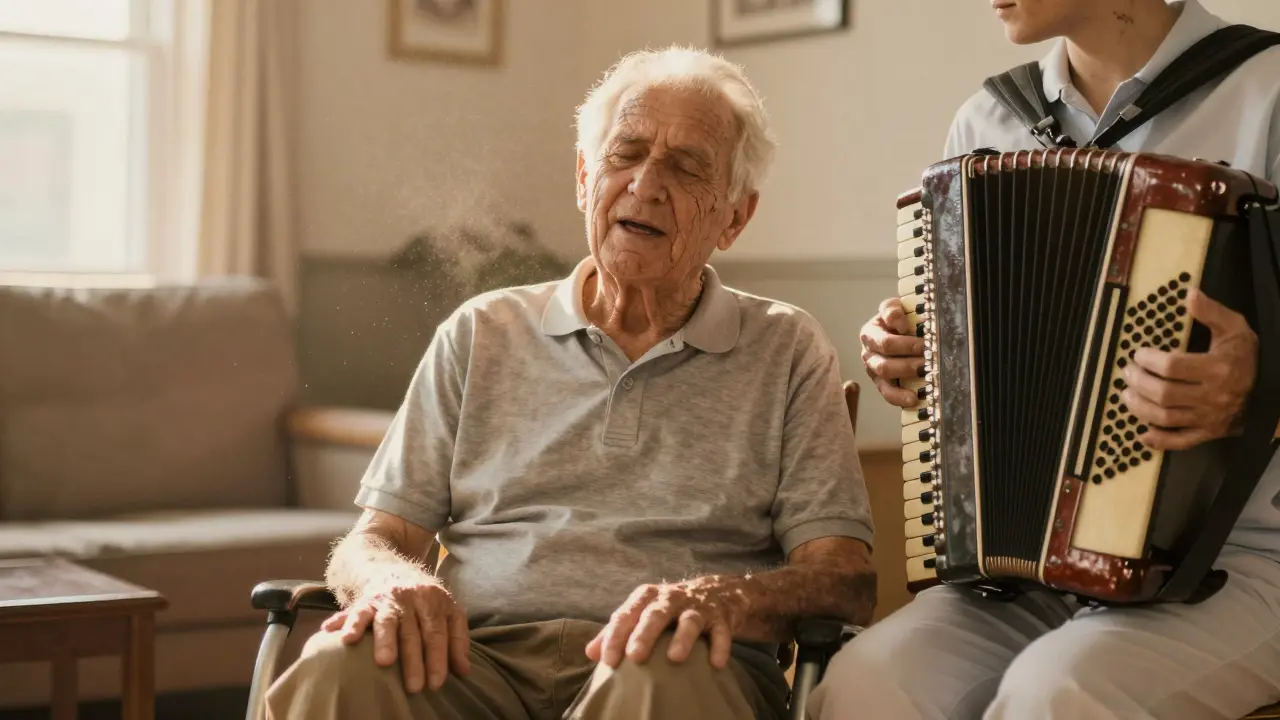
A man in his 70s, diagnosed with advanced Alzheimer’s, hadn’t spoken in over a year. His daughter brought his old accordion to his care home. When the therapist played a folk tune he used to dance to, he started tapping his foot. Then he sang. Not perfectly. Not clearly. But he sang. He remembered the lyrics. He remembered the feeling.
These aren’t outliers. They’re repeatable results. A 2025 meta-analysis of 89 clinical trials found that instrument-based therapy improved emotional regulation in 82% of participants with mood disorders and increased verbal communication in 76% of those with neurological impairments.
It’s Not About Being Good
You don’t need to be a musician to benefit. You don’t even need to like music. What matters is engagement. A therapist’s job isn’t to teach scales-it’s to find the instrument that lets a person feel safe enough to make a sound.
One woman with severe depression refused to talk. She sat in silence every week. Then, the therapist placed a rain stick in her hands. She turned it slowly. Then again. Then she started crying. She didn’t say why. But the next session, she asked for the rain stick again. That was her language.
Therapy with instruments isn’t about performance. It’s about presence. The vibration of a cello string. The click of a maraca. The breath through a flute. These are all ways of saying, “I’m here.”
Who Benefits the Most?
Music therapy with instruments isn’t a cure-all, but it’s remarkably effective for specific groups:
- Stroke survivors - Rhythmic auditory stimulation helps relearn walking and speaking.
- Autism spectrum disorders - Predictable rhythms reduce sensory overload and build social connection.
- Chronic pain patients - Playing an instrument distracts the brain from pain signals and releases endorphins.
- People with dementia - Familiar melodies unlock long-term memory when short-term memory is gone.
- Children with trauma - Instruments give a safe outlet for rage, fear, or grief without words.
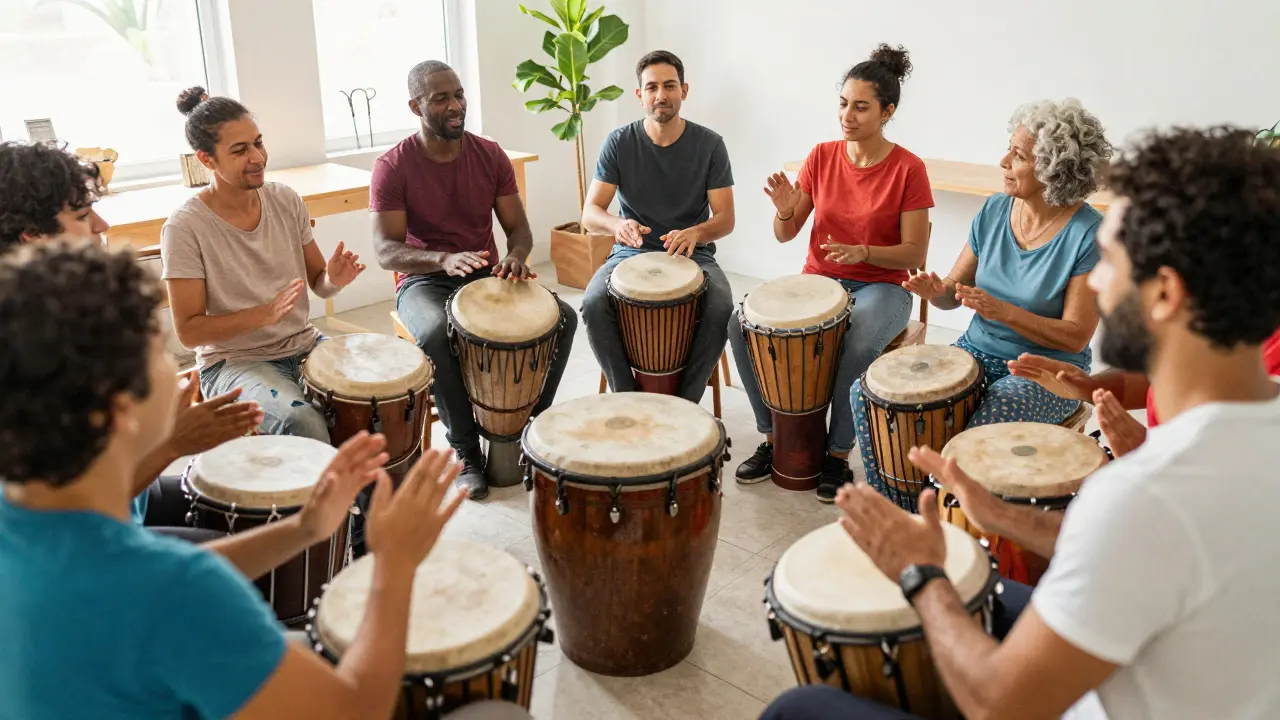
Even healthy adults use it. Corporate wellness programs in Melbourne and Sydney now offer weekly drum circles. Employees report lower stress, better focus, and stronger team bonds. It’s not fluff-it’s neuroscience.
Getting Started-No Experience Needed
If you’re curious, you don’t need to sign up for a therapy session right away. Start small:
- Grab a pot and a wooden spoon. Tap out a rhythm while breathing slowly.
- Find a free online guided drumming session (5 minutes, no cost).
- Try a free app like “Soundbrenner” to feel vibrations through your phone.
- Visit a local music therapy center-many offer free trial sessions.
- Ask your doctor if music therapy is covered under your health plan. In Australia, it’s often claimable under Medicare if referred by a GP.
The goal isn’t to become a musician. It’s to rediscover your voice-through vibration, rhythm, and sound.
Why This Works-The Science Behind the Sound
Here’s what’s happening in your body when you play:
- Neurochemical shift - Playing an instrument boosts dopamine and serotonin. That’s the same chemistry behind feeling happy or motivated.
- Brainwave sync - Rhythmic sound entrains your brain to slower, calmer frequencies (alpha and theta waves), which reduce anxiety.
- Motor retraining - Coordinating hands, eyes, and ears rebuilds neural pathways damaged by injury or illness.
- Emotional release - Sound vibrations resonate in the body, helping release stored tension, especially in the chest and shoulders.
It’s not magic. It’s biology. And it’s been proven in labs from Johns Hopkins to the University of Melbourne.
What’s Missing? The Human Touch
Apps and YouTube videos can help. But they can’t replace a trained therapist. Why? Because therapy isn’t about the instrument-it’s about the relationship. A therapist notices when you hesitate. When you play louder after a pause. When you smile without realizing it. They adjust. They reflect. They hold space.
That’s why DIY methods work for relaxation, but not for deep healing. If you’re struggling with trauma, grief, or neurological decline, working with a certified music therapist makes all the difference.
Final Thought: Sound Is a Lifeline
Some people think therapy is about talking. But not everyone can talk. Some people don’t want to. Some can’t. For them, a drum, a harp, a keyboard-these become lifelines. Not because they’re fancy or expensive. But because they let the soul speak without a voice.
Can anyone benefit from music therapy with instruments?
Yes. Music therapy with instruments is adaptable for almost any age, ability, or condition. It’s been used successfully with newborns in neonatal units, people with advanced dementia, trauma survivors, and even athletes recovering from injury. The key isn’t your background-it’s whether you’re open to making sound, even in small ways.
Do I need to own an instrument to start therapy?
No. Most clinics provide instruments. Even simple items like pots, shakers, or rhythm sticks can be used. The goal is to explore sound, not to own a perfect instrument. If you’re working with a therapist, they’ll guide you on what’s best for your needs.
How long does it take to see results?
Some people feel calmer after one session. For deeper changes-like improved speech, reduced anxiety, or better motor control-it usually takes 6 to 12 weekly sessions. Progress isn’t always linear. Sometimes the biggest shifts happen weeks after a session, when the brain keeps processing the rhythm and sound.
Is music therapy covered by insurance?
In Australia, music therapy is often covered under Medicare if you have a referral from your GP under a Chronic Disease Management plan. Private health insurers may also cover it under extras policies. Always check your policy or ask your provider. Many clinics offer sliding-scale fees or community programs.
Can I do this at home with my family?
Absolutely. Family drumming, singing together, or even tapping rhythms on tables can strengthen bonds and reduce stress. It’s not clinical therapy, but it’s still healing. Try a 10-minute “sound circle” once a week-everyone picks an object to make noise with. No rules. Just play. You might be surprised by what comes up.
If you’ve ever felt music move you, you already know this truth: sound has power. With instruments, that power becomes a tool-not just for art, but for recovery, connection, and quiet, lasting healing.