
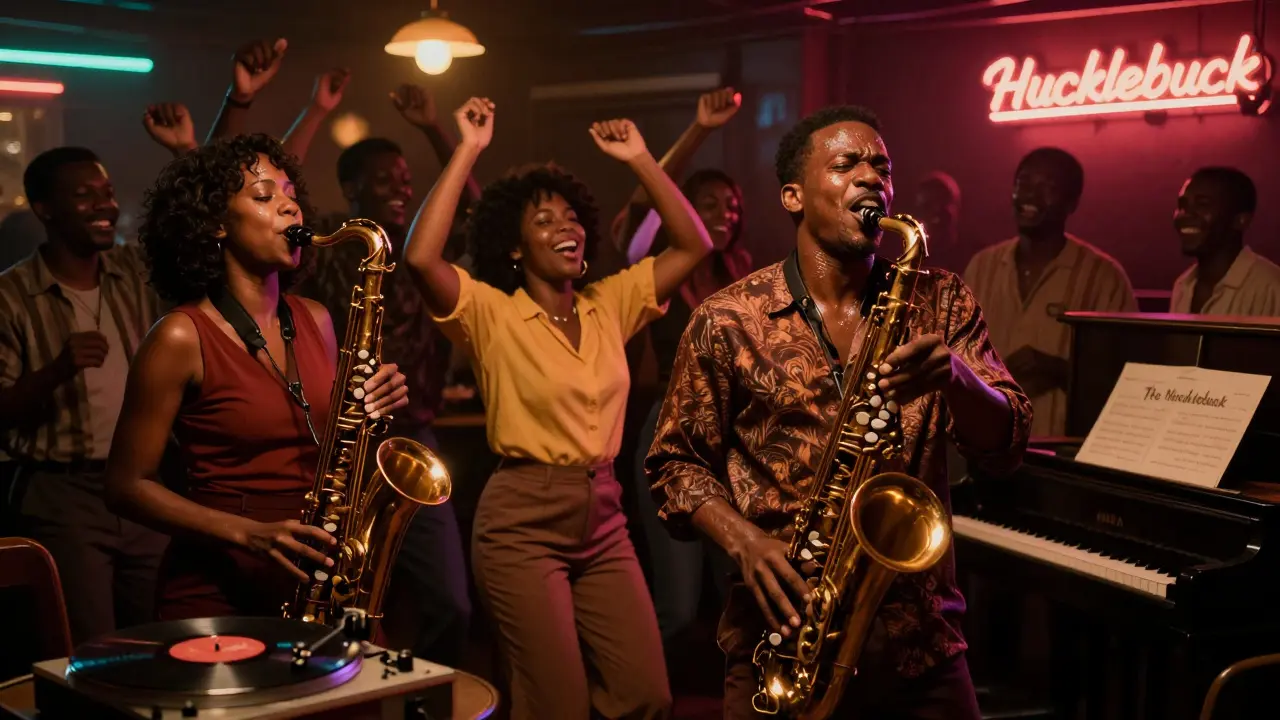
Before rock and roll, before soul, before hip-hop - there was rhythm and blues. It didn’t just appear on the radio. It exploded out of Black communities in the 1940s and 1950s, reshaping American music forever. This wasn’t just a new sound. It was a cultural earthquake.
What Rhythm and Blues Actually Was
Rhythm and blues, or R&B, started as a term coined by R&B is a genre of popular music that originated in African American communities in the 1940s, blending blues, jazz, and gospel with a strong backbeat and danceable rhythms. Also known as race music, it was officially labeled by Billboard in 1949 to replace the outdated and offensive term "race records".
Early R&B wasn’t smooth or polished. It was raw. Think of Louis Jordan’s jump blues bands with saxophone riffs and shuffling drums. Or Ray Charles, who fused gospel vocals with piano-driven grooves. These weren’t background tracks - they were party-starters. Songs like "Caldonia" and "What’d I Say" made people move. They didn’t just listen - they danced in clubs, on street corners, in juke joints.
The Breakthrough: From Black Clubs to Mainstream Airwaves
In the late 1940s, R&B was confined to Black neighborhoods. Radio stations in major cities like Chicago, New Orleans, and Detroit played it on late-night shows. Record labels like Atlantic, Chess, and Specialty were small, independent, and run by people who actually understood the music - not just the profit.
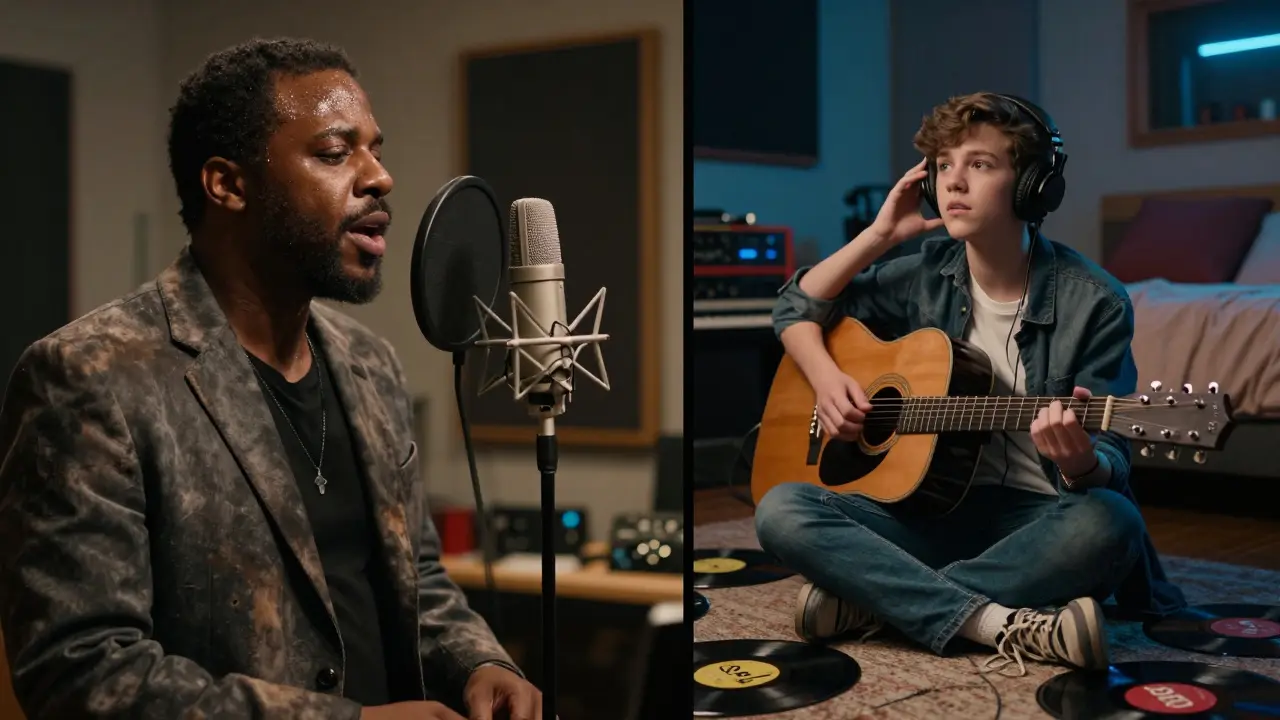
Then came the post-war boom. Black soldiers returned home, cities grew, and young people - Black and white - started sharing records. A white teenager in Ohio could hear a record by Chuck Berry on a radio station that played "race music." And suddenly, he wanted to play guitar like that. He didn’t know the term R&B. He just knew it felt different. It had energy. It had attitude.
By 1955, R&B was climbing the charts. Billboard’s R&B chart had 20 slots. By 1957, it was a top-10 force. Songs like "Hound Dog" and "Tutti Frutti" were originally R&B tracks. Elvis didn’t invent rock and roll. He covered it.
How R&B Created Rock and Roll
Rock and roll didn’t come out of nowhere. It was R&B with a lighter skin tone and a bigger marketing budget.
Elvis Presley’s version of "That’s All Right" was a cover of Arthur Crudup’s 1946 R&B track. Jerry Lee Lewis’s "Whole Lotta Shakin’" borrowed its rhythm from Big Maybelle’s "I’m Gonna Be a Wheel on the Wall." Even the term "rock and roll" came from R&B lyrics - it was slang for dancing or sex in Black communities long before it became a genre label.
White artists got radio play. White record labels got the profits. But the blueprint? That was all R&B. The driving beat. The call-and-response vocals. The electric guitar riffs. The raw emotion. All of it came from Black musicians who were often paid less than $500 for a hit record.
The Rise of Soul and the Birth of Modern Pop
By the early 1960s, R&B didn’t fade - it evolved. Motown Records, founded by Berry Gordy in Detroit, took R&B’s core and polished it for mass appeal. Marvin Gaye, Stevie Wonder, Diana Ross - they didn’t abandon R&B. They elevated it.
Motown’s formula was simple: tight harmonies, punchy horns, a steady four-on-the-floor beat, and lyrics that spoke to love, heartbreak, and social change. Songs like "My Girl" and "I Heard It Through the Grapevine" crossed over to white audiences. But they were still R&B at their heart.
And then came Aretha Franklin. Her 1967 hit "Respect" turned a R&B groove into a civil rights anthem. The backing band? Memphis session players. The vibe? Gospel meets blues meets funk. That song didn’t just top the charts - it changed how the world heard Black women’s voices.
The Domino Effect: R&B’s Influence on Every Genre That Followed
If you like hip-hop, you’re listening to R&B. The beat, the sampling, the rhythm - it all traces back to James Brown’s "Funky Drummer" or The Meters’ tight grooves.
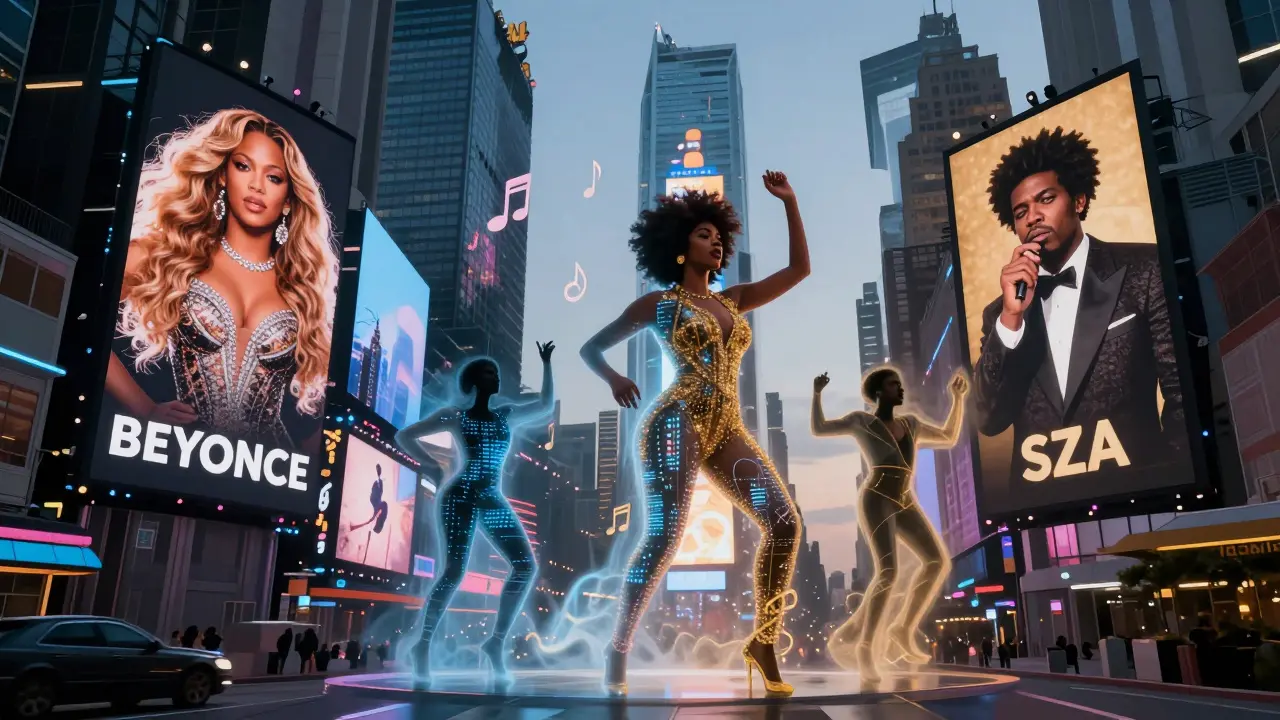
If you like pop music today - think Bruno Mars, Beyoncé, or The Weeknd - you’re hearing R&B. The vocal runs, the melisma, the emotional delivery - those are R&B traditions passed down through generations.
Even electronic dance music owes something to R&B. The syncopated rhythms, the emphasis on bass, the use of vocal chops - all of it comes from the dance floors of the 1950s and 60s.
Rock bands like The Rolling Stones, Led Zeppelin, and The Doors didn’t just cover R&B songs - they built their entire sound around them. Jimmy Page said he learned to play guitar by copying R&B licks. Mick Jagger’s stage moves? Directly from Little Richard.
The Business Side: How R&B Forced the Industry to Change
Before R&B, record labels treated Black artists as disposable. They paid flat fees, didn’t promote records, and rarely gave royalties.
R&B changed that. Independent labels like Atlantic Records (founded in 1947) started paying royalties. They booked tours. They promoted artists. They treated them like stars.
And when R&B started selling - really selling - the big labels had no choice but to follow. By the 1960s, major companies were hiring Black A&R men. They were opening offices in Black neighborhoods. They were learning that the music they once dismissed was the most profitable music on the market.
By 1970, over 30% of all U.S. record sales were R&B or soul records. That number kept climbing.
The Legacy: Why R&B Still Matters Today
Today, R&B isn’t a relic. It’s the foundation.
When a pop singer hits a high note with emotion, that’s R&B. When a hip-hop producer samples a 1972 Isley Brothers track, that’s R&B. When a TikTok dance goes viral to a slow jam with a steady groove, that’s R&B.
It’s not just music. It’s a story of resistance, creativity, and survival. Black artists created a sound that the industry tried to ignore - then stole, repackaged, and sold back to the world. But they never lost ownership of its soul.
And that’s why R&B didn’t just revolutionize the music industry. It redefined what music could be - raw, real, and relentlessly human.
What was the first R&B song to top the charts?
The first R&B song to reach No. 1 on Billboard’s national charts was "The Hucklebuck" by Paul Williams and His Hucklebuckers in 1949. It spent five weeks at the top and became a dance craze across the country. The track was a jump blues number with a driving saxophone riff - exactly the kind of sound that defined early R&B.
Did R&B only influence American music?
No. R&B’s influence spread quickly overseas. In the UK, bands like The Rolling Stones, The Animals, and The Who built their early sound on American R&B records. In Jamaica, R&B rhythms helped shape the birth of ska and later reggae. In Africa, artists in Nigeria, Ghana, and Senegal fused R&B with traditional rhythms to create Afrobeat. Even in Japan, R&B covers became popular in the 1960s. Its groove was universal.
Why did white artists get more recognition than Black artists in the early days of rock and roll?
Racial bias in radio, TV, and record distribution played a huge role. White artists had access to national networks, better promotion budgets, and radio stations that refused to play "race music." Even when a Black artist had a hit, their version often disappeared from charts within weeks while a white cover version climbed the pop charts. This pattern repeated for decades - from Chuck Berry to Little Richard to Ray Charles.
How did R&B influence modern vocal styles?
R&B introduced vocal techniques that became standard in pop and soul: melisma (singing multiple notes on one syllable), gospel-inspired screams, breathy phrasing, and emotional dynamics. Aretha Franklin’s "Chain of Fools" and Whitney Houston’s "I Will Always Love You" are direct descendants of early R&B singers like Mahalia Jackson and Ruth Brown. Today, singers from Adele to Ariana Grande use these techniques because R&B made them mainstream.
Is R&B still a distinct genre today?
Yes - but it’s changed. Modern R&B blends with hip-hop, electronic, and pop. Artists like SZA, Brent Faiyaz, and H.E.R. keep the core alive: emotional lyrics, syncopated rhythms, and vocal expressiveness. The term "R&B" now often refers to a broader category called "contemporary R&B," but its roots in gospel, blues, and jazz are unmistakable. It’s still the heartbeat of modern Black music.