
Turn up the volume on any chart-topping hip-hop track from the last decade, and you will likely hear something that feels instantly familiar. It is not just the beat or the flow; it is often a smooth vocal sample, a lush chord progression, or a groove that traces its DNA back to the 1960s and 70s. Rhythm and Blues is a genre of popular music that originated in African American communities in the 1940s, characterized by a strong backbeat and expressive vocals. While modern hip-hop might seem like a completely different beast-born from block parties in the Bronx rather than the recording studios of Motown-the two are deeply intertwined.
You cannot understand where hip-hop is today without looking at where R&B has been. This isn't just about nostalgia. Producers have spent decades mining the archives of soul records to build the sonic foundation of rap. From the way drums are programmed to how melodies are constructed, R&B provided the blueprint. Let’s break down exactly how this musical lineage works and why it matters for the sound we hear now.
The Sample Library: Digging in the Crates
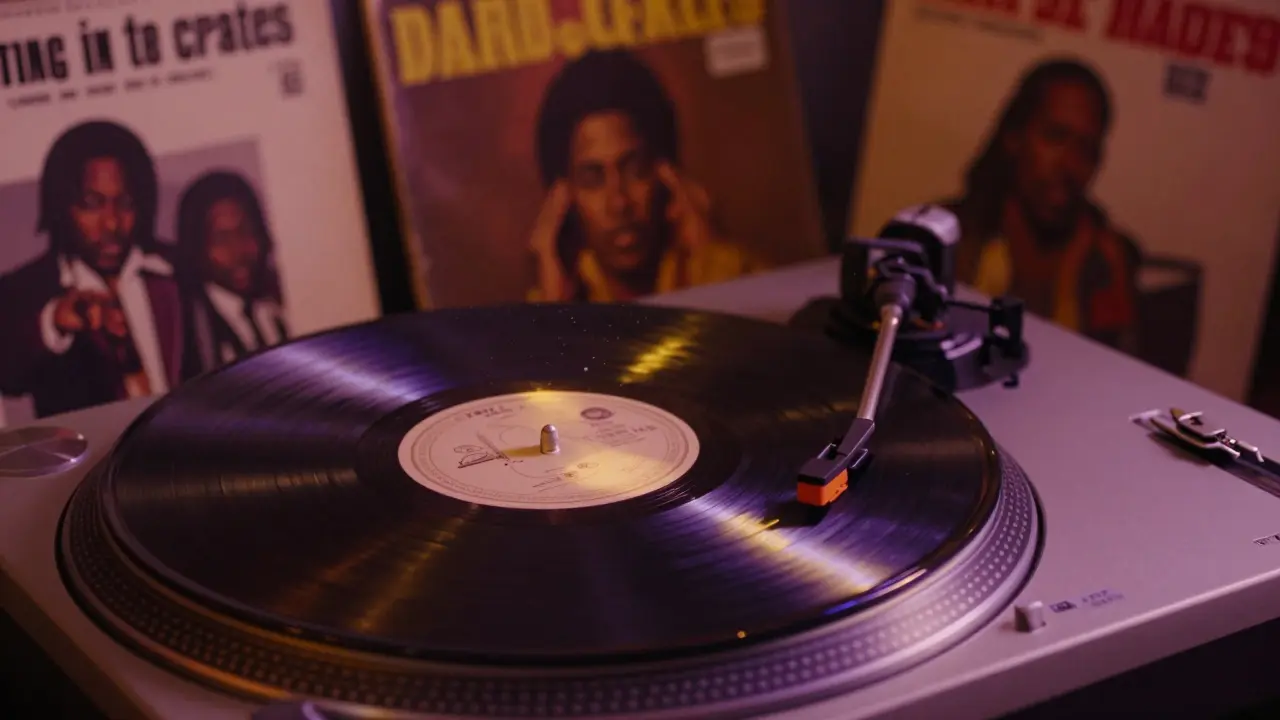
If you want to talk about the technical side of how R&B shaped hip-hop, you have to start with sampling. In the late 1980s and early 1990s, producers didn’t have access to the vast digital libraries we use today. They had vinyl records. Specifically, they had crates full of obscure soul, funk, and R&B records.
A Tribe Called Quest is an influential American hip hop group formed in Queens, New York City in 1985, known for their jazz-rap style. When Q-Tip and Ali Shaheed Muhammad were crafting beats for tracks like "Scenario," they weren't inventing new sounds from scratch. They were taking short loops from records by artists like Curtis Mayfield is an American singer-songwriter and guitarist who was a key figure in the development of soul music.
This practice, known as "digging in the crates," turned R&B into the primary source material for hip-hop production. A simple horn stab from a James Brown record or a five-second vocal hook from a Marvin Gaye is an American singer, songwriter, and record producer who was one of the most critical musical artists of the 20th century album could become the backbone of a hit rap song. This created a direct sonic link between the two genres. Listeners who might not have heard the original soul record suddenly found themselves humming the melody because it was embedded in their favorite rap track.
| R&B Artist | Famous Sampled Track | Hip-Hop Hit Using Sample |
|---|---|---|
| James Brown | "Funky Drummer" | Countless tracks (The foundational drum break) |
| Isaac Hayes | "Walk On By" | "Juicy" by The Notorious B.I.G. |
| Chaka Khan | "I'm Every Woman" | "Everytime" by Salt-N-Pepa |
| Bill Withers | "Ain't No Sunshine" | Various underground and mainstream cuts |
The beauty of this approach is that it preserved the emotional weight of the original R&B performance. When you sample a soul singer crying over a love song, you are importing that raw emotion directly into a rap verse about struggle or triumph. It adds a layer of depth that synthetic instruments alone often struggle to achieve.
Groove and Rhythm: The Pocket
Beyond specific samples, R&B taught hip-hop how to move. In music theory, there is a concept called "the pocket." This refers to the feel of the rhythm section-the way the bass and drums lock together to create a groove that makes you want to dance. R&B musicians, particularly those associated with Motown Records is an American record label founded by Berry Gordy in Detroit in 1959, known for its polished sound and crossover appeal, mastered the art of the pocket.
Early hip-hop DJs like Grandmaster Flash is a pioneering Jamaican-American DJ and musician who was instrumental in developing turntablism realized that if they isolated the drum breaks from these R&B records, they could extend them indefinitely. These breaks were usually the most rhythmic, energetic parts of the song. By looping them, hip-hop producers adopted the syncopated rhythms of R&B but stripped away the melody to focus purely on the beat.
This evolution continued into the modern era. Even when producers stopped using direct samples due to copyright issues, they kept the rhythmic patterns. If you listen to the hi-hat patterns in trap music or the 808 bass lines in contemporary rap, you will find echoes of the syncopation found in classic soul grooves. The difference is that instead of a live drummer playing it, a MIDI controller triggers it. But the mathematical relationship between the notes remains rooted in that R&B tradition.

Vocal Melodies and Hooks
One of the most noticeable ways R&B has shaped modern hip-hop is in the structure of the songs themselves. Early rap was often continuous verses with minimal breaks. However, as the genre evolved, the importance of the "hook" or chorus grew. This shift was heavily influenced by the pop sensibilities of R&B.
Artists like Prince is an American singer, songwriter, and multi-instrumentalist who revolutionized pop music with his blend of funk, rock, and R&B and Michael Jackson is an American singer, songwriter, and dancer who became the best-selling music artist of all time showed the industry that catchy, melodic choruses were essential for radio success. Hip-hop artists began collaborating with R&B singers to provide these hooks. This collaboration created a hybrid sound that dominated the charts in the 1990s and 2000s.
Think about hits like "Hypnotize" by The Notorious B.I.G. or "Mo Money Mo Problems." The verses are hard-hitting rap, but the choruses are sung by R&B vocalists (Faith Evans and 112, respectively). This formula allowed hip-hop to cross over into mainstream pop culture. It made the music more accessible to listeners who might have been intimidated by pure rap. Today, this is even more pronounced. Many top rap tracks feature melodic singing throughout, blurring the line between rapping and singing entirely.
Emotional Expression and Storytelling
R&B has always been a genre of deep emotion. Whether it is heartbreak, joy, or social commentary, soul music prioritizes feeling. Hip-hop, while often focused on lyrical complexity and bravado, also draws from this well of emotional expression. The storytelling aspect of hip-hop owes a debt to the narrative structures found in R&B ballads.
In the 1970s, groups like The Temptations is an American vocal group known for their distinctive sound and choreography, which evolved from doo-wop to sophisticated soul released concept albums that told complex stories. Later, artists like Stevie Wonder is an American singer, songwriter, and multi-instrumentalist who has sold over 100 million records worldwide addressed social issues with profound empathy. Hip-hop artists adopted this approach, using their lyrics to paint vivid pictures of their environments and experiences.
When you listen to an album like "To Pimp a Butterfly" by Kendrick Lamar, you can hear the influence of R&B in the instrumentation and the emotional vulnerability. The use of live horns, bass guitar, and vocal harmonies creates a texture that is unmistakably soulful. This allows the rapper to explore themes of identity, race, and mental health with a nuance that would be difficult to achieve with a minimalist beat. R&B gave hip-hop permission to be vulnerable, to be soft, and to be beautiful.
Modern Production Techniques
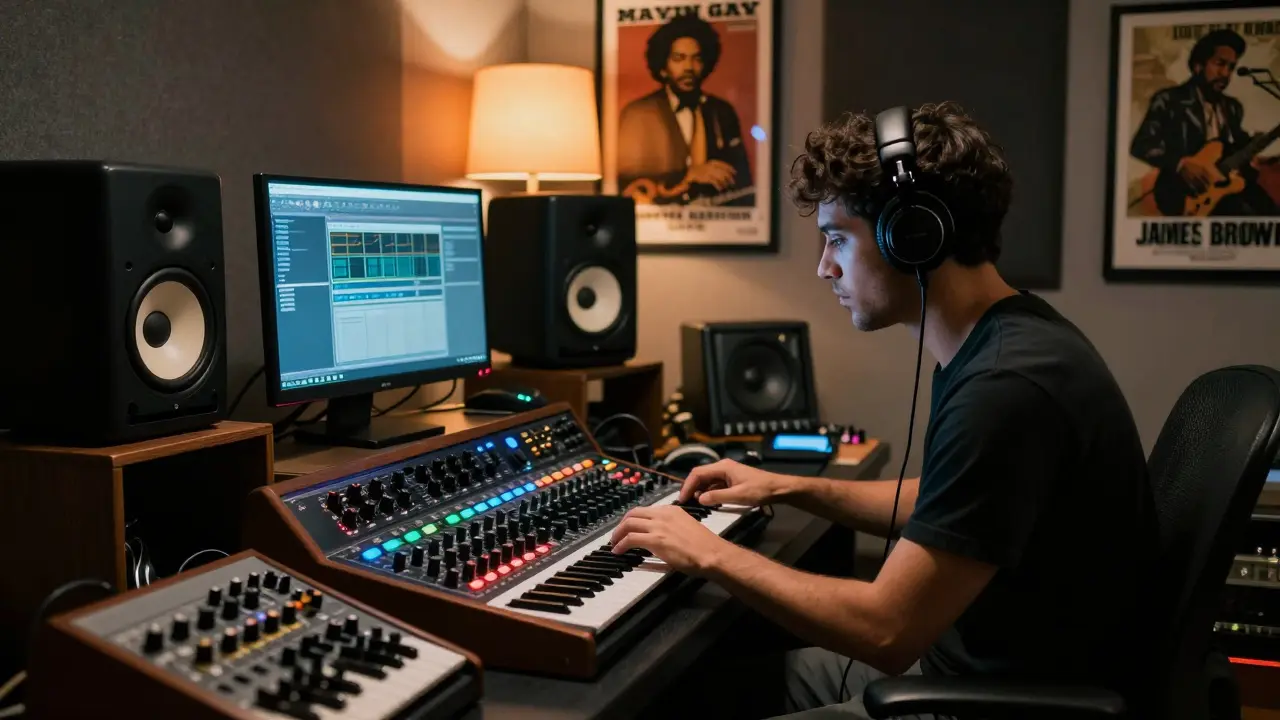
Today, the connection between R&B and hip-hop is less about sampling old records and more about shared production techniques. Modern producers use software synthesizers to recreate the sounds of vintage R&B equipment. They emulate the warmth of analog tape, the saturation of tube amplifiers, and the imperfections of live recordings.
Producers like Pharrell Williams is an American singer, rapper, songwriter, and record producer who has been a dominant force in hip-hop and R&B production and Timbaland is an American record producer, songwriter, and DJ known for his innovative use of electronic sounds and percussion have built careers on blending these genres seamlessly. They use complex chord progressions typical of jazz and R&B, but apply them to hip-hop rhythms. This results in a sound that is both sophisticated and street-ready.
The rise of "alternative R&B" artists like Frank Ocean and SZA has further blurred the lines. These artists often collaborate with hip-hop producers, bringing their melodic sensibilities to rap tracks. Conversely, rappers are increasingly incorporating singing into their own performances. This fluidity means that the distinction between R&B and hip-hop is becoming increasingly irrelevant. They are now part of the same continuum, influencing each other in real-time.
The Cultural Feedback Loop
It is important to recognize that this relationship is not one-way. While R&B laid the groundwork, hip-hop has also reshaped R&B. Modern R&B artists adopt the flows, slang, and fashion of hip-hop. The cultural dominance of hip-hop has forced R&B to adapt to stay relevant. This feedback loop ensures that both genres continue to evolve together.
For example, the popularity of trap music has led to the emergence of "trap soul," a subgenre that combines the heavy 808 bass and hi-hats of trap with the vocal styles of R&B. Artists like The Weeknd and Bryson Tiller exemplify this fusion. They sing about similar topics as rappers but use the melodic tools of R&B. This demonstrates how deeply integrated the two genres have become.
Did R&B come before hip-hop?
Yes, Rhythm and Blues emerged in the 1940s, while hip-hop originated in the late 1970s. R&B provided the musical foundation and samples that early hip-hop producers used to create beats.
What is the most sampled R&B song in hip-hop?
While exact numbers vary, James Brown's "Funky Drummer" is widely considered the most sampled drum break in hip-hop history. Other heavily sampled tracks include Isaac Hayes' "Walk On By" and Chaka Khan's "I'm Every Woman."
How did R&B influence hip-hop lyrics?
R&B influenced hip-hop lyrics by introducing themes of emotional vulnerability, romance, and social commentary. Soul singers expressed personal feelings openly, which encouraged rappers to explore similar depths in their storytelling.
Are there any modern artists who blend R&B and hip-hop?
Yes, many modern artists blend these genres. Examples include Drake, The Weeknd, Post Malone, and SZA. They incorporate melodic singing, R&B chord progressions, and hip-hop rhythms into their music.
Why do hip-hop producers still use R&B samples?
Hip-hop producers use R&B samples because they contain rich harmonic content and emotional resonance. A few seconds of a soulful vocal or a warm bassline can add instant depth and character to a beat that synthetic instruments might lack.