Remember when you could just say you liked "rock" or "hip-hop" and people knew exactly what you meant? Those days are gone. Today, if you tell someone you like rock, they’ll ask if you mean post-hardcore, shoegaze, math rock, or maybe some obscure blend of folk-punk from the early 2010s. We are living in a golden age of subgenres in music, where the lines between styles are blurring, breaking, and reforming faster than ever before.
This isn't just about labels for the sake of it. It’s about how we discover, consume, and connect with sound in the digital era. With streaming algorithms feeding us hyper-specific playlists and social media creating instant global niches, the way we categorize music has shifted from broad buckets to precise coordinates. Let’s look at why this fragmentation is happening, how it changes the artist-listener relationship, and what it means for the future of sonic identity.
The Death of the Broad Bucket
For most of the 20th century, radio stations and record stores dictated the categories. You went to the jazz aisle, the country section, or tuned into the rock station. These were gatekept systems that required music to fit into pre-existing boxes to reach an audience. If your band played blues but used synthesizers, you had trouble finding a home on the radio.
Then came the internet. Suddenly, geography and physical inventory stopped mattering. A teenager in Toowoomba, Australia, could find a connection with a producer in Seoul who was making a weird mix of traditional Korean pansori and trap beats. This accessibility didn't just spread music; it specialized it. When you can access every song ever recorded, generalization becomes less useful. Listeners started digging deeper, seeking out specific vibes rather than broad genres.
We see this clearly in the rise of terms like "lo-fi hip hop," "cloud rap," or "drill." These aren't just marketing tags; they describe distinct production techniques, lyrical themes, and cultural origins. The broad bucket of "hip-hop" became too large to be descriptive. Subgenres emerged as a necessary tool for navigation in an ocean of content.
Algorithms as Curators
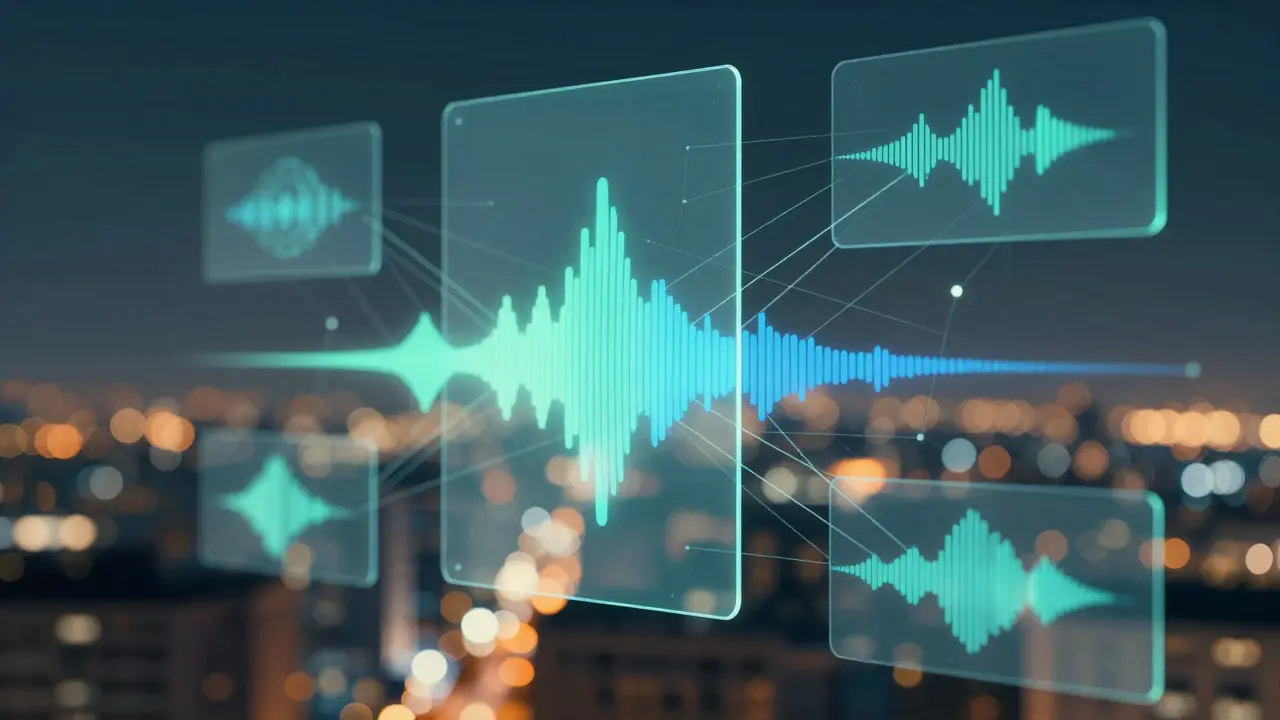
If the internet provided the space, algorithms provided the map. Streaming platforms like Spotify and Apple Music don't just play songs; they analyze them. They look at tempo, key, instrumentation, and even the texture of the vocals. This data allows them to group songs into micro-categories that humans might never have noticed.
Consider the concept of "mood-based" listening. You don't search for "indie pop" anymore; you search for "songs to study to" or "aggressive workout tracks." The algorithm responds by creating playlists that cut across traditional genre lines. A playlist might include a track from a Japanese city pop revivalist alongside a Swedish synth-wave artist because they share similar spectral characteristics. This forces listeners to engage with music based on function and feeling, not just historical lineage.
However, this creates a feedback loop. Artists begin producing music that fits these algorithmic pockets. If you know that "dark ambient" gets recommended to people who listen to horror soundtracks, you might tailor your production to hit those sonic markers. The line between organic evolution and algorithmic optimization is thinning. We are seeing a new era where algorithmic curation is the process by which software selects and recommends content based on user behavior and audio analysis drives the creation of new subgenres.
Social Media and Viral Aesthetics
While algorithms sort the backend, social media fuels the frontend. TikTok and Instagram Reels have turned music discovery into a visual and viral experience. A 15-second clip of a song can catapult a niche sound into the mainstream overnight. But here’s the twist: it often doesn't stay mainstream for long. Instead, it spawns dozens of imitators and variations, fragmenting further.
Take the recent surge in "hyperpop." What started as a small collective in Chicago exploded globally because its exaggerated, glitchy aesthetic translated perfectly to short-form video. But within months, you saw splinter genres emerge: "glitchcore," "breakcore," and "sigilkore." Each carried slight variations in speed, distortion, and vocal processing. Social media accelerates the lifecycle of a subgenre. It rises fast, peaks hard, and then either stabilizes as a recognized style or dissolves into the next trend.
This speed changes how artists approach their craft. There is pressure to create instantly recognizable hooks. But there is also freedom. An artist doesn't need a label to define their genre; they can tag themselves #pluggnb or #seapunk and find their tribe immediately. The community forms around the tag, not the record store shelf.
The Hybridization Effect
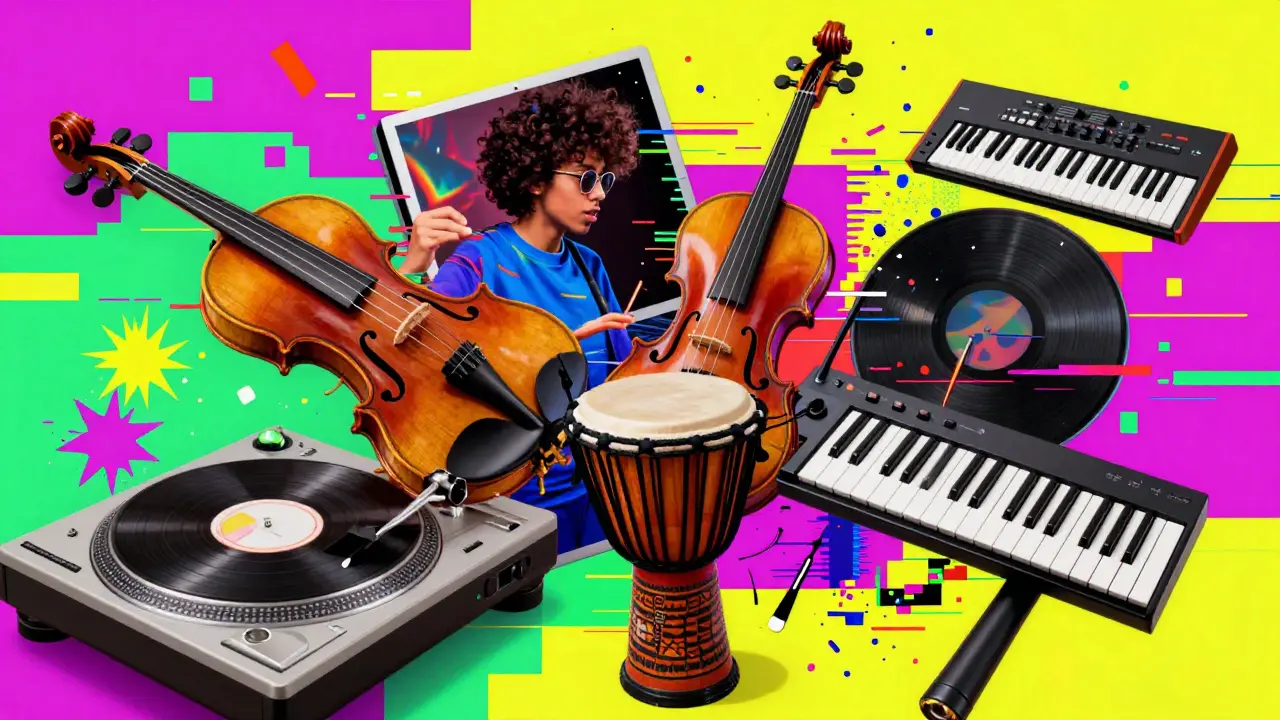
In this new era, purity is dead. The most exciting music today lives in the intersections. We are seeing massive hybridization where genres that were once considered opposites merge seamlessly. Think about the collaboration between a classical violinist and a drill rapper, or a bluegrass fiddle player joining a dubstep set. These aren't gimmicks; they are natural progressions in a world where musicians have access to all musical history.
Let’s look at a concrete example: the fusion of Latin rhythms with electronic dance music (EDM). For years, reggaeton and house music existed in separate spheres. Now, we have "reggaeton-house" or "Latin-trap" dominating global charts. Artists like Bad Bunny or Rosalía don't just stick to one lane; they weave together flamenco, hip-hop, and electronic elements. This creates a rich, complex tapestry that defies simple categorization.
This hybridization requires listeners to be more flexible. You can no longer dismiss a whole genre because you dislike one element. If you hate heavy bass, you might still love the melodic structure of a techno track that incorporates acoustic guitar. The subgenre landscape encourages open-mindedness. It asks us to listen to the components, not just the label.
| Feature | Traditional Era (Pre-2010) | Digital Era (2010-Present) |
|---|---|---|
| Discovery Method | Radio, Record Stores, MTV | Streaming Algorithms, Social Media Feeds |
| Categorization | Broad Genres (Rock, Pop, Jazz) | Micro-Genres & Mood-Based Tags |
| Gatekeepers | d>Label Executives, Radio DJs | Users, Algorithms, Influencers |
| Lifecycle Speed | Slow (Years to establish) | Fast (Weeks to go viral) |
| Artist Control | Low (Dependent on Label) | High (Direct-to-Fan Distribution) |
The Challenge of Identity
With so many subgenres, does it become confusing? Absolutely. For casual listeners, the jargon can feel exclusionary. Terms like "mathcore" or "vaporwave" carry cultural weight that isn't always obvious to outsiders. This creates a barrier to entry. If you don't know the history, you might miss the nuance.
But this also fosters deep community bonds. Knowing the difference between "post-rock" and "ambient post-rock" signals belonging. It shows you’ve done the homework. In a fragmented world, these micro-communities provide a sense of identity. Fans gather online to discuss the latest releases in their niche, creating forums and Discord servers dedicated to sounds that barely register on the mainstream radar.
For artists, this is both a blessing and a curse. On one hand, you can build a sustainable career with a small, dedicated fanbase. You don't need millions of streams to survive; you need thousands of superfans who buy merch and attend shows. On the other hand, breaking out of your niche is harder. If you’re labeled as a "shoegaze" artist, you might struggle to be taken seriously when you release a country album. The labels stick, sometimes unfairly.
Looking Ahead: The Future of Sound
Where do we go from here? The trend toward specificity is unlikely to reverse. As technology advances, we will likely see even more granular categorization. Artificial intelligence might soon generate music tailored to your exact biometric data-heart rate, stress levels, time of day-creating personalized subgenres that exist only for you.
We are also seeing a resurgence of interest in regional sounds. While global trends dominate, there is a counter-movement celebrating local dialects and instruments. "Afrobeats" has gone global, but within it, we see distinctions between Lagos-style Afrobeats and Nairobi-inspired Afro-fusion. This localization adds depth to the global conversation.
The new era of sonic exploration is not about chaos; it’s about precision. It’s about finding the exact frequency that resonates with your soul. Whether you’re a listener digging through crates of digital vinyl or an artist blending unexpected sounds, the tools are in your hands. The question is no longer "What genre do you like?" but "What vibe are you chasing today?"
Why are there so many subgenres in music now?
The explosion of subgenres is driven by digital accessibility and algorithmic curation. Streaming platforms allow listeners to explore niche sounds easily, while algorithms recommend hyper-specific playlists. Social media further accelerates this by creating viral trends around micro-aesthetics, encouraging artists to experiment and fans to identify with precise sonic identities.
Do algorithms kill creativity in music?
Not necessarily, but they influence it. Algorithms can encourage artists to produce music that fits certain data patterns to get recommended. However, they also expose artists to diverse influences they might never have encountered otherwise. Many creators use algorithms as a starting point for inspiration, leading to unique hybrid genres rather than generic copies.
How do I find new subgenres I might like?
Start by exploring the "Fans Also Like" sections on streaming platforms or diving into curated playlists based on moods rather than genres. Engage with social media communities centered around specific aesthetics (e.g., #lofi or #synthwave). Talk to friends who have different tastes, and don’t be afraid to let algorithms surprise you by clicking on unfamiliar recommendations.
Is it bad to label music with too many subgenres?
It can be limiting if used rigidly, as it may pigeonhole artists or exclude casual listeners. However, subgenres serve as useful shorthand for communication and discovery. They help connect specific communities and preserve the cultural context of music. The key is to view labels as guides, not rules, and remain open to fluidity in musical expression.
What is the role of social media in creating new music genres?
Social media acts as an accelerator and amplifier. Trends start with small groups sharing clips, which can go viral globally within days. This rapid dissemination allows niche sounds to gain traction quickly. Platforms like TikTok prioritize visual and auditory hooks, encouraging artists to create distinctive, memorable snippets that define new micro-genres.