
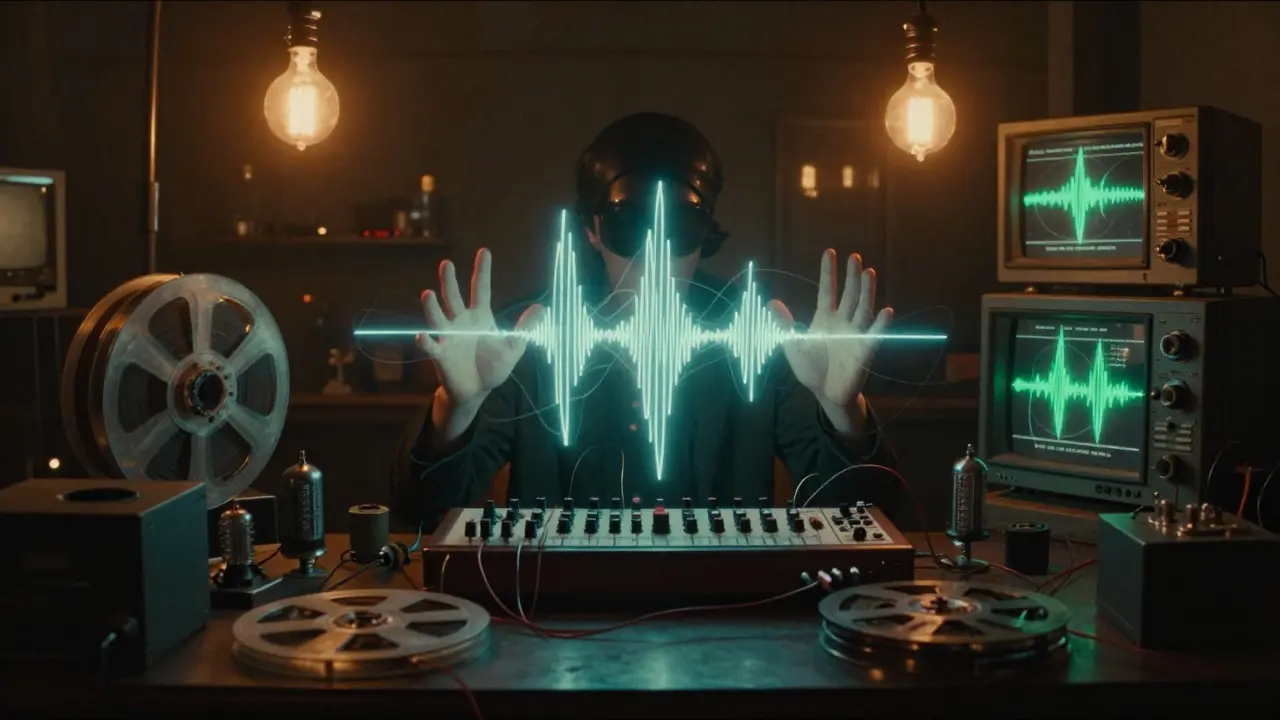
Walk into any major city today, and you will hear it. It is in the club next door, streaming from someone’s headphones on the subway, and blasting from speakers at a massive outdoor festival. Electronic music is a genre of music that utilizes electronic musical instruments, digital instruments, or circuitry-based music technology. It has moved from the fringes of experimental art to the absolute center of global pop culture. But how did we get here? And why does this sound, once considered cold and robotic, now dominate our emotional lives?
The story isn't just about new gadgets; it is about a fundamental shift in how humans create and consume sound. We are looking at a journey that started with wires and vacuum tubes and ended with cloud-based collaboration and AI-assisted production. This article breaks down the rise of this sonic revolution, exploring the technology, the culture, and the future of beats made by machines.
From Laboratory to Living Room: The Early Years
To understand where electronic music is going, you have to look at where it began. It didn't start in a nightclub. It started in laboratories and radio stations. In the early 20th century, inventors were fascinated by generating sound through electricity rather than physical vibration.
The Theremin, invented by Lev Termen in 1928, was one of the first instruments played without physical contact. Musicians would wave their hands near antennas to change pitch and volume. It sounded eerie, sci-fi, and completely unlike anything else. Around the same time, the Ondes Martenot was being used in classical compositions in France. These were not party instruments; they were tools for composers who wanted to explore sounds that nature couldn't produce.
Then came the tape recorder. This device changed everything. Composers like Pierre Schaeffer began cutting and splicing magnetic tape to create musique concrète, or "concrete music." They took recordings of trains, birds, and doors slamming, then slowed them down, sped them up, and reversed them. This was the birth of sampling-taking existing sounds and repurposing them into something new. It was messy, expensive, and required a lot of physical labor, but it proved that recorded sound itself could be an instrument.
The Analog Revolution: Synthesizers Enter the Scene
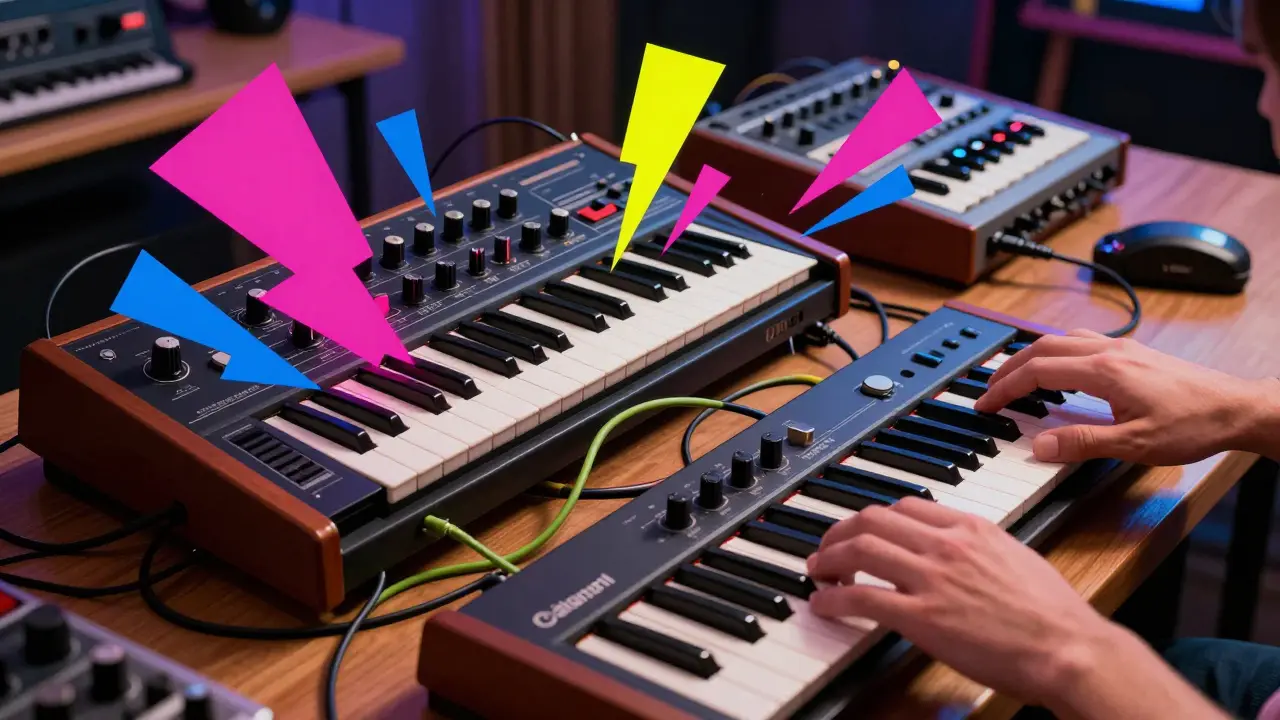
In the 1960s and 70s, the technology became more accessible. The Moog synthesizer, developed by Robert Moog, brought voltage-controlled oscillators to musicians. Before this, synthesizers were room-sized computers costing hundreds of thousands of dollars. Moog created a keyboard interface that musicians already understood.
This era gave us two distinct paths. On one side, you had progressive rock bands like Pink Floyd using synths to create atmospheric textures. On the other, you had disco and funk producers using drum machines like the Roland TR-808 to create tight, rhythmic grooves. The 808 was initially a commercial failure because its kick drum sounded too artificial. But decades later, that exact "fake" sound became the backbone of hip-hop and techno.
The key shift here was control. Musicians could now shape the envelope of a sound-how it attacks, decays, sustains, and releases. This allowed for sounds that were impossible on acoustic instruments. A piano note fades naturally. A synth pad can hold a perfect, unwavering tone for minutes. This precision appealed to a growing desire for clarity and energy in popular music.
Digital Breakthroughs and the Birth of Dance Culture
The 1980s marked the transition from analog to digital. The introduction of MIDI (Musical Instrument Digital Interface) in 1983 was a watershed moment. MIDI allowed different electronic instruments to talk to each other. A keyboard could trigger a drum machine, which could sync with a sequencer. Suddenly, one person could create an entire orchestra in their bedroom.
This democratization of technology fueled the explosion of dance music scenes. In Detroit, musicians like Juan Atkins, Derrick May, and Kevin Saunderson combined European synth-pop with American funk and electro to create techno. Meanwhile, in Chicago, Frankie Knuckles and others were blending house music with soulful vocals and four-on-the-floor beats.
| Genre | Origin City | Key Technology | Sonic Characteristic |
|---|---|---|---|
| Techno | Detroit, USA | Roland TB-303, TR-909 | Mechanical, repetitive, futuristic |
| House | Chicago, USA | Korg M1, Roland TR-808 | Soulful, disco-influenced, warm |
| Drum and Bass | London, UK | Ableton Live, Samplers | Fast breakbeats, heavy basslines |
These genres weren't just music; they were social movements. Clubs became spaces for community, often welcoming marginalized groups who felt excluded from mainstream venues. The music provided a unifying pulse. The DJ became the curator of this experience, mixing tracks seamlessly to keep the energy flowing. This role evolved from playing records to performing live sets using controllers and laptops.
The Internet Age and Global Mainstreaming
If the 80s and 90s built the foundation, the 2000s poured concrete over it. The internet changed distribution. File-sharing platforms allowed underground tracks to spread globally overnight. A track produced in Berlin could be heard in Tokyo within hours. This broke down geographical barriers and created a unified global electronic music scene.
Simultaneously, software caught up with hardware. Ableton Live, released in 2001, revolutionized production. It allowed for non-linear composition, meaning producers could loop sections, rearrange parts instantly, and perform live with their computer. Other DAWs (Digital Audio Workstations) like FL Studio and Logic Pro followed suit, making professional-grade production available to anyone with a laptop.
This accessibility led to an explosion of subgenres. Dubstep emerged from London, trap from the South of the US, and future bass from online producer communities. Each subgenre had its own aesthetic, fashion, and community. The term "EDM" (Electronic Dance Music) was coined in the US to market these diverse styles to a broader audience, particularly through massive festivals like Tomorrowland and Ultra Music Festival.
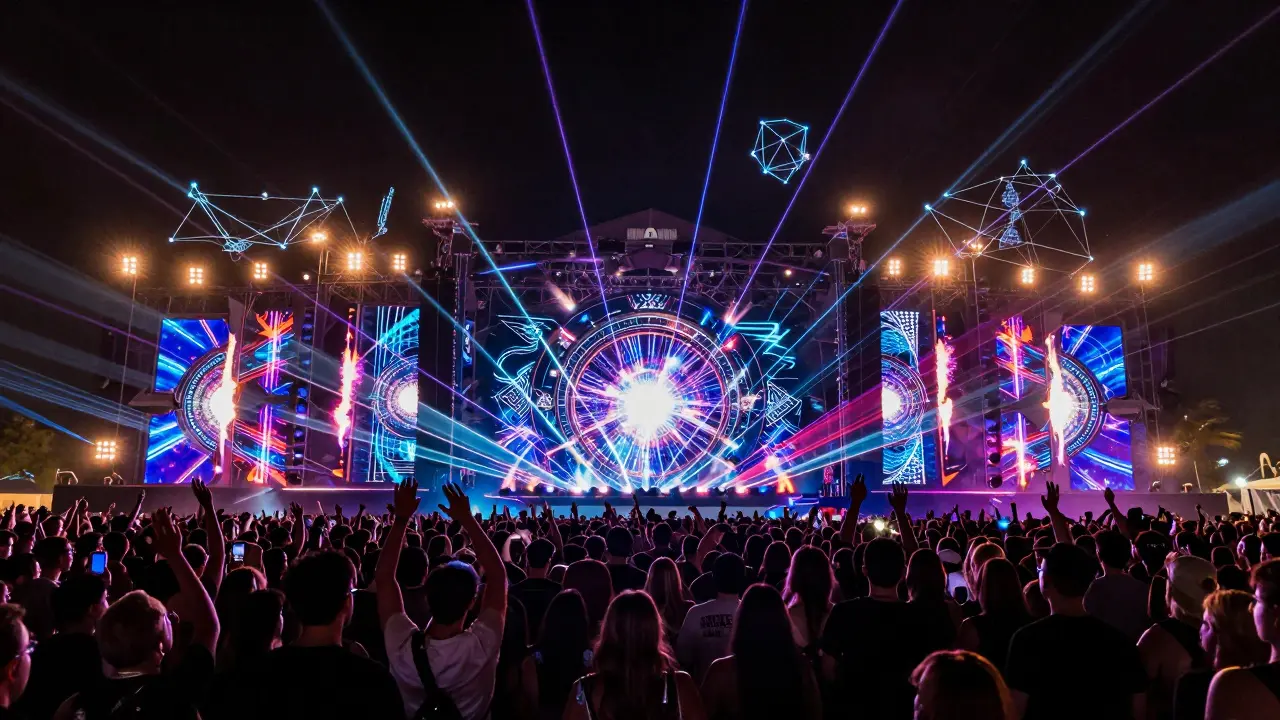
Festivals transformed electronic music into a visual spectacle. Stages became architectural marvels with laser shows, pyrotechnics, and immersive lighting. The focus shifted from just hearing the music to experiencing it physically. This commercialization brought billions of dollars into the industry but also sparked debates about authenticity and corporate influence.
Current Trends: Hybridization and Immersion
In 2026, the lines between electronic and other genres are blurrier than ever. Pop stars collaborate with DJs regularly. Hip-hop beats incorporate complex synth layers. Rock bands use live looping and digital effects. Pure electronic music is rare; most modern music is hybrid.
Technology continues to drive innovation. Spatial audio and Dolby Atmos are changing how we mix music, allowing listeners to place sounds in three-dimensional space. Virtual Reality (VR) concerts let fans attend shows from anywhere in the world, interacting with avatars in digital environments. Artists like Travis Scott and Fortnite's virtual events have proven that digital performances can rival physical ones in scale and engagement.
Artificial Intelligence is also entering the studio. AI tools can now generate melodies, suggest chord progressions, and even master tracks. While some purists worry about losing the human touch, many producers see AI as a creative partner-a way to overcome writer's block or explore new sonic territories quickly. The question is no longer whether machines can make music, but how humans can guide them to create something meaningful.
Why Electronic Music Resonates Today
So, why does this genre continue to rise? It comes down to adaptability. Electronic music is inherently flexible. It can be background ambiance for studying, high-energy fuel for workouts, or deep emotional journeys for late-night listening. It reflects the digital age we live in-fast, connected, and constantly evolving.
It also offers a sense of unity. At a rave or festival, thousands of strangers move together to the same beat. There is a primal connection in shared rhythm. In an increasingly fragmented world, that collective experience is powerful. Electronic music provides a space where differences fade away, and everyone is united by the sound.
Moreover, the barrier to entry remains low. You don't need a million-dollar studio. You need a laptop, some headphones, and creativity. This inclusivity ensures a constant stream of new talent and fresh ideas. The genre never stagnates because there are always new tools and new voices pushing boundaries.
Challenges and Future Directions
Despite its success, the industry faces challenges. Streaming payouts remain low for many artists, forcing them to rely on touring and merchandise. The environmental impact of large festivals is under scrutiny, with organizers working to reduce waste and carbon footprints. Copyright issues around AI-generated music are becoming a legal battleground.
Looking ahead, expect more integration of biometric data. Imagine headsets that adjust the music based on your heart rate or mood. Or collaborative platforms where producers across the globe work on the same track in real-time with zero latency. The future of electronic music is not just about better sounds; it is about deeper connections and smarter technology.
The rise of electronic music is far from over. It has become the soundtrack of modern life, shaping how we listen, dance, and feel. As technology advances, so will the music. The only constant is change-and in electronic music, change is the beat.
What is the difference between electronic music and EDM?
Electronic music is the broad umbrella term for any music created primarily with electronic instruments. EDM (Electronic Dance Music) is a specific subset focused on danceable rhythms, typically found in clubs and festivals. All EDM is electronic music, but not all electronic music is EDM (e.g., ambient or synth-wave).
Do I need expensive gear to start making electronic music?
No. Most professional tracks today are made using a laptop and a free or affordable Digital Audio Workstation (DAW) like Ableton Live Intro, FL Studio, or GarageBand. High-quality plugins and samples are widely available online. Focus on learning theory and arrangement before buying hardware.
How has AI impacted electronic music production?
AI assists in tasks like mastering, stem separation, and melody generation. Tools like iZotope's Ozone use AI to analyze and optimize mixes. Some producers use AI to brainstorm ideas, but the creative direction and emotional depth still come from the human artist.
What are the most influential electronic music festivals?
Major festivals include Tomorrowland (Belgium), Ultra Music Festival (Miami), Electric Daisy Carnival (Las Vegas), and Awakenings (Netherlands). These events showcase top DJs, innovative stage designs, and global cultural exchange.
Is electronic music environmentally friendly?
Large festivals have significant environmental impacts due to travel, waste, and energy use. However, the industry is shifting towards sustainability. Many events now use solar power, ban single-use plastics, and promote public transport. Home listening via streaming has a lower footprint than vinyl or CDs.