
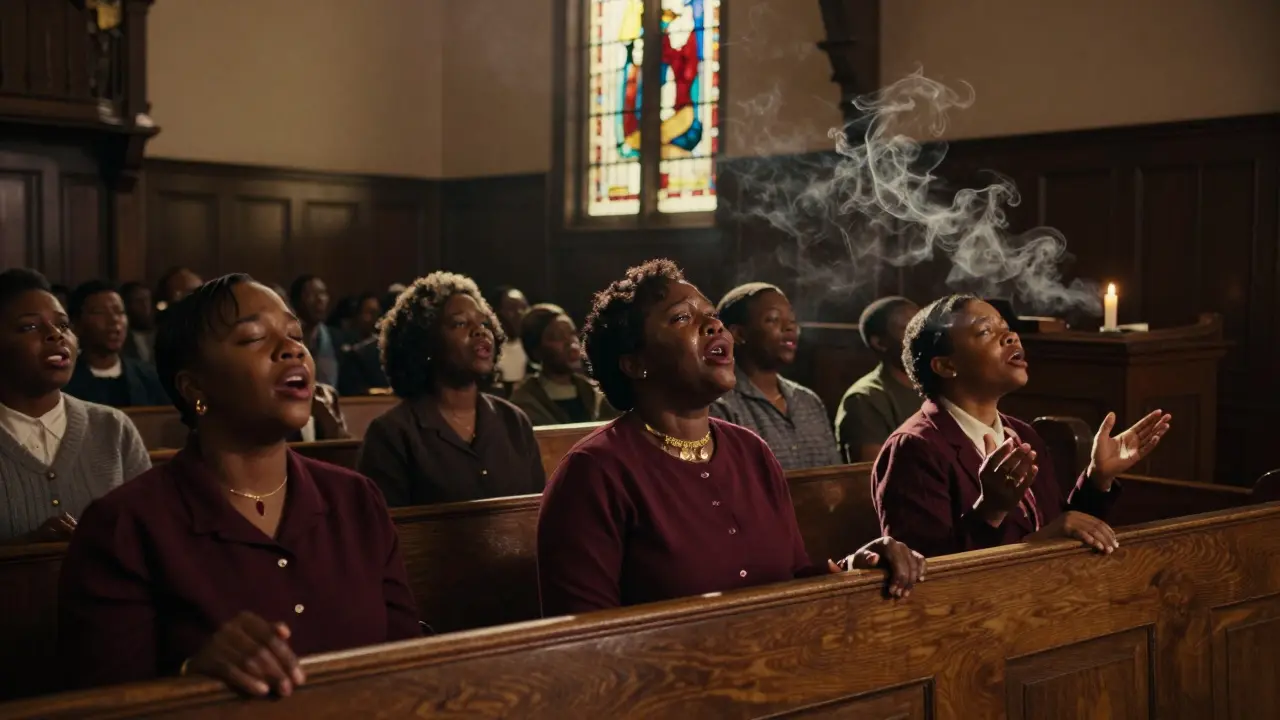
Soul music doesn’t just play-it pulses. It’s in the way a gospel choir lifts a note until the rafters shake, in the slow bend of a tenor sax after a long silence, in the way a singer lets a word hang like smoke before letting it go. This isn’t background noise. It’s the sound of people telling the truth when the world told them to stay quiet. And its rhythm? That’s not just time signatures and drum patterns. It’s the heartbeat of a movement.
Where the Beat Came From
Soul music didn’t appear out of nowhere. It grew from the soil of Black churches in the American South. Gospel music, with its call-and-response structure and raw emotional delivery, was the foundation. Singers like Mahalia Jackson didn’t just sing-they testified. And when those same voices started recording secular songs in the 1950s, something new was born. Ray Charles took a gospel choir’s passion and poured it into a song about lost love. “I Got a Woman” in 1954 wasn’t just a hit-it was a revolution. The church had given it the voice. Now, it was speaking to the streets.
The rhythm? It came from the syncopation of spirituals, the sway of blues, and the steady thump of R&B bands. Drummers didn’t just keep time-they pushed it. The snare cracked on the two and four, but the hi-hat danced around it. Basslines didn’t walk-they grooved, locking into the guitar’s chop like a heartbeat syncing with breath. This wasn’t dance music for the sake of dancing. It was music that made you move because your body knew what your mind couldn’t say.
Two Cities, Two Sounds
By the early 1960s, soul had split into two powerful branches. In Detroit, Berry Gordy built Motown Records like a factory-but instead of cars, it made hits. The Funk Brothers, Motown’s house band, played with surgical precision. Their rhythm section was tight: James Jamerson’s bass lines were melodic puzzles, Benny Benjamin’s drums were crisp and controlled. Songs like “Ain’t No Mountain High Enough” felt effortless, but every note was rehearsed until it was perfect. Motown soul was polished, radio-ready, and designed to cross over. It made Black music palatable to white audiences without losing its soul.
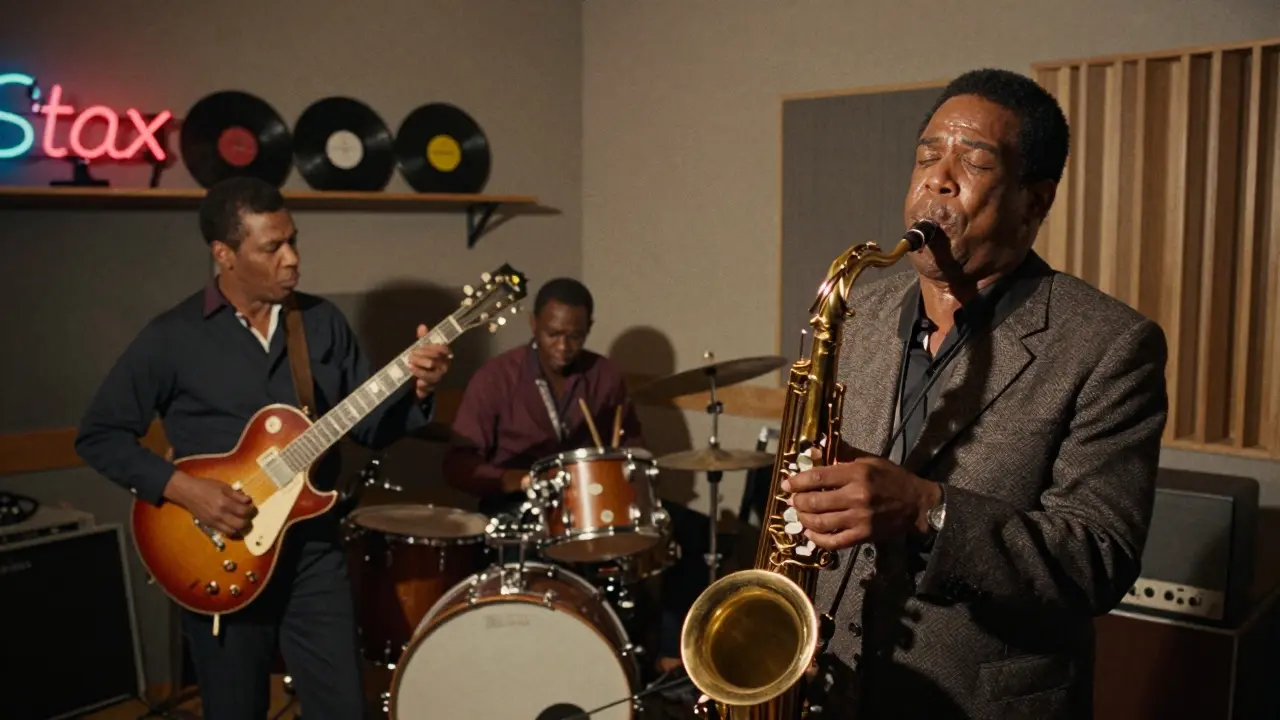
Down in Memphis, Stax Records did the opposite. There was no factory. Just a converted movie theater, a dusty studio, and musicians who played like they were in a backroom jam. Booker T. & the M.G.’s-white and Black musicians playing side by side in segregated Tennessee-created a grittier, earthier sound. The drums were looser. The horns blew with raw, breathy urgency. Otis Redding didn’t sing notes-he screamed them. “Try a Little Tenderness” starts soft, then builds like a storm you can’t outrun. Stax soul didn’t care if it made the charts. It cared if it made you feel something real.
The Voice That Changed Everything
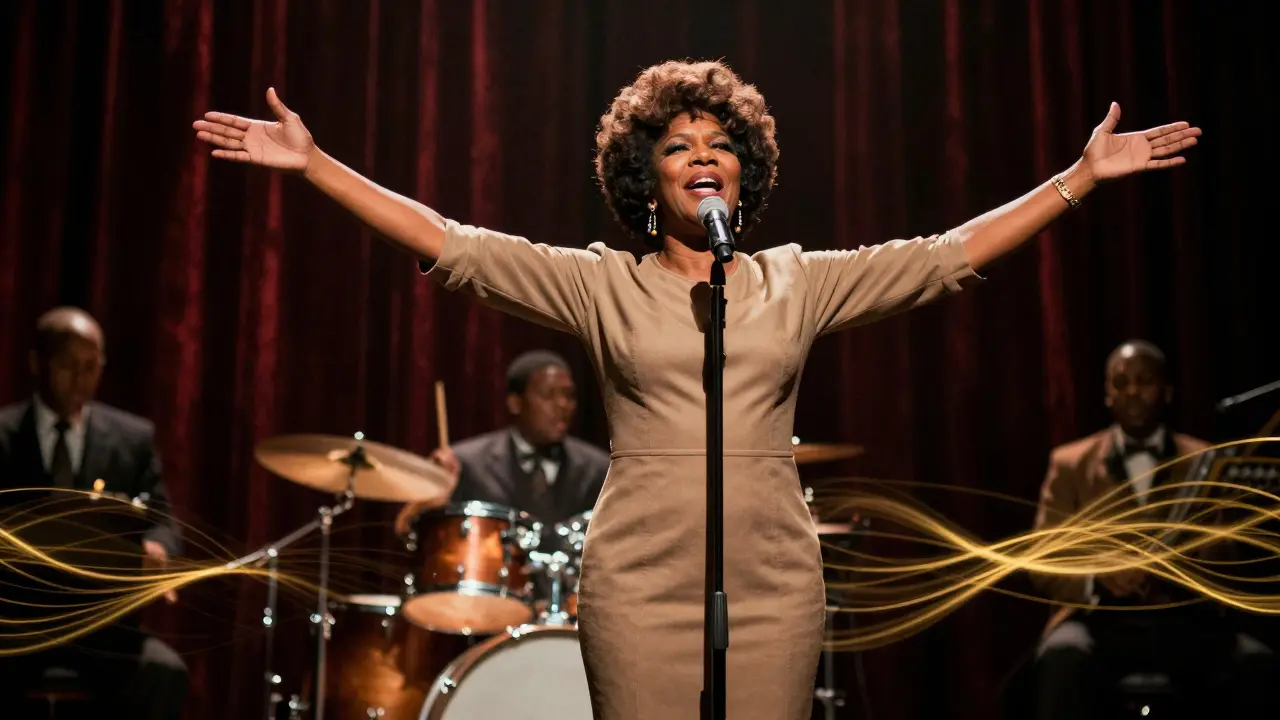
If Motown was the engine and Stax was the fire, then Aretha Franklin was the soul itself. When she moved from Columbia to Atlantic Records in 1967, she walked into Muscle Shoals with a band that knew how to breathe with her. The rhythm section-especially the drumming of Roger Hawkins-didn’t just follow her. It anticipated her. That famous intro to “Respect”? The way the horns stab in, the way the bass locks in just before she sings the first word? That’s not arrangement. That’s telepathy.
She didn’t just sing the lyrics. She owned them. “Respect” wasn’t a request. It was a demand. And the rhythm? It was the sound of a woman claiming her space. Every beat behind her was a step forward. Every pause before she hit a note was a breath held by a generation waiting to be heard.
The Groove That Wouldn’t Die
Soul music didn’t fade. It changed shape. In the 1970s, James Brown turned it into funk-tighter, more percussive, with the emphasis on the “one.” But the core remained: rhythm as resistance. Marvin Gaye’s “What’s Going On” used a slow, swaying groove to carry lyrics about war, poverty, and police brutality. The beat didn’t distract from the message-it deepened it. You couldn’t tap your foot to that song and ignore what it was saying.
Even today, the rhythm lives. When Adele sings “Rolling in the Deep,” the clapping, the stomping, the way the drums kick in after the first chorus-that’s soul. When Bruno Mars drops “Uptown Funk,” he’s not just copying the 70s. He’s channeling the same energy that made Otis Redding’s voice crack with feeling. The rhythm is the thread.
Why It Still Moves Us
Why does soul still hit harder than most modern pop? Because it doesn’t rely on auto-tune or programmed beats. It relies on imperfection. A slightly flat note. A breath before the chorus. A drummer hitting the snare a millisecond too early. Those are the moments that make you feel like you’re in the room. That’s what streaming algorithms can’t replicate. That’s what AI can’t fake.
When you hear “Chain of Fools” or “I Heard It Through the Grapevine,” you’re not just listening. You’re feeling the weight of history. The rhythm isn’t just in the music. It’s in the way the bass holds the groove like a promise. In the way the horns answer the singer like a congregation saying “Amen.” In the way the drums don’t just keep time-they keep hope alive.
How to Hear It
If you want to truly hear soul music, don’t just listen with your ears. Listen with your body. Put on headphones. Close your eyes. Let the bassline settle into your chest. Notice how the snare hits like a second heartbeat. Pay attention to the spaces between the notes. That’s where the soul hides. The best soul songs don’t tell you how to feel. They make you feel it before you even know you’re feeling it.
Start with these five tracks:
- “Chain of Fools” - Aretha Franklin
- “(I Can’t Get No) Satisfaction” - Otis Redding
- “When a Man Loves a Woman” - Percy Sledge
- “Try a Little Tenderness” - Otis Redding
- “Ain’t No Mountain High Enough” - Marvin Gaye & Tammi Terrell
Play them loud. Let the rhythm move you. Then ask yourself: when was the last time a song made you feel like you were part of something bigger?”
What makes soul music different from R&B?
Soul music grew out of R&B but added deeper gospel influences-emotional delivery, call-and-response patterns, and a focus on spiritual intensity. R&B in the 1950s was more about danceable beats and smooth vocals. Soul turned those elements into vehicles for personal and social expression. Think of R&B as the foundation and soul as the building that rose from it, with stained glass windows and a choir singing from the rafters.
Who were the key players in soul music?
Aretha Franklin, Otis Redding, Sam Cooke, James Brown, Marvin Gaye, Percy Sledge, and Wilson Pickett were the giants. Behind them, the Funk Brothers in Detroit and Booker T. & the M.G.’s in Memphis were the unsung heroes who shaped the sound. Producers like Berry Gordy, Jerry Wexler, and Rick Hall didn’t just record music-they crafted movements.
Is Motown the same as soul music?
Motown is a subset of soul, not the whole thing. It’s soul with polish-designed for crossover success. While Stax and Atlantic records kept the raw, Southern grit, Motown refined it for pop radio. Both are soul, but Motown was the polished version, and Stax was the unfiltered truth. You can’t understand soul without both.
Why does soul music still matter today?
Because it’s one of the few genres where emotion is the main instrument. Modern pop often hides behind production tricks. Soul doesn’t. Its power comes from human imperfection-the crack in a voice, the slight delay in a drum hit, the way a singer holds a note until it hurts. That’s why artists from Adele to H.E.R. still borrow from it. Soul reminds us that music doesn’t need to be perfect to be powerful.
Can you learn to sing soul music?
Yes-but not by just learning scales. Soul singing is about emotional honesty, not technique. You have to connect to the lyrics like they’re your own story. Practice phrasing like a preacher: pause before the big note, breathe through the pain, let the voice break if it needs to. Listen to Aretha singing “Natural Woman” and notice how she doesn’t just hit the high note-she climbs to it, step by step, like she’s climbing out of something.