
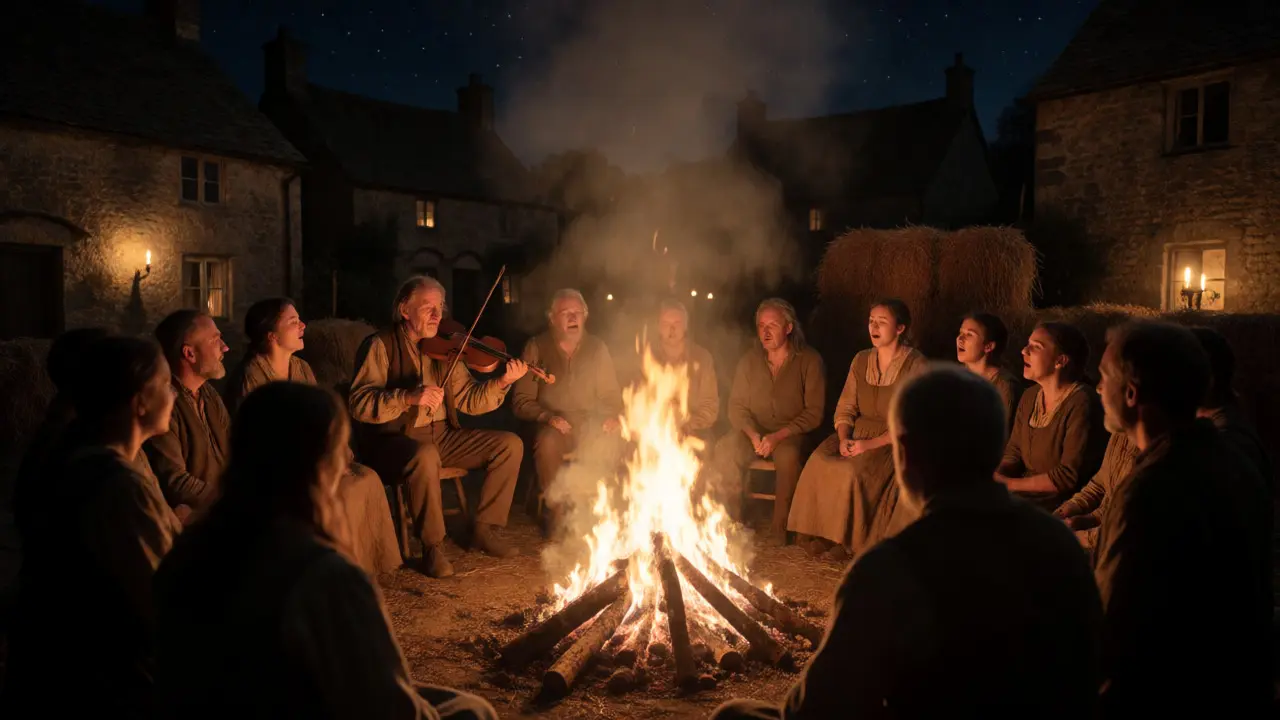
Imagine sitting around a fire in a village square three hundred years ago. There is no electricity, no radio, and certainly no Spotify. Yet, the air is thick with sound. Someone plucks a stringed instrument, and voices rise together, singing about a harvest that failed, a lover who left, or a hero who died young. This isn't just entertainment; it's news, history, and community bonding rolled into one melody. Folk music is the traditional music of a people, region, or class that is generally passed on by oral tradition. It’s the soundtrack of everyday life before mass media took over.
You might think folk music is just old songs played on banjos. But that’s like saying books are just paper. Folk music is a living archive. It tells us how our ancestors felt, what they feared, and what they celebrated. In this guide, we’ll explore why these traditions matter, how they survive today, and how you can connect with them. We’re not talking about museum pieces behind glass. We’re talking about sounds that still echo in modern coffee shops, festivals, and even your favorite indie playlists.
What Exactly Is Folk Music?
Defining folk music can be tricky because it changes depending on where you are and when you’re listening. Generally, it’s music created by ordinary people, not professional composers. Think of it as the internet of the pre-digital age-a network of stories shared person-to-person.
The core characteristic of traditional music is its anonymity. Most classic folk songs don’t have a single known author. They evolved over time. A farmer in Ireland might sing a song slightly differently than his neighbor. A traveler might carry that version to Scotland, changing a verse or two. By the time it reaches America, the melody might shift again. This process is called oral transmission. It means the song belongs to everyone and no one at the same time.
This stands in stark contrast to classical or pop music, which usually has a clear composer and fixed arrangement. Folk music is fluid. It adapts to the singer, the audience, and the era. If you’ve ever heard a lullaby your grandmother sang, you’ve encountered folk music. It’s intimate, personal, and deeply rooted in local identity.
The Instruments That Built The Sound
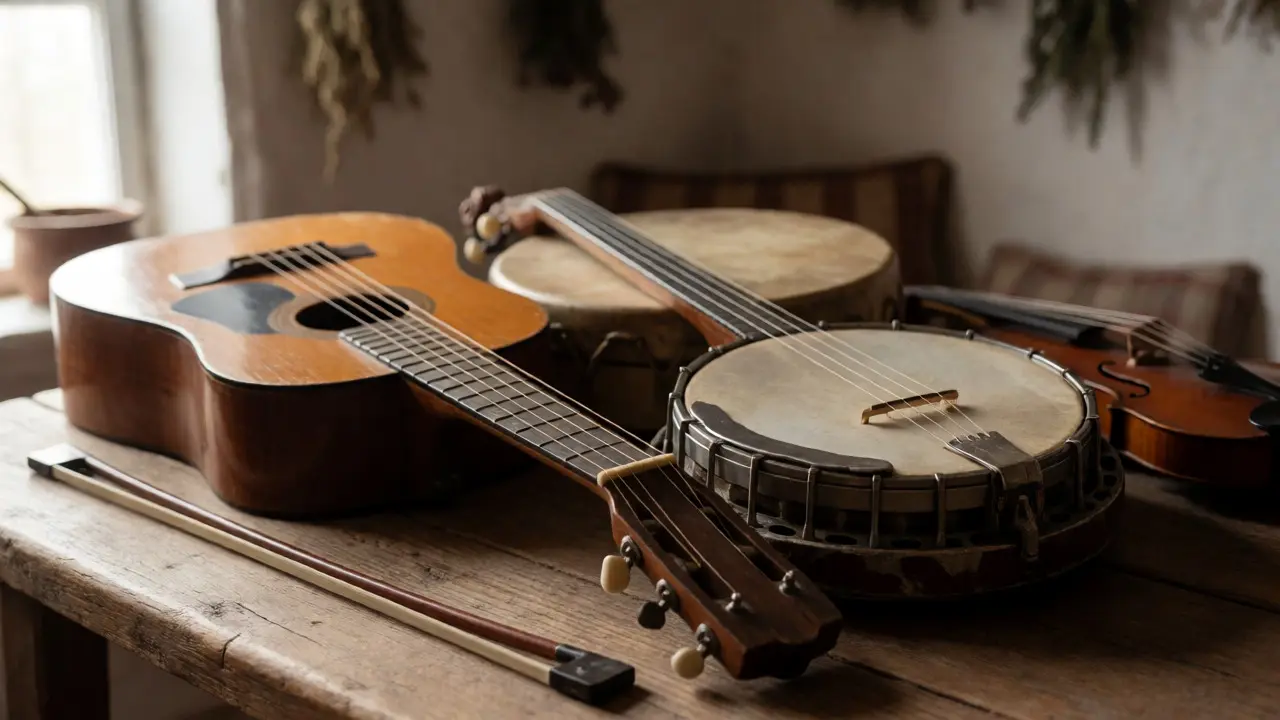
You can’t talk about folk traditions without mentioning the tools used to create them. These instruments were often handmade from locally available materials. Wood, gut strings, animal hides-these were the resources at hand. Because of this, regional variations in sound are huge. A fiddle in Appalachia sounds different from a fiddle in Sweden, partly due to playing style, but also due to the wood used and the tuning methods.
Let’s look at some key instruments that define global folk scenes:
| Instrument | Region of Origin | Key Characteristics |
|---|---|---|
| Acoustic Guitar | Spain/Latin America | Versatile chordal accompaniment; portable and affordable. |
| Banjo | Africa (via US) | Distinctive bright tone; descended from West African gourd-lutes. |
| Fiddle | Global (Europe focus) | Violin family; used for dance tunes and emotional ballads. |
| Accordion | Central Europe/Russia | Portable organ; drives rhythm in polkas and waltzes. |
| Bodhrán | Ireland | Frame drum; provides heartbeat-like rhythm for Celtic music. |
Notice anything? None of these require electricity. This portability was crucial. Workers could carry their instruments to gatherings after long days in the fields or mines. The banjo, for instance, traces its roots back to West Africa. Enslaved people brought similar instruments to the Americas, adapting them with available materials. Over centuries, it became central to American bluegrass and country folk. It’s a powerful example of how migration shapes musical heritage.
Why Did People Sing? The Functions of Folk Songs
We tend to view music as leisure now. For most of human history, music was functional. You didn’t just listen to folk songs; you worked to them, danced to them, and mourned with them.
Work Songs: Imagine hauling heavy nets onto a boat or rowing a canoe against a current. Rhythmic chants helped coordinate movement. Sea shanties are the most famous example. The call-and-response structure allowed a leader to set the pace while the crew pulled in unison. This wasn’t just for morale; it prevented injury and increased efficiency.
Narrative Ballads: Before newspapers, news traveled through song. Ballads told stories of murders, romances, disasters, and historical events. They were often dramatic and exaggerated, designed to stick in memory. If a king lost a battle, a ballad would spread the story faster than any written letter.
Lullabies and Rituals: Lullabies weren’t always sweet. Many contained dark warnings or prayers for protection against illness. Similarly, wedding songs, funeral dirges, and seasonal hymns marked the passage of time. These rituals reinforced social bonds and cultural values.
Understanding these functions helps you appreciate the lyrics. When you hear a repetitive chorus, it might have been meant for group participation during labor. When the melody feels haunting, it might reflect genuine hardship rather than artistic choice.
Regional Flavors: How Geography Shapes Sound
Folk music is hyper-local. The landscape influences the tempo, the scale, and the mood. Mountainous regions often feature slower, more introspective melodies, perhaps echoing the isolation of rural life. Coastal communities might have faster, rhythmic styles suited to dancing and communal celebration.
Take Celtic music from Ireland and Scotland. It’s characterized by modal scales and ornamentation. The use of the uilleann pipes creates a continuous drone, mimicking the wind. Contrast this with Appalachian folk in the United States. Born from Scots-Irish immigrants blending with African and Native American influences, it features high-lonesome vocals and intricate guitar picking.
In Eastern Europe, complex time signatures dominate. Bulgarian folk choirs, for example, use dissonant harmonies that sound unusual to Western ears. This reflects specific cultural aesthetics and religious traditions. Meanwhile, Latin American folk genres like Son Jarocho blend Spanish guitar techniques with African rhythms and Indigenous melodies.
You don’t need to travel far to hear differences. Even within a single country, dialects and local customs create distinct sub-genres. Recognizing these nuances turns casual listening into active exploration.
The Revival: Keeping Traditions Alive Today
By the mid-20th century, many feared folk music would die out. Radio and television favored polished pop productions. Traditional ways of life were disappearing. Then came the folk revival of the 1950s and 60s. Artists like Pete Seeger, Joan Baez, and Bob Dylan brought acoustic authenticity back to the mainstream. They proved that simple chords and honest lyrics could sell millions of records.
This revival wasn’t just nostalgia. It was political. Folk songs became anthems for civil rights and anti-war movements. "Blowin' in the Wind" wasn’t just a pretty tune; it was a protest tool. This era showed that folk music could evolve while keeping its core spirit.
Today, we see a new wave of interest. Young musicians are digging into archives, learning rare instruments, and collaborating across cultures. Festivals dedicated to world music draw massive crowds. Streaming platforms make it easy to discover obscure recordings from decades ago. Technology helps preserve audio quality, but the live experience remains irreplaceable.
However, challenges remain. Commercialization can dilute authenticity. When a sacred ritual song becomes a background track for a car advertisement, does it lose its meaning? Balancing preservation with innovation is the ongoing task for modern folk artists.
How to Start Your Own Journey
You don’t need a degree in ethnomusicology to enjoy folk music. Here’s a practical approach to getting started:
- Pick a Region: Choose an area that interests you. Maybe you love Irish literature, so start with Celtic folk. Or perhaps you’re curious about American history, so try Appalachian ballads.
- Listen Actively: Don’t just play it in the background. Read the lyrics. Understand the story. Notice the instrumentation.
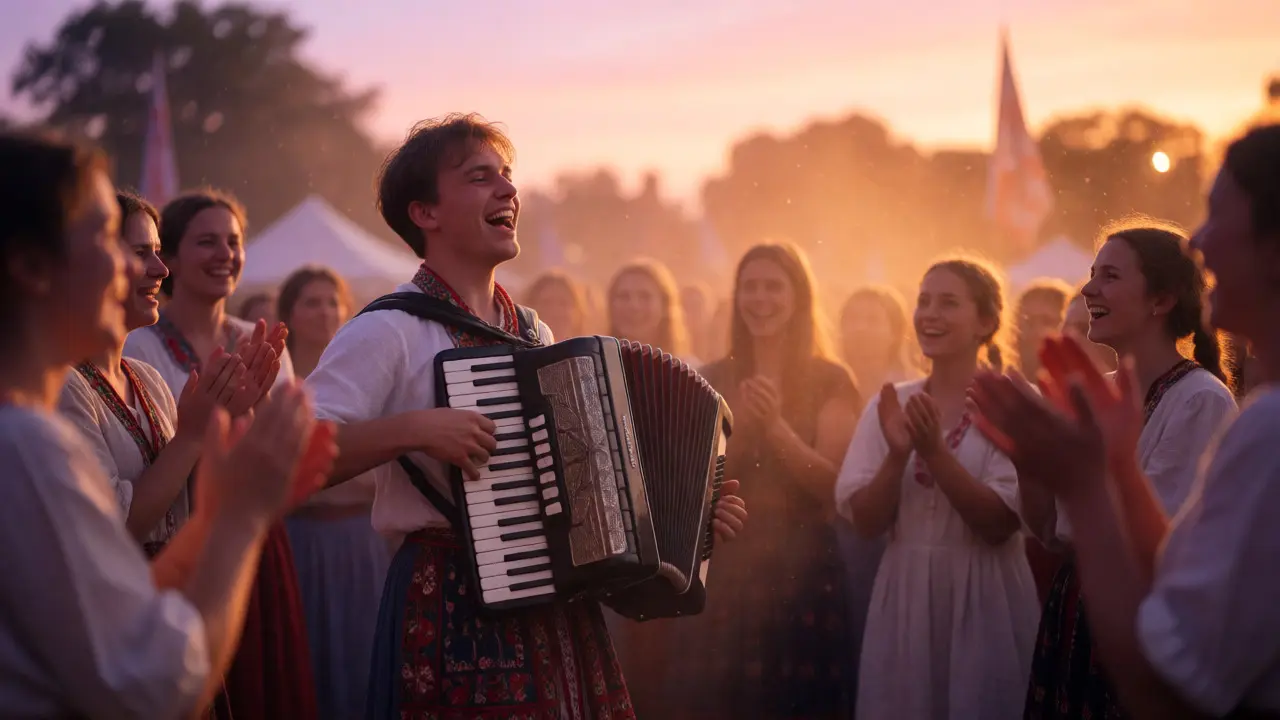
- Visit Live Performances: Look for local folk clubs or cultural festivals. The energy of a live crowd singing along is unmatched.
- Learn One Song: Pick a simple tune and learn to play it on an instrument or sing it. Engaging physically deepens your connection.
- Explore Archives: Websites like the Library of Congress or Smithsonian Folkways offer thousands of free recordings. Dive into field recordings from the early 1900s to hear raw, unpolished performances.
Remember, there’s no wrong way to listen. Some prefer the academic depth of historical context, while others just want the vibe. Both are valid entry points.
Why It Matters Now
In an increasingly digital and disconnected world, folk music offers something rare: authenticity. It reminds us that music was once a communal act, not a solitary consumption habit. It connects us to universal human experiences-love, loss, work, and joy-across time and space.
When you listen to a centuries-old ballad, you’re hearing the voice of someone who lived and breathed long before you. That continuity is powerful. It grounds us. It reminds us that despite technological changes, our emotional needs remain largely the same.
Folk music isn’t stuck in the past. It’s a foundation upon which much of modern popular music is built. From rock to hip-hop, sampling and storytelling techniques owe a debt to folk traditions. By exploring these roots, you gain a deeper appreciation for the music you listen to every day.
Is folk music the same as country music?
Not exactly. Country music is a commercial genre that evolved from folk roots, particularly Appalachian and Southern folk traditions. While country shares instruments like the guitar and fiddle, it often follows industry standards for production and songwriting. Folk music is broader, encompassing traditional songs from all over the world, and emphasizes oral tradition and community participation over commercial success.
Who owns the copyright to folk songs?
Traditional folk songs are typically in the public domain because their authors are unknown and they have been in circulation for generations. However, specific arrangements or recordings of these songs can be copyrighted. If an artist writes a new melody or significantly alters the lyrics, they may claim copyright on that specific version, but not on the underlying traditional elements.
Can I learn to play folk music if I'm a beginner?
Absolutely. Folk music is known for being accessible. Many traditional songs use only three or four basic chords. Instruments like the ukulele, harmonica, or simple percussion are easy to pick up. The emphasis is often on expression and storytelling rather than technical perfection, making it a welcoming genre for beginners.
What is the difference between folk and classical music?
Classical music is typically composed by named individuals, written down in notation, and performed by trained professionals in formal settings. Folk music is traditionally anonymous, passed down orally, and performed by non-professionals or community members in informal settings. Classical focuses on structural complexity and precision, while folk prioritizes memorability, emotional resonance, and communal participation.
Why do folk songs often have sad themes?
Historically, life was harder for most people. Hard labor, disease, war, and poverty were common realities. Folk songs served as a way to process grief and share struggles. Sad songs provided comfort by validating suffering and creating a sense of shared humanity. Joyful songs existed too, but the melancholic ballads often resonated more deeply with audiences facing difficult lives.