
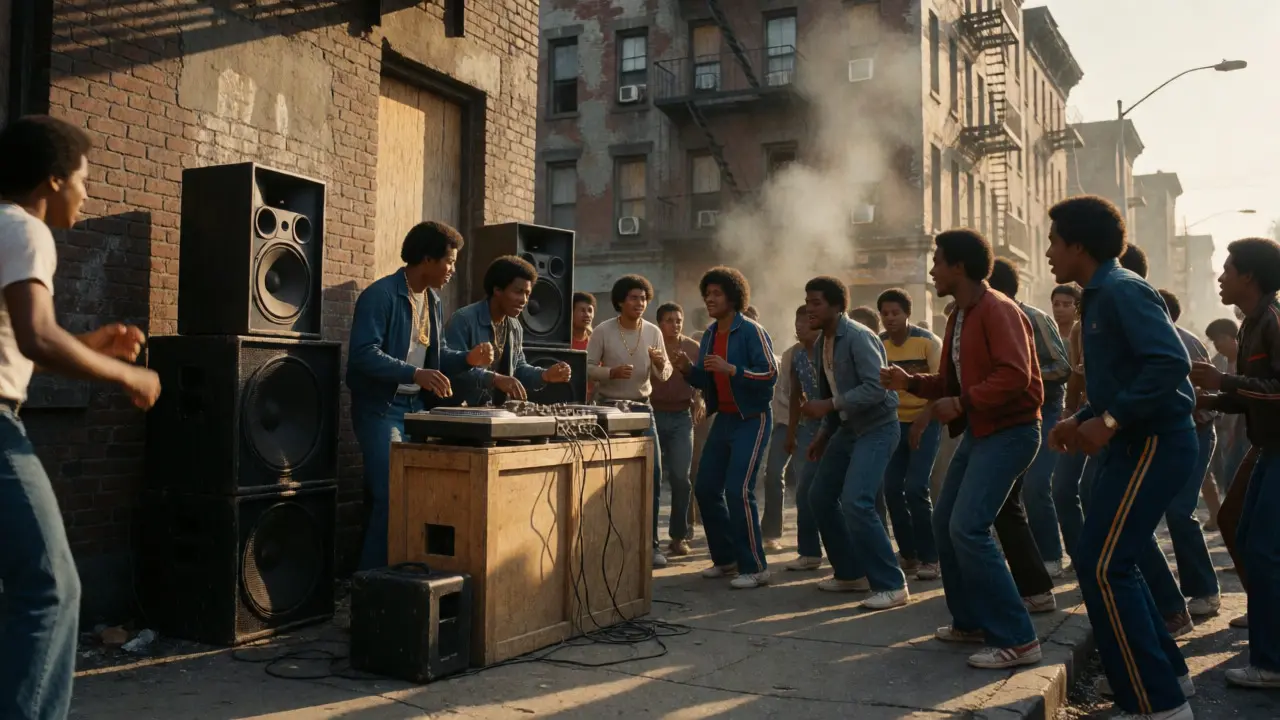
You hear the beat drop, and suddenly the air in the room changes. It’s not just a rhythm; it’s a heartbeat. For over fifty years, Hip Hop has been more than a genre of music-it is a global language of survival. Born in the Bronx during the late 1970s, this cultural movement didn’t just entertain; it gave a voice to those who had been silenced by systemic neglect. If you think hip hop is just about flashy cars and expensive chains, you’re missing the point entirely. At its core, it is the soundtrack of resistance against oppression and the anthem of resilience in the face of hardship.
| Pillar | Primary Function | Cultural Impact |
|---|---|---|
| DJing | Creating the sonic foundation using turntables. | Invented sampling and remix culture. |
| MCing (Rapping) | Vocal delivery and lyrical storytelling. | Elevated spoken word to high art. |
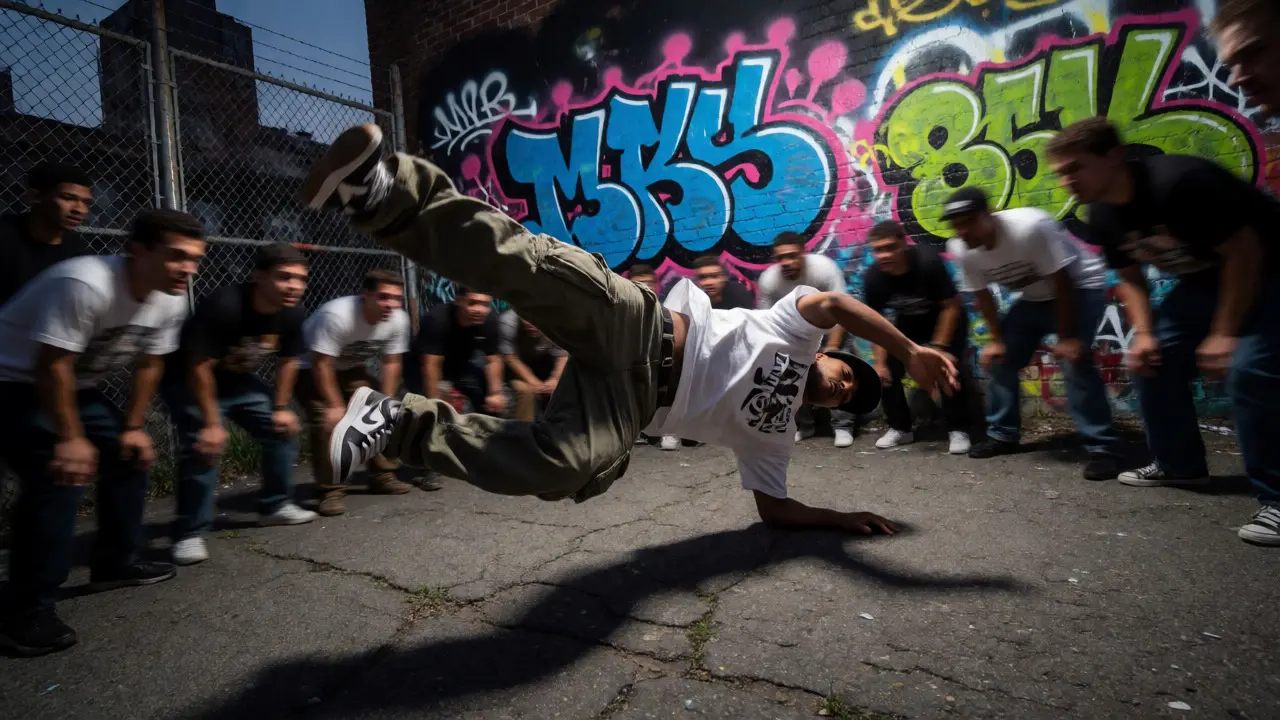
| Breaking (B-boying) | Athletic dance style expressing energy. | Bridged street culture with performance art. |
| Graffiti | Visual expression on public spaces. | Claimed visibility for marginalized youth. |
The Bronx Origins: Turning Scarcity into Creativity
To understand the resilience embedded in hip hop, you have to look at where it started. In 1973, the South Bronx was burning-literally and metaphorically. Landlords set fire to their own buildings for insurance money, leaving neighborhoods in ruins. There were no concert halls, no expensive instruments, and very little money. But there was electricity, and there was community. DJ Kool Herc, a Jamaican-American DJ, noticed that crowds danced hardest during the instrumental breaks of funk songs. He used two identical turntables to extend these "breaks," creating an endless loop of rhythm. This wasn't just a party trick; it was an act of resourcefulness. By isolating the drum beats, he created a space where people could move, express themselves, and forget their struggles for a few hours.
This innovation sparked a chain reaction. Other DJs like Grandmaster Flash refined the techniques, developing scratching and back-spinning. Meanwhile, MCs began to speak over the beats, evolving from simple hype men into storytellers. They described life in the projects, police brutality, and economic despair. Unlike other genres that often ignored social issues, early hip hop held up a mirror to society. It forced listeners to confront the reality of urban decay while celebrating the spirit of those living through it.
Lyrical Warfare: Words as Weapons of Resistance
If the beat is the body of hip hop, the lyrics are its soul. Rappers use words to dissect power structures, challenge authority, and document history. Consider Public Enemy in the late 1980s. Their track "Fight the Power" wasn't just a song; it was a political manifesto. Spike Lee used it in his film *Do the Right Thing*, cementing hip hop's role in mainstream cinema and social discourse. The group’s frontman, Chuck D, famously called hip hop "the Black CNN," meaning it provided news and perspectives that traditional media ignored.
This tradition of social commentary continues today. Artists like Kendrick Lamar tackle complex themes such as institutional racism, mental health, and survivor's guilt. His album *To Pimp a Butterfly* blends jazz, funk, and spoken word to explore the African American experience. When he raps about feeling trapped in a cycle of poverty despite success, he articulates a specific type of modern resilience-the struggle to maintain identity when your environment tries to define you. These lyrics do more than rhyme; they educate. They force listeners to engage with uncomfortable truths, making hip hop a powerful tool for social awareness.
Global Echoes: From New York to Melbourne
While hip hop was born in the United States, its message of resistance resonates globally. Why? Because marginalization looks different in every country, but the feeling of being unheard is universal. In Australia, for instance, Indigenous artists have adopted hip hop to tell stories of colonization and land rights. Groups like Yothu Yindi blended traditional Yolŋu music with rock and rap, creating a unique hybrid that asserted cultural pride. Similarly, in Melbourne, local rappers use the genre to discuss multiculturalism and the immigrant experience. They mix English with languages like Arabic, Vietnamese, or Greek, reflecting the city's diverse fabric.
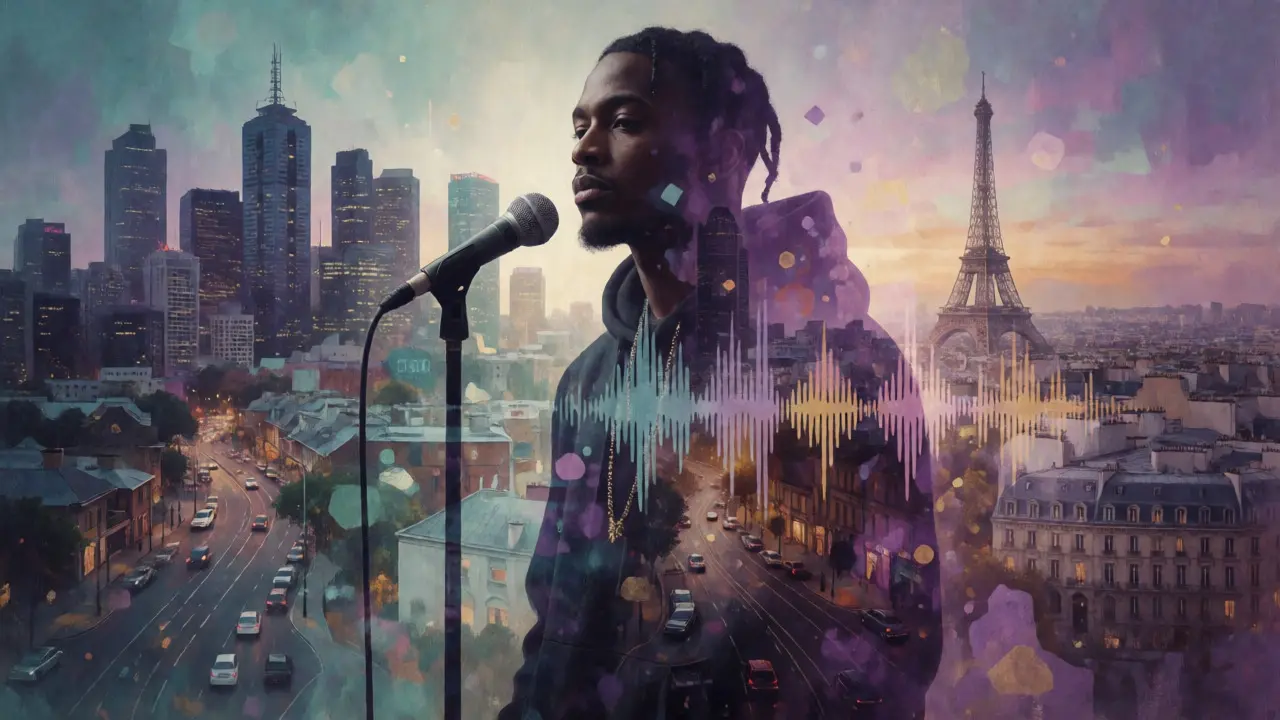
This adaptability is hip hop's greatest strength. It doesn't demand assimilation; it encourages localization. A teenager in Paris, Lagos, or Seoul can take the basic elements-beat, rhyme, flow-and inject their own local slang, musical scales, and social issues. This makes hip hop a decentralized network of voices rather than a single monolithic brand. It allows communities worldwide to assert their presence on the global stage without losing their distinct identities.
The Economics of Independence
Resistance isn't just ideological; it's economic. Historically, major record labels controlled what music reached the masses. Hip hop changed this dynamic by proving that independent distribution could work. In the 1990s, Death Row Records and Bad Boy Records showed that artist-owned labels could compete with industry giants. Today, platforms like SoundCloud and Spotify allow artists to bypass gatekeepers entirely. You don't need a million-dollar budget to be heard anymore; you just need a microphone and a story worth telling.
This shift has empowered a new generation of entrepreneurs within the culture. Rappers now launch clothing lines, tech startups, and beverage companies. They leverage their cultural capital to build wealth outside the traditional entertainment industry. This economic resilience ensures that hip hop isn't just a trend that will fade away; it's a sustainable ecosystem that creates jobs and opportunities in underserved communities.
Mental Health and Modern Vulnerability
For decades, hip hop projected an image of invincibility. Toughness was the currency. But in recent years, a significant shift has occurred. Artists are increasingly open about anxiety, depression, and trauma. Kid Cudi broke barriers in the 2010s by singing about loneliness and suicidal thoughts, paving the way for others to follow. Now, vulnerability is seen as a form of strength, not weakness.
This change reflects a broader societal understanding of mental health. By normalizing conversations about emotional pain, hip hop helps listeners feel less alone. When a fan hears their favorite rapper admit to struggling, it validates their own experiences. This aspect of resilience is quiet but profound. It teaches us that surviving isn't always about fighting back loudly; sometimes, it's about acknowledging your pain and continuing to move forward anyway.
Frequently Asked Questions
Why is hip hop considered a culture rather than just a music genre?
Hip hop encompasses four main elements: DJing, MCing, breaking, and graffiti. Beyond these artistic expressions, it includes specific fashion styles, slang, and a shared worldview focused on self-determination and community. It influences how people dress, speak, and interact, making it a comprehensive lifestyle rather than just a category of audio content.
How did hip hop start?
It originated in the Bronx, New York, around 1973. DJ Kool Herc is widely credited with founding the genre by extending the instrumental "breaks" of funk records at block parties. This allowed dancers to stay on the floor longer, leading to the development of breakdancing and eventually rapping.
What does "resistance" mean in the context of hip hop?
Resistance refers to hip hop's historical role in challenging systemic inequality, racial discrimination, and economic marginalization. Through lyrics and activism, artists have consistently pushed back against narratives imposed by mainstream media and government policies, offering alternative perspectives centered on the experiences of Black and Brown communities.
Is hip hop still relevant today?
Absolutely. Hip hop remains the most consumed music genre globally. Its influence extends beyond music into fashion, technology, politics, and language. As long as there are social issues to address and stories to tell, hip hop will continue to evolve and remain a vital platform for expression.
Can anyone participate in hip hop culture?
Yes. While rooted in African American and Latino experiences, hip hop is inclusive. People from all backgrounds participate as fans, artists, producers, and scholars. Respect for the culture's origins and willingness to learn its history are key to authentic participation.