
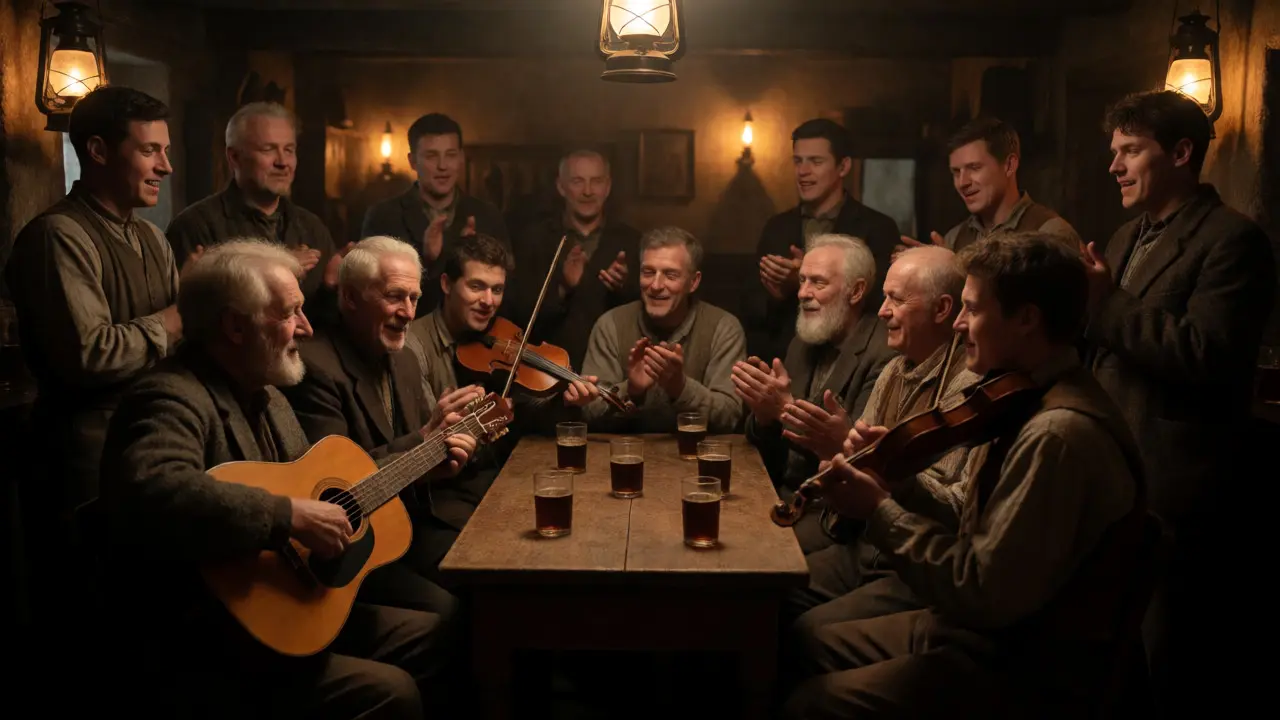
Think about the last time you heard a song that made you feel instantly connected to a place or a people. It probably wasn't a polished pop track produced in a sterile studio. It was likely something raw, acoustic, and steeped in history. That is Folk Music, a genre of traditional music passed down through generations by oral transmission, reflecting the life and culture of ordinary people. We often dismiss it as background noise for coffee shops or tourist traps, but this view misses the point entirely. Folk music isn't just entertainment; it's a social glue. It has started revolutions, preserved languages on the brink of extinction, and defined national identities when empires tried to erase them.
If you've ever wondered why certain melodies trigger such strong emotional responses, or how a simple guitar chord can unite thousands of strangers, you're asking the right questions. This article breaks down exactly how folk music functions as a tool for social cohesion, political resistance, and cultural survival. We'll look at real-world examples, from the labor strikes of the early 20th century to modern indie-folk revivals, and explain why this genre remains relevant in our digital age.
Defining Folk Music: More Than Just Acoustic Guitars
Before we talk about impact, we need to clear up what folk music actually is. Many people confuse "folk" with "acoustic." You can play an acoustic cover of Taylor Swift, but that doesn't make it folk. The core definition relies on origin and transmission. Folk music is traditionally created by anonymous authors or communities, not individual celebrities. It evolves over time. A song sung in Ireland in 1850 might sound different when sung in New York in 1950 because singers changed lyrics to fit their own lives.
This process is called Oral Tradition. Unlike classical music, which is fixed in written scores, folk music lives in memory. It adapts. If a verse doesn't resonate with a new generation, it gets dropped or altered. This flexibility is its superpower. It allows the music to stay relevant across centuries. When you listen to a folk song, you aren't just hearing one artist's vision; you are hearing the collective editing of hundreds of years of human experience.
| Feature | Folk Music | Commercial Pop |
|---|---|---|
| Authorship | Often anonymous or communal | Credited individual artists/producers |
| Transmission | Oral tradition, learning by ear | Recorded media, streaming platforms |
| Purpose | Community bonding, storytelling, protest | Entertainment, profit, radio play |
| Complexity | Simple structures, easy to learn | High production value, complex layering |
The Glue of Community: Building Social Cohesion
Humans are tribal creatures. We need rituals to mark our belonging. Folk music provides these rituals. In many cultures, there is no separation between "performer" and "audience." Everyone sings. Think of a sea shanty on a ship. The rhythm coordinated the crew's pulling. Without that shared song, the work would have been harder and less efficient. Today, while we don't haul ropes on tall ships, we still use group singing to build trust. Choirs, campfire sing-alongs, and local pub sessions serve the same psychological function.
Sociologists note that synchronized activities increase feelings of closeness. When a group sings together, their heartbeats often sync up. This biological response creates a sense of unity. Folk music facilitates this because it requires minimal skill to participate. You don't need to be a virtuoso to join in a chorus. This accessibility lowers social barriers. A banker and a construction worker can stand side-by-side singing "The Wild Rover" and feel like equals for those three minutes. That leveling effect is rare in other genres, which often rely on technical proficiency or expensive equipment.
Moreover, folk songs often contain local dialects, slang, and references to specific geography. Singing these songs reinforces local identity. It tells newcomers, "This is who we are, and here is where you fit in." For immigrant communities, maintaining folk traditions is often the last link to the homeland. It preserves language nuances that textbooks miss. If your grandparents spoke a regional dialect, their folk songs are the best archive of that speech pattern.
Voice of the People: Folk Music as Political Protest
You cannot discuss folk music without discussing politics. Because it originates from the working class, it naturally carries anti-establishment themes. When the mainstream news ignores the struggles of the poor, folk singers write about them. They become the journalists of the streets.
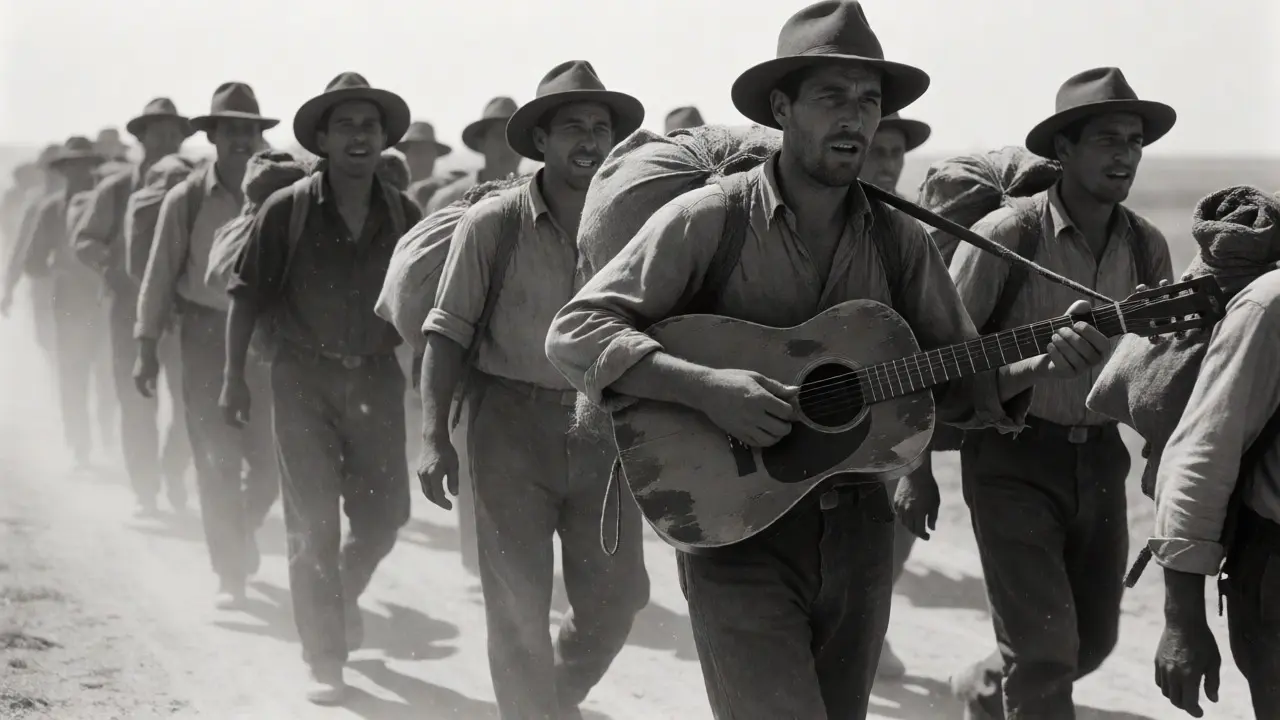
Consider the American Labor Movement of the 1930s and 40s. Woody Guthrie, a key figure in American Folk Revival, wrote songs like "This Land Is Your Land" not just as patriotic anthems, but as critiques of private property and inequality. His music traveled with migrant workers, spreading ideas about unionization faster than pamphlets could. The melody was catchy, so people remembered the message. This is the power of mnemonic devices in protest art.
This trend continued into the 1960s with the Civil Rights Movement. Songs like "We Shall Overcome" were adapted from older gospel hymns but repurposed for racial justice. Marchers sang them to maintain courage in the face of police dogs and fire hoses. The repetition of the lyrics served as a mantra, calming fear and boosting morale. Later, punk and hip-hop took up this mantle, but the structural role remained the same: giving voice to the marginalized.
In Australia, the folk revival of the 1960s and 70s played a crucial role in recognizing Indigenous rights. Artists like Gary Sheikholeslami and groups like Redgum used folk-rock to highlight issues of land rights and reconciliation. Their hit "I Was Only 19" brought the trauma of the Vietnam War into living rooms across the nation, challenging the sanitized version of war presented by government authorities.
Preserving Cultural Heritage Against Globalization
Globalization tends to homogenize culture. You can buy the same clothes and watch the same movies in Melbourne, London, or Tokyo. Folk music acts as a counter-force. It insists on difference. When a society maintains its unique musical scales, instruments, and rhythms, it asserts its distinct identity.
Take the case of the Balkans. During periods of conflict, music became a marker of ethnic identity. Instruments like the Gusle, a single-stringed instrument used in epic poetry, became symbols of Serbian heritage. Preserving the playing style wasn't just artistic; it was an act of cultural survival. Similarly, in Ireland, the revival of traditional Irish music in the mid-20th century helped reclaim national pride after decades of British colonial influence. By celebrating their own tunes, Irish people rejected the notion that their culture was inferior to English high culture.
Today, digital archiving helps preserve these traditions. However, recording a song isn't the same as living it. True preservation happens when young people learn to play the fiddle or the banjo not for YouTube views, but for the joy of joining a session. Programs that teach folk instruments in schools help bridge the gap between elders and youth, ensuring the knowledge doesn't die out.
The Modern Folk Revival: Digital Campfires
Some critics argue that folk music is dead because we no longer live in rural villages. But look at the charts. Artists like Bon Iver, Fleet Foxes, and Hozier blend folk instrumentation with modern production. Why? Because people are craving authenticity. In an era of AI-generated content and auto-tuned vocals, the imperfections of folk music feel honest.
The internet has created new forms of oral tradition. Viral videos of street musicians performing in subways spread songs globally overnight. Platforms like Bandcamp allow independent folk artists to bypass major labels, keeping the economic model closer to the artisan spirit of traditional folk. We see a resurgence of interest in vinyl records and live acoustic sessions, suggesting a fatigue with hyper-digital perfection.
Furthermore, modern folk addresses contemporary anxieties. Climate change, mental health, and isolation are common themes. These songs validate listeners' feelings, creating a global community of shared concern. Just as miners sang about dangerous conditions in the 1900s, gig-economy workers today sing about burnout and precarious employment. The context changes, but the function remains: naming the pain to manage it.
Practical Ways to Engage with Folk Music
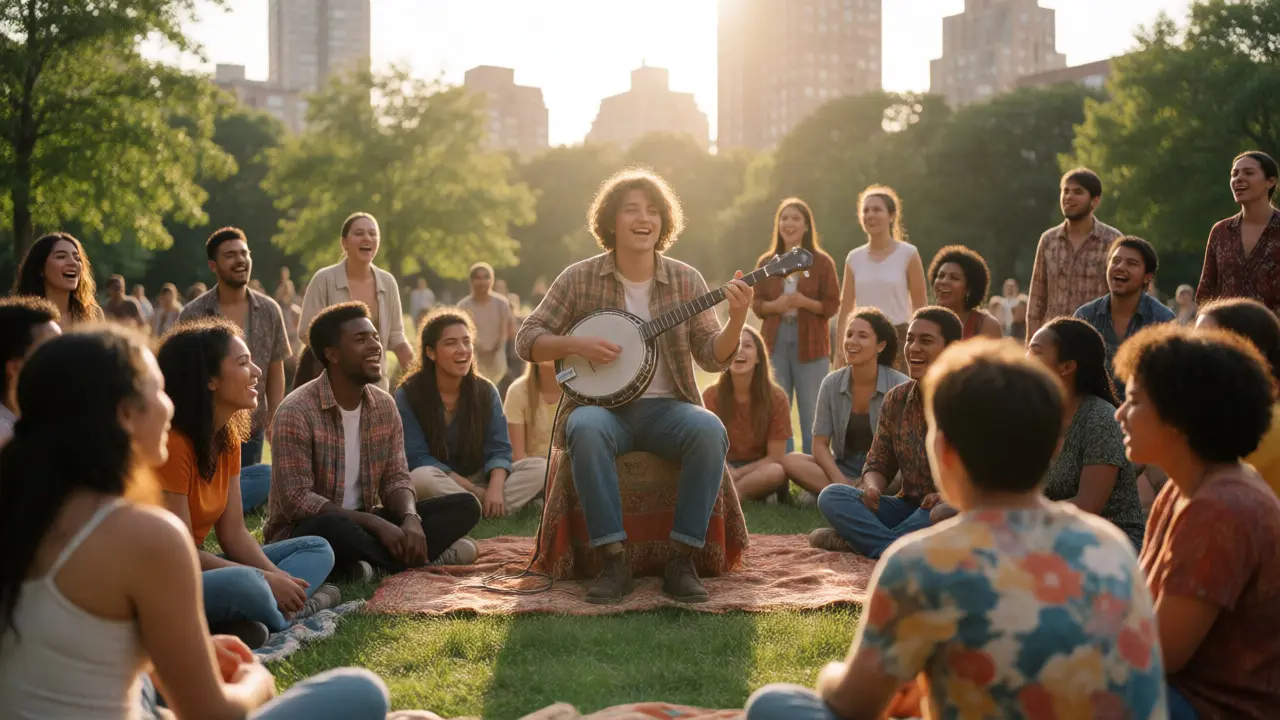
You don't need to be a historian to benefit from folk music. Here is how you can integrate it into your life to strengthen your own community ties:
- Attend Local Sessions: Look for "open mic" nights or traditional music pubs in your city. In Melbourne, venues like The Corner Hotel or smaller suburban pubs often host folk nights. Go there not to perform, but to listen and maybe clap along.
- Learn One Song: Pick a classic folk song from your family's heritage. Learn the chords and the story behind it. Ask older relatives if they know the verses. This turns music into a conversation starter.
- Support Independent Artists: Buy tickets to small gigs rather than only seeing stadium tours. Direct support keeps the grassroots scene alive.
- Start a Sing-Along: Host a dinner party where the playlist is strictly folk. Encourage guests to bring a song from their background. This exposes everyone to diverse cultural narratives.
FAQ
What is the main difference between folk music and classical music?
Classical music is typically composed by named individuals, written down in sheet music, and performed by trained specialists in formal settings. Folk music is usually anonymous, transmitted orally, evolved by communities over time, and performed in informal settings where audience participation is common.
Why is folk music considered important for social movements?
Folk music simplifies complex political messages into memorable melodies, making them easier to spread among large groups. It fosters solidarity by allowing participants to sing together, creating a physical and emotional bond that strengthens collective action against perceived injustices.
Can folk music exist in urban environments?
Yes. While historically associated with rural areas, folk music thrives in cities through community choirs, street performances, and club scenes. Urban folk often addresses city-specific issues like housing costs, immigration, and industrial labor, adapting the tradition to modern contexts.
How does globalization affect traditional folk music?
Globalization poses risks of homogenization, where local styles disappear in favor of global pop. However, it also offers tools for preservation and dissemination. Digital platforms allow niche folk genres to find global audiences, potentially revitalizing interest and providing financial support for traditional practitioners.
Is bluegrass considered folk music?
Bluegrass is derived from Appalachian folk music, blending old-time fiddle tunes with blues and jazz influences. While it has developed its own distinct commercial identity, it retains the core folk elements of acoustic instrumentation, communal performance traditions, and roots in working-class culture.
Next Steps for the Curious Listener
If this article sparked your interest, don't just stop reading. Go deeper. Find out what folk songs were popular during your great-grandparents' childhood. Listen to them. Notice the language, the concerns, the humor. You will likely find echoes of today's news cycles. Folk music proves that while technology changes, human needs for connection, expression, and justice remain constant. Start small: learn one song, share one story, and join one local session. That is how you keep the tradition alive.