
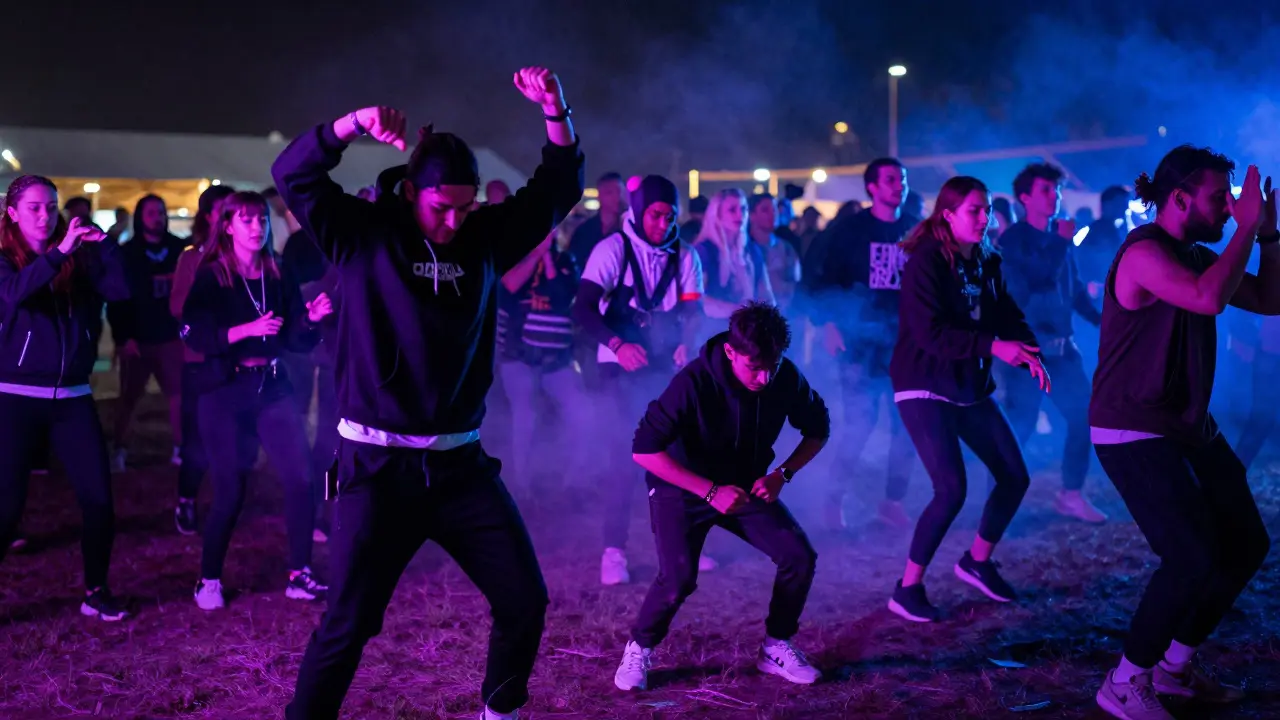
When the bass drops in a dubstep track, something happens to your body before your mind even catches up. Your shoulders twitch. Your knees bend. Your arms lock and release like pistons. You don’t decide to dance-you just do. That’s the power of dubstep dance, a raw, mechanical, and deeply rhythmic style that’s exploded from underground clubs in London and Los Angeles to festivals in Tokyo, Sydney, and beyond.
What Is Dubstep Dance?
Dubstep dance isn’t one fixed style. It’s a family of movements built around the rhythm of dubstep music-typically 140 BPM with heavy, wobbling basslines and sharp, syncopated drops. Dancers don’t follow the melody. They ride the bass. Each pulse, each glitch, each sub-bass hit becomes a cue for a body movement. Think of it like translating sound into motion.
The most recognizable moves include the wobble, where dancers shake their limbs in rapid, controlled bursts to match the bass wobbles; the stutter step, a quick, stuttering foot pattern that locks into the off-beats; and the robotic freeze, where the body suddenly locks in place mid-motion, then snaps back into motion like a glitching machine. These aren’t choreographed routines. They’re instinctive responses to the music’s structure.
Unlike hip-hop or house dance, dubstep dance doesn’t rely on flow or groove. It thrives on tension and release. Dancers don’t glide-they detonate. There’s a physicality to it that feels almost industrial, like your body is a speaker cone vibrating at 80Hz.
Where Did It Come From?
Dubstep dance didn’t appear out of nowhere. It grew alongside the music in the early 2000s in South London, where producers like Skream, Benga, and Coki were experimenting with dark, bass-heavy beats. Early raves in warehouses and squat parties saw kids moving in ways that matched the music’s unpredictability. No one taught them. They just felt it.
By the late 2000s, videos of dancers at festivals like Boom Festival and Bassnectar started going viral. One clip from 2010-showing a guy in a hoodie in a field, arms jerking like broken puppets to a Skream track-got over 2 million views. That’s when it went global. Suddenly, people in Seoul, Mexico City, and Melbourne were trying to replicate those moves.
What made it spread wasn’t just the music. It was the freedom. Dubstep dance doesn’t care if you’re tall, short, young, or old. You don’t need years of training. You just need to feel the bass. That’s why it stuck.
How It’s Different From Other Electronic Dance Styles
Compare dubstep dance to house or techno. House is about rhythm, flow, and body rolls. Techno is about repetition and trance. Dubstep is about disruption. It’s the difference between swimming and being hit by a wave.
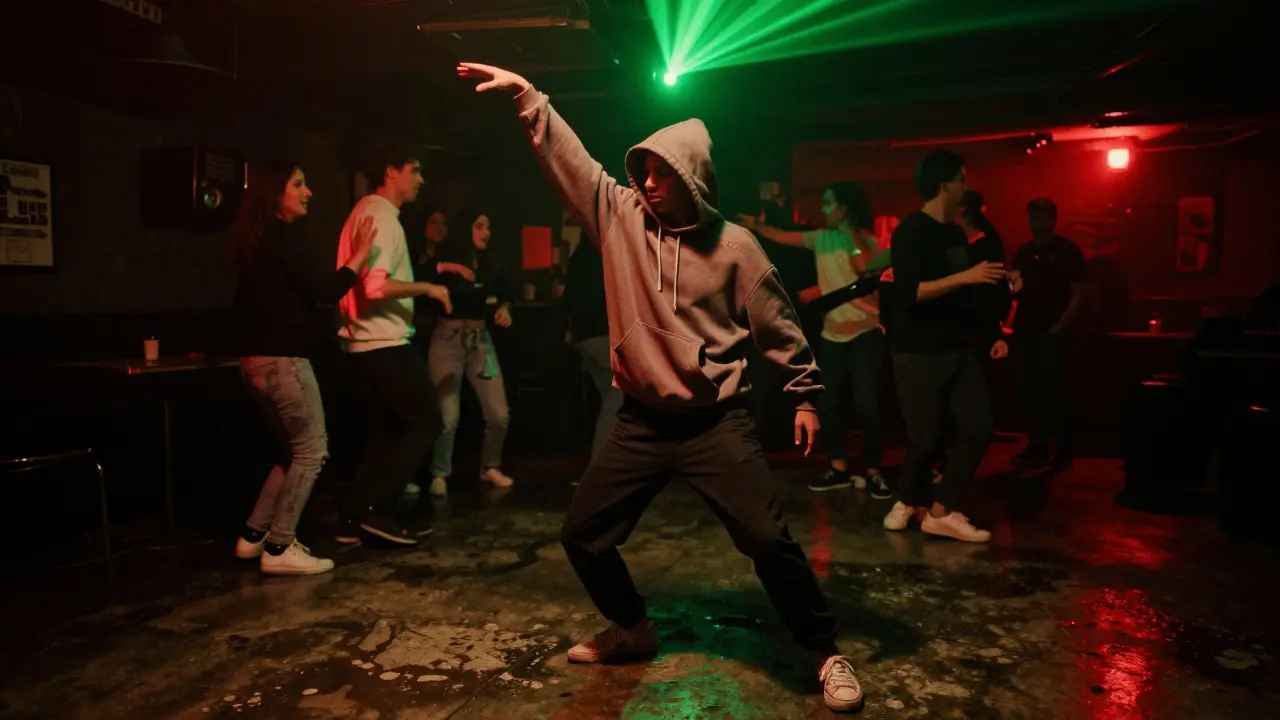
Breakdancing has power moves, but it’s athletic and acrobatic. Dubstep dance is more like a controlled seizure. It’s not about flips or spins-it’s about isolating parts of your body to hit exact points in the music. A dancer might hold their torso still while their arms jerk like a broken robot, then suddenly drop into a low crouch as the bass hits again.
Even compared to trap or riddim dance-both bass-heavy genres-dubstep dance is more mechanical. Trap dance leans into bounce and swagger. Riddim dance is about fast footwork and energy. Dubstep? It’s about precision. Every movement has to land on the sub-bass hit. Miss it, and you lose the connection.
Key Moves and How to Learn Them
You don’t need a studio to start. All you need is a pair of headphones and a track with a clear drop. Here are five foundational moves:
- The Wobble-Stand with knees slightly bent. Shake your arms or shoulders in quick, short bursts. Match the speed to the wobble in the bass. Start slow. Speed comes later.
- The Stutter Step-Quickly tap your feet in a 1-2-1 pattern, like your feet are hitting a glitch. Focus on the off-beats between the bass hits.
- The Freeze and Snap-Move your arm or leg into a position, then lock it completely for a half-second. Release instantly when the next bass hit hits. It’s like a camera shutter.
- The Body Ripple-Start at your chest, then push the motion down through your torso, hips, and legs like a wave. Use it during rising synths, not drops.
- The Head Nod-Not just bobbing. It’s a sharp, downward jerk on the bass hit, then a quick return. It’s subtle but powerful when done right.
Practice with tracks like “Creeper” by Wooli, “Bassline” by Flux Pavilion, or “Sirens” by Skrillex. Listen for the bass wobbles-they’re usually every 1, 2, or 4 beats. Tap your foot to them first. Then add your arms. Then your head. Layer it slowly.
Why It’s Taking Over the World
Dubstep dance is the perfect expression of digital-age movement. It’s not polished. It’s not pretty. It’s raw, glitchy, and unpredictable-just like the music. In a world where everything is curated, dubstep dance feels real. It’s not about looking good. It’s about feeling the sound in your bones.
Festivals like Tomorrowland, Ultra, and Lollapalooza now have dedicated dubstep dance zones. TikTok is full of teens in Melbourne, Berlin, and Manila posting 15-second clips of themselves wobbling to new drops. YouTube tutorials with titles like “How to Dubstep Dance in 5 Minutes” have millions of views.
It’s also accessible. You don’t need expensive gear. You don’t need a dance team. You can learn it alone in your bedroom. That’s why it’s spreading faster than any other dance style in the last decade. It’s not taught-it’s inherited through sound.
Common Mistakes Beginners Make
Most people think dubstep dance is just flailing around. It’s not. Here’s what goes wrong:
- Overdoing it-Trying to move on every beat. Dubstep dance is about hitting the bass, not every hi-hat. Less is more.
- Ignoring the silence-The best moments are the gaps between drops. Use them to reset. Don’t keep moving.
- Looking in the mirror-This isn’t ballet. No one’s judging your form. Focus on the music, not your reflection.
- Trying to copy videos exactly-Every body moves differently. Your wobble doesn’t have to look like someone else’s. Find your rhythm.
- Forgetting the feet-Your feet are your anchor. If they’re not grounded, your whole movement feels floaty. Keep them planted.
The goal isn’t perfection. It’s connection. If your body moves when the bass hits, you’re doing it right.
Where to Experience It Live
If you want to feel dubstep dance in its natural habitat, go where the bass is loudest:
- Melbourne-The Bassline Festival every February draws dancers from across Australia. The crowd there doesn’t just watch-they become part of the sound.
- Los Angeles-The Low End Theory nights in Echo Park were where the style first fused with street dance culture.
- London-Events at Fabric and XOYO still host the most authentic, underground dubstep dance circles.
- Japan-Tokyo’s electronic scene has embraced dubstep dance with a precision and discipline you won’t find anywhere else.
- Online-Check out Twitch streams from DJs like Excision or Mija. Their live audiences are full of dancers moving in real time.
Don’t wait for permission. Go to a local club with a bass-heavy night. Put on your headphones. Let the music take over. Watch others. Don’t copy them. Feel them.
Is This Just a Trend?
Some say dubstep dance is fading because the music’s popularity dipped after 2015. But that’s not true. The music evolved. It didn’t disappear. Riddim, brostep, and future bass all carry the same DNA. And the dance? It’s adapting.
Today’s dancers blend dubstep moves with krump, waacking, and even voguing. You’ll see someone do a wobble, then transition into a spin, then freeze like a robot-all in one track. It’s becoming a language, not just a style.
More importantly, it’s not about the genre anymore. It’s about the relationship between sound and body. As long as there’s bass, there will be people moving to it. Dubstep dance isn’t a phase. It’s a new way of listening.
Do you need dance experience to learn dubstep dance?
No. Dubstep dance doesn’t require formal training. Many of the best dancers started with zero experience. All you need is the ability to feel the bass and move your body in response. It’s instinctive, not technical.
What music is best for practicing dubstep dance?
Start with tracks that have clear, heavy bass wobbles and distinct drops. Good examples include "Creeper" by Wooli, "Bassline" by Flux Pavilion, "Sirens" by Skrillex, and "The Drop" by Bro Safari. Avoid tracks with too many melodies or fast hi-hats-focus on the low end.
Can you do dubstep dance in regular clothes?
Absolutely. Most dancers wear hoodies, sneakers, and loose pants because they allow freedom of movement. You don’t need special gear. Comfort and mobility matter more than style.
Is dubstep dance only for young people?
No. While it’s popular with teens and 20-somethings, dancers in their 30s, 40s, and even 50s are active in the scene. The dance is about how you feel the music, not your age. Many older dancers bring a deeper sense of rhythm and control.
Why do people freeze during dubstep dance?
Freezing is a way to emphasize the silence between bass hits. It creates contrast-when your body snaps back into motion after a freeze, it makes the next drop hit harder. It’s not random. It’s a tool to control the energy of the movement.
Final Thought: It’s Not About the Steps
The real secret to dubstep dance isn’t in the moves. It’s in the listening. Most people hear music. Dubstep dancers hear vibrations. They feel the bass as a physical force. That’s why, no matter where you are, if you hear a track with a deep, wobbling drop, your body will respond. You don’t have to be good. You just have to let it move you.