
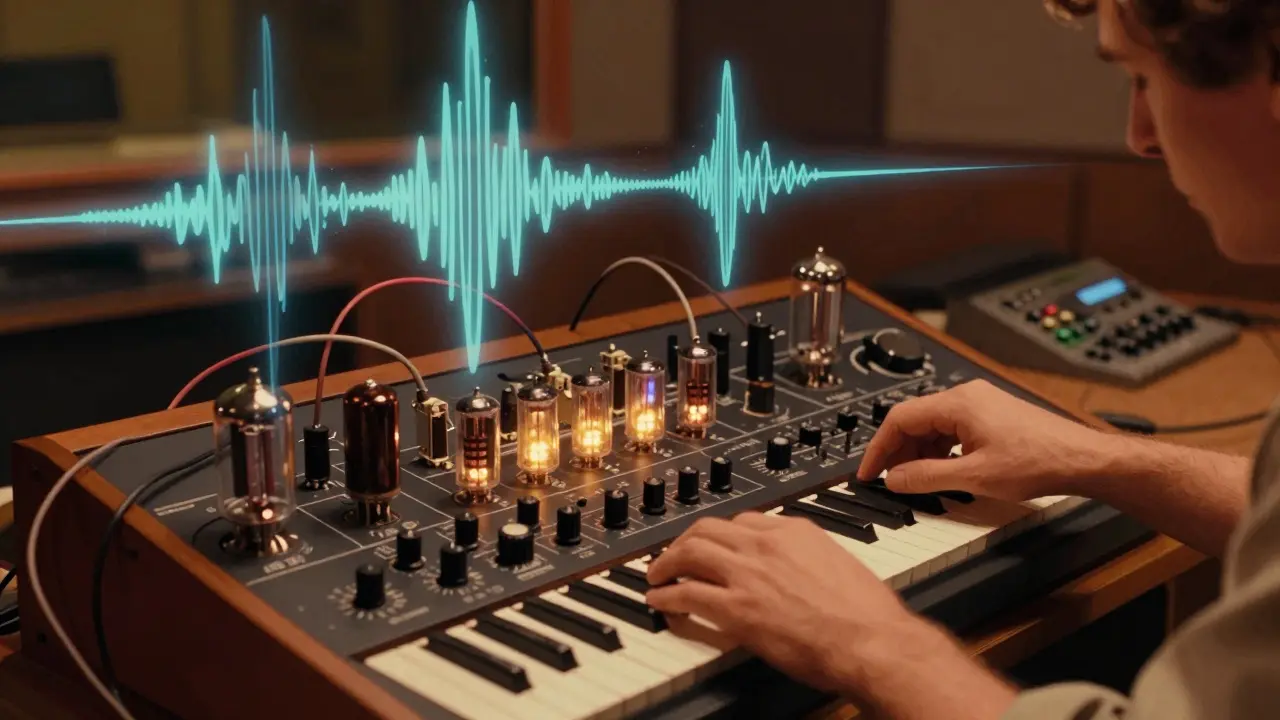
Electronic music is more than just a genre; it is the sonic backbone of the modern digital age. From the first blips of synthesizers in the 1960s to the algorithmic beats of today's AI-driven production, this form of sound has rewritten how we create, consume, and experience audio. It didn't just change music; it changed technology itself.
The Birth of Electronic Sound
Before you could download a track or stream a playlist, musicians had to build their instruments from scratch. The journey started with theremin, an instrument played without physical contact, invented by Leon Theremin in 1920. It sounded like sci-fi because it was essentially the first time electricity became music.
Then came the Moguo and later the Moog Synthesizer. In the late 1960s, Robert Moog created a modular system that allowed composers to shape voltage into sound. This wasn't just a keyboard; it was a laboratory. Wendy Carlos used it on her 1968 album Switched-On Bach, proving that machines could replicate classical complexity with eerie precision. That album sold over one million copies and went triple platinum, shattering the idea that electronic tools were only for avant-garde experiments.
This era established a crucial relationship: Synthesizers [enable] Voltage Control, which [allows] Pitch Manipulation. Without these early analog circuits, the concept of "programming" music would not have existed.
The Drum Machine Revolution
If synthesizers provided the melody, drum machines provided the pulse. In the 1970s and 80s, devices like the Roland TR-808 and TR-909 changed everything. The 808, released in 1980, was initially a commercial failure. Its sounds were unrealistic-too loud, too deep, too artificial. But hip-hop producers in New York and Detroit loved them. They sampled the kick drum, stretched it out, and made it the heartbeat of genres like techno and trap.
Consider this: the iconic bassline in Marvin Gaye's "Sexual Healing" uses an 808 kick. The same machine underpins tracks by Kanye West, Travis Scott, and countless EDM artists. The Roland TR-808 [defines] Hip-Hop Rhythm, which [influences] Global Pop Culture. It’s a perfect example of how a "flawed" product becomes a standard when users find a new creative application for it.
From Analog to Digital: The Rise of DAWs
The biggest shift in electronic music history happened in the 1990s and 2000s with the advent of Digital Audio Workstations (DAWs). Before DAWs, recording required expensive studios, tape reels, and engineers. With software like Pro Tools, Logic Pro, and later Ableton Live, anyone with a laptop could become a producer.
Ableton Live, launched in 2001, was particularly revolutionary. Unlike traditional sequencers that mimicked linear tape, Ableton introduced a clip-based workflow. You could trigger loops instantly, rearrange songs on the fly, and perform live sets from your computer. This bridged the gap between studio creation and stage performance. Today, over 50% of professional electronic music producers use Ableton as their primary tool.
The transition marked a clear semantic shift: Recording Studios [were replaced by] Home Studios, which [enabled] Democratization of Music Production. The barrier to entry dropped from thousands of dollars to hundreds, leading to an explosion of independent artists.
EDM Goes Mainstream
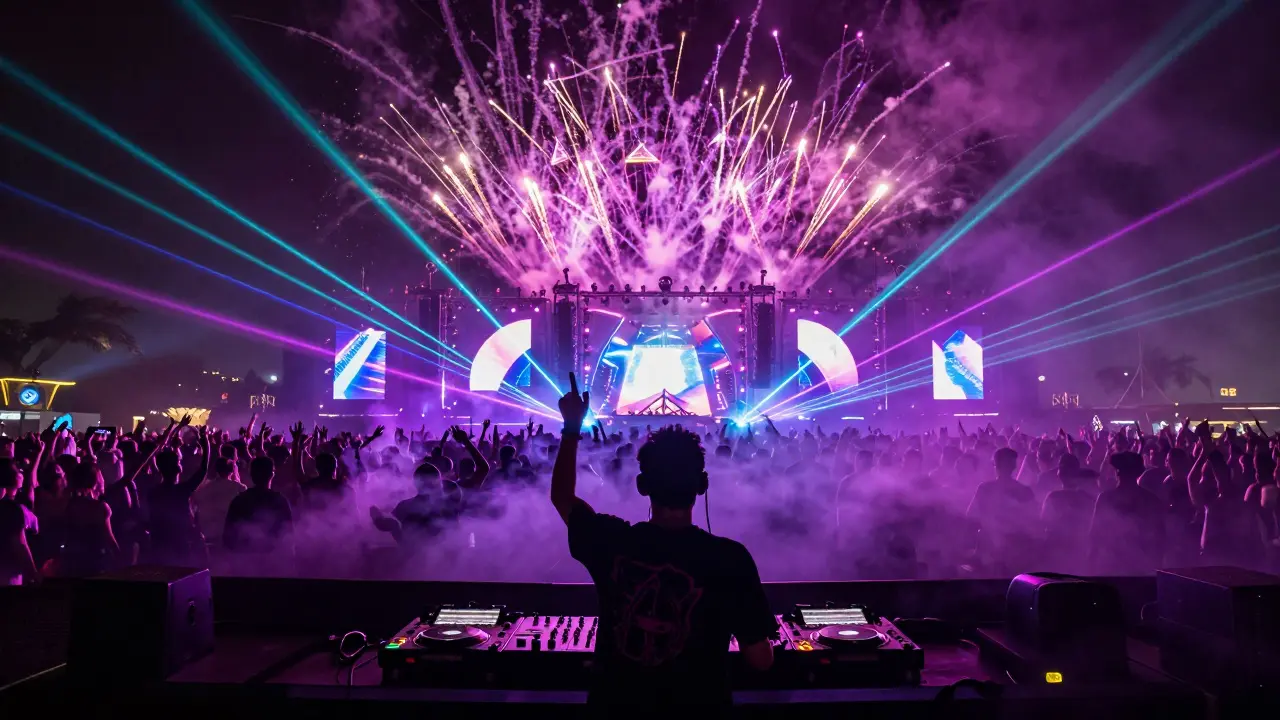
In the 2010s, Electronic Dance Music (EDM) exploded into the mainstream. Festivals like Tomorrowland in Belgium and Ultra Music Festival in Miami became cultural landmarks. Artists like Avicii, Calvin Harris, and Daft Punk brought electronic sounds to pop radio. Daft Punk’s Random Access Memories (2013) even won Album of the Year at the Grammys, blending vintage analog gear with modern production techniques.
This period saw the rise of specific subgenres:
- House: Rooted in Chicago clubs, characterized by a 4/4 beat and soulful vocals.
- Techno: Born in Detroit, darker, repetitive, and mechanical.
- Dubstep: Originating in London, known for heavy bass drops and syncopated rhythms.
- Trap: A fusion of hip-hop hi-hats and EDM synths, dominating charts by 2015.
The success of these genres proved that Electronic Music [drives] Festival Economy, which [supports] Touring Infrastructure. The financial scale of EDM tours now rivals that of rock bands, with lighting rigs and sound systems costing millions per show.
Streaming and Algorithmic Discovery
By 2020, streaming platforms like Spotify and Apple Music dominated consumption. Algorithms began curating playlists, introducing listeners to niche electronic subgenres they might never have found otherwise. If you liked a track by Flume, the algorithm might suggest similar artists from Australia, Brazil, or Japan. This globalized taste.
However, this also changed how music is made. Producers started optimizing tracks for "skip rates"-keeping intros short and hooks coming within the first 30 seconds. The structure of electronic songs evolved to fit digital attention spans. Streaming Platforms [influence] Song Structure, which [alters] Production Techniques.
AI and the Future of Creation
We are now in 2026, and artificial intelligence is reshaping electronic music again. Tools like Suno and Udio can generate full tracks from text prompts. While purists argue this lacks soul, many producers use AI as a brainstorming partner. You can ask an AI to generate five bassline ideas, pick the best one, and then refine it manually.
Virtual Reality (VR) concerts are also emerging. Artists like Gorillaz and K/DA perform in metaverse spaces, reaching audiences who can’t attend physical festivals. This suggests a future where Physical Presence [is no longer required for] Live Experience, challenging traditional notions of concert culture.
| Technology | Era | Key Impact | Notable Example |
|---|---|---|---|
| Analog Synthesizer | 1960s-70s | Voltage-controlled sound synthesis | Moog Minimoog |
| Drum Machine | 1980s | Programmable rhythm patterns | Roland TR-808 |
| Digital Sampler | 1990s | Recording and manipulating real-world sounds | Akai MPC60 |
| DAW Software | 2000s-Present | All-in-one production environment | Ableton Live |
| AI Generators | 2020s | Text-to-audio generation | Suno / Udio |
Why Electronic Music Matters Today
Electronic music is the soundtrack of our digital lives because it mirrors our technological reality. It is built on code, circuits, and data. As we move further into an AI-driven world, electronic music will continue to evolve. It teaches us that creativity isn't limited by human hands-it’s expanded by tools. Whether you’re producing a beat in your bedroom or designing a VR concert, the core remains the same: using technology to express emotion.
What is the difference between analog and digital synthesizers?
Analog synthesizers use electrical circuits to generate sound waves, resulting in warm, organic tones that can drift slightly in pitch. Digital synthesizers use mathematical models to simulate sound, offering precise tuning and a wider variety of presets but sometimes lacking the "character" of analog hardware.
Which DAW is best for beginners in electronic music?
Ableton Live is often recommended for its intuitive interface and clip-based workflow, which is great for looping and live performance. FL Studio is another popular choice due to its affordable price and strong pattern-based sequencer, making it ideal for beat-making.
Did the Roland TR-808 influence hip-hop?
Yes, profoundly. The TR-808’s deep kick drum and crisp snare became foundational elements of hip-hop, especially in subgenres like trap and boom-bap. Its distinctive sound is still widely used in modern pop and rap productions.
How has AI changed music production?
AI tools can now generate melodies, harmonies, and even full tracks from text descriptions. Producers use them for brainstorming ideas, overcoming writer’s block, or creating background layers, though human curation and emotional intent remain essential for final releases.
What defines Electronic Dance Music (EDM)?
EDM is a broad umbrella term for percussive electronic music designed for nightclubs, festivals, and dance-oriented settings. It typically features a steady 4/4 beat, prominent basslines, and structured builds and drops to encourage dancing.