
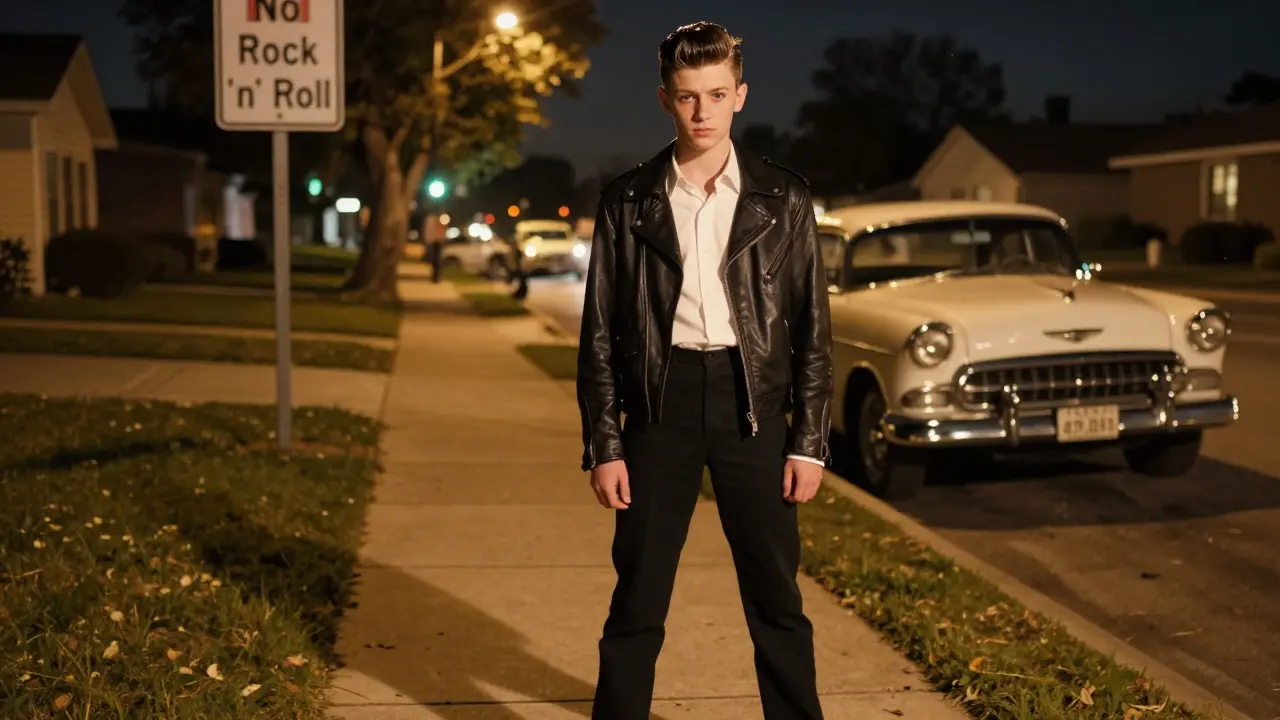
Rock music never just played songs-it dressed the revolution. From the greased-back hair of 1950s rebels to the ripped jeans and safety pins of punk, rock didn’t follow fashion. It made it. Every riff, every stage dive, every defiant glare from a microphone had a matching leather jacket, spiked bracelet, or combat boot. This isn’t just about what people wore. It’s about how rock music turned clothing into a weapon, a statement, and sometimes, a survival tactic.
1950s: The Birth of Rebellious Style
Before rock had a name, it had a look. Elvis Presley didn’t just shake his hips-he changed how men dressed. His tight black pants, white shirts with rolled sleeves, and slicked-back hair weren’t just performance gear. They were a middle finger to the conservative, buttoned-up norms of post-war America. Teenagers copied him because they wanted to feel dangerous, even if they were just sitting in a high school cafeteria.
Meanwhile, in Britain, bands like Cliff Richard and the Shadows wore matching suits and neat haircuts. But the real shift came when American rockers like Little Richard and Jerry Lee Lewis took the stage in flashy suits, open shirts, and wild makeup. They didn’t just perform-they performed rebellion. And kids noticed. By the late 50s, leather jackets were no longer just for bikers. They became the uniform of anyone who wanted to say, "I’m not like you."
1960s and 70s: Glam, Psychedelia, and the Rise of the Rock Star
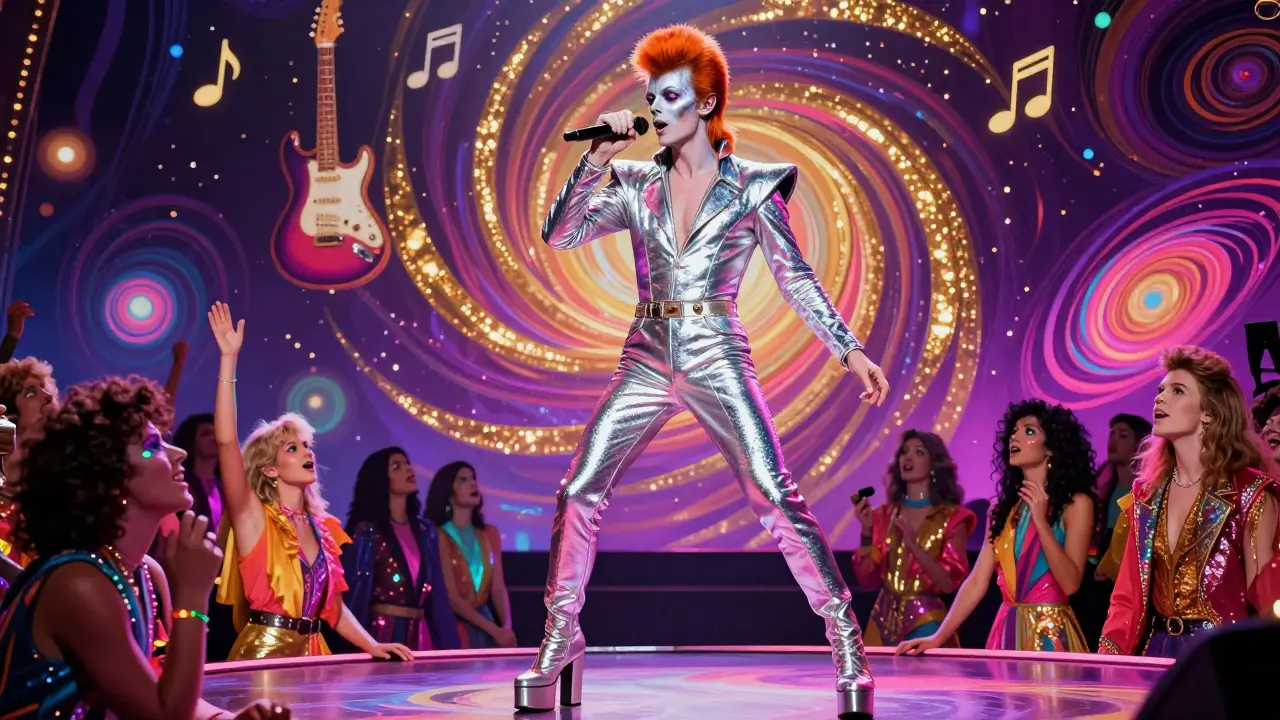
The 60s didn’t ditch rebellion-it got glitter. Rock music exploded into glam and psychedelic styles. David Bowie’s Ziggy Stardust persona didn’t just sing songs; he wore platform boots, metallic jumpsuits, and alien-like makeup. Fans didn’t just buy his records-they bought the whole look. Suddenly, gender-bending fashion wasn’t fringe. It was mainstream.
At the same time, bands like The Rolling Stones and Led Zeppelin turned rock into a lifestyle. Long hair, fringe vests, bell-bottoms, and suede shoes became the norm. It wasn’t about looking rich-it was about looking free. The more you looked like you didn’t care about rules, the more you belonged. This was the era when rock stars started designing their own clothes. No more off-the-rack suits. This was custom-made rebellion.
1980s: Big Hair, Heavy Metal, and the Merchandise Boom
The 80s took rock fashion to extremes. Think big hair, spandex, eyeliner, and chains. Bands like Mötley Crüe, Bon Jovi, and Poison turned concerts into fashion shows. Hair wasn’t just long-it was towering, teased, and sprayed into submission. Leather pants were skin-tight. Gloves? Of course. Spikes? Everywhere.
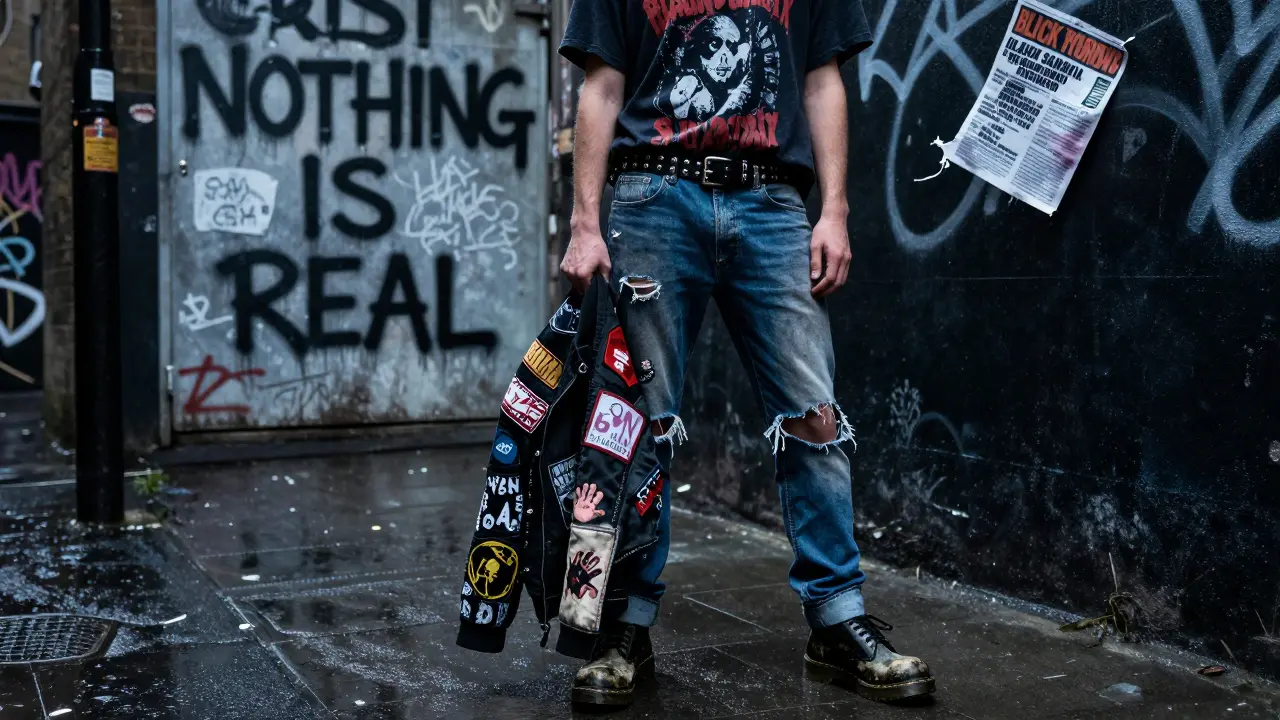
This was also the decade when rock merch became a billion-dollar industry. T-shirts weren’t just souvenirs-they were identity. Wearing a Black Sabbath shirt meant something. It meant you knew the music. You understood the attitude. You didn’t need to say a word. The shirt said it all.
And then there was the rise of the metal fan’s uniform: black jeans, band patches sewn on by hand, fingerless gloves, and belts with buckles shaped like skulls. This wasn’t fashion for the sake of looking cool. It was a badge. A tribal mark. If you didn’t have at least three band patches on your jacket, you weren’t really part of the scene.
1990s: Grunge and the Anti-Fashion Revolution
Just when it seemed rock fashion couldn’t get any more flashy, Nirvana dropped a whole new vibe. Grunge didn’t care about hair spray or sequins. It cared about flannel shirts, ripped jeans, and worn-out Converse. Kurt Cobain didn’t design a look-he just wore what he already owned. And somehow, that became the most influential style of the decade.
Grunge wasn’t about looking good. It was about looking real. Thrift store finds. Hand-me-down sweaters. Shoes with holes. It was fashion that said, "I’m tired of pretending." And millions of kids across the world bought into it. Major brands like Calvin Klein and Marc Jacobs started copying grunge looks. Soon, $200 flannel shirts were selling in department stores. The irony? The movement that rejected commercialism became the biggest commercial trend of the 90s.
2000s to Today: Fragmentation and Revival
After the 90s, rock fashion lost its unified voice. Metal went underground. Pop-rock took over radio. But the legacy didn’t disappear-it scattered. In the 2000s, bands like The Strokes brought back slim black jeans and leather jackets with a minimalist twist. The punk spirit didn’t die-it just got cleaner.
Today, you’ll see young fans at festivals wearing vintage Metallica tees, Doc Martens, and dyed black hair. TikTok is full of #RockFashion edits where teens mix 80s spandex with 90s flannel. It’s not nostalgia. It’s reclamation. Rock fashion isn’t about following trends anymore. It’s about choosing pieces that feel like truth.
Even mainstream brands now release "rock-inspired" collections. Zara sells spiked chokers. H&M has band tee collaborations. But the real power still lives in the underground. In basements, in small venues, in bedrooms where kids hand-paint their own jackets and stitch patches from old concert flyers. That’s where rock fashion is still alive-not in stores, but in the making.
Why Rock Fashion Still Matters
Rock music didn’t just influence fashion. It gave people permission to be themselves. When you put on a black leather jacket, you’re not just wearing fabric. You’re carrying a history. You’re saying you’ve felt alienated. You’ve been told to sit down, shut up, and behave. And you chose not to.
That’s why, even in 2026, you’ll still see teenagers in Perth, London, or Tokyo wearing ripped jeans and band tees. They might not even know who the band is. But they know the feeling. Rock fashion doesn’t need to be loud to be powerful. Sometimes, all it takes is one torn sleeve to say everything.
Key Elements That Never Left
- Leather jackets - Still the ultimate rock symbol. Originally worn by bikers, now worn by everyone from students to CEOs who secretly miss their rebellious years.
- Band tees - More than merch. A cultural passport. Wearing a Slayer shirt in 2026 still signals you’re part of a tribe.
- Combat boots - From punk to grunge to metalcore, these boots have outlasted every trend. Durable. Practical. Unapologetic.
- Studs and spikes - Not just decoration. A physical manifestation of defiance. Still seen on belts, jackets, and even phone cases.
- Long hair and dyed colors - Whether it’s jet black, electric blue, or neon pink, hair remains a canvas for rock identity.
What Rock Fashion Taught Us
Rock music taught us that clothing doesn’t have to be pretty to be powerful. It doesn’t have to be expensive. It doesn’t have to follow rules. It just has to mean something. The most enduring rock fashion items aren’t the ones that looked the coolest-they were the ones that felt the truest.
That’s why, no matter how much the world changes, you’ll always find someone wearing a faded Black Sabbath shirt, scuffed boots, and a look that says, "I’m not here to fit in."
Did rock music really change fashion, or was it just a trend?
Rock music didn’t just start trends-it redefined what fashion could be. Before rock, clothing was mostly about class and conformity. Rock made it about identity. The leather jacket, band tee, and combat boot became symbols not because they were trendy, but because they carried meaning. They said, "I’m not like you." That shift from conformity to self-expression is what changed fashion forever.
Why do people still wear band tees today?
Band tees are more than memorabilia-they’re tribal markers. Wearing a Led Zeppelin shirt in 2026 doesn’t mean you’re stuck in the past. It means you connect with the music’s attitude: freedom, rebellion, raw emotion. Even if you’ve never heard the song, the shirt says you understand the spirit behind it. That’s why they’ve survived decades of fashion cycles.
Is grunge fashion still relevant?
Absolutely. Grunge’s power was in its authenticity. Today’s streetwear and normcore trends owe everything to grunge. Oversized sweaters, ripped jeans, and unlaced boots are everywhere-not because they’re "vintage," but because they feel real. In a world of polished influencers, grunge’s messy honesty still resonates.
Can rock fashion be bought, or does it have to be handmade?
You can buy the pieces-leather jackets, band tees, boots-but the soul of rock fashion comes from how you wear them. A store-bought Metallica tee looks different on someone who’s been to five concerts than on someone who just saw it on TikTok. Rock fashion isn’t about the label. It’s about the story behind the wear and tear. That’s why handmade patches, custom paint, and scuffed boots still matter more than new tags.
Why do so many rock fashion items come from thrift stores?
Because rock fashion was never about wealth. It was about resourcefulness. Bands like Nirvana and The Clash wore secondhand clothes because they couldn’t afford new ones-and that became part of the message. Today, thrifting isn’t just eco-friendly. It’s a way to keep the spirit alive. A ripped flannel from a thrift shop carries more history than a new designer version ever could.