
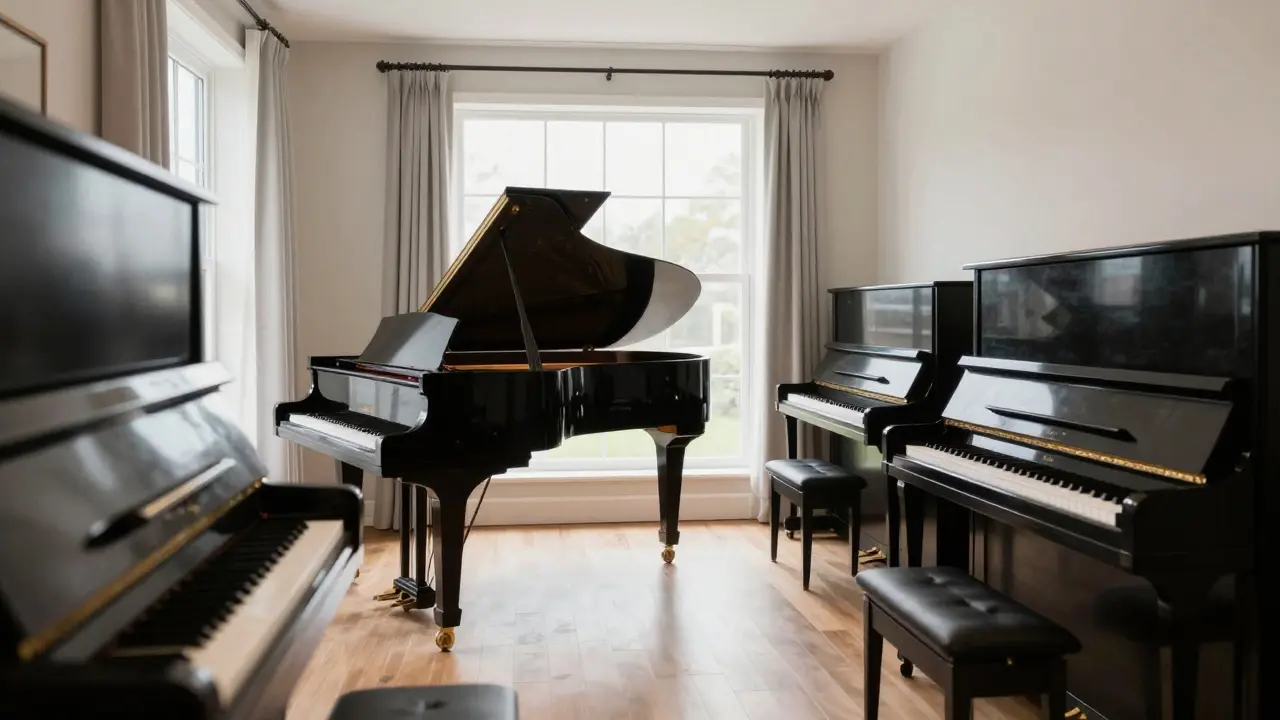
- Match the piano type (Grand, Upright, Digital) to your available square footage and noise tolerance.
- Prioritize 'weighted keys' if you're choosing a digital model to maintain finger strength.
- Check the age and tuning history of used acoustic pianos to avoid costly repairs.
- Consider the 'touch' and 'tone'-how the keys feel and how the sound decays.
The Great Debate: Acoustic vs. Digital
Before you look at brands, you have to decide where you stand on the acoustic vs. digital divide. An Acoustic Piano is a mechanical marvel. When you press a key, a hammer physically strikes a string. This creates a complex, vibrating sound that fills a room. It's an organic experience, but it comes with strings attached-literally. You have to tune it at least twice a year, it's heavy, and you can't exactly turn the volume down at 11 PM when your neighbors are trying to sleep. On the flip side, a Digital Piano uses samples or physical modeling to mimic that sound. The biggest win here is versatility. You can plug in headphones, change the sound to a harpsichord or an electric organ, and you never have to worry about a tuning fork. However, the 'feel' is where some digitals fail. If you get a cheap keyboard with 'synth-action' (keys that feel like a spring), you'll struggle to play classical pieces that require precise volume control. Look for 'hammer action' to get as close to the real thing as possible.| Feature | Grand Piano | Upright Piano | Digital Piano |
|---|---|---|---|
| Sound Quality | Professional/Rich | Warm/Intimate | Simulated/Consistent |
| Space Needed | High (Large) | Medium (Wall-side) | Low (Flexible) |
| Maintenance | High (Tuning/Regulating) | Medium (Tuning) | Very Low |
| Price Point | $$$ to $$$$ | $$ to $$$ | $ to $$ |
When to Go Big: The Grand Piano
If you have the space and the budget, a Grand Piano is the gold standard. The main difference isn't just the shape; it's the physics. Because the strings are horizontal, the hammers can return to their resting position faster. This is called 'double escapement,' and it allows you to play the same note again much faster than on an upright. If you're looking for a balance between a massive concert grand and a small upright, look for a 'Baby Grand.' These usually have a length of around 5 feet. They give you that iconic look and a more responsive touch, though they still require a dedicated area of the room. Just keep in mind that they are incredibly heavy-often weighing over 500 pounds-so make sure your floor can handle the load before you hire the movers.The Practical Choice: Upright Pianos
For most homes, an Upright Piano is the most logical choice. These are designed to sit flush against a wall, saving precious floor space. The strings run vertically, and the hammers strike them in an upward motion. While they don't have the same rapid-fire repetition as a grand, they offer a lovely, compressed sound that feels very intimate in a living room. When shopping for an upright, pay attention to the height. A taller upright usually has longer strings, which means a deeper, richer bass. If you find a 'spinet' (a very short upright), be aware that the sound can be a bit thinner. If you're choosing a used one, open the top lid and look at the Soundboard. If you see large cracks in the wood, walk away. That's a sign of dryness or poor care, and it can lead to buzzing or a dead tone that's nearly impossible to fix cheaply.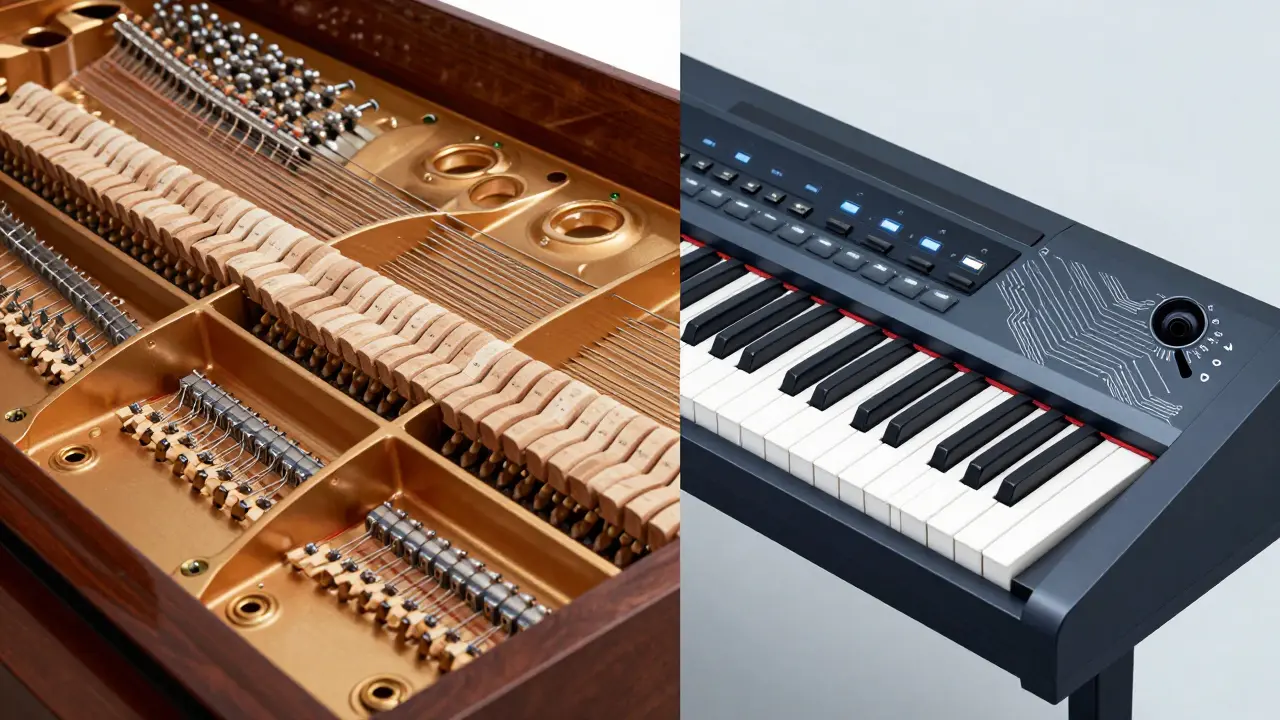
Navigating the Digital World
If you've decided that a Digital Piano is your best bet, you need to look beyond the marketing buzzwords. You'll see terms like 'weighted keys' and 'graded hammer action.' Here is the secret: 'Weighted' means the key feels heavy, but 'Graded' means the keys in the bass section feel slightly heavier than the keys in the treble section, just like a real acoustic piano. This is crucial for your muscle memory. Another thing to check is the 'polyphony.' This is simply how many notes the piano can play at once. If the polyphony is too low (say, 64 notes), the piano will start cutting off the earliest notes when you hold down the sustain pedal during a big chord. Look for at least 128-note polyphony to ensure your music doesn't suddenly go silent in the middle of a crescendo. Many modern digitals also come with Bluetooth connectivity, allowing you to connect to apps like Simply Piano or Flowkey for learning.The Hidden Costs of Ownership
Choosing the choose the perfect piano isn't just about the sticker price. You need to budget for the 'after-care.' For acoustic pianos, the most immediate cost is tuning. A piano is basically a giant tension machine with thousands of pounds of pressure on the frame. Temperature and humidity changes cause the wood to expand and contract, knocking the strings out of tune. Expect to pay a professional tuner every six months. Then there's the environment. If you live in a very dry climate, your piano's soundboard can crack. Many owners install a 'Damppner' or a humidity control system inside the piano to keep the moisture levels steady. For digital pianos, the costs are lower, but you might want to invest in a high-quality wooden stand and a padded bench. Playing on a folding metal stand for three hours a day is a quick way to develop back pain.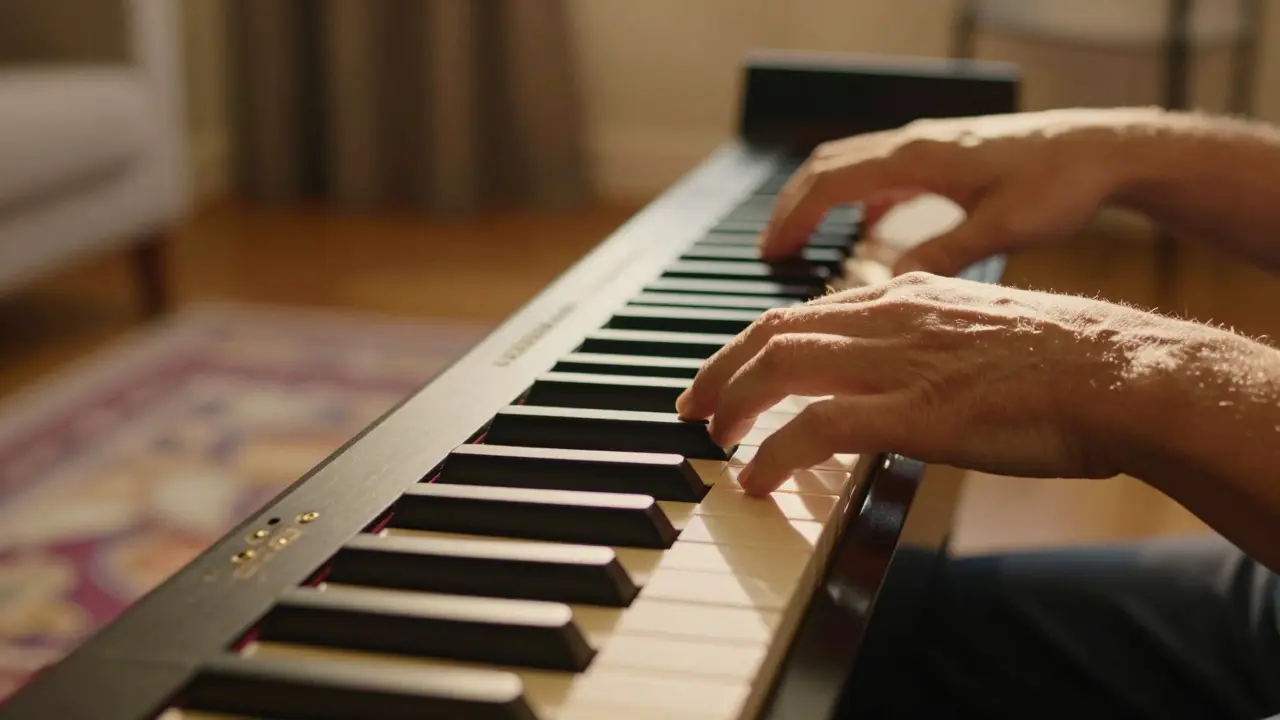
Testing the Instrument: The Checklist
Never buy a piano without playing it for at least 20 minutes. You can't tell if a piano is right for you from a five-second scale exercise. Here is a practical way to test any instrument:- The 'Sticky Key' Test: Play every single key from bottom to top. If any key feels sluggish or doesn't return to its position immediately, the action needs regulation.
- The Dynamic Test: Play a note as softly as you possibly can, then as loudly as you can. Does the piano respond to your touch, or does it just sound 'loud' and 'soft' without any nuance?
- The Sustain Test: Hold the pedal down and play a chord. Does the sound linger naturally, or does it die out too quickly?
- The Tuning Check: For acoustics, play an octave (e.g., Middle C and the C above it). If they sound 'wavy' or beat against each other, the piano is out of tune. While normal for a used piano, it gives you leverage for negotiation.
Common Pitfalls to Avoid
One of the biggest mistakes beginners make is buying a 'keyboard' and calling it a 'piano.' A keyboard is a great tool for songwriting or electronic music, but it lacks the physics required to learn proper piano technique. If you're taking lessons, your teacher will likely insist on a 88-key weighted instrument. Anything less will hinder your progress because your fingers won't develop the strength needed for real pianos. Another trap is ignoring the 'room acoustics.' A huge grand piano in a room with hardwood floors and high ceilings will sound like a thunderclap, potentially annoying everyone in the house. Conversely, a small digital piano in a cavernous room might feel disconnected. If the room is too 'bright' (lots of echoes), a few area rugs and heavy curtains can help soak up the excess sound and make the piano feel warmer.How often does an acoustic piano actually need tuning?
Generally, twice a year is the standard. However, if you've just bought a used piano or moved it to a new house, you should wait about a month for the instrument to settle into the new environment's humidity and temperature before calling the tuner. If you keep it in a climate-controlled room, you might stretch this to once a year, but any less and you'll start noticing the intervals sounding 'sour.'
Can a digital piano really replace an acoustic one for a student?
For the first couple of years, yes-provided it has weighted, hammer-action keys. The most important thing for a student is the 'feel' of the resistance. Once a student reaches an intermediate level, they will need an acoustic piano to learn how to manipulate 'tone' and 'color,' which digital pianos still struggle to replicate perfectly. But for starting out, a high-end digital is often a more practical and affordable entry point.
What is the difference between a ' Console' and an 'Upright' piano?
A console piano is essentially a smaller version of an upright. It usually has a shorter height and smaller strings, which means the sound is quieter and less bass-heavy. They are great for small apartments, but they don't have the same dynamic range as a full-sized upright. If you plan on playing advanced classical music, go for the full upright.
Should I buy a new or used acoustic piano?
Used pianos can be incredible bargains, but they are risky. You're buying a mechanical object that may have been neglected. Always have a certified technician inspect a used piano. They can check for cracks in the soundboard, worn-out hammers, or rusted strings. If the technician says the 'pinblock' is shot, avoid it at all costs, as replacing a pinblock is an expensive, major surgery for the piano.
Does the brand really matter when choosing a piano?
Brand names like Yamaha or Steinway often guarantee a certain level of quality control and resale value. However, don't let the logo blind you. A well-maintained mid-tier brand can sound better than a neglected luxury brand. Focus on the individual instrument's condition, the touch of the keys, and how the sound resonates in your specific room.