
Most of us think we know classical music. We hear the swelling strings of a romantic concerto or the precise ticking of a Bach fugue and nod along. But what if I told you that some of the most beloved pieces in history were born from obsession, tragedy, and even madness? The notes on the page are just the surface. Beneath them lies a world of human drama that explains why these compositions still move us centuries later.
When you listen to Ludwig van Beethoven's Ninth Symphony, you aren't just hearing a masterpiece of orchestration. You're hearing a deaf man's defiant shout against his own silence. This isn't just background noise for a museum visit; it's a raw expression of human resilience. Understanding the stories behind these works changes how you hear them. It turns passive listening into an active experience of empathy and historical connection.
The Deaf Composer and the Universal Anthem
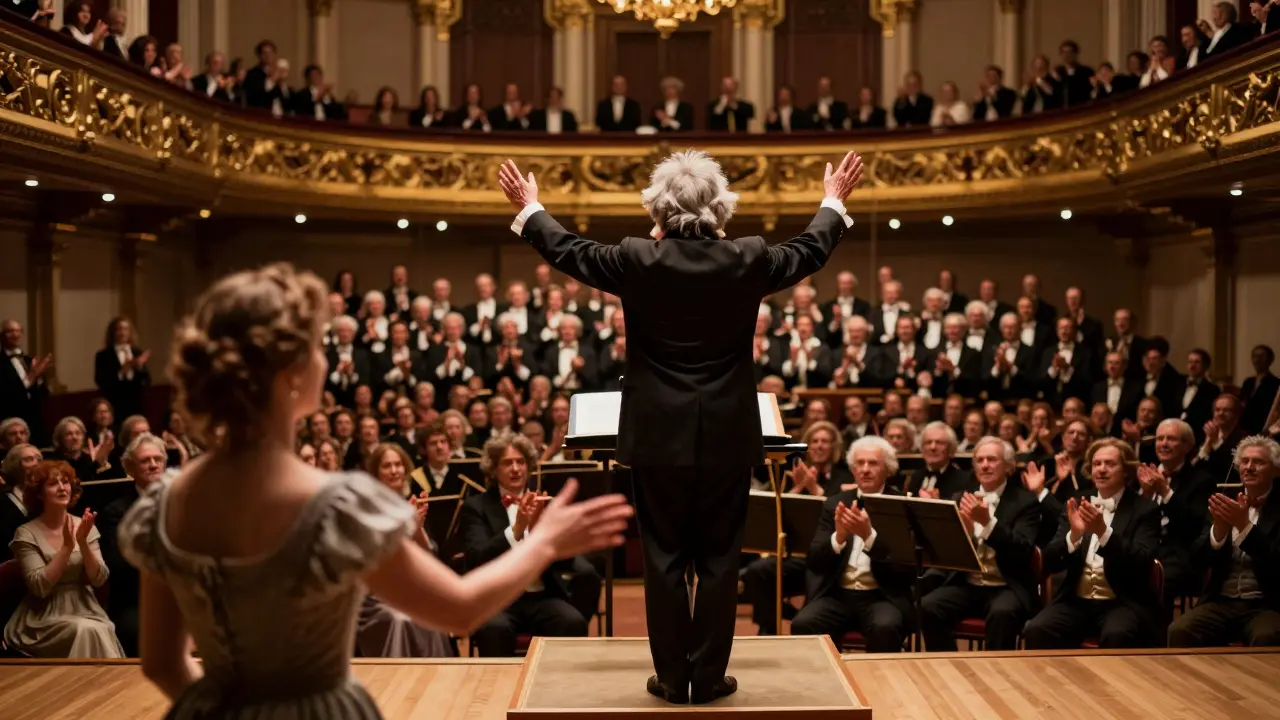
Consider Beethoven's Ninth Symphony, also known as the 'Choral Symphony'. Completed in 1824, this piece was revolutionary not just for its music, but for its message. By then, Beethoven was almost completely deaf. Imagine standing at the podium, conducting a massive orchestra and choir, unable to hear a single note. He had to rely on muscle memory and the visual cues of the musicians around him.
The climax of the symphony features the 'Ode to Joy,' based on a poem by Friedrich Schiller. It’s a call for unity among all men. For Beethoven, this wasn't abstract philosophy. It was personal. Isolated by his disability, he found connection through art. When the premiere ended, the conductor turned Beethoven around to see the audience cheering wildly. He couldn't hear the applause. A woman in the front row had to grab his arm and turn him toward the crowd so he could see their gratitude. That image-a deaf man realizing he had connected with thousands-defines the emotional weight of the piece.
- Key Fact: Beethoven began losing his hearing in his late 20s and was nearly totally deaf by the time he wrote the Ninth.
- Innovation: It was the first major symphony to include vocal soloists and a chorus, breaking traditional structural rules.
- Legacy: The 'Ode to Joy' melody is now the anthem of the European Union.
Mozart's Dark Side: The Requiem Mystery
If Beethoven represents struggle, Wolfgang Amadeus Mozart often represents effortless genius. But his final work tells a different story. In 1791, a mysterious hooded figure visited Mozart and commissioned a Requiem Mass. The visitor claimed it was for a nobleman, but Mozart suspected it was for himself. He was already ill, anxious, and obsessed with death.
Mozart worked on the Requiem feverishly, believing he was writing his own funeral mass. He died before completing it. His widow, Constanze, sold the manuscript to pay off debts, hiring another composer, Franz Xaver Süssmayr, to finish it. For decades, rumors swirled that Mozart had been poisoned by his rival, Antonio Salieri. While historians have debunked the poisoning theory (Mozart likely died of streptococcal infection), the myth persists because it fits the narrative of the tortured artist.
The intrigue adds a layer of chill to every performance. When you hear the 'Lacrymosa,' you're hearing Mozart's final musical thoughts, unfinished and haunting. It’s a reminder that even the most gifted artists are mortal, and their legacies are often shaped by the mysteries surrounding their deaths.
| Composer | Final Work | Status at Death | Primary Cause of Intrigue |
|---|---|---|---|
| Mozart | Requiem in D Minor | Unfinished | Poisoning myths and mysterious commission |
| Beethoven | Ninth Symphony | Completed | Composed while nearly totally deaf |
| Tchaikovsky | Sixth Symphony ('Pathétique') | Completed | Died shortly after premiere; disputed cause |
Tchaikovsky's Swans and Secret Pain
Move forward a century to Pyotr Ilyich Tchaikovsky. His Swan Lake ballet is iconic, but the story behind it is one of failure turned triumph. When it premiered in 1877, it was a disaster. The choreography was poor, the orchestra pit was too small, and the critics were brutal. Tchaikovsky was devastated and never attended another performance during his lifetime.
It was only after his death, when Marius Petipa revised the choreography, that Swan Lake became the global phenomenon we know today. But Tchaikovsky’s personal life was even more complex. He was gay in a society that criminalized homosexuality. His relationships were fraught with secrecy and shame. Many musicologists believe his Sixth Symphony, 'Pathétique', reflects his inner turmoil. The finale doesn't end with a triumphant crescendo like most symphonies of the era. Instead, it fades away quietly, as if the composer is surrendering to fate.
Tchaikovsky died just days after the premiere of the Pathétique. The official cause was cholera, but some theories suggest he drank unboiled water to commit suicide due to fear of exposure. Whether true or not, the symphony stands as a poignant farewell, deeply personal and emotionally devastating.
Bach's Mathematical Divinity
Not all classical music stories are about tragedy. Some are about intellectual brilliance. Johann Sebastian Bach was a child prodigy who lost both parents by age ten. He taught himself to play by copying manuscripts by candlelight. His The Well-Tempered Clavier is not just a collection of preludes and fugues; it’s a technical manual that proved a keyboard could be played in all 24 major and minor keys.
Before Bach, tuning systems made certain keys sound dissonant. Bach’s work demonstrated that equal temperament tuning allowed for seamless modulation between keys. This wasn't just artistic; it was mathematical. Bach saw music as a reflection of divine order. His complexity wasn't meant to confuse listeners but to reveal the hidden structure of the universe. When you listen to a Bach fugue, you're hearing a puzzle where every voice is independent yet perfectly interlocked.
Stravinsky's Rite of Spring Riot
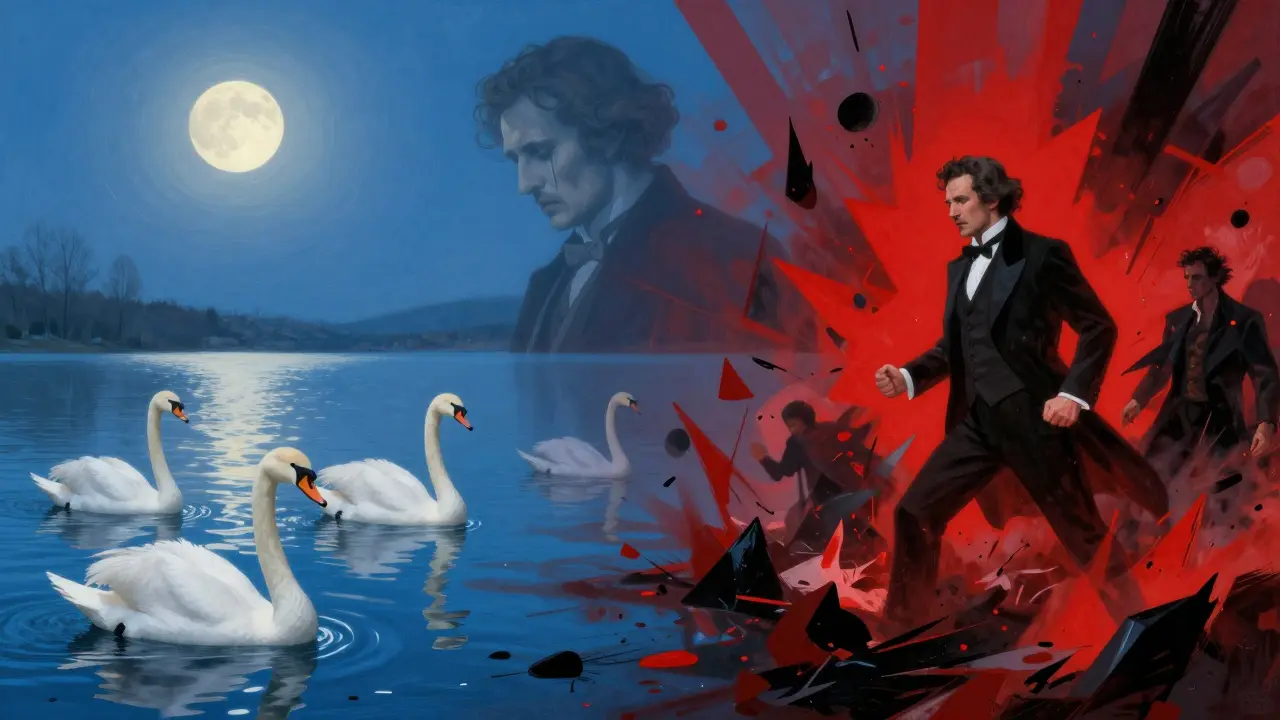
Jump to the 20th century, and we find Igor Stravinsky. His ballet The Rite of Spring caused a literal riot at its 1913 Paris premiere. The music was jarring, with irregular rhythms and dissonant chords that broke every rule of harmony. The choreography, by Vaslav Nijinsky, was primal and angular, depicting pagan rituals rather than graceful court dances.
Audience members shouted insults, fought each other, and tried to stop the performance. Police had to intervene. Why such a reaction? Because Stravinsky challenged the very idea of what music should sound like. He didn't care about beauty in the traditional sense; he cared about energy and rhythm. Today, The Rite of Spring is considered a cornerstone of modern music. The riot proves that innovation often meets resistance before it becomes accepted.
How Context Changes Listening
Why do these stories matter? Because music doesn't exist in a vacuum. Knowing that Beethoven was deaf makes his Ninth Symphony a miracle of willpower. Knowing Mozart feared death makes his Requiem a ghostly whisper. These contexts add layers of meaning that pure auditory analysis can't capture.
Next time you listen to classical music, try this: read a brief biography of the composer before playing the piece. Notice how the knowledge shifts your perception. You might hear sadness where you once heard only melody. You might feel tension where you once heard only rhythm. The notes stay the same, but your experience deepens.
Was Mozart really poisoned by Salieri?
No, there is no credible evidence that Antonio Salieri poisoned Wolfgang Amadeus Mozart. This myth was popularized by Alexander Pushkin's play and later Rimsky-Korsakov's opera. Historical records suggest Mozart died from a streptococcal infection, possibly exacerbated by excessive treatment with mercury-based medicines common at the time.
Why did audiences riot at The Rite of Spring?
The 1913 premiere of Igor Stravinsky's The Rite of Spring caused a riot because it radically departed from traditional musical and dance conventions. The dissonant harmonies, irregular rhythms, and primal choreography shocked Parisian audiences who expected graceful, melodic ballet. The conflict was less about quality and more about cultural expectations being violently disrupted.
Did Beethoven conduct his Ninth Symphony despite being deaf?
Yes, Beethoven conducted the premiere of his Ninth Symphony in 1824, though he was nearly completely deaf. He relied on visual cues from the orchestra and muscle memory. After the performance, he was unaware of the audience's enthusiastic applause until a singer turned him around to see their ovation.
Who finished Mozart's Requiem?
After Mozart's death, his widow Constanze hired Franz Xaver Süssmayr, one of Mozart's former students, to complete the Requiem Mass. Süssmayr used Mozart's sketches and instructions to finish the work, which has since become one of the most famous choral pieces in classical music.
Was Swan Lake a success when it first premiered?
No, Pyotr Ilych Tchaikovsky's Swan Lake was a critical and commercial failure at its 1877 premiere in Moscow. Poor choreography and inadequate orchestral space contributed to the negative reception. It only became a worldwide success after Marius Petipa revised the production years later.