
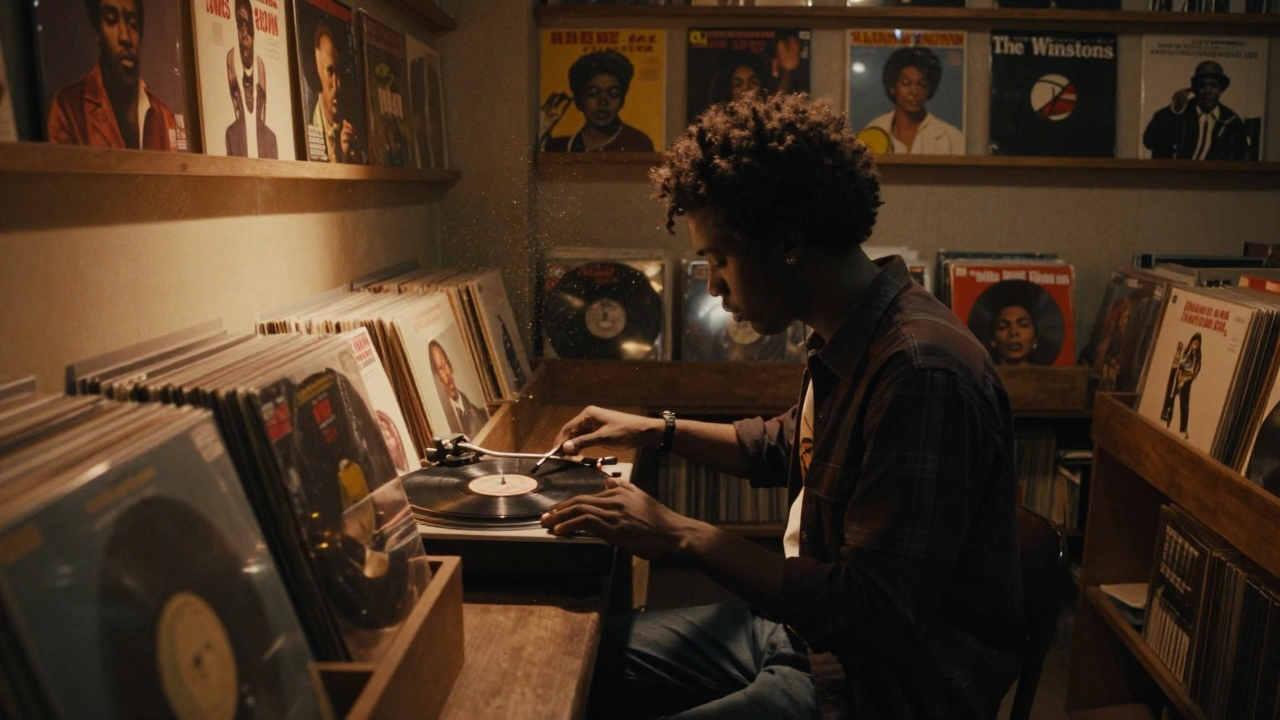
When you hear a beat drop in a 90s hip-hop track and instantly feel that deep, warm groove - it’s not just luck. It’s probably a 50-year-old soul record, dug out from a dusty vinyl bin and chopped into something new. Soul music didn’t just influence hip-hop - it built the backbone of it. From the crackle of a turntable to the punch of a drum break, soul is the most sampled genre in hip-hop history. And it’s not just because it sounds good. It’s because it was made to be broken apart and rebuilt.
Why Soul Music Got Chopped First
Soul music, born in the 1950s and 60s, was built on emotion. It had raw vocals, live horns, handclaps, and grooves that made you move before you even knew why. Producers in the early days of hip-hop - mostly working with limited gear - didn’t need fancy synths or drum machines. They needed soul music because it already had everything: punchy drums, melodic basslines, and hooks that stuck in your head.
Think about it: a snare hit on the backbeat, a Hammond organ swell, a female vocal sighing in the background - these weren’t just sounds. They were emotional triggers. Hip-hop producers didn’t just sample them; they resurrected them. The break in James Brown’s ‘Funky Drummer’? Used in over 2,000 tracks. The horns from Isaac Hayes’ ‘Theme from Shaft’? Turned into the intro of Nas’ ‘N.Y. State of Mind’. Soul gave hip-hop its heartbeat.
The Turntable as a Musical Tool
In the late 70s and early 80s, DJs in the Bronx didn’t have studio software. They had two turntables, a mixer, and crates of vinyl. Their job? Find the part of a song that made people dance - the break - and loop it. Soul records were perfect for this. They were often recorded live, with organic rhythms that didn’t rely on strict quantization. That meant the groove had human imperfections - slight delays, swing, breath between notes - and that’s exactly what made them feel alive when replayed.
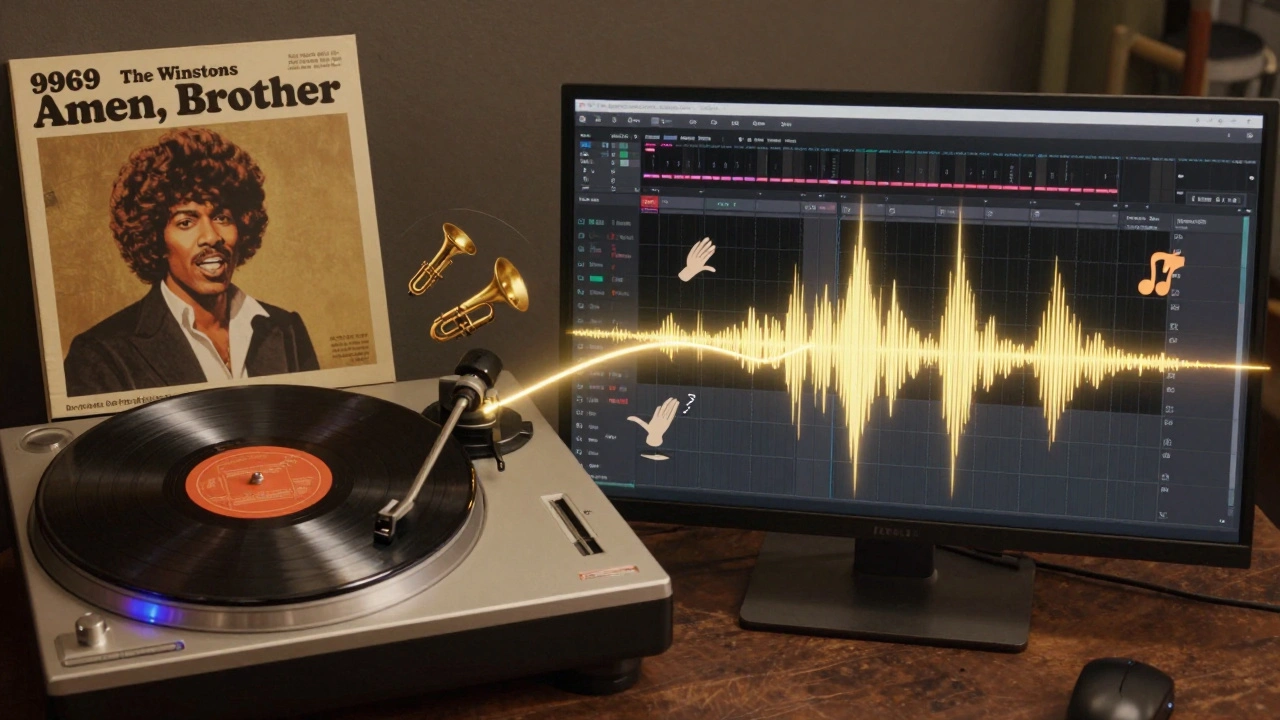
Take ‘Amen, Brother’ by The Winstons. It’s technically a funk/soul drum break from 1969. But it became the most sampled drum break in history, appearing in thousands of hip-hop, jungle, and drum and bass tracks. Why? Because it had weight. It had space. It had personality. You couldn’t program that.
Key Soul Artists Who Powered Hip-Hop
Some names come up again and again in hip-hop credits. These aren’t random picks - they’re the foundation.
- James Brown - The Godfather of Soul. His breaks, basslines, and horn stabs are the DNA of hip-hop. Tracks like ‘Give It Up or Turnit a Loose’ and ‘The Payback’ are sampled so often they’re practically public domain.
- Aretha Franklin - Her vocals, especially the ad-libs and screams, became emotional anchors in tracks by Common, Kanye West, and A Tribe Called Quest.
- Al Green - Smooth, soaring melodies from ‘Let’s Stay Together’ and ‘I’m Still in Love with You’ turned up in songs by Jay-Z and Lauryn Hill.
- The Temptations - Their lush harmonies and string arrangements gave tracks like ‘The Message’ by Grandmaster Flash a cinematic feel.
- Barry White - His deep basslines and orchestral swells became the backdrop for slow jams and introspective rap verses.
It’s not just about the big names. Lesser-known artists like Charles Wright, The Meters, and The Ohio Players also gave hip-hop producers gold. One obscure track - ‘Betcha by Golly, Wow’ by The Stylistics - became the basis for ‘I Get Around’ by Tupac. That’s the power of soul: even the deep cuts had value.
How Sampling Changed the Sound of Hip-Hop
Early hip-hop was built on loops. A producer would isolate a four-bar section of a soul record, loop it, and build a whole track around it. That method shaped the rhythm, mood, and even the lyrical flow of rap. If the sample had a slow, swinging groove, the rapper would ride behind the beat. If it was punchy and fast, the flow got sharper.
Kanye West’s The College Dropout (2004) didn’t just sample soul - it reimagined it. He took Aretha Franklin’s ‘I Wonder What She’s Doing Tonight’ and slowed it down, pitched it, layered it with piano and strings, and turned it into ‘Through the Wire’. That track didn’t just sound like soul - it felt like soul, even though it was made with a sampler and a laptop.
Similarly, D’Angelo’s ‘Untitled (How Does It Feel)’ was built on a sample of ‘The World Is a Ghetto’ by War - a soul/funk record from 1972. But D’Angelo didn’t just use the sample. He transformed it into something new, and then hip-hop artists sampled his version. That’s the cycle: soul feeds hip-hop, hip-hop reinterprets it, and then soul comes back again.
The Legal and Ethical Side of Sampling
Sampling wasn’t always legal. In the 90s, lawsuits started popping up. The Biz Markie case in 1991 - where he used a Gilbert O’Sullivan track without clearance - changed everything. Suddenly, every sample needed permission. That made sampling expensive. Labels started pushing producers to use original recordings or cleared loops.
But here’s the twist: soul music, especially from small independent labels, often had unclear ownership. Many of the original recordings were made by artists who never saw royalties. So while the legal side got tighter, the cultural side kept going. Producers started digging deeper - into obscure 45s from the 60s, church choirs, and regional soul labels from Detroit, Memphis, and Philadelphia. That’s how you find the hidden gems.
Today, sample clearance is still a barrier. But platforms like Splice and Loopmasters now offer royalty-free soul loops - so new producers can get that classic sound without the legal headache. Still, nothing beats the real thing. The crackle of vinyl. The slight pitch wobble. The way a vocal cracks on the last note. That’s the soul you can’t replicate.
Why Soul Still Matters in 2025
Even with AI-generated beats and synthetic basslines, soul music is still the go-to source for emotion in hip-hop. Look at the charts in 2025: artists like Kendrick Lamar, SZA, and Tyler, The Creator still use soul samples to ground their music in something real. Even pop-rap hits like Olivia Rodrigo’s ‘vampire’ (which samples a 1970s soul ballad) prove the genre’s staying power.
Soul music isn’t just a sound - it’s a memory. It carries the pain, joy, and resilience of a generation. When a hip-hop producer samples a 1968 Motown track, they’re not just borrowing a beat. They’re connecting to a history. That’s why, even in the age of digital production, the most powerful hip-hop tracks still come from the same place: a dusty record, a needle drop, and a moment of feeling.
How to Find Soul Samples for Your Own Beats
If you’re a producer looking to tap into soul’s power, here’s where to start:
- Start with the classics: James Brown, Aretha Franklin, Marvin Gaye, Curtis Mayfield. These are the big ones for a reason.
- Use Discogs.com to search for obscure soul labels like Stax, Atlantic, or Tamla. Filter by year (1965-1975) and genre (soul, funk, R&B).
- Listen for breaks - the 4- to 8-bar sections where the drums and bass lock in. That’s your gold.
- Slow down the track. Pitch it down. Add reverb. Sometimes the magic isn’t in the original - it’s in the transformation.
- Don’t just sample the melody. Sample the silence between the notes. The breath after the vocal. That’s where the humanity lives.
There’s no shortcut. The best samples come from digging. Not just through records - through history.
Why is soul music the most sampled genre in hip-hop?
Soul music has rich, organic instrumentation - live drums, punchy basslines, emotional vocals, and dynamic arrangements - that were perfect for looping and chopping. Unlike more rigid pop or disco tracks, soul had human imperfections that gave beats character. Producers in the 1970s and 80s found these elements on vinyl, and they became the foundation of hip-hop’s sound.
What’s the most sampled soul song in hip-hop?
The most sampled soul/funk track is ‘Amen, Brother’ by The Winstons, a 1969 drum break that’s been used in over 2,000 hip-hop, jungle, and electronic tracks. For pure soul, James Brown’s ‘Funky Drummer’ and ‘Give It Up or Turnit a Loose’ are among the most sampled, with hundreds of credits across decades.
Can you still sample soul music legally today?
Yes, but it’s expensive and complicated. Clearing a sample requires contacting the copyright holder - often a record label or estate - and paying a fee or royalty. Many producers now use royalty-free sample packs or recreate the sound with live instruments to avoid legal issues. Some older soul tracks from defunct labels are in the public domain, but those are rare.
Do modern hip-hop producers still use vinyl to find soul samples?
Many still do. Vinyl offers a unique texture - surface noise, warble, warmth - that digital files can’t fully replicate. While online databases like WhoSampled and YouTube make discovery easier, the best producers still dig through crates in record stores. There’s a tactile, almost spiritual connection to finding a hidden gem on a 50-year-old record.
How did soul music influence rap flow and delivery?
Soul’s rhythmic phrasing - the way singers stretched syllables, paused between lines, or added ad-libs - directly shaped how rappers deliver their lines. Artists like Rakim and Common learned to ride the groove of soul samples, using space and timing like a jazz musician. The call-and-response structure of soul gospel also influenced the back-and-forth between rapper and beat.
If you want to make hip-hop that hits hard, don’t look for the newest plugin. Look for the oldest record. The soul is still there - waiting to be found.