
Key Takeaways
- Rock is moving toward 'genre-fluidity,' blending with hyperpop, hip-hop, and electronic music.
- AI and virtual production are changing how riffs are written and recorded.
- A shift from massive global superstars toward hyper-local, community-driven indie scenes.
- The rise of 'analog revival' as a reaction to digital perfection.
The Era of Genre Fluidity
For decades, we put music in boxes. You were either a metalhead, a punk, or a classic rock fan. That wall has completely collapsed. The future of rock music is defined by a lack of borders. We are seeing a surge in what critics call 'genre-fluidity.' Younger artists aren't studying the history of the electric guitar in a vacuum; they are blending it with the glitchy textures of Hyperpop is a microgenre of pop music characterized by a maximalist approach, featuring pitched-up vocals and distorted electronic production and the rhythmic weight of trap music.
Take a look at the current charts. You'll find tracks that start with a grunge-inspired bassline and pivot into a high-energy electronic drop. This isn't just a gimmick. It's a response to how we consume music. With streaming algorithms, listeners are exposed to a buffet of sounds, making them more open to hybrid styles. When an artist like Willow Smith or Machine Gun Kelly pushes rock into the pop mainstream, they aren't just changing the sound; they are changing who the audience is. The new rock fan might be someone who grew up on K-pop but loves the raw energy of a live drum kit.
How Technology is Rewiring the Riff
The tools we use to make noise are changing. For years, the gold standard was a Marshall Amplifier is a legendary brand of guitar amplifiers known for their distinct loud and distorted sound used in rock and metal and a mahogany guitar. While those still matter, the digital frontier is where the real experimentation is happening. We are moving past simple digital plugins into the realm of AI-assisted composition.
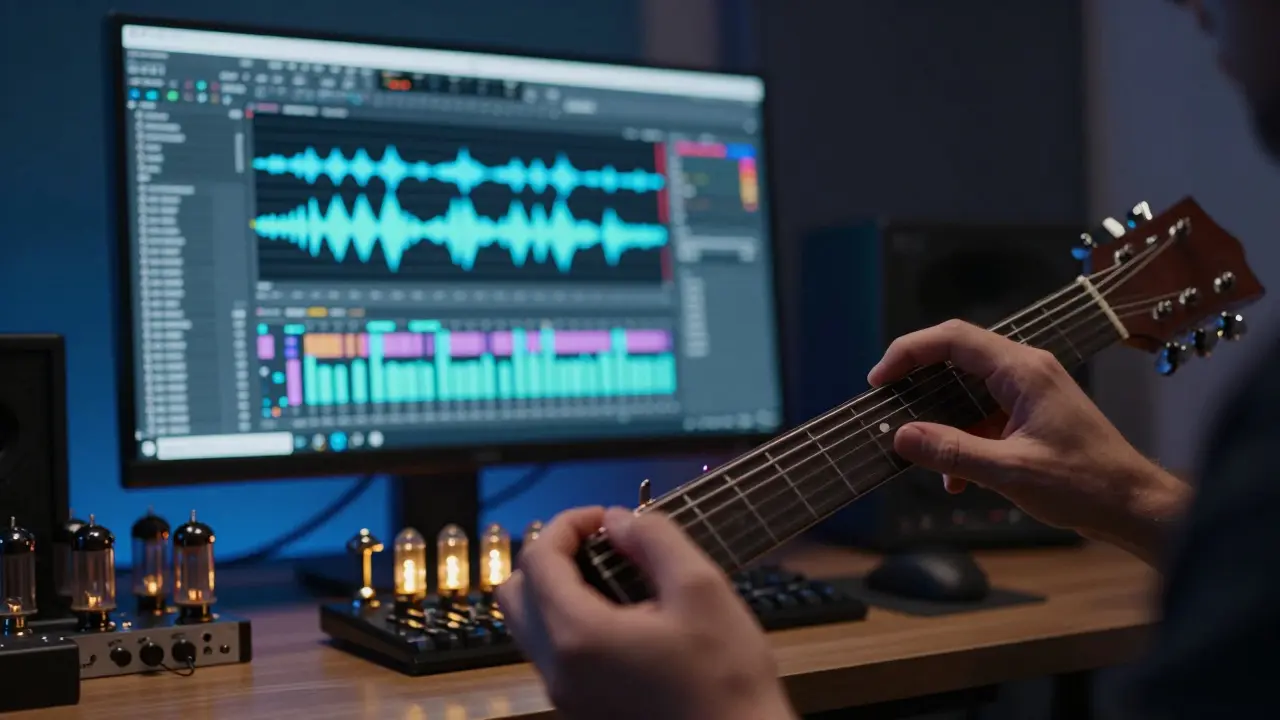
Artificial intelligence isn't replacing the guitarist, but it is acting as a sophisticated collaborator. Some producers are using AI to generate thousands of rhythmic variations of a riff, then picking the one that feels the most 'human' or surprising. This creates a strange paradox: using machine logic to find a feeling of raw, unplanned emotion. Furthermore, the integration of Digital Audio Workstations (DAWs) like Ableton Live allows rock bands to treat their live instruments like samples, looping and manipulating sounds in real-time during a concert. The stage is becoming a laboratory.
| Era | Primary Tool | Sound Philosophy | Key Value |
|---|---|---|---|
| Classic Rock | Analog Tape / Valve Amps | Warmth and saturation | Authentic room sound |
| Grunge/Alt | Multitrack Recording | Rawness and distortion | Dynamic contrast |
| Modern/Future | AI / Hybrid DAWs | Precision and glitch | Infinite sonic texture |
The Analog Rebellion
Whenever technology pushes too far in one direction, humans swing back the other way. As we lean into AI and polished digital production, we are seeing a powerful 'analog revival.' This isn't just about nostalgia or buying a vintage record player; it's a desire for imperfection. In a world of perfectly tuned vocals and quantized beats, the slight hiss of a tape machine or a guitar that's a tiny bit out of tune feels honest.
We are seeing a return to Vinyl Records is an analog sound storage medium consisting of a disc with a groove that is read by a stylus and a renewed interest in boutique pedal boards. Small-scale workshops are popping up again, where musicians build their own gear from scratch. This 'DIY' ethos is the heartbeat of rock. The future will likely see a split: high-gloss, tech-driven rock for the masses, and a gritty, tactile, analog-only scene for those seeking a visceral connection to the music.
The Death of the Megastar and the Rise of the Micro-Scene
The days of the monolithic rock god-the person who sells out every stadium in the world-might be fading. Instead, we are entering the age of the 'micro-scene.' Thanks to social media, artists can find their specific 50,000 fans across the globe without needing a massive record label. This allows for much weirder, more specific subgenres to thrive.
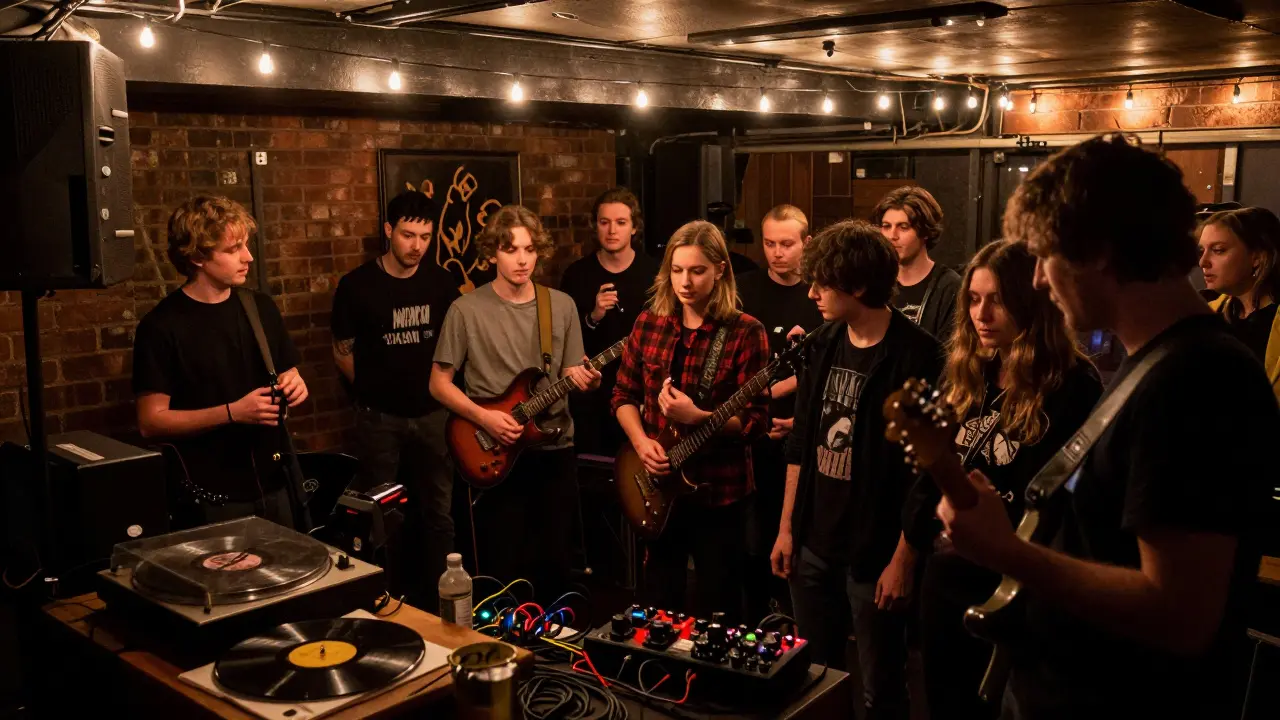
Imagine a scene where 'Ambient Doom-Gaze' becomes a trend in three different cities simultaneously, despite the artists never meeting. These communities form around shared aesthetics and niche sounds. The focus is shifting from global dominance to local authenticity. We are seeing more 'house shows' and unconventional venue bookings. The energy is moving away from the corporate arena and back into the basement, which is exactly where rock music was born. This decentralization makes the genre more resilient because it doesn't depend on a few executives deciding what is 'cool' this year.
Sustainability and the New Touring Model
Let's be real: touring is becoming a nightmare. Between the cost of diesel and the environmental impact of hauling tons of gear across continents, the traditional tour model is broken. The future of rock performance will have to adapt. We are already seeing 'residencies' where bands stay in one city for a month, playing different venues and collaborating with local artists, rather than playing one night in ten different cities.
Additionally, immersive technology is changing the live experience. While we've seen the first wave of virtual concerts, the next step is hybrid shows. Picture a band playing in a physical club in London, but with holographic extensions or interactive visual elements that react to the frequency of the guitar. This allows for a theatrical scale that was previously only possible for artists with million-dollar budgets. The goal is to make the live show an event that can't be replicated by simply watching a video on a phone.
What This Means for the Listeners
If you're a fan, the next decade is going to be an adventure. You won't be able to just follow 'Rock' as a single category. You'll find yourself following producers, specific gear-enthusiasts, and cross-genre collectives. The experience of being a rock fan is becoming more active. You aren't just consuming a product; you're participating in a discovery process.
Will we see another 'big' movement like Grunge or Britpop? Maybe. But it probably won't look like a cohesive sound. Instead, it will be a collection of vibes. The common thread will remain the same: a sense of urgency, a willingness to be too loud, and a drive to challenge the status quo. As long as there are teenagers who feel misunderstood and have access to an amplifier, rock music will continue to evolve in ways we can't yet predict.
Is rock music actually disappearing from the charts?
Not exactly. While you might see fewer traditional 'guitar bands' at the top of the pop charts, rock elements are integrated into almost every modern hit. From the distorted bass in hip-hop to the angst-driven melodies in emo-rap, the 'rock spirit' is present; it just doesn't always wear a leather jacket anymore.
Will AI eventually replace rock musicians?
AI can mimic a guitar solo or write a chord progression, but it can't replicate the human experience of frustration, joy, or rebellion that fuels rock. AI will be used as a tool for production and experimentation, but the demand for authentic, flawed human performance is what will keep real musicians relevant.
Why is vinyl making a comeback in the rock scene?
It's a reaction to the 'invisible' nature of streaming. Rock fans crave a physical connection to the music-the large artwork, the act of dropping a needle, and the warmer, less compressed sound. It turns music consumption back into a conscious activity rather than background noise.
What are some emerging subgenres to watch?
Keep an eye on 'Hyper-Rock,' which blends extreme electronic production with metal vocals, and 'Neo-Psych,' which uses modern synthesis to expand on 60s psychedelic sounds. There is also a growing movement of 'Eco-Rock' focusing on sustainable production and political activism regarding the climate.
Do I need a lot of gear to get into modern rock?
Not at all. While some love the analog gear, a laptop and a basic audio interface are all you need to start. Many of today's most influential rock sounds are created entirely in the box using software, making the entry point lower than ever before.