Piano Joy Assessment Tool
Discover Your Piano Joy Level
How does piano play in your life? Answer these simple questions to find your personal joy score. This isn't about perfection—it's about how music makes you feel.
Your Piano Joy Level
"You don't need to be good. You just need to be there." — Marie, 67
There’s a moment when your fingers first find the right key-not because you practiced it a hundred times, but because your heart knew where to go. That’s when playing the piano stops being a skill and becomes a conversation. Not with a teacher, not with an audience, but with yourself. Thousands of people around the world feel this every day, and their stories aren’t about perfect technique or recitals. They’re about survival, healing, connection, and quiet triumph.
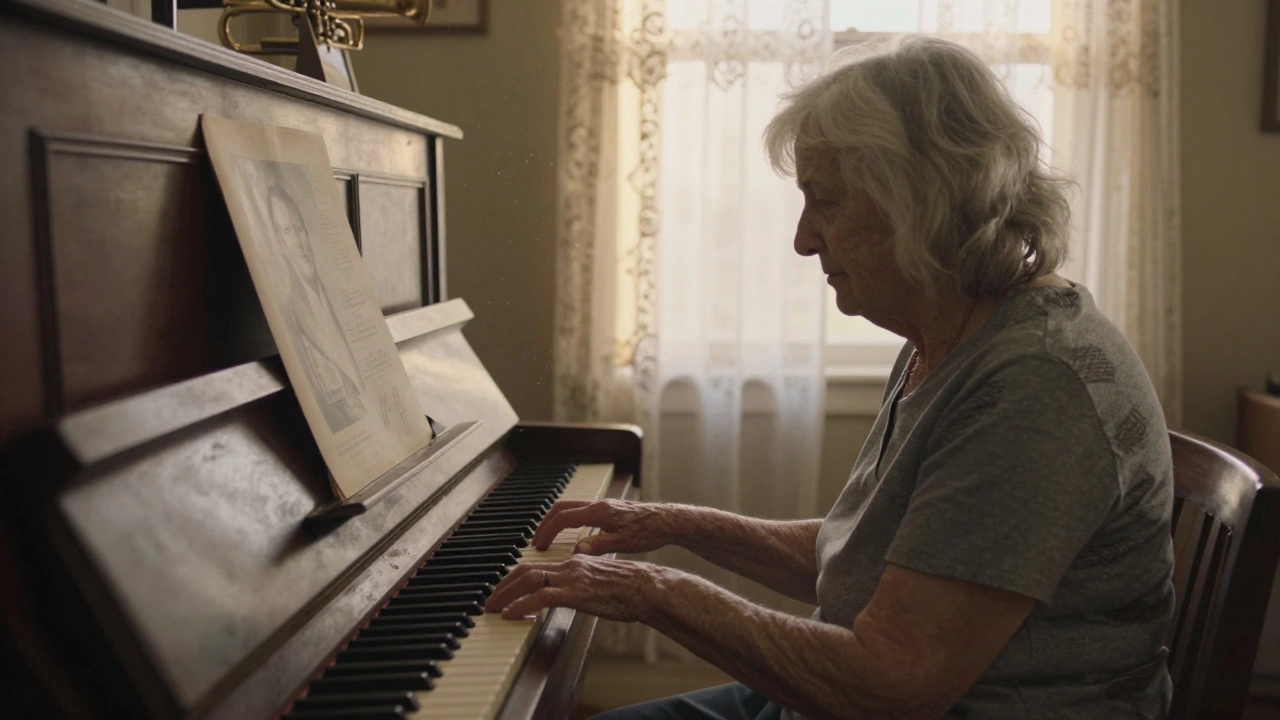
She Started at 67 After Her Husband Passed Away
Marie from Adelaide didn’t touch a piano until she was 67. Her husband, a jazz trumpeter, used to play old Bill Evans records on Sunday mornings. After he died, the silence in their house was heavier than anything she’d ever known. One day, she walked into a secondhand store and saw a dusty upright piano for $150. She bought it on the spot. No lessons. No sheet music. Just her fingers and the memories. She’d play the same three chords over and over-C, G, Am-until they felt like his voice. Two years later, she started playing full songs. Now, she plays for her grandchildren every Sunday. "I don’t play well," she says. "But I play true."
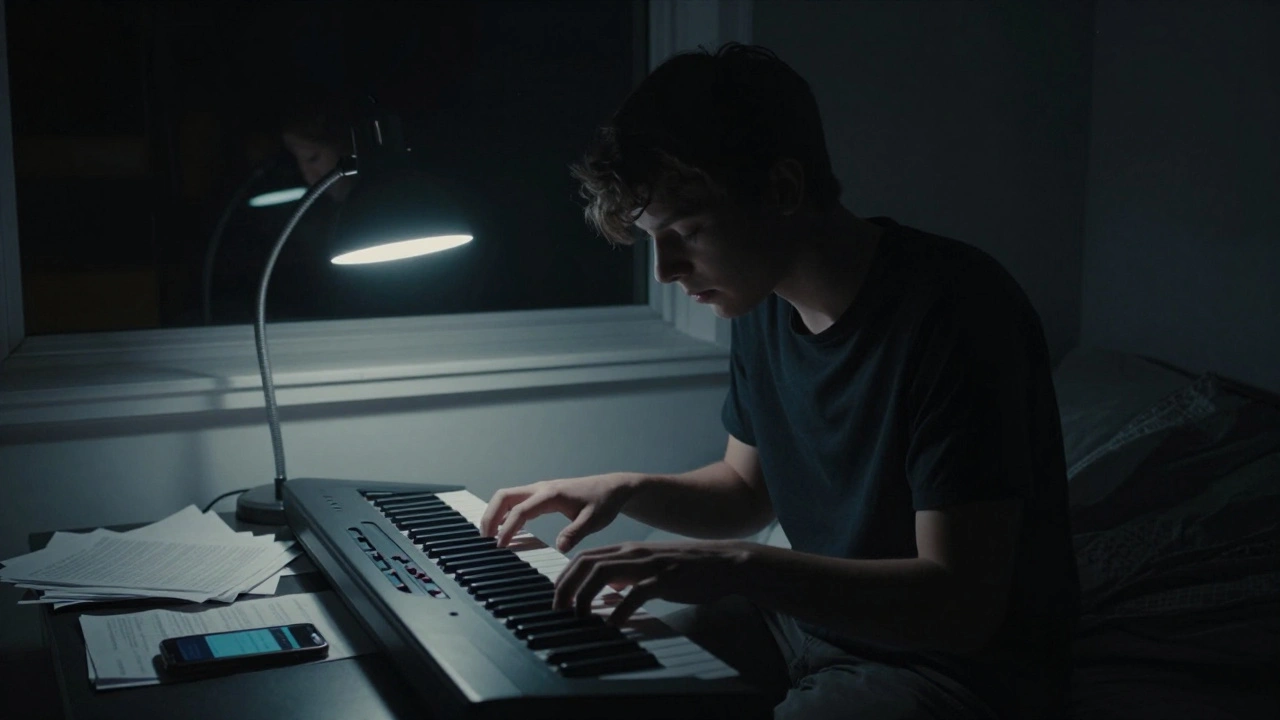
The Teen Who Played Through Panic Attacks
In Melbourne, 16-year-old Liam started having panic attacks in year 10. He’d wake up with his chest tight, his breath gone, his mind racing. His therapist suggested grounding techniques-name five things you see, four you can touch. He tried them, but nothing stuck. Then he remembered the piano his aunt gave him when he was ten. He sat down, pressed middle C, and let his hands move. He didn’t play songs. He played sounds. Low rumbling bass notes. High, trembling highs. A slow, uneven rhythm that matched his heartbeat. Over time, the music became his anchor. He didn’t get better overnight. But when he played, he could breathe. He started posting short clips online-not to be seen, but to feel less alone. One day, a stranger messaged him: "Your music saved me today."
He Relearned After a Stroke
Robert, 72, was a classical pianist for over 40 years. He taught at the Queensland Conservatorium. In 2023, a stroke took the use of his right hand. Doctors said he’d never play again. He spent months in rehab, frustrated, silent. One morning, he woke up and started tapping the table with his left hand-just the opening of Chopin’s Nocturne in E-flat. His wife recorded it. He listened back. Something clicked. He began practicing one-handed pieces. Then he found arrangements for left hand alone. Now, he performs at aged care homes. He doesn’t play the same way. But the music still lives in him. "The fingers don’t remember the notes," he says. "The soul does."
The Single Mom Who Played to Stay Sane
Jessica worked three jobs. Two kids. A tiny apartment in Perth with a keyboard she bought on layby. She didn’t have time for lessons. She didn’t have quiet. She played while the kids napped, standing up, one hand on the keyboard, the other holding a baby. She played pop songs she remembered from her teens-Adele, Coldplay, Norah Jones. She didn’t know chords, so she played melodies by ear. Sometimes she’d cry while playing. Not because she was sad. Because for those 20 minutes, she wasn’t a mom, a worker, a bill-payer. She was just someone who made something beautiful. Her daughter, now eight, says her favorite song is "When the Rain Comes Down"-the one Jessica made up during a thunderstorm. She still plays it every night before bed.
The Boy Who Taught Himself in a Refugee Camp
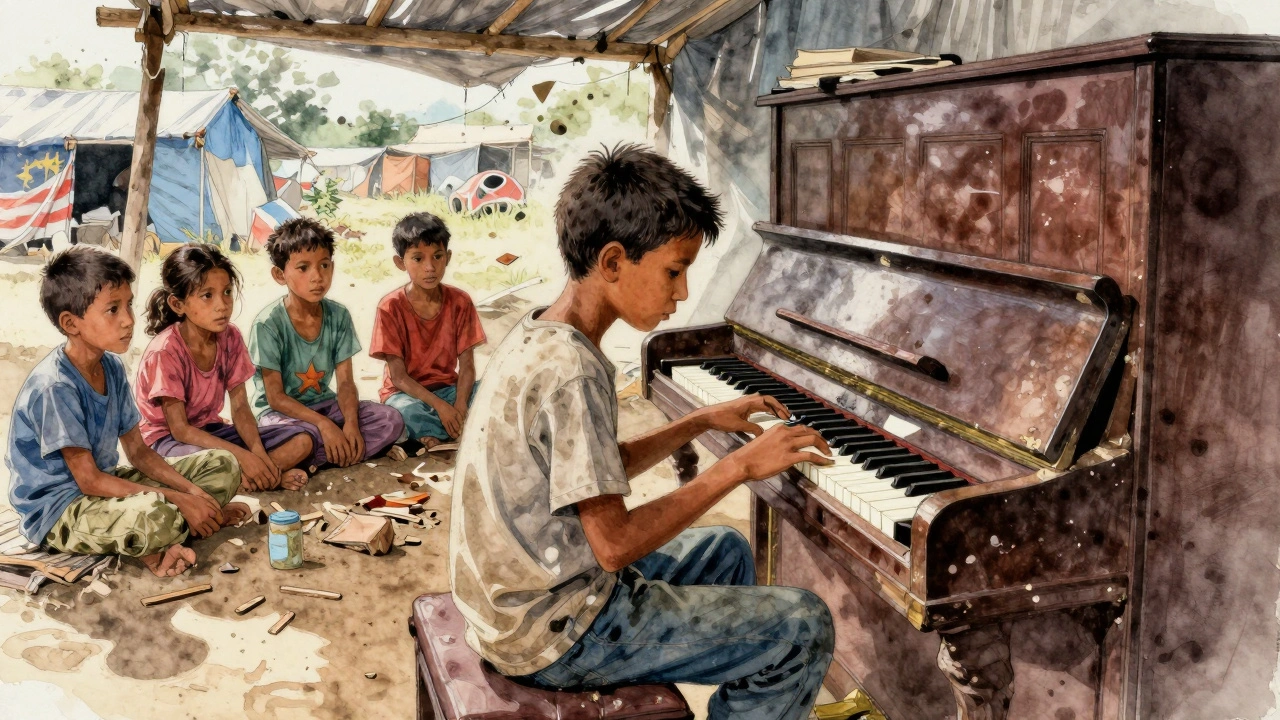
In 2022, a group of musicians from Brisbane volunteered at a refugee camp in Malaysia. They brought a broken upright piano. It had missing keys, warped wood, and one string that always went out of tune. A 12-year-old boy named Amir sat beside it every day, watching. One afternoon, he picked up a pen and used it to press the broken keys. He played a melody-slow, haunting, familiar. It was a folk song from his village in Syria. The volunteers didn’t recognize it. But they recognized the feeling. Amir didn’t know music theory. He didn’t know scales. He just knew the sound his grandmother used to hum. Within months, he was playing full versions of the song on the broken piano. He taught other kids. They made a little choir. The piano never got fixed. But the music did.
Why This Matters More Than Perfect Technique
Most piano lessons focus on scales, finger strength, timing, and accuracy. Those things matter. But they’re not why people keep playing. They keep playing because the piano doesn’t judge. It doesn’t ask for resumes, for grades, for social media followers. It just listens. And when you play, even badly, it gives back something real. It gives you a space where you’re not broken, not busy, not enough. You’re just present. The piano doesn’t care if you’re 8 or 80. It doesn’t care if you’re rich or struggling. It only cares if you show up.
It’s Not About Becoming a Pro
You don’t need to play Mozart to feel the joy. You don’t need to perform on stage. You don’t even need a real piano-just a keyboard, an app, or even a tabletop. What you need is the willingness to sit down, even when you’re tired, even when you think you’re bad, even when you’re scared. The stories above aren’t about prodigies. They’re about people who chose music when everything else felt heavy. And in doing so, they found a way to carry their weight differently.
Where to Start, Even If You Think It’s Too Late
- Find any keyboard-even an old one. You don’t need a grand piano. A $100 digital keyboard works. Even a free piano app on your phone can be a start.
- Play one note. Then another. Don’t aim for a song. Just make sound. Notice how it feels in your chest, your arms, your breath.
- Play something you love. A movie theme. A lullaby. A song from your childhood. Not what you think you should play. What makes you pause when you hear it.
- Let yourself sound bad. The first time you play a song, it will be messy. That’s not failure. That’s the beginning.
- Play when you’re alone. No audience. No recording. Just you and the keys. That’s where the magic lives.
What Keeps People Coming Back
It’s not fame. It’s not money. It’s not trophies. It’s the quiet truth that the piano holds space for your whole self-the grief, the joy, the anger, the peace. When you play, you’re not fixing anything. You’re not performing. You’re remembering. Remembering who you are when no one’s watching. That’s the real reward. And it’s available to anyone who sits down, puts their hands on the keys, and lets the music find them.
Do I need to know how to read music to enjoy playing the piano?
No. Many of the most heartfelt piano stories come from people who never learned sheet music. Playing by ear, using apps like Simply Piano or YouTube tutorials, or even just experimenting with notes can lead to deep personal connection. Reading music helps with structure, but joy comes from expression, not notation.
Is it too late to start learning piano as an adult?
Absolutely not. Studies show that adults can learn piano just as effectively as children, especially when motivated by emotion rather than performance. People over 60 are the fastest-growing group of piano learners worldwide. The brain adapts. The heart remembers. Age doesn’t block music-it often deepens it.
What if I don’t have space for a piano?
You don’t need a full-sized piano. A 61-key digital keyboard costs under $200 and fits in a corner. Even a portable keyboard or a piano app on your tablet can give you the tactile feedback you need. The instrument matters less than the habit. Ten minutes a day on a small keyboard is more powerful than a grand piano gathering dust.
Can playing piano help with anxiety or depression?
Yes. Research from the University of Melbourne found that regular piano playing lowers cortisol levels and increases dopamine, similar to meditation or light exercise. The rhythm, the focus, the physical movement-all help regulate the nervous system. Many therapists now use music as part of treatment plans for trauma and anxiety.
How do I stay motivated when I feel like I’m not improving?
Stop measuring improvement in scales or speed. Measure it in moments: Did you play when you didn’t want to? Did you feel something while playing? Did you play for someone else? Those are the real signs of progress. Joy isn’t earned by perfection. It’s found in consistency-even when you think you’re stuck.
Next Steps: Start Today, Not Tomorrow
Don’t wait for the perfect time. Don’t wait until you have more money, more space, more skill. Sit down right now-even if it’s just for five minutes. Find a keyboard. Press a key. Listen. Let your hands move. You don’t need to be good. You just need to be there. The piano has been waiting for you. And it’s not asking for anything but your presence.