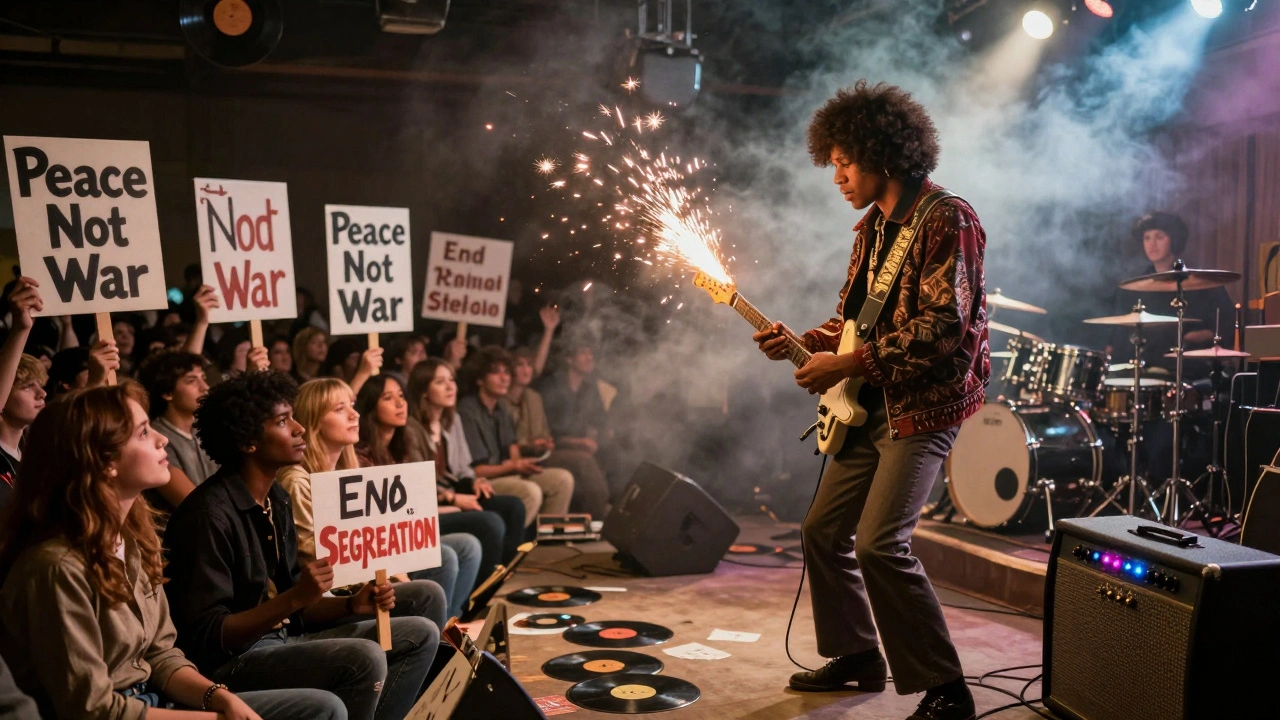
Music and Activism: How Sound Drives Social Change
When we talk about music and activism, the powerful union of sound and social change where artists use their craft to challenge injustice, mobilize communities, and demand justice. It's not background noise—it's a protest, a prayer, and a punch all at once. You can’t separate the history of civil rights from the songs that carried them. The blues music, a raw, emotional genre born in the Deep South that gave voice to Black suffering and resilience didn’t just tell stories—it kept people alive. Ma Rainey and Bessie Smith sang about poverty, betrayal, and survival not for applause, but because silence meant surrender. That same spirit lives in soul music, a genre fueled by gospel passion and civil rights urgency, with artists like Aretha Franklin turning hymns into anthems of dignity. And when you hear ‘Respect,’ you’re not just listening to a song—you’re hearing a demand written in melody.
Fast forward to today, and hip hop activism, the modern extension of musical protest, where lyrics become manifestos and beats become rallying cries is reshaping global conversations. From the Bronx to Lagos, hip hop doesn’t just reflect struggle—it organizes it. Artists use sampling to reclaim history, freestyles to name police violence, and albums to fund community programs. Meanwhile, reggae music, a Jamaican-born sound rooted in Rastafari faith and resistance, that turned spiritual belief into political force taught the world that music could be both a sanctuary and a weapon. Bob Marley didn’t just sing about love—he sang about liberation, and millions worldwide still carry those words like a flag.
These aren’t just genres. They’re movements wrapped in rhythm. Whether it’s the 12-bar cry of the blues, the soulful swell of a church choir turned protest chant, or the heavy bass of a dubstep track that moves bodies as much as it moves minds—music doesn’t wait for permission to speak truth. It grabs the mic and doesn’t let go. In this collection, you’ll find stories of women who turned pain into power, artists who rebuilt industries from the ground up, and sounds that traveled across oceans to become tools of change. You’ll see how folk songs held communities together, how electronic pioneers built new worlds with machines, and how every note has a purpose beyond entertainment. This isn’t about playlists. It’s about power. And it’s still playing.
Rock music has long been a powerful force in political movements, from civil rights protests to anti-dictatorship uprisings. This article explores how rock songs sparked change, were banned by regimes, and still inspire activism today.