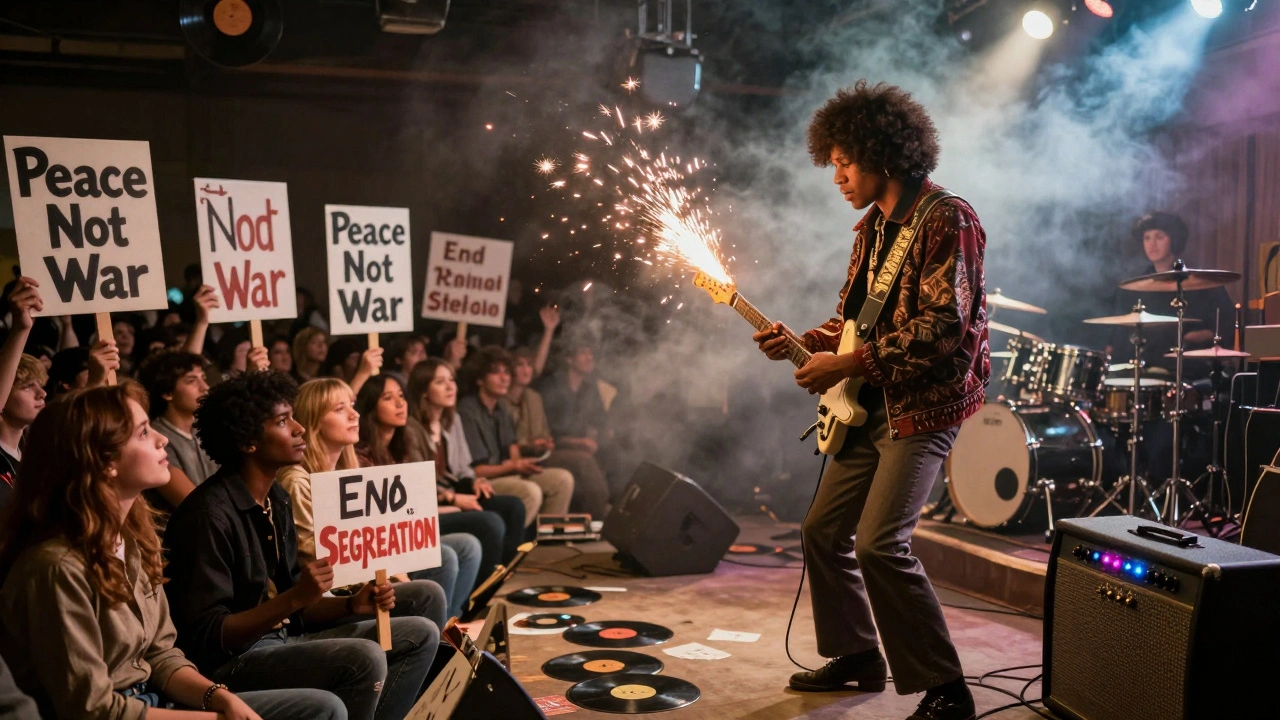
Political Rock: Music That Challenges Power and Sparks Change
When you hear political rock, a genre where music is used as a weapon against injustice, corruption, and silence. Also known as protest rock, it doesn’t just play songs—it starts conversations, rallies crowds, and refuses to look away when the world is falling apart. This isn’t background noise. It’s the sound of people who refused to wait for change—they made it with amps, distortion, and lyrics that cut deeper than any speech.
Political rock ties directly to punk rock, a raw, fast, and angry offshoot that exploded in the 1970s as a reaction to economic collapse and political apathy. Bands like The Clash and Dead Kennedys didn’t just write songs—they printed zines, organized benefit shows, and handed out flyers at gigs. Their music was a blueprint: if you’re angry, turn it into something that moves others. And it worked. social justice music, any sound that fights for equality, human rights, or systemic change didn’t start with punk, but punk gave it a new heartbeat. You hear it in the shout of Rage Against the Machine, the bitter sarcasm of Crass, and the defiant chants of later bands like Rise Against and Anti-Flag.
What makes political rock different from other protest music? It doesn’t wait for permission. It doesn’t soften its message for radio play. It leans into noise, chaos, and discomfort because silence is the real enemy. You won’t find polished ballads here—you’ll find broken guitar strings, shouted choruses, and lyrics that name names. It’s the sound of factory workers, students, prisoners, and veterans saying, "We see what’s happening, and we’re not staying quiet." And that’s why it still matters. The posts below don’t just list songs—they show you how political rock has been used to challenge wars, expose police violence, defend workers’ rights, and give voice to those pushed to the edges. You’ll find stories of artists who risked their careers, labels that banned them, and fans who turned concerts into protests. This isn’t history. It’s alive. And if you’re listening, you’re part of it now.
Rock music has long been a powerful force in political movements, from civil rights protests to anti-dictatorship uprisings. This article explores how rock songs sparked change, were banned by regimes, and still inspire activism today.