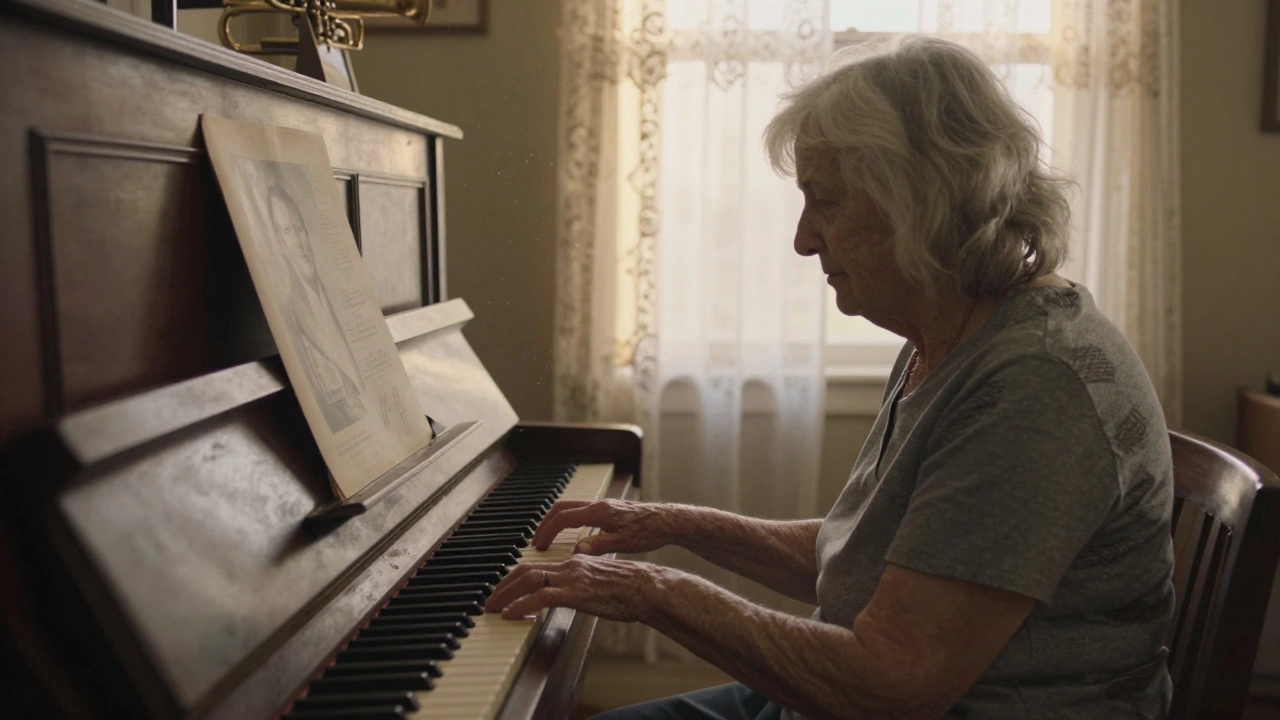
Piano Joy: The Emotional Power of Piano Music in Art and Life
When we talk about piano joy, the deep, personal happiness that comes from playing or listening to piano music. It's not just a feeling—it's a physical response. Your shoulders drop, your breathing slows, your mind clears. This is what happens when the piano speaks without words. You don't need to be a musician to feel it. That moment when a single chord lingers in the air and everything else fades? That’s piano joy.
It’s no accident that classical piano, the foundation of Western music, built on structured compositions from Bach to Chopin carries so much weight in emotional storytelling. Think of the quiet tension in Debussy’s "Clair de Lune" or the raw ache in Beethoven’s "Moonlight Sonata." These aren’t just pieces—they’re emotional maps. And soulful piano, a style rooted in blues, gospel, and jazz, where every note feels lived-in and honest? That’s the sound of people turning pain into beauty. You hear it in the way a jazz pianist lets a note hang just a second too long, or how a soul artist lets their left hand thump like a heartbeat while the right hand cries in melody.
Piano joy doesn’t live only in concert halls. It’s in the kitchen where someone plays a lullaby to calm a child. It’s in the studio where a producer samples a 1960s piano loop for a hip-hop track. It’s in the quiet room where someone sits alone after a hard day and lets their fingers find the keys without thinking. The piano doesn’t shout. It whispers. And that’s why it sticks with you.
That’s why the posts here aren’t just about technique or theory. They’re about how the piano connects to bigger things—how it shows up in blues, how it’s sampled in hip-hop, how it calms the mind like classical music does for focus, and how it carries emotion as powerfully as any voice. You’ll find stories about the roots of soul music that fed into modern piano-driven tracks. You’ll see how jazz improvisation turns a simple melody into something unforgettable. And you’ll feel how a single piano note can carry the weight of a whole lifetime.
There’s no magic trick to piano joy. It’s not about how fast you play or how many octaves you cover. It’s about honesty. About presence. About letting the instrument speak what words can’t. And if you’ve ever sat down at a piano—whether you knew how to play or not—and felt something shift inside you? You already know what this is about.
Real stories from people who found healing, joy, and connection through playing the piano-not as professionals, but as humans. Discover how music transforms lives, one note at a time.