Music Subgenres: How to Spot, Explore, and Make New Sounds
One beat, one tweak in sound design, and a whole new crowd shows up. That’s how subgenres form. They’re not just labels — they’re clues about rhythm, instruments, production, and the people behind the music. If you want to find fresh tracks or craft your own niche, learning to read those clues helps a lot.
How to recognize a subgenre
Listen for the obvious stuff first: tempo, drum patterns, and main instruments. A dubstep drop hits differently from a soul break. Production choices matter too — vintage tube distortion points toward classic rock or blues influence, while heavily processed synths usually mean electronic or experimental subgenres. Lyrics and vocal delivery are big signals as well: storytelling and grit often point to blues or hip hop, while introspective, airy vocals lean toward indie or dream pop.
Context helps. Where you found the track says a lot. A song gaining steam on TikTok with a choreography trend may be spinning off a dance-oriented subgenre. A record label or producer credit can reveal scenes you’d miss by ear alone. Follow labels, small blogs, and local venues to catch patterns early.
Practical ways to explore subgenres
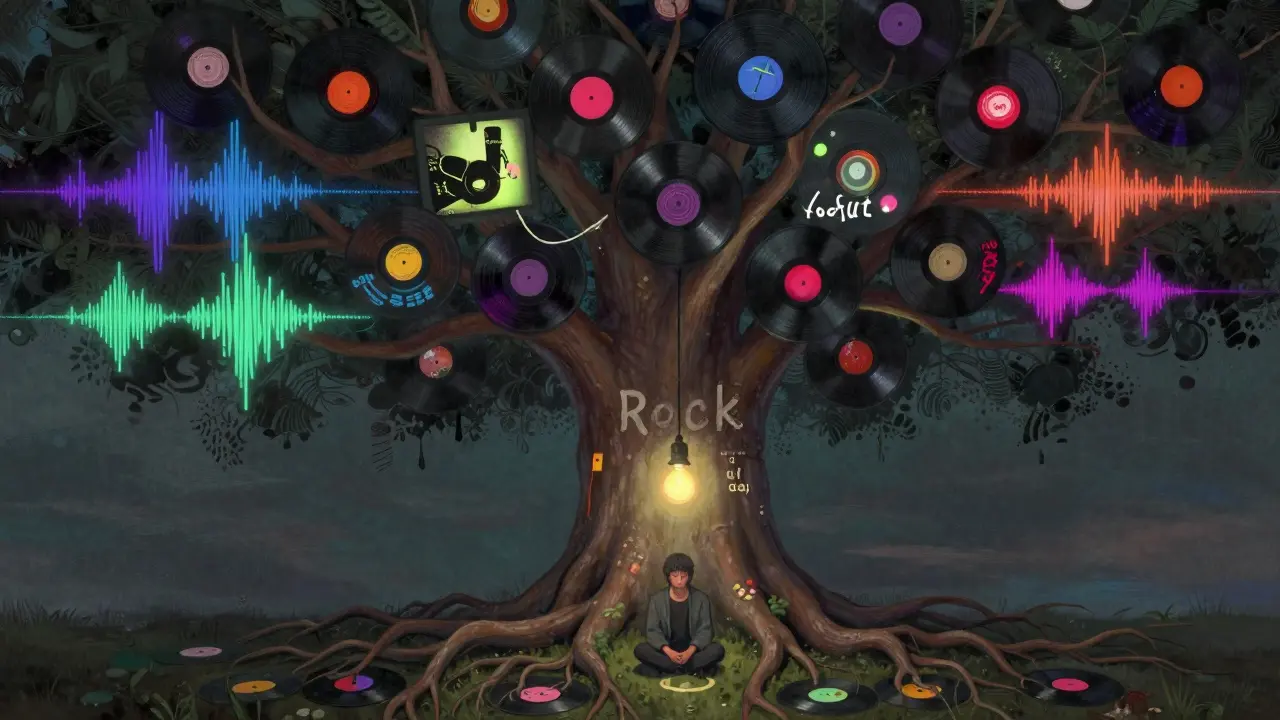
Start with a single thread: pick a song you like and trace its family tree. Check who produced it, who it influenced, and what playlists it appears on. Use playlists and curated lists to map related sounds. For electronic music, pay attention to synth types and DAW techniques mentioned in producer interviews. For jazz or blues, learn a few key artists and listen backward — you’ll hear the roots and branches.
Be curious about overlaps. Subgenres often form where two styles meet. Soul vulnerability mixed with modern pop hooks can create a new singer-songwriter lane. Acoustic guitar styles like fingerstyle and flamenco can blend into folk or world-music hybrids. Watch what dancers do too — movement styles like dubstep dance helped spotlight a musical style as its own thing.
If you’re a musician, try small, deliberate changes. Shift tempo by 10–20 BPM. Swap a lead instrument—replace a guitar riff with a synth pad. Change production choices: lo-fi tape saturation versus glossy digital compression can push a track into a different scene. Visuals and performance matter as much as sound. A consistent image attracts the right listeners and helps a subgenre stick.
Want to predict the next wave? Look for growing micro-scenes: local nights, niche playlists, producers credited across emerging tracks, and social clips that keep repeating a style. Early signs are often subtle — a signature drum hit, a lyrical theme, or a shared production trick.
Pick one subgenre to explore this week. Make a short playlist, follow three creators in that scene, and attend a local show or livestream. You’ll hear the patterns faster than any article can explain. Subgenres are living things — they grow when people listen, share, and play. Be part of that process, and you might find the next sound everyone talks about.
Explore how subgenres and micro-genres are reshaping the music industry. From algorithmic curation to niche communities, discover why specific musical identities matter more than ever.
Explore how digital technology and streaming algorithms have fragmented the music industry into countless subgenres. Learn why niche sounds like hyperpop and drill are rising, and what this means for artists and listeners.
Explore how digital tools and social media have fragmented music into micro-genres. Discover why subgenres matter, how algorithms shape our taste, and what this means for artists and listeners in 2026.
Subgenres in music aren't just labels-they're the hidden forces driving innovation, identity, and discovery. From bedroom pop to blackgaze, they give listeners deeper connections and artists the space to create something truly original.
Subgenres in music aren't just labels-they're emotional codes that define what we connect with. From lo-fi hip hop to blackgaze, they shape taste, community, and identity in ways you might not realize.
Subgenres are the hidden force behind today's global music trends-from hyperpop to afrobeats-driving innovation, cultural exchange, and listener loyalty. Discover how small, niche sounds are reshaping music worldwide.
Music subgenres play a crucial role in shaping society and culture. From influencing fashion trends to altering social norms, these subgenres often serve as cultural identifiers. They reflect societal changes while sometimes challenging conventional viewpoints. By understanding them, one gains insight into the dynamic relationship between music and cultural evolution.
This article dives into the fascinating world of music subgenres, elaborating on the varied categories and their unique characteristics. From historical development to cultural influences, it sheds light on what makes each subgenre distinct. Readers will find useful tips on how to explore new subgenres and deep-dive into the richness of their favorite music styles. Discover the beauty of music that sits between the lines of main genres.
The musical landscape is rich with a variety of sounds and styles, making it a vibrant realm of diverse genres. This article delves into the complexities of music subgenres, offering readers a clearer understanding of how these categories are formed and why they matter. Readers will learn about the influence of culture and history on musical classification and discover how to navigate the intricate world of music genres. Tips on exploring new musical styles and understanding the nuances of each subgenre are also provided.